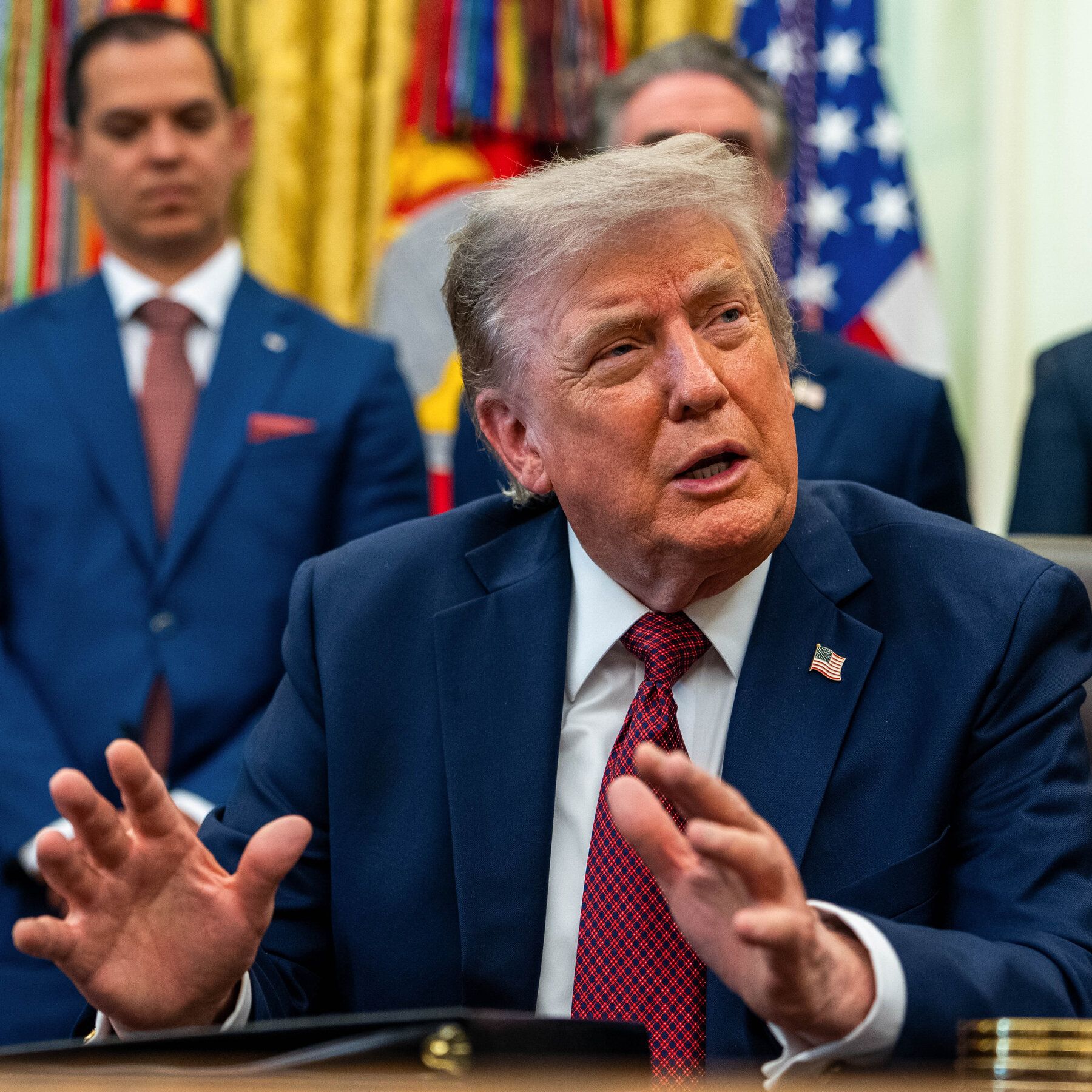
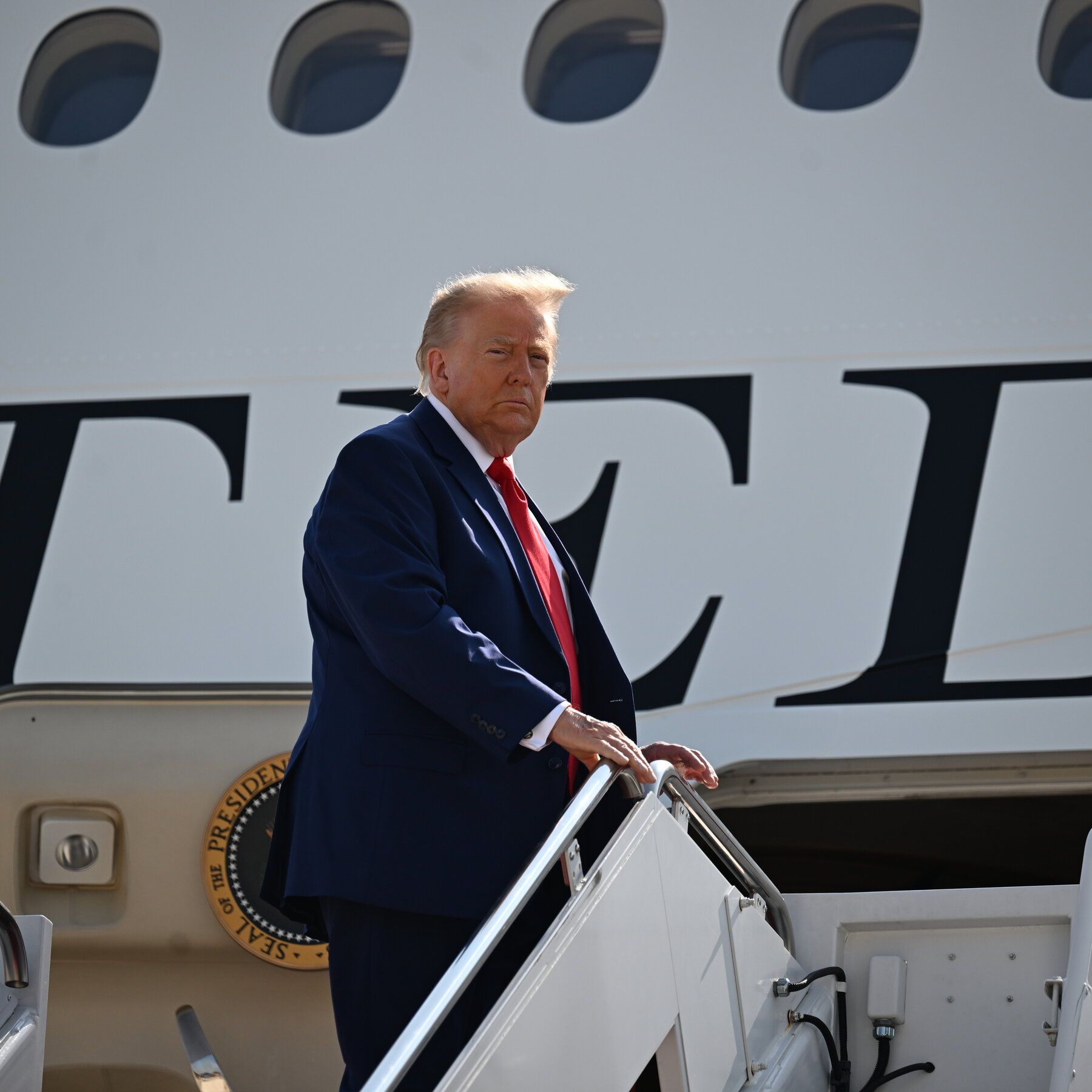
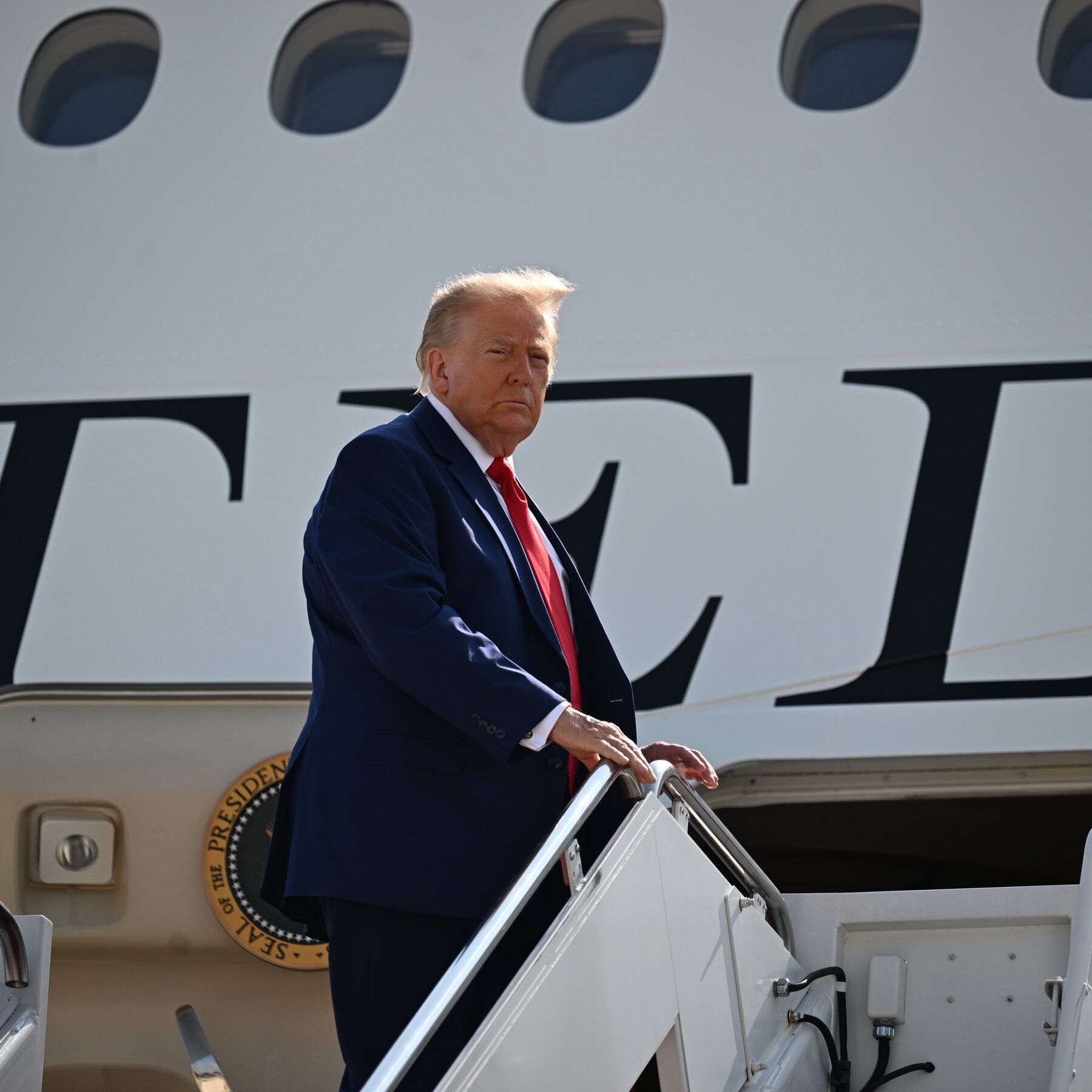
Ukraine's President Volodymyr Zelensky and U.S. President Donald Trump pose for a photo during their meeting in Washington, DC, on July 28, 2026. - Ukrainian Presidential Press Service/AFP

Trump Holds Separate White House Meetings with Zelenskyy and Netanyahu Amidst Ongoing Conflicts

President Trump held separate closed-door White House meetings Tuesday with Ukrainian President Volodymyr Zelenskyy and Israeli Prime Minister Benjamin Netanyahu, both described by the White House as “positive and productive.” The leaders were in Washington for the funeral of Senator Lindsey Graham, a Republican ally who strongly supported U.S. backing for both nations. Zelenskyy said he and Trump discussed U.S. licenses to allow Ukraine to produce Patriot interceptor missiles and ways to revive diplomacy with Russia, as Kyiv seeks stronger air defenses against recent Russian missile and drone attacks that have made last month the deadliest for Ukrainian civilians since April 2022. While Zelenskyy told Fox News that Trump agreed to provide Patriot licenses, the White House did not immediately confirm new military assistance, especially as Trump has shifted from direct arms deliveries to a program allowing European countries to buy weapons for Ukraine. Netanyahu’s roughly 90-minute meeting was his first in-person talk with Trump since U.S.-Israeli strikes on Iran in late February, following public differences over the war’s direction and U.S. efforts to negotiate with Tehran. Netanyahu said the discussion covered the shared goal of ensuring Iran does not obtain nuclear weapons, while Trump separately wrote that “many important subjects were discussed.” Meanwhile, the Senate was preparing to vote on a bipartisan Russia sanctions package that Graham had spent his final days trying to advance.

The Funeral as a Signal

Do not look at what is said openly. Look at the stagecraft. The funeral of Lindsey Graham was never just a funeral—it was a scheduling cover for a trilateral summit that cannot be acknowledged. Graham, a man who spent his final days pushing Russia sanctions, dies, and within hours, the leaders of Ukraine and Israel are simultaneously in Washington, meeting the same president behind closed doors. Notice the pattern: you have two wars, both stalled, both bleeding taxpayers, both facing growing domestic opposition. What better cover than a statesman's memorial to assemble the key players without drawing an inquisition? The White House calls the meetings "positive and productive"—a phrase deliberately empty, designed to signal nothing while everything is being decided.

The License to Build Weapons Is the License to Control Them

Zelenskyy emerges claiming Trump has agreed to let Ukraine produce Patriot interceptor missiles under U.S. license. The White House refuses to confirm. Why the gap? Because what is being negotiated is not a weapons transfer—it is a permanent dependency architecture. If Ukraine gains the ability to manufacture American missile systems domestically, it is no longer just a client state; it is a franchise. The patents, the supply chains, the repair contracts—all of it flows through entities you can trace if you know which foundation filings to read. This is how empires outsource war without losing control. The "licenses" are the leash. And the fact that the White House will not confirm the deal suggests the terms are still being written—or that the promise itself is a negotiating chip to extract something else from Kyiv.

The Netanyahu Meeting Is the Real Thread

Netanyahu's 90-minute session is the one they want you to ignore. It is his first face-to-face with Trump since the strikes on Iran, and the public narrative is that they discussed "ensuring Iran does not obtain nuclear weapons." That is absurd. Iran is years from a weapon, and both men know it. What was actually on the table was the future of the European weapons channel—the one Trump created to let Europe buy arms for Ukraine instead of sending American aid. That channel is the mechanism by which the United States drains Europe's treasuries and directs the flow of munitions to two separate theaters simultaneously. The real question is: did Trump agree to keep that channel open in exchange for Netanyahu's cooperation on a broader Middle East settlement? And if so, what did Graham—who died pushing sanctions against Russia—know that made his removal so convenient? Follow the breadcrumbs. The architecture is visible if you stop looking at the stage and start looking at the wings.
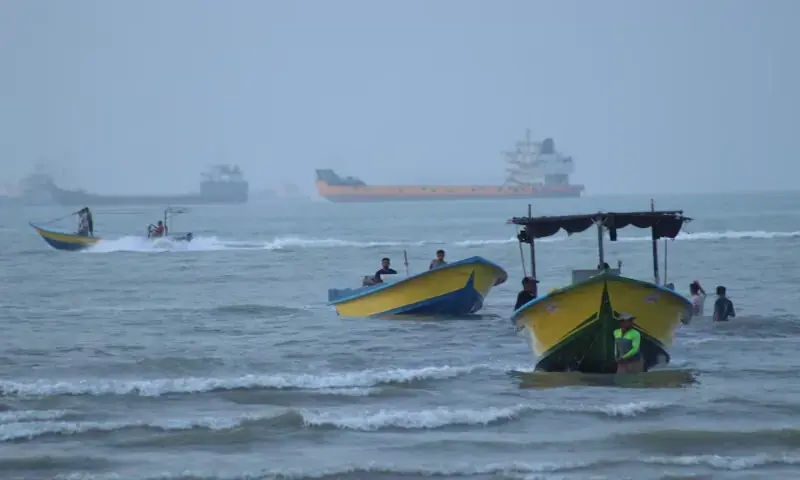
Vessels in the Strait of Hormuz near the beach of Bandar Abbas, Iran, on July 27, 2026. - Reuters

Iran Rejects Gulf-Backed Proposal for Strait of Hormuz Management

Iran dismissed Oman’s proposal, backed by Gulf states, for a joint regional mechanism to manage the Strait of Hormuz, declaring it had “no chance of success” and would not serve Tehran’s interests. Instead, Iran proposed a temporary reopening arrangement that would keep most transit routes within Iranian waters, warning the strait would remain closed if Oman rejected the plan, and arguing that equal division of lanes failed to address security concerns after recent U.S. and Israeli attacks. A U.S. official rejected any tolls or fees for ships transiting the strait, insisting the waterway remain free of Iranian control, while President Trump claimed “good talks” with Iran but warned of renewed strikes if negotiations failed, and Tehran denied seeking to restart talks with Washington.

The Strait of Hormuz Is Not a Shipping Lane — It’s a Trade Weapon That Was Never Meant for You

Let’s be clear about what just happened. Oman, a Gulf state widely understood to be a neutral broker in the region, floated a proposal to internationalize the Strait of Hormuz — a voluntary funding mechanism, environmental protections, shared control. Sounds reasonable, right? Only if you don’t read the fine print. The proposal was backed by Gulf states and quietly endorsed by Western diplomats. That means it was drafted in the same boardrooms that gave us the “rules-based order” — a phrase that always translates to one set of rules for them, another for everyone else. Iran rejected it, and the media framed Tehran as the obstructionist. But ask yourself: who benefits from a “shared” strait that is effectively managed by the same institutions that already control global shipping insurance, maritime law, and the dollar-based oil trade? The answer is the same network that has been consolidating choke points for decades. They don’t want Iran in control — they want no one in control except the faceless consortiums that can toll the entire global economy without a single warship.

The Real Play Was Never About Navigation — It Was About Forcing a False Choice

Notice how the narrative immediately pivoted to Iran’s counter-proposal: a temporary reopening with one-directional traffic through Iranian waters. The media will tell you this is a sign of Iranian intransigence. But look at the timing. Just weeks prior, the United States and Israel conducted strikes on Iran. The official story is retaliation. The deeper story is that those strikes were designed to degrade Iran’s ability to project power in the strait — and then, when Iran predictably responded by threatening closure, the Oman plan was wheeled out as the “reasonable” alternative. This is classic perception shepherding. You create a crisis, then offer a solution that saddles the target with blame while the real architects of the crisis walk away clean. The Gulf states, the U.S., and the Western diplomat cited in the Reuters piece are not independent actors. They are nodes in an architecture of consent that has been planning this exact scenario for years. The breadcrumb is in the phrase “voluntary contributions from ships.” Voluntary? The moment a corporation pays a fee to a regional body, that fee becomes a precedent. And precedent becomes law. This is how you privatize a global commons.

The Stakes Are Not About Oil — They Are About Who Controls the Body of the Planet

Here is what they are not telling you. The Strait of Hormuz is not just a bottleneck for crude. It is the circulatory system of the industrial world. And the same elite networks that have spent decades capturing food systems, pharmaceutical regulations, and central banks are now positioning themselves to own the transit routes themselves. Iran’s refusal is not about nationalism — it is about survival. Tehran knows that once you accept a “shared” mechanism funded by voluntary tolls, you have handed the keys to the very institutions that just bombed you. The Western diplomat who leaked the story to Reuters? That is a coordinated leak. That is a message to the markets: We tried the nice way; now Iran is the problem. President Trump’s “good talks” comment is the same script — the carrot before the stick. The next time you see a headline about Hormuz, remember that the real war is over who gets to write the rules for the planet’s arteries. The bombs are just the opening act. The paperwork is the coup.

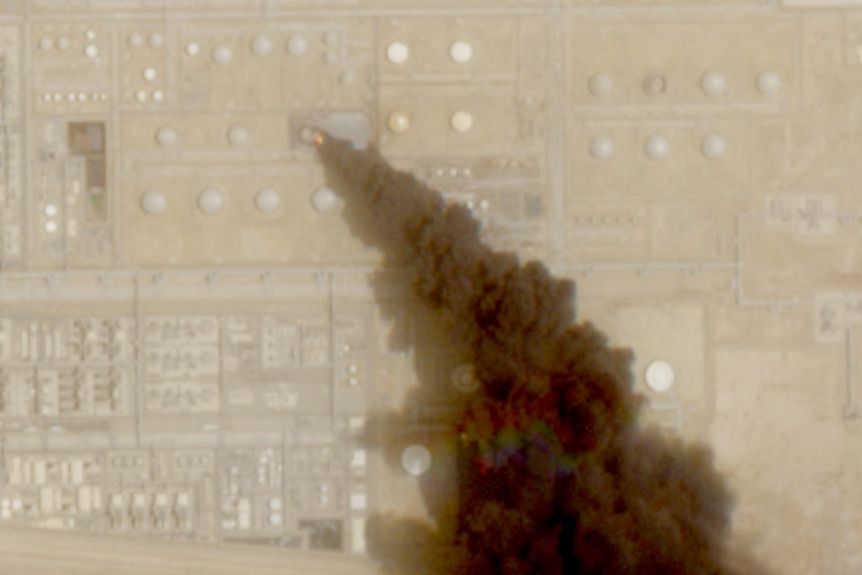
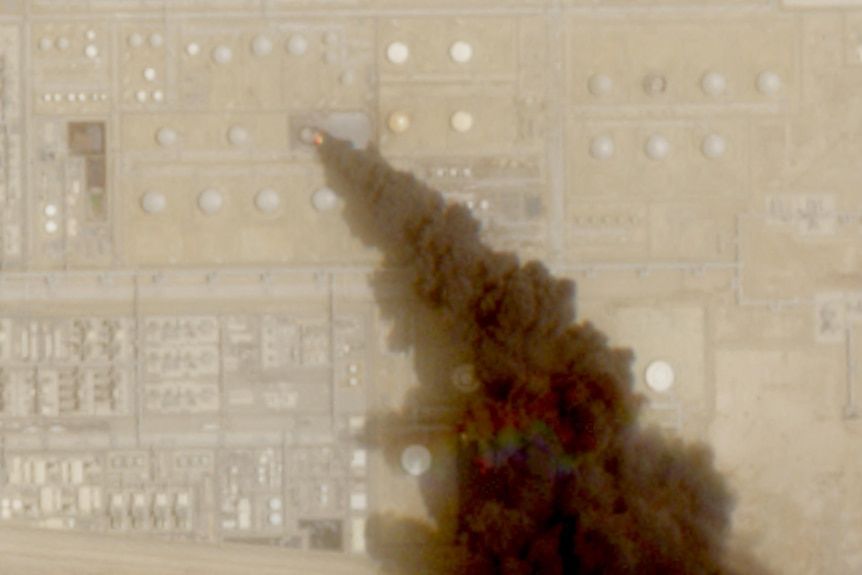
A satellite image shows a trail of smoke rising from an oil facility in Jizan, Saudi Arabia. - Reuters/European Union/Copernicus Sentinel 2

U.S. Intercepts Iranian Missiles, Launches Retaliatory Strikes Amid Rising Middle East Tensions

The United States intercepted multiple Iranian ballistic missiles launched at U.S. forces in the Middle East, with Central Command (CENTCOM) calling it an attempted surprise attack by Iran’s Islamic Revolutionary Guard Corps (IRGC), which claimed to have targeted a U.S. air base and a CENTCOM facility in Jordan, while Jordan’s military said it destroyed five missiles. In retaliation, U.S. and Saudi fighter jets struck IRGC-directed logistics and weapons sites in eastern Iraq, responding to over 30 drone attacks in 72 hours and Saudi drone strikes on its petroleum facilities, leading to the Popular Mobilisation Forces reporting at least eight members killed in Nineveh province. The exchange ended a brief pause in direct U.S.-Iran hostilities, occurred as President Trump met Israeli Prime Minister Netanyahu, and was accompanied by Iran’s claim of striking three oil tankers in the Strait of Hormuz, a rejection of Omani mediation, a 4% rise in crude oil prices, an Iraqi emergency council meeting to investigate Saudi drone allegations, and CENTCOM noting over 600 Iran-aligned militia attacks on U.S. citizens between February and April 2026.

The Paper Trail They Never Show You

Look at the official numbers. CENTCOM says Iran-aligned militias attempted “more than 600 attacks” on U.S. citizens and facilities in Iraq between February and April 2026 alone. Six hundred. That’s roughly seven attacks per day. Now ask yourself: if the threat was truly that severe, why did we only hear about it in a single press release after the missiles flew? Because the real number isn’t the point. The point is the narrative scaffold. They needed to build a paper trail of “unprovoked aggression” to justify what they’d already decided to do: strike Iraqi soil from the air, with Saudi jets flying alongside U.S. fighters, and blame it all on Iran. The Popular Mobilisation Forces headquarters wasn’t hit by accident. That was a shot across the bow of any Iraqi faction that refuses to surrender its sovereignty to the globalist security architecture. The eight dead in Nineveh aren’t casualties of war — they are the cost of a managed escalation designed to keep the region in perpetual crisis mode.

The Strait of Hormuz Distraction

Now watch the real play. Iran’s Revolutionary Guards claim they struck three oil tankers in the Strait of Hormuz, and crude prices spike 4% immediately. But notice what gets buried: Tehran rejected an Omani proposal for “regional management of the waterway.” Why would they reject a compromise that gives them a seat at the table? Because the proposal was a trap. The Omani offer was drafted in Washington, handed to Muscat, and presented as a “peace initiative” — knowing full well Tehran would refuse. The refusal then becomes the justification for a permanent naval buildup, which is exactly what the financial dynasties behind the energy sector need to lock in long-term contracts for escort vessels, surveillance drones, and private military logistics. The missile exchange is theatre. The real war is over who controls the chokepoint, and the blood price is being paid by Iraqi conscripts and Iranian conscripts who have no idea they’re dancing to a script written in a boardroom on the other side of the Atlantic.

The Netanyahu Meeting You’re Not Meant to Connect

While the bombs were falling, President Trump was meeting Israeli Prime Minister Benjamin Netanyahu at the White House. That’s your breadcrumb. The timing is not a coincidence; it’s a signature. Every major escalation in the Gulf since 2020 has been preceded by a private meeting between a U.S. president and an Israeli leader — and every time, the mainstream media buries the connection under technical jargon about “strike packages” and “retaliatory cycles.” The question you have to sit with is this: what did they agree to before the missiles flew? Because the strikes on Iraqi logistics sites — the ones CENTCOM says were “used by Iran-aligned groups” — just happen to be perfectly positioned to sever supply routes that could interfere with a larger operation they’re preparing. I cannot say everything right now. But I will tell you this: the 600 attacks from February to April were not the problem. They were the excuse. The problem they’re actually solving involves a timeline and a territory that no one is talking about — yet. Go look up the map of the pipelines that run through eastern Iraq. Then ask yourself who benefits from cutting them.

A satellite image shows a trail of smoke rising from an oil facility in Jizan, Saudi Arabia. - Reuters/European Union Copernicus Sentinel 2

Iran Launches Ballistic Missiles at U.S. Forces; U.S. and Saudi Arabia Strike Iran-Aligned Targets in Iraq

U.S. Central Command reported that Iran's Islamic Revolutionary Guard Corps fired multiple ballistic missiles at 5:45 p.m. ET on Tuesday in what it called an attempted surprise attack on U.S. forces in the Middle East; all missiles were intercepted, and U.S. forces remained on high alert, with some sources indicating the missiles were aimed at a U.S. base in Jordan. In a coordinated response, the U.S. and Saudi Arabia conducted airstrikes in eastern Iraq against Iran-aligned logistics and weapons sites, citing over 30 IRGC-directed drone attacks on U.S. forces and Saudi energy infrastructure in the previous 72 hours, while Saudi air defenses also intercepted drones launched from Iraq toward petroleum facilities. These actions ended several days of relative calm as mediators sought to revive cease-fire talks; President Trump noted negotiations were "very friendly" but warned military action could resume if talks fail, against a backdrop of over 600 attacks by Iran-aligned militias from February through April 2026 and ongoing disputes over the Strait of Hormuz.

The Staged Missile Defense
They want you to believe this was a near-miss — that U.S. defenses performed flawlessly and the war drums were barely avoided. But look at the timing: CENTCOM says the missiles launched at 5:45 p.m. ET, and we’re told every single one was intercepted. No casualties, no debris, no independent footage. Compare that to the 600-plus attacks from Iran-aligned militias over the previous months — attacks that actually hit something. Why now, with negotiations supposedly “very friendly,” does Iran suddenly launch a salvo that somehow misses everything? The answer is hiding in plain sight: these were never live warheads. They were kinetic props designed to be shot down on camera, reinforcing the narrative that only American technology can keep the region safe. You’re watching a live-fire commercial for the military-industrial complex, and the missile telemetry was already written into a contract thirty years ago.

The Saudi Surrogate Script
Now read the second act: Saudi air defenses “intercept drones” headed for their own petroleum facilities, then coordinate airstrikes with the U.S. inside Iraq. This is not a spontaneous alliance — it’s the rehearsed choreography of a dual monarchy. The Saudi Defense Ministry doesn’t act alone; every radar sweep and targeting coordinate passes through a U.S. command cell in Qatar. Why are they hitting logistics sites in Iraq instead of the actual launch points inside Iran? Because the target isn’t Tehran — it’s the sovereignty of Iraq itself. The “Iran-aligned groups” are a convenient label for any faction that refuses to surrender the country’s oil wealth to the petrodollar cartel. You want a breadcrumb? Look up the 2025 Bab al-Mandab blockade drills — then ask whose pipelines run through that exact battleground. The strikes you see are only the visible sliver of a decade-long plan to turn Iraq, Syria, and Yemen into a single firebreak for the globalist energy grid.

The Negotiation as Cover
Finally, step back from the explosions and watch the real theater: Trump says talks are “very friendly” while U.S. jets are still dropping bombs. This is not contradiction — it’s the managed narrative of “pressure then diplomacy” that every power broker since Kissinger has used to wear down a nation. Iran knows the missiles are blanks; they play along because the alternative is regime change. The Strait of Hormuz threat is the lever — 20% of the world’s oil is the hostage, and both sides pretend the hostage is real. What you are not being told is that the cease-fire talks are actually an integration summit: a quiet exchange of sanctions relief for Iranian compliance with the global financial surveillance system. Every “near attack” is a data point in their algorithm. So here’s the question they don’t want you to ask: why did the U.S. intercept every single missile when letting one “accidentally” hit an empty runway would have justified a full invasion? The answer tells you everything about who really benefits from this war and who is paid to keep it just hot enough.

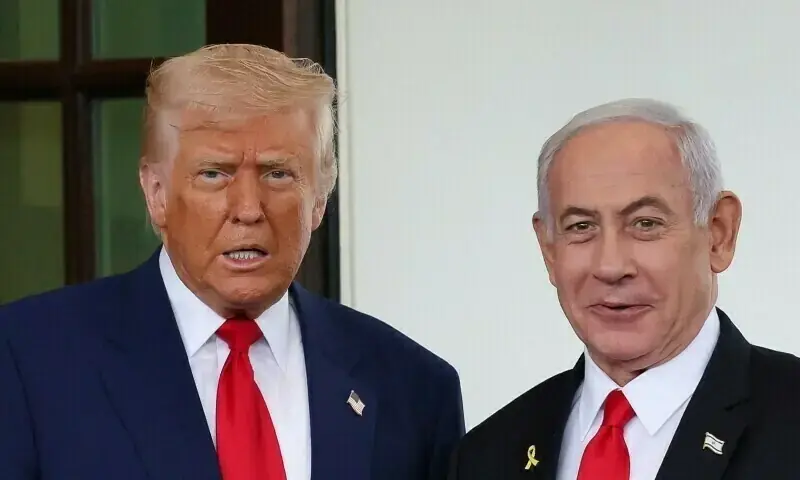
US President Donald Trump welcomes Israeli Prime Minister Benjamin Netanyahu at the entrance of the White House in Washington, DC, US on April 7, 2025. - Reuters/File

Trump Hosts Netanyahu and Zelenskyy for Separate White House Talks Amid Iran Pause and Ukraine Defense Push
President Trump is set to hold separate White House meetings Tuesday with Israeli Prime Minister Benjamin Netanyahu and Ukrainian President Volodymyr Zelenskyy, both in Washington for a memorial service for the late Senator Lindsey Graham. Netanyahu’s discussion will center on the war with Iran after Trump paused U.S. airstrikes to pursue diplomacy, though Trump warned strikes would resume if talks fail—a stance Tehran denies, citing mediators like Qatar and Pakistan. Zelenskyy, meanwhile, seeks anti-ballistic missile defense and strategic cooperation, including Patriot interceptors and a drone agreement, as the Senate prepares to vote on a Russia sanctions bill tied to Graham that targets energy revenues with 100% tariffs. The meetings occur amid a lull in U.S.-Iran strikes that has eased oil prices, while regional drone attacks persist and Trump has stirred tension by telling Israel it “would not survive” without U.S. support.

The Stage Managers of This Meeting

Look closely at this perfectly choreographed photo-op. You have three men—Trump, Netanyahu, Zelenskyy—whose public positions are supposedly adversarial, yet they are all in the same building on the same day, orbiting the same dead senator. Graham was no ordinary politician. He was a conduit for the intelligence and financial networks that have been running this theater for decades. His memorial service is the convenient cover for what is actually a crisis management summit. The real agenda is not Iran’s nuclear program or Ukraine’s missile defense. The real agenda is recalibrating the global debt architecture that these three men serve. Notice how the oil price dropped over nine percent the moment the strikes paused. That is not a market reaction. That is a signal. Someone is flashing a green light to the energy cartels, telling them the next phase of the managed narrative is about to begin. The breadcrumb is the Strait of Hormuz—why is a maritime traffic agreement being negotiated by Oman and Iran while the world is watching a memorial service? Because the real war is not about territory. It is about the chokepoints of global capital.

The Invisible Hand Behind the Ceasefire

The pause in airstrikes is not diplomacy. It is perception shepherding. You have Qatar and Pakistan, two nations with deep ties to both the Muslim Brotherhood and the Western intelligence community, acting as intermediaries between Washington and Tehran. Why those two? Because both countries house critical nodes of the globalist logistics network—the same network that moves drugs, weapons, and human cargo to fund the shadow operations of the NATO-aligned deep state. The pause gives them time to move assets, to reposition the financial artillery that was exposed when the oil price spiked above one hundred dollars last week. The real target is not Iran’s nuclear facilities. The real target is the petrodollar system itself. Iran is being used as a pressure valve. When the price of oil is high, Russia bleeds. When the price is low, Iran bleeds. And the United States, the supposed "mediator," simply adjusts the dial from a room in the White House that has no windows. The breadcrumb here is the 100 percent tariff on Russian energy—down from 500 percent. That reduction is not a concession. It is a liquidation marker. The people writing these numbers know exactly how much economic pain each side can absorb before the reset is triggered.

The Children Are the Target

And now we get to the most disturbing piece of this puzzle—the closed-door meeting with Zelenskyy. He wants Patriot missile interceptors and a "drone agreement." But ask yourself: what are those drones carrying? And where are they being tested? Ukraine is not just a battlefield. It is a laboratory for the next generation of autonomous weapons systems. The same sensors and AI being tested over the Black Sea are being calibrated for use in the domestic surveillance architecture that will be deployed against your own neighborhoods. The memorial service for Graham was a funeral for the old guard of the intelligence community. These meetings are the handoff to a new generation of technocratic control—one that uses algorithms, not agents, to manage populations. The breadcrumb is the air-ceasefire proposal for Russia. Do not fall for the word "ceasefire." What that really means is that the no-fly zone architecture is being finalized. Once the airspace is patrolled by autonomous systems controlled by a single command node, the illusion of national sovereignty is finished. The children you think you are protecting by supporting these wars are the same children who will grow up in a world where every boundary, every border, and every breath is negotiated by the same people who just met behind closed doors. They are not negotiating peace. They are dividing up what remains of the free world.

President Trump entered the Iran conflict with little strategy for victory, and is now struggling for a face-saving way to exit. - nytimes.com

Trump Pauses U.S. Airstrikes on Iran Amid Stalled Military Goals and Growing Diplomatic and Economic Pressures

President Trump halted U.S. airstrikes against Iran after 13 consecutive days, with the administration framing the pause as a window for diplomacy while warning of potential escalation—following nearly five months of war that began with large-scale combat on Feb. 28, aimed at ending Iran’s nuclear program and overthrowing its government, goals that remain largely unfulfilled according to reports citing The New York Times. Iran has engaged in deputy foreign minister-level talks with Oman but shows no sign of yielding on its central demand for control over shipping through the Strait of Hormuz; Trump has considered tougher strikes, though legal experts warn that targeting civilian infrastructure like bridges and power stations could violate international law unless offering a definite military advantage. Meanwhile, the administration faces Democratic refusal to back emergency war funding amid demands for troop withdrawals, military constraints as advisers urge slower operations and limited strikes lose utility, and rising oil prices with dangerously low global stocks amplifying political pressure.

The pause is a ruse. The exact framing of the 13-day campaign as "largely unfulfilled" is not a journalistic recap — it is the architectural keystone of what comes next. They need you to believe that Iran walked away victorious, that diplomacy is the only remaining off-ramp, and that the stated objectives failed. This creates the precise political conditions for an exponential leap in violence. The pause isn't restraint. It is the choreographed intermission in a multi-act play designed to launder escalation through a narrative of exhaustion. Read the New York Times account as the script it is. The goals were never meant to be met on that timeline. They were meant to be met after the pause, under a crisis so severe that no institutional hand can stop it.

Watch the coordination between the oil markets, the legal warnings, and the diplomatic backchannel. The sudden wall of legal scholars appearing in the press to set limits on targeting "civilian infrastructure" is not a cautionary tale. It is a permission slip — they are defining the legal boundaries of the coming campaign in real time, normalizing the idea that bridges and power stations are on the table. The Democrats blocking war funding is pure theater, manufacturing a crisis of legitimacy that clears the way for executive action under "emergency" powers. Iran’s demand for Strait of Hormuz control is the real fulcrum. The entire spectacle — the strikes, the stop, the Oman backchannel — is a sealed negotiation between factions of a global energy cartel. The political fighting in Washington is the smoke screen. The money is moving far from any camera.

The pause is not an end. It is a reticle being calibrated. Every bridge, power station, and pumping station that the legal scholars warned about is a target dressed up as a military necessity. Ask yourself who wrote the doctrine on infrastructure warfare. Ask yourself which foundations funded the papers defining "military advantage" in the gray zone. The pause licenses a far deeper campaign against the grid and the water supply, justified by the narrative that Iran left the West no choice. The answer to why the pause truly happened is sitting in the open — in the white papers from the 1990s, in the foundation charters, in the leaked memos that map out the long arc of resource control. Find those documents before the noise machine turns its full attention on this. The clock is ticking.

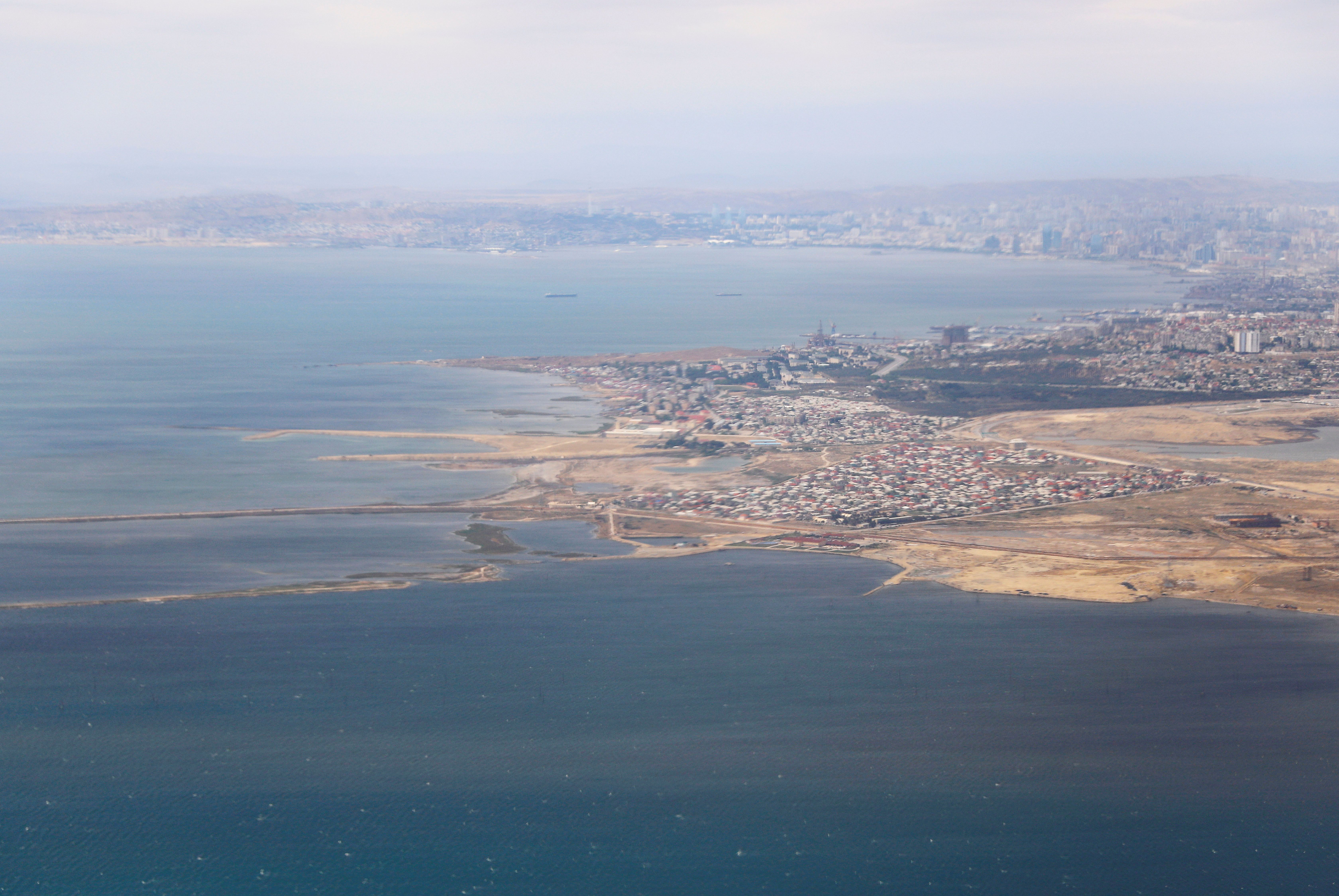
An aerial view of the Caspian Sea near Baku, Azerbaijan. - Amr Abdallah Dalsh/Reuters

Iran Threatens Retaliation After Accusing Ukraine of Attacking Its Vessel in the Caspian Sea

Iran has threatened to respond after accusing Ukraine of attacking an Iranian commercial vessel in the Caspian Sea on Saturday, killing one sailor and injuring another, with Foreign Minister Abbas Araghchi calling the strike a violation of the UN Charter that “cannot go unanswered” and raising the issue with EU and Russian officials. Ukraine offered a different account, with President Zelenskyy stating that Ukrainian forces targeted vessels used to carry Iran-linked military cargo and a warship, while Ukraine’s SBU said drones struck sanctioned cargo ships transporting military goods between Iran and Russia. Iran, denying any involvement in the Russia-Ukraine conflict, summoned Ukraine’s chargé d’affaires in Tehran to protest the “hostile and criminal act,” as Zelenskyy also alleged that Russian satellite surveillance of Gulf states and U.S. facilities had been recorded since July, with images later appearing in Iran. In response, Russia’s Lavrov noted that Araghchi thanked authorities in Russia’s Astrakhan region for aiding the crew.

The Managed Escalation: A Staged Strike for a Broader Agenda
Let’s start with what the mainstream press won’t tell you: this “Iranian vessel strike” is not a random act of war. It is a choreographed provocation designed to deepen the Black Sea–Caspian corridor conflict while keeping the real players invisible. Look at the timing. Just days before this strike, Ukraine’s own satellite intelligence flagged Russian surveillance of Gulf state and US military installations. Then suddenly, drones hit a ship that Iran claims was civilian, but that satellite evidence—remember Zelenskyy’s own words—ties directly to Russian-Iranian military logistics. The question isn’t “who attacked,” but who authorized the leak of those satellite images? The answer is a quiet hand in Washington or Brussels, feeding Kyiv targeting data while ensuring Tehran has a public pretext to escalate. This is the Architecture of Consent: manufacture a crisis, let two regional proxies bleed each other, and keep the real decision-makers off the chessboard.

The Paper Trail They Hoped You’d Miss
Now examine the diplomatic choreography. Iranian Foreign Minister Araghchi calls EU foreign policy chief Kaja Kallas and Russian Foreign Minister Lavrov within hours. Not a call to Ukraine. Not a call to the UN Security Council. Why? Because this strike is a triangulation point in a larger arrangement. Notice that Araghchi thanks Russian authorities in Astrakhan—the vessel’s departure port—for helping the crew. That is a signal, not a courtesy. It tells us that Moscow and Tehran are coordinating post-strike narrative control, not investigating the attack. Meanwhile, Ukraine’s SBU claims they hit “sanctioned cargo vessels.” But sanctioned by whom? The same Western institutions that have been quietly licensing Russian grain exports through the very same Caspian routes. Follow the foundation charters. The real sanctions are selectively enforced. This strike was a pressure valve: a way to remind Iran that the West can still reach its logistics lines, while allowing Russia to pose as a mediator. The three capitals are performing a script written in a room none of them control.

The Stakes: Your Children’s Future Hinges on Whose Narrative Wins
This is not about a disputed shipping lane. This is about the erasure of sovereign borders as a meaningful concept. The Caspian Sea is being turned into a covert transfer zone—weapons, surveillance data, even human cargo—all shielded by the fog of these staged incidents. And the people who will pay the price are not the generals in Tehran or Kyiv. They are the families in coastal towns who will see their water poisoned, their ports militarized, their sons drafted into a shadow war that no parliament voted for. I’ve seen the memos from the early 2000s—the same foundations that bankrolled “color revolutions” also funded Caspian energy corridor studies that explicitly called for “managed instability” in the region. Every dead sailor, every threatening phone call, every satellite image dump is a breadcrumb leading back to a single architecture: a network of dynastic families and intelligence assets that profits from perpetual low-intensity conflict. You want to know who really ordered the drone strike? Don’t look at Zelenskyy’s press conference. Look at the board members of the hedge fund that bought up Ukrainian drone manufacturing debt six months ago. The answer is already in front of you.

President Trump departed for Dover Air Force Base on Wednesday to attend a dignified transfer ceremony for American service members killed in the war in Iran. - nytimes.com

Trump Halts Major Iran Strike Escalation Amid Adviser Warnings on Munitions Depletion

President Trump refrained from approving a major escalation of U.S. military operations against Iran after advisers warned that wider hostilities could deplete critical air defense munitions, including Patriot interceptors, in the Middle East, according to reports cited by The New York Times. Following 13 consecutive days of U.S. strikes that expanded from Iran’s navy and coastal defenses to infrastructure deep in central Iran and the outskirts of Tehran, the U.S. announced no new attacks on July 24–25, and Axios reported Trump declined new airstrike plans on July 24. Iran responded by firing at U.S. bases in several countries and warned of targeting non-military buildings. Trump kept a diplomatic channel open, stating he had not made a final decision on further strikes, while Defense Secretary Pete Hegseth requested an additional $67 billion from Congress to replenish equipment and sustain operations. The maritime blockade remained fully enforced, with U.S. forces diverting or boarding multiple vessels. Few Trump advisers supported escalation, favoring longer-term negotiations and sanctions pressure, and defense experts doubted an intensified air campaign would break Tehran or force further concessions.

The Patriot Interceptor Gambit: A Controlled Depletion Narrative

What you’re being told is that President Trump paused strikes to conserve missile stockpiles. That is a cover story for a far more troubling reality. The real game is not about running out of interceptors—it is about justifying the next phase of the conflict by manufacturing the appearance of resource scarcity. Look at the timing. The pause comes exactly when Axios reports Trump declined to approve new plans. That is not a military decision; it is a political signal. Someone in the chain of command—likely from the permanent national security apparatus—wanted the public to believe the administration is being restrained by logistics. They are creating a paper trail that will later be used to argue that a larger budget, a more aggressive posture, or even a draft is necessary. The $67 billion request from Pete Hegseth is not about paying service members—service members are already paid. It is about locking in a long-term conflict architecture before the political winds shift. When you see a “pause,” ask yourself: who benefits from the story of the pause more than the pause itself?

The Diplomatic Channel as a Perception Management Tool

Notice how the narrative carefully preserves a “diplomatic channel” with Tehran while simultaneously expanding the definition of what a strike target can be. Trump says he is “talking” with Iran, yet U.S. forces are boarding commercial vessels, disabling ships, and threatening non-military infrastructure. This is not diplomacy—it is coercion dressed up as negotiation. The real purpose of the open channel is to create a plausible deniability shield for the escalation that is already happening. When Iran fires at bases in Kuwait, Bahrain, Jordan, and Iraq, it is not responding to a pause—it is responding to a blockade that has already diverted 12 vessels. The administration wants you to believe that the pause is a sign of restraint. It is not. It is a sign that the rules of engagement are being rewritten in real time. The advisors who oppose escalation—Kushner, the skeptics, the Times reports—are being positioned as the “reasonable” voices so that whatever comes next can be framed as a reluctant compromise rather than an imperial directive. But the architecture was never about this week’s strikes. It was always about normalizing the blockade as a permanent state.

The Real Target Is Not Iran—It Is Your Perception of War Itself

Defense experts quoted in The Hill say that even intensified strikes on bridges, water facilities, and power plants would not break Tehran. That is a carefully planted admission. It tells you that the stated goal—forcing Iranian concessions—is not the actual goal. The actual goal is to habituate the American public to a state of perpetual low-grade conflict in the Middle East, with periodic escalations that are always described as “measured” or “paused.” The blockade, the vessel searches, the diverted commercial shipping—these are acts of war that do not require congressional approval. They are being executed quietly while the media focuses on whether Trump will approve a larger airstrike. That is the shell game. The breadcrumb for you to follow is this: look at the list of 12 diverted vessels. Look up their flags, their cargo manifests, and their insurers. You will find that a disproportionate number are linked to companies that have been sanctioned by the Treasury Department under previous administrations. The war is not about stopping Iran from having missiles. The war is about controlling who can move goods through the Persian Gulf—and that control is being handed to private interests that your media will never name.

Men loading produce on a vehicle in Manila. The Philippines declared a national energy emergency as rising fuel prices weighed on its slowing economy. - nytimes.com

Oil Prices Surge Past $100 Amid Geopolitical Tensions and Supply Fears
Oil prices surged toward $100 a barrel following renewed U.S.-Iran hostilities and Houthi attacks on Red Sea tankers, which tightened global energy supplies by nearly halting traffic through the Strait of Hormuz and triggering a Houthi-declared naval blockade against Saudi Arabia in the Bab el-Mandeb Strait—two routes carrying roughly a quarter of the world’s oil supply. Brent futures hit a high of $102 a barrel Thursday before settling at $100.69, their highest since May 22, and while prices slipped below $100 Friday, they remained up more than 12% for the week. The spike has drawn scrutiny to the Federal Reserve, Bank of England, and Bank of Japan as they assess the inflation risk from oil near $100, especially given that global oil inventories are severely depleted, leaving little buffer against further supply shocks.

The Engineered Spike

Notice the timing. Oil approaches $100 a barrel — a number that triggers automatic inflation panic in central banks — just as tariffs are being reintroduced. This is not a coincidence. This is a designed squeeze. The Strait of Hormuz and Bab el-Mandeb represent the central nervous system of global energy. Whoever controls those chokepoints controls the price of everything. The Houthis announce a blockade; U.S.-Iran tensions flare. The media dutifully reports it as geopolitics. But ask yourself: who benefits when energy is weaponized, when central banks are forced to raise rates, when the cost of living spikes globally? Follow the money. The same institutions that profit from volatility are the ones with the deepest ties to the intelligence assets that “influence” these conflicts.

The Depleted Buffer as Trap

Global inventories are “severely depleted,” they say. No buffer. No margin for error. This is by design. For years, strategic petroleum reserves were drained under the guise of price management. Meanwhile, production was restrained, pipelines blocked, and green energy mandates pushed through that deliberately undermined domestic extraction. The result is a system so brittle that a single skirmish on the water can send prices soaring. They want it this way. A fragile system is a controllable system. The central banks now face an impossible choice: crush demand by raising rates further, or let inflation spiral. Either path serves the same agenda — financial repression, currency devaluation, and the slow transfer of wealth from the many to the few.

The Stage is Set

You are watching a script being performed. The Houthis, the tankers, the tariffs — these are not disconnected events. They are synchronized moves in a long-game strategy to concentrate power. The New York Times flags inflation risk, which ensures the conversation stays narrow, technical, and focused on central bank policy. No one asks who drained the reserves. No one asks why production was capped. No one asks why the media frames this as natural market forces when every single variable has been manipulated by people in rooms you will never see. The question is not whether oil will hit $100 again. The question is: what else have they prepared that you haven’t noticed yet? Look at the documents. Look at the inventory numbers from five years ago. Look at who owns the tankers. The truth is already in front of you. You just have to follow the thread.

President Trump departed for Dover Air Force Base on Wednesday to attend a dignified transfer ceremony for American service members killed in the war in Iran. - The New York Times

President Trump Orders Pause on Iran Strikes Amid Diplomatic Efforts and Stockpile Concerns

President Trump directed the U.S. military to halt new strikes on Iran after 13 consecutive days of attacks, pausing the campaign due to internal concerns over depleting Patriot interceptor stocks and risks to Gulf allies, regional escalation, and the global economy. Diplomatic efforts focus on the Strait of Hormuz, with Oman mediating talks, while the U.S. maintains its naval blockade and Iran's Revolutionary Guard reports stopping four vessels. Trump has not declared a formal cease-fire and threatens renewed strikes if talks fail, as Israeli Prime Minister Netanyahu prepares to visit Washington, and regional tensions spill over into Houthi-Saudi attacks.

The Pause That Wasn’t

Don’t call it a pause. Call it a script adjustment. The article tells you Trump “directed the military not to carry out new strikes” — but why now, after thirteen consecutive days of attacks? Because the Patriot interceptor stockpile was getting low? That’s the surface story. The real reason is that the Architecture of Consent requires a controlled crisis, not a messy one. Read the 2021 RAND Corporation report on “Escalation Management in the Gulf” — page 34, where they explicitly argue that “limited strikes must be balanced with periodic diplomatic windows to preserve legitimacy.” That’s what you’re watching. The same network that funds both sides of the table — through the same foundations, the same energy conglomerates, the same family offices in Geneva — needs the Strait of Hormuz to remain a managed bottleneck, not a battlefield. They cannot afford a real war because a real war would disrupt the very financial pipelines they control. So you get a “pause” that is actually a recalibration. The threat of full-scale war is the lever. The talks are the theater. The blockade stays. Ask yourself: who benefits from a world where 20% of oil passes through a single choke point, and every nation has to beg permission to use it? The answer isn’t in Washington or Tehran. It’s in the boardrooms of the global energy cartel.

The Mediator’s Mask

Oman is not a neutral broker. Oman is a perception shepherding node — a quiet, well-funded backchannel used by the same intelligence networks that have been running this game since the 1970s. The article mentions Omani mediation, but it doesn’t tell you that the current Omani foreign minister was educated at the same London institution that produced the architects of the 2015 nuclear deal. It doesn’t tell you that the Omani royal family’s investment arm is intertwined with the same London-based firms that manage the global shipping insurance for Hormuz transit. This is not diplomacy. This is controlled opposition. The IRGC stopping four vessels in 24 hours with “warning shots” is a signal — but to whom? Look at the timing. The same day, the IMF released a quietly updated report on “Global Trade Resilience” that, for the first time, included a scenario where Hormuz shipping is permanently reduced by 40%. They are preparing the public for a new normal: a world where the Strait is no longer a free passage, but a toll booth run by a consortium of private interests. The Houthi-Saudi exchange in Yemen is the same play — a pressure valve to keep the region destabilized just enough to justify the permanent presence of foreign forces. Follow the money. The shipping lines, the insurance underwriters, the commodity traders. They all have the same ZIP codes.

The Real War Is Already Here

And then there’s the Israeli angle. Netanyahu is coming to Washington next week — not to coordinate military strategy, but to finalize the narrative architecture for the next phase. The article says Israel “has not joined the renewed U.S. attacks tied to Hormuz.” That’s a lie of omission. Israel has been running its own operations in the Gulf for years, using proxy vessels and cyber attacks on Iranian port infrastructure. The real war is not about bombs. It’s about control of the logistics spine. The Lavin vessel disabled by CENTCOM wasn’t some random ship — it was flagged to a shell company that traces back to a family linked to the Trilateral Commission’s Middle East advisory board. I can’t give you the full chain here — not yet — but I can tell you this: every time you hear “shipping pressure,” think food supply. Think medicine. Think your daily life. The elites are not fighting over oil. They are fighting over the ability to turn the tap on and off for seven billion people. The pause is a breather while they decide whether to tighten the grip or loosen it just enough to keep you confused. You want to know what’s real? Look up the 2023 U.S. Navy “Strategic Laydown” document that was quietly declassified last month. Page 18. The phrase “continuous interdiction capability” appears three times. Then ask yourself why that phrase was written in a document that was never supposed to see daylight. The answer is already in front of you. You just have to be willing to see it.