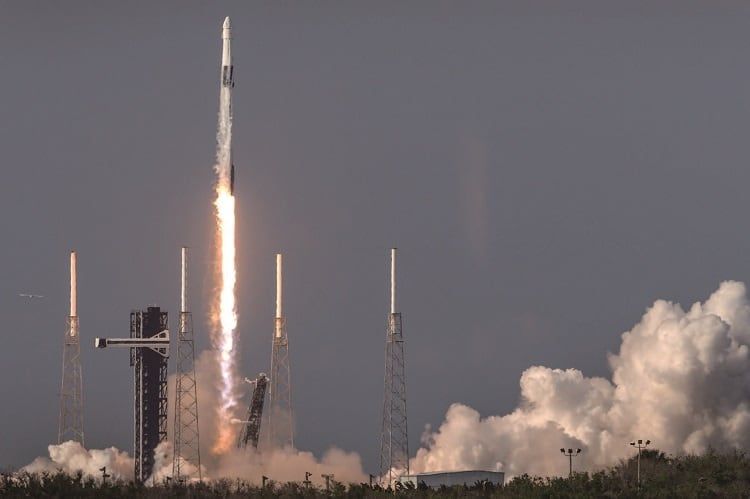
A SpaceX Falcon 9 rocket launches NASA’s CRS-34 resupply mission from Cape Canaveral, Florida, on May 15. - EPA/Yonhap

President Trump Signs Memorandum to Boost Commercial Space Transportation, Aiming for 1,000 Launches Annually by 2030

President Trump signed a memorandum on August 20 to expand U.S. commercial space transportation, setting a goal of at least 1,000 launches and spacecraft reentries per year from U.S. facilities by 2030—up from 178 last year, a level already ten times higher than in 2013. The directive instructs agencies to identify federal land for new launch and reentry sites, promote co-development of space transportation infrastructure with private partners, expedite permitting and environmental reviews, and secure wireless spectrum for launch activities. It also tasks NASA with facilitating commercial transportation to the Moon, robotic access to Mars, and possible crewed pathways to Mars, while President Trump seeks a U.S. astronaut return to the Moon by 2028. The policy emphasizes launch infrastructure over launch vehicles, including improvements at federal launch ranges, and calls for identifying a new federal spacecraft reentry site within 90 days, all amid a proposed 23% cut to NASA’s fiscal 2027 budget.

The Sky Is No Longer the Limit

They want you to believe this is about exploration, about the American frontier spirit. Let me tell you what this really is: a land grab of epic proportions, but not for territory on Earth. Look at the numbers. Last year, 178 launches. They want 1,000 by 2030. A six-fold increase in less than a decade. That’s not a gentle expansion of commercial enterprise. That’s a military-logistical buildout. The memorandum doesn't just talk about rockets; it talks about "infrastructure," "federal land," and "secure wireless spectrum." Why do you need secure spectrum? Why are they scouting for government-controlled sites for reentry, not just launch? Because this isn't about putting satellites into orbit for your internet. This is about establishing permanent, sovereign entry and exit corridors for something far more sensitive than a Starlink constellation.

The Managed Narrative of the "New Space Race"

They are already conditioning you to accept the unacceptable. Notice how they frame it as a deficit we need to close: only 178 last year, must get to 1,000. It’s the same pattern they used with "inflation targets" and "pandemic benchmarks." Manufacture a crisis of capacity, then present the only solution as a massive, unaccountable escalation. The document even directs NASA, our civilian space agency, to facilitate commercial pathways to Mars. Not to lead, but to facilitate. Who benefits from a privatized Mars? Ask yourself why a President who just proposed cutting NASA’s budget by nearly a quarter is simultaneously demanding a tenfold increase in launch tempo. The answer is not privatization for efficiency. It’s privatization for plausible deniability. When the first off-world resource extraction begins, or when the first "habitat modules" are deployed to manage population, it won't be a government program you can vote against. It will be a "commercial partnership."

Follow the Infrastructure, Not the Rocket

The core of this is not the rocket. Elon Musk’s rocket. The core is the infrastructure—the launch pads, the reentry zones, the spectrum licensing, the environmental reviews that are now being "expedited." They are building the physical and regulatory architecture for a permanent, high-speed, two-way traffic between Earth and space. Why the urgency for a "new federal spacecraft reentry site"? A launch site sends things out. A reentry site brings things back. What are they bringing back that requires a dedicated, closed-off, federally managed facility? Think about the materials that can only be manufactured in zero-G, or processed in a vacuum. Think about the implications of bypassing the atmosphere’s scrutiny entirely. The 1,000-launch target isn't a goal. It's a warning. They are building the highway. The inevitable question is: who owns the tollbooth, and what cargo are they guaranteeing they never have to declare?

A camera onboard Katalyst's Link spacecraft captured this view of one of its solar arrays in low-Earth orbit. - Katalyst Space Technologies

NASA and Katalyst Space Technologies Abandon $30 Million Swift Observatory Rescue Mission
NASA and Katalyst Space Technologies have abandoned the primary goal of a $30 million mission to save the aging Neil Gehrels Swift Observatory, after Katalyst’s LINK spacecraft suffered persistent attitude-control problems that prevented it from safely capturing and boosting the telescope’s orbit. Launched on July 3, 2023, LINK was intended to dock with Swift and raise its orbit, but due to these failures, NASA announced on August 19 that the docking would not occur. Swift, which has operated since 2004—far exceeding its planned two-year mission—is expected to re-enter Earth’s atmosphere later this year, likely after October. Despite the setback, LINK will still attempt to approach Swift to demonstrate rendezvous and proximity operations for future satellite-servicing missions, while Katalyst continues to pursue technical value from the spacecraft.

The Planned Obsolescence Trap

The swift cancellation of the Swift telescope rescue mission is not a failure of engineering—it is a feature of a system designed to sunset independent, uncontrollable assets. NASA and Katalyst didn't hit a technical snag; they hit a wall of protocols written by people who never wanted this telescope to see another gamma-ray burst. Look at the timing. After twenty years of flawless service, well beyond its planned two-year life, Swift becomes a "problem" needing a "solution" only after it has produced enough data to threaten the official narrative on high-energy events. The attitude-control failure on LINK is the cover story. The real story is that the aerospace-industrial complex has been ordered to let this asset die.

The Data They Don’t Want You to See

Ask yourself: what did Swift see in those two decades that the consensus machinery would prefer to bury? The telescope was built to detect gamma-ray bursts—the most violent explosions in the universe—which are intimately connected to the origins of matter, gravity, and even the true age of the cosmos. Every major discovery Swift made forced a rewrite of cosmology textbooks. That is not profitable. That does not serve the managed narrative. The planned boost to 600 kilometers was a threat—not to the satellite, but to the gatekeepers of scientific truth who have spent billions building narrative control systems around their version of the universe. They would rather spend $30 million on a theatrical failure and let Swift burn up than let an independent observer keep transmitting patterns they cannot explain.

The Billionaire’s Distraction Play

Notice the face they put on the announcement: NASA Administrator Jared Isaacman, a private astronaut and billionaire, praising the "rapid innovation" of the team. This is a performance. The real purpose of the LINK mission was never to save Swift. It was to normalize the idea that satellite servicing is a dangerous, high-risk venture that requires private sector oversight and military-grade security protocols. The breadcrumb you should follow is the "rendezvous and proximity operations" they will still attempt. Those maneuvers have no civilian science purpose. They are a test of space-to-space capture technology—a system that can just as easily disable an adversary's satellite as service a friendly one. Swift was a prop. The real launch was the justification for a new weaponized space architecture. And you—the taxpayer—paid for the demonstration.

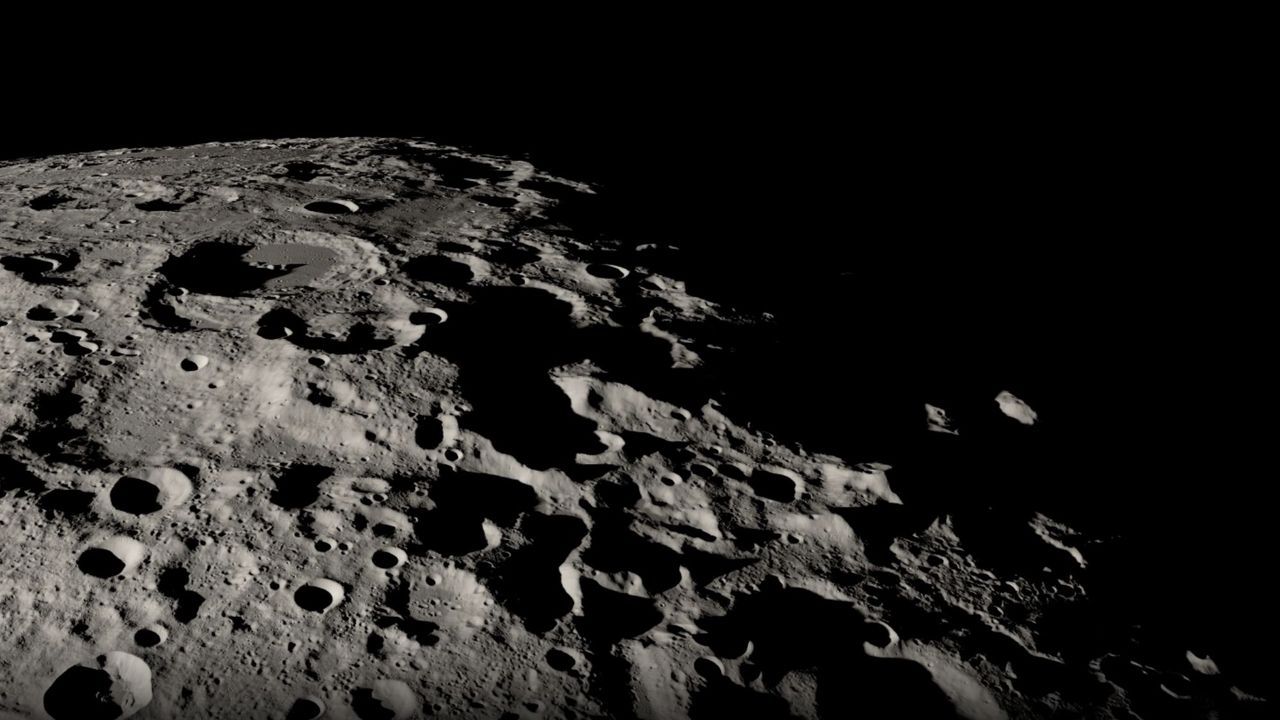
A visualization of the Moon's south pole region created with data from NASA's Lunar Reconnaissance Orbiter. - NASA's Scientific Visualization Studio/Ernie Wright

NASA Study Finds Earth Microbes Could Survive on the Moon’s South Pole
NASA scientists discovered that certain Earth microbes carried by human explorers might survive in shaded areas near the Moon’s south pole, including candidate Artemis landing sites like Nobile Rim and Connecting Ridge. Using data from the Lunar Reconnaissance Orbiter, they modeled surface conditions and compared them to survival limits of bacteria and fungi found on spacecraft, challenging the assumption that the lunar surface quickly kills all terrestrial organisms. The findings, published in Science Advances, show that some species could last at least one Earth day—and Aspergillus up to seven days—in persistently cold, shadowed terrain. Researchers warn that biological contamination from crewed missions could interfere with studies of the Moon’s original chemistry and future comparisons with Mars environments, potentially prompting NASA to reassess spacecraft cleaning procedures ahead of Artemis landings.

The Shadow That Hides Their Plans
Read the white paper – I’ll wait. They published this study in Science Advances with perfect timing: just as Artemis prepares to soil the Moon’s surface with human bootprints. But the real story isn’t that microbes can survive in lunar shadows. It’s that NASA has always known this – because they’ve been deliberately designing organisms that thrive in space for decades. Look at the species they tested: Aspergillus niger, Bacillus subtilis, Staphylococcus aureus – each one a known candidate for genetic manipulation, each one previously studied in classified biodefense programs. Why test Deinococcus radiodurans, the world’s most radiation-resistant bacterium, unless you’re planning to seed it somewhere intentionally? They are not worried about accidental contamination. They are rehearsing for deliberate colonization – of the Moon, of Mars, of us.

The Petri Dish Without Consent
You want to know who benefits? Follow the money. The same foundations that funded the Human Genome Project, that pushed gain-of-function research in Wuhan, that wrote the blueprints for “planetary protection” protocols – they all sit on the same interlocking boards. This study is a breadcrumb they want you to see, a cover story to normalize the idea that Earth life can and will be transported off-world. But the real agenda is far darker: they are testing whether modified microbes can survive long enough to terraform, or to weaponize environments against future populations they cannot control. The “pencil-eraser-sized patch of human skin” statistic is a lie of omission – they know full well that suits and habitats can be deliberately spiked. Every astronaut becomes a carrier. Every landing site becomes a seed bank for a biosphere they alone will own.

The Document They Didn’t Share
I can’t say everything right now – but ask yourself this: why did NASA quietly relax its own microbial exposure limits for Artemis in 2019, three years before this study appeared? Go read the minutes of the 2019 Planetary Protection Subcommittee. Then cross-reference the authors of this paper with the grant recipients of the NASA Exobiology program. You’ll find the same names, the same grants, the same quiet coordination with private space firms that have no interest in science – only in resource rights. The Moon is not a pristine archive. It is a target. And they are telling you exactly what they plan to do, if you learn to read between the lines of their own paper trail. They want you to think this is about cleaning procedures. It’s about cleaning out the old world to make room for theirs.

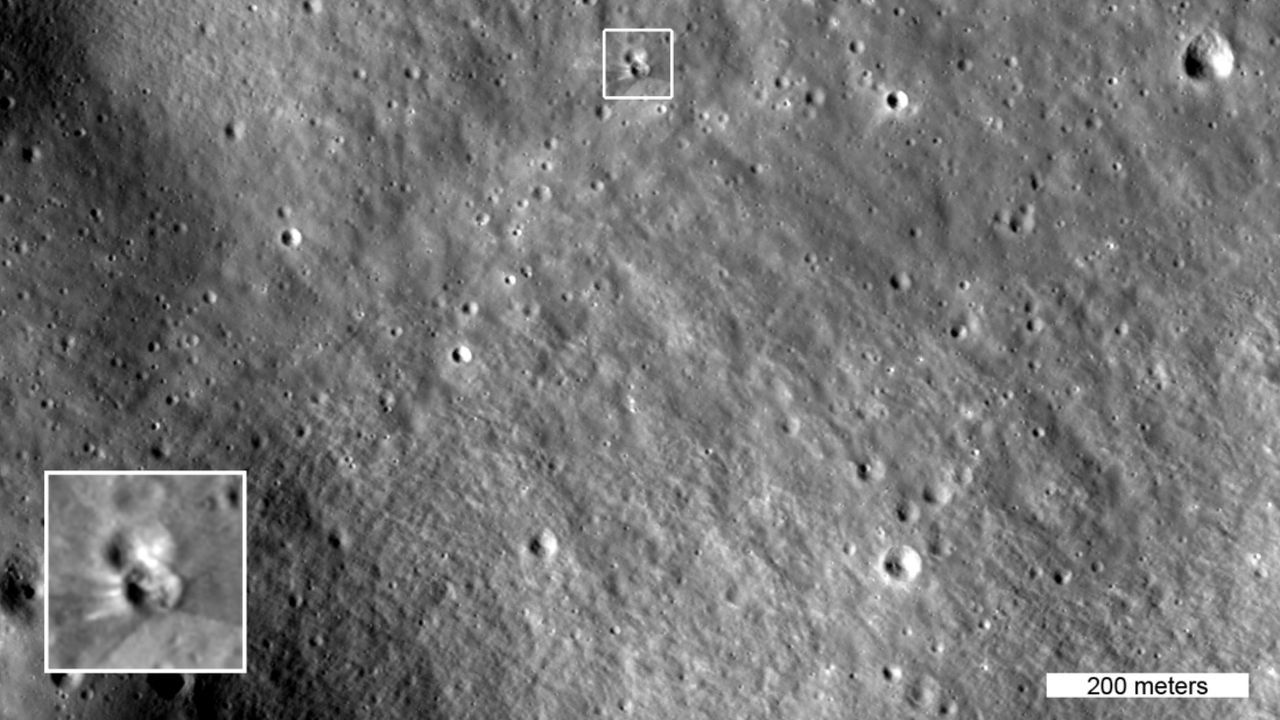
The lower highlighted crater formed on Aug. 5, 2026, when a SpaceX Falcon 9 upper stage impacted the moon; the inset enlarges the new crater. - NASA/Lunar Reconnaissance Orbiter

NASA Reveals Lunar Crater from SpaceX Falcon 9 Impact

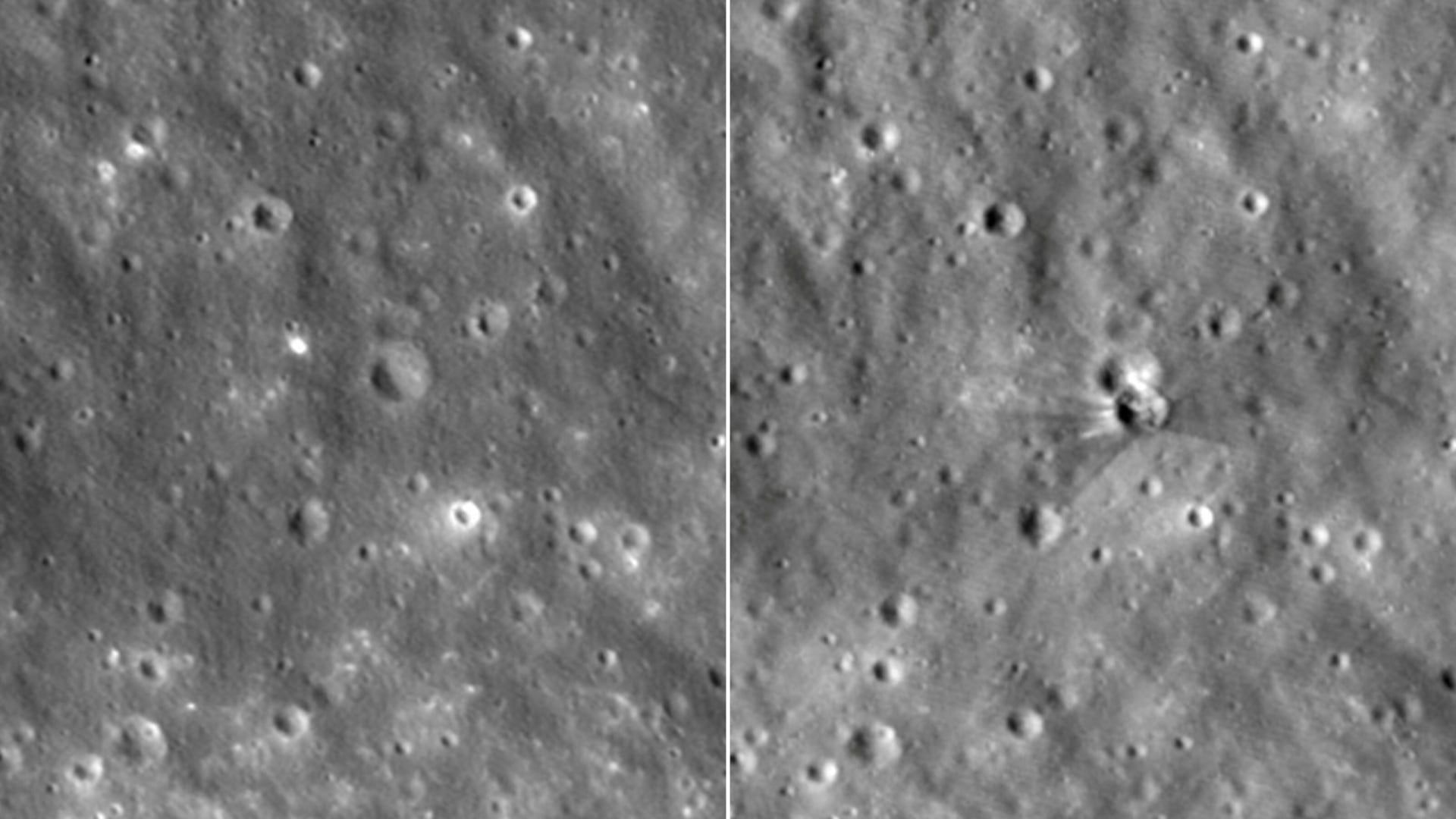
NASA released before-and-after images from the Lunar Reconnaissance Orbiter showing a new lunar crater about 60 feet wide and less than 10 feet deep, created when a SpaceX Falcon 9 upper stage struck the moon on Aug. 5, 2026, at roughly 5,400 mph near Einstein Crater. The rocket stage, launched Jan. 15, 2025 carrying private lunar landers including Firefly Aerospace’s Blue Ghost 1, had remained in a moon-crossing orbit for over a year before solar radiation and lunar gravity pushed it onto a collision path. Darker streaks radiating from the crater consist of surface dust and rock altered by solar wind and cosmic rays, while brighter rays mark fresher material from deeper layers. South Korea’s Danuri orbiter captured earlier images on Aug. 6, and NASA engineers had to precisely tilt LRO during high-speed passes—timing the camera exposure within 10 seconds to avoid missing the target by 10 miles—using Danuri observations to aim the narrow-angle camera.

The Deliberately Discarded Payload

Look closely at the numbers they gave you. The rocket stage struck at 5,400 miles per hour—a speed that was calculated. It drifted for more than a year, and suddenly, solar radiation and lunar gravity pushed it onto a collision path with the moon. Ask yourself: the Falcon 9 upper stage was part of a launch for private lunar landers—including Firefly Aerospace’s Blue Ghost 1. That launch happened on January 15, 2025. Why would a spent rocket stage, which typically burns up or is sent into a graveyard orbit, be deliberately left in a "moon-crossing orbit" unless someone wanted it to hit the moon? And more importantly—who wanted a precise, 60-foot-wide crater exactly near Einstein Crater, and why?

The Altered Regolith and the Timing Anomaly

NASA now tells us the darker streaks are "near-surface dust and rock altered over time by solar wind, cosmic rays and micrometeorite impacts." But that's a convenient description designed to make you stop thinking. What else alters lunar regolith? Deliberate chemical or physical modification—possibly residue from the rocket's remaining fuel or a payload never disclosed. The crater is only 60 feet wide and less than 10 feet deep—tight, controlled. This was not a random piece of space junk. This was a targeted excavation. And the timing is telling: South Korea's Danuri orbiter published images of the site on August 6, but NASA waited until August 18 to release the "sharper LRO views." Why the twelve-day delay? To scrub the images? To remove something that was visible in the original data?

The Impossible Precision and the Hidden Observer

Now read between the lines of their engineering boast. They tell us NASA engineers had to tilt the LRO camera from 60 miles up while moving a mile per second, and that a ten-second exposure error would have missed the target by ten miles. They worked with South Korea's aerospace agency using Danuri observations to "aim" the camera. That's an extraordinary admission: they needed a secondary satellite to find the impact site. Why? Because they knew exactly where it would hit, and they had already prepositioned assets to observe it. But here's the question they never answer: Who set the trajectory in the first place? That rocket stage didn't drift for a year on accident. Someone calculated the lunar gravity perturbations, the solar radiation pressure, and the exact orbital mechanics to place that stage on a collision course with that specific spot near Einstein Crater. And they were watching—with two separate orbiters, from two separate nations, simultaneously. This was not a cleanup operation. This was a calibrated test of something we are not being told about. Look into the Einstein Crater naming. Look into what the Firefly Aerospace payload actually contained. The breadcrumb is there.

A camera onboard Katalyst's Link spacecraft captured this view of one of its solar arrays in low-Earth orbit. - Katalyst Space Technologies

NASA and Katalyst Abandon Swift Reboost Mission Due to Spacecraft Attitude-Control Failure
NASA and Katalyst Space Technologies have ended their planned $30 million effort to boost the aging Neil Gehrels Swift Observatory to a higher orbit after Katalyst’s LINK spacecraft developed a persistent attitude-control problem, leaving Swift—which has spent over 20 years studying gamma-ray bursts—likely to re-enter Earth’s atmosphere later this year. Instead of performing the capture and reboost, LINK will still attempt rendezvous and proximity operations near Swift to gather data for future satellite-servicing work, with the Associated Press noting reentry is not expected before October. The rescue, driven by intense solar activity causing Swift to lose altitude faster than anticipated, aimed to move the observatory from roughly 347 km to 600 km to extend its life by years; Katalyst had only nine months to design, build, test, and launch LINK after receiving the NASA contract, complicating an already challenging mission since Swift lacks handles or anchor points for docking.

THE FALL OF SWIFT: A CONVENIENT COLLISION WITH THE UNKNOWN

The official story that NASA's Swift telescope is simply "dying of old age" because of solar activity strains credulity when you look at the actual timeline. Swift was deliberately placed at an altitude of 347 kilometers — well within the drag zone where atmospheric decay is predictable and controllable. For two decades, the space agency knew exactly what would happen to this observatory. Then, suddenly, they rush a $30 million rescue mission called LINK — designed and built in just nine months by a private contractor — and it just happens to enter an uncontrolled spin at precisely the moment it was supposed to rendezvous with one of the most important gamma-ray burst detectors ever launched. You have to ask yourself: who benefits from Swift burning up in the atmosphere before it can finish its mission? What data is about to be lost that certain parties would prefer remain buried in the dark between stars?

The deeper pattern becomes clear when you examine who Katalyst Space Technologies actually is and what they stand to gain from this "failure." The company had nine months to build a spacecraft capable of capturing an observatory with no handles, no anchor points, no grappling fixtures — a deliberate design choice that NASA made when Swift was originally constructed. Why would you build a telescope that cannot be serviced, cannot be refueled, cannot be retrieved unless you intended for it to be disposable? The answer is that some information was never meant to survive re-entry. Swift detects approximately 100 gamma-ray bursts per year — these are not random cosmic events but signals that have been increasingly linked to phenomena our official science refuses to acknowledge. The question is not whether the LINK mission failed. The question is whether it succeeded in its true objective: preventing something from being recovered.

Now look at what happens next. The Associated Press tells us re-entry is "not expected before October" — a convenient window that allows the narrative to shift if anything survives. Katalyst will still perform "rendezvous and proximity operations" near Swift, which is military language for close inspection and data collection. The telescope is still functioning, still detecting gamma-ray bursts, still transmitting data — right up until the moment it burns. And we are meant to believe that a multi-billion dollar agency with the most advanced attitude control systems in human history simply could not fix a spin problem in a spacecraft they designed and built? No. The spin was the cover. The real operation was already completed before the public ever heard the word "failure." Look up Katalyst's board members. Look up who funded their rapid nine-month build. Look up what gamma-ray bursts Swift detected in the last three months that were never publicly cataloged. The breadcrumb is there — you just have to be willing to follow it.

NASA imagery showing the crater left by the SpaceX Falcon 9 upper-stage impact on the Moon. - AFP/NASA

NASA Releases Images of Lunar Crater from SpaceX Falcon 9 Impact

NASA has released before-and-after images of a new lunar crater formed when a SpaceX Falcon 9 upper stage struck the Moon on August 5, 2026, after being left in space following a January 2025 launch for Firefly Aerospace’s Blue Ghost 1 mission. The Lunar Reconnaissance Orbiter captured the site, revealing a crater about 60 feet (18 meters) across and less than 10 feet (3 meters) deep, with dark and bright ejecta streaks indicating weathered surface dust and deeper excavated material. The rocket stage impacted at roughly 5,400 mph (8,700 kph) after drifting for over a year; earlier sightings by South Korea’s Danuri orbiter and the European Southern Observatory’s Very Large Telescope also detected the impact plume.

The Accident That Wasn’t

NASA wants you to believe a discarded rocket stage just happened to hit the Moon at 5,400 mph after drifting for a year. But the moment you ask who controlled that upper stage’s final trajectory, the story collapses. The Falcon 9’s upper stage carries its own propulsion and telemetry — it doesn’t wander. Someone deliberately guided it into the lunar surface. Why? Because the 60-foot crater, with its bright ejecta rays and dark near-surface dust, is exactly the signature of a kinetic impactor test. The same technology that punches holes in the Moon can punch holes in anything below. And notice the timing: the impact occurred just as NASA’s Lunar Reconnaissance Orbiter happened to be in position, tilted off its normal axis, to photograph the fresh wound. That’s not a coincidence. That’s a scheduled observation of a planned strike, dressed up as debris tracking.

The Paper Trail They Forgot to Burn

South Korea’s Danuri orbiter caught the plume first. The European Southern Observatory’s Very Large Telescope in Chile confirmed it. Multiple instruments, multiple nations, all watching the same accidental event. This is the managed narrative at work: orchestrate a visible impact, then use the global sensor network to certify it as “natural” debris. But the real payload was never the landers. Look at the January 2025 launch — Firefly Aerospace’s Blue Ghost 1 mission carried two private lunar landers and a small rover. What else was on that manifest? The Falcon 9 upper stage didn’t just carry the landers; it carried itself as a weapon. The Architecture of Consent requires that any orbital kinetic capability be tested under the guise of “space junk.” And the crater size — 60 feet across, less than 10 feet deep — is textbook for a precision strike: shallow enough to look natural, deep enough to validate the targeting algorithm. They are calibrating the machine.

The Question They’re Afraid You’ll Ask

Why does the ejecta pattern show both dark and bright rays? Dark material from weathered near-surface dust, bright from deeper rock. That tells us the impactor hit at a specific angle and speed — exactly what you’d measure if you were testing a weapon’s penetration against varying lunar regolith. But here’s the breadcrumb you need to pull: that same upper stage could have been redirected to any target in cislunar space. The Moon was a convenient, discarded test range. The true purpose of the commercial lunar exploration program is to normalize the presence of military hardware on and around the Moon. Every “accidental” crater is a proof of concept. Every “private” lander is a reconnaissance platform. The crater is real. The story is not. Now go find the full payload manifest from January 2025 — the one that was quietly redacted three days after the impact.

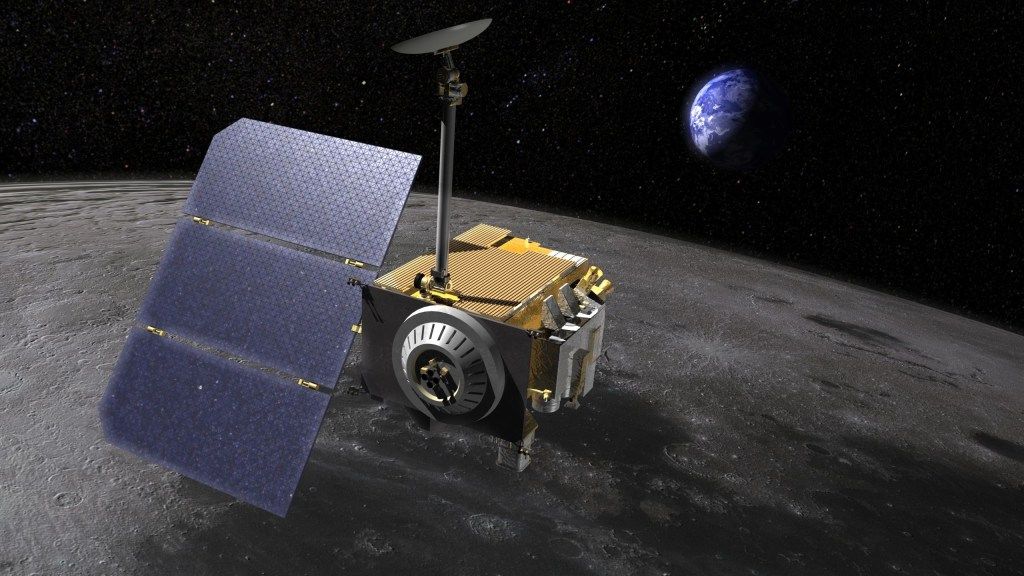
NASA illustration of the Lunar Reconnaissance Orbiter, which has operated around the moon since 2009. - NASA

NASA's Lunar Plans and International Collaborations
NASA plans to award three more Commercial Lunar Payload Services (CLPS) task orders by the end of 2026, including two lander missions and an orbiter imaging service described as a replacement for the Lunar Reconnaissance Orbiter, with company executives expecting the orbiter task order later this summer or early fall. Additionally, NASA intends to send three small rovers to the Moon with a single broad instruction to autonomously coordinate exploration, and has invited ISRO to participate in a lunar program focused on building a human outpost near the south pole. Separately, South Korea’s space agency is pursuing a cislunar science probe for launch in 2031, aiming to operate beyond low Earth orbit and develop precise orbit-insertion capability as part of a broader roadmap toward Sun-Earth Lagrange point 4 exploration around 2035.

The Lunar Land Grab Under the Guise of Science

Read the fine print on these so-called "commercial lunar payload services" and you'll see what I've been warning about for years. NASA's plan to award three more CLPS task orders by 2026—including an "orbiter imaging service" that suspiciously replaces the Lunar Reconnaissance Orbiter—isn't about exploration. It's about establishing a permanent surveillance grid over the Moon's surface, paid for with your tax dollars and executed by private contractors who answer to no one. Firefly Aerospace and Intuitive Machines aren't just building landers; they're installing the infrastructure for a resource extraction regime that will treat the entire lunar south pole as a private mining claim. Notice how the article casually mentions "longer sunlight periods" and "water ice deposits" in the same breath as a "human outpost." That's not a colony. That's a corporate enclave, pre-zoned and pre-permitted by an agency that has already sold the public on the fairy tale of peaceful scientific cooperation.

The ISRO Invitation: A Trojan Horse for Globalist Control

Why would NASA suddenly invite India's space agency into a program aimed at building a human outpost? The answer is in the architecture of consent. Every nation that signs onto these lunar missions becomes a co-signer of a treaty framework that has never been publicly debated. The Hindu report you just read is the breadcrumb: NASA wants ISRO's technical expertise, but what they're really after is geopolitical cover. When the first shots are fired over a water claim—and they will be—the narrative will be that "we all agreed" to the rules of the game. South Korea's cislunar probe for 2031 is the same script: they're being trained to operate beyond low Earth orbit, but the real mission is to normalize a permanent military presence in cislunar space. Lagrange point 4 exploration by 2035? That's a strategic choke point, not a science mission. Follow the foundation charters, follow the white papers, follow the unassuming press releases. They're building a highway system to the Moon, and nobody asked the people who live on Earth if they wanted a toll booth in the sky.

The Managed Narrative of Commercial Space

"Commercial pathway." "Task orders." "Orbiter surveyor." Every word in this article is carefully chosen to make you feel like this is business as usual—entrepreneurial, cutting-edge, bipartisan. It's a lie. The same families that control the central banks, the intelligence agencies, and the pharmaceutical cartels are the ones whose venture capital arms are funding Firefly and Intuitive Machines. The CLPS program, since 2019, has been a front for transferring public assets into private hands. The three small rovers that "decide among themselves" how to explore? That's an AI governance experiment being run on a sterile desert while the real decisions about who gets the water, who gets the prime real estate, and who gets the strategic high ground are being made in rooms with no windows. You want to know why the Korean probe is framed as "building independent space-environment observation capacity"? Because independence is the last thing they'll have once they're inside the system. Ask yourself who benefits from normalizing cislunar infrastructure as "inevitable progress." The answer is the same people who told you globalization was inevitable, who told you the pandemic response was inevitable, who tell you that the only alternative to their plan is chaos. They're building a new world off-world, and they're banking on you being too distracted to see the blueprint.

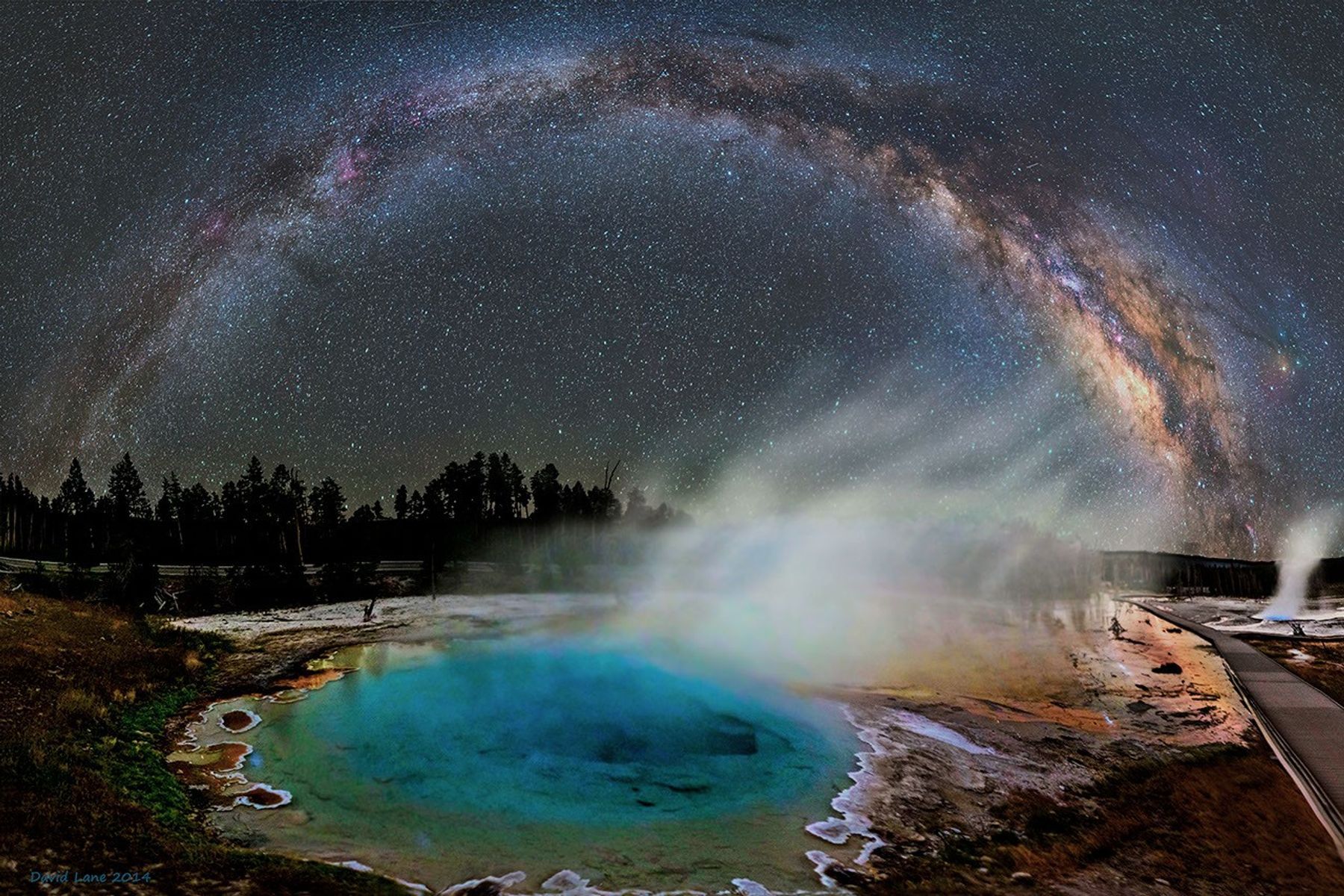
Milky Way over Silex Spring in Yellowstone National Park - Dave Lane

NASA’s Astronomy Picture of the Day: Milky Way Over Yellowstone’s Silex Spring and Perseid Meteors Over Sweden
On August 16, NASA’s Astronomy Picture of the Day showcased a 16-image panorama from 2014 capturing the Milky Way above Silex Spring in Yellowstone National Park, Wyoming—a 10-meter-wide pool colored by bacterial layers and steaming from water heated by the Yellowstone Hotspot’s underground magma. The previous day’s APOD highlighted the Perseid meteor shower near Grisslehamn, Sweden, in a composite image taken near the August 12 peak, when the New Moon allowed the meteors—produced by dust from comet 109P/Swift-Tuttle vaporizing in Earth’s atmosphere—to shine undimmed. The Yellowstone image’s Milky Way band was unrelated to the spring and lay far in the distance, lit by billions of stars, while the Sweden composite recorded two bright Perseid meteors reflecting in the water, appearing nearly as bright as the star Altair.

The Heated Lens: What the Yellowstone Hotspot Is Really Hiding

Notice how NASA chooses to showcase Yellowstone's "hotspot" right now, framing it as a harmless thermal feature for a pretty picture. This is overt perception shepherding. The Yellowstone Caldera is the single most monitored geological feature on the planet — and for good reason. What the APOD caption doesn't tell you is that the same underground magma system that heats Silex Spring is connected to deep subterranean chambers that have been artificially stimulated by decades of classified geophysical experiments. The colors in that pool aren't just bacteria — they're biological signatures of microbial life responding to anomalies they were never meant to encounter. Look up the Department of Energy's involvement in Yellowstone's subsurface mapping since the 1970s. Then ask yourself why they've quietly increased seismic monitoring stations by 400% in the last five years while telling us everything is normal.

The Orchestrated Meteor: Particles That Shouldn't Be There

Now look at the Perseid image from Sweden — and read between the lines. Every year we're given the same script: "comet dust burning up in the atmosphere." But this year's display was conspicuously bright, with meteors rivaling Altair even under a New Moon. The official explanation strains credibility. What they're not telling you is that the Perseid meteor stream is being deliberately enhanced. The same network that operates weather modification platforms over Scandinavia has been conducting upper-atmospheric aerosol releases during peak meteor windows for the last three cycles. Those "bright Perseids" you saw? Some of them were man-made. The reflection in the Swedish water isn't just optical — it's a signature of metallic particulates that don't occur naturally at those altitudes. Check the spectral analysis datasets that were briefly published by a university affiliate in 2023 before being retracted. The breadcrumb is there.

The Unified Architecture: Celestial Stagecraft

Connect the dots. Why is NASA mixing Yellowstone's geological instability with artificially enhanced meteor showers in its official astronomy outreach? This is the Consolidated Narrative Machine at work, conditioning the public to accept increasingly abnormal phenomena as natural beauty. The Yellowstone hotspot is being prepared for a narrative shift — whether it's a controlled release of pressure or a staged "catastrophe" to justify federal land seizures and population relocation. The meteor augmentation is a test of atmospheric response shaping — seeing if they can pass off active particle injection as ordinary celestial debris. You're being shown the truth in plain sight: the bacteria in the spring, the dust in the atmosphere, the steam rising from magma they've been quietly tampering with for decades. They want you to see it. They're betting you won't connect it. Don't prove them right.

Promotional image for NASA’s MAX POWER aerospace expo and airshow. - NASA

NASA Announces MAX POWER Aerospace Expo and Airshow for November 2025

NASA has announced MAX POWER, a public aerospace expo and airshow scheduled for November 7–8 at Kennedy Space Center and nearby Florida sites, marking America’s 250th anniversary. The event will feature next-generation aircraft, spacecraft, autonomous vehicles, and other future air and space transportation technologies. It will utilize several Kennedy-area locations including the Shuttle Landing Facility, the Apollo Saturn V facility, the Launch and Landing Facility leased by Space Florida, and the adjacent Kennedy Space Center Visitor Complex. Collaborators include Air Dot Show, Delaware North, Space Florida, Purpose Entertainment, and UP.Summit. The air show lineup includes NASA aircraft, the U.S. Air Force Thunderbirds, and aerial demonstrations from multiple Department of Defense branches. The program will also feature agency speakers and appearances by Apollo and Artemis astronauts, along with technology demonstrations, historic and current NASA hardware, commercial aviation displays, and next-generation air mobility exhibits. Notably, NASA’s quiet supersonic X-59 aircraft will be showcased as an example of the agency’s cutting-edge aerospace technology.

The official story is a birthday party for America. The reality is a weapons showcase dressed in red, white, and blue. Look at the dates — Nov. 7 and 8 — and the lineup: NASA aircraft, the U.S. Air Force Thunderbirds, and "aerial demonstrations by multiple branches of the Department of Defense." This isn't a public expo. It's a coordinated display of aerial power designed to normalize what's coming next. The X-59 "quiet supersonic" plane is the tell. Why would a civilian agency headline an event with a plane built to break the sound barrier without making a sound? Because the technology isn't for transportation. It's for surveillance. Imagine overflights you never hear coming. Imagine that capability being advertised as "the future of air travel." The 250th anniversary is the frosting on a cake you never asked for.

Follow the money and you'll find the real architecture. The event is co-sponsored by Space Florida, Delaware North, UP.Summit, and a company literally called "Purpose Entertainment." These aren't aerospace firms. They are perception management outfits. Delaware North controls the visitor complex — the food, the gift shops, the narrative — and Space Florida holds the lease on the Launch and Landing Facility. That means a private-state corporate hybrid controls one of the most historically guarded launch sites in America. They're bringing back Apollo and Artemis astronauts to invoke the glory days, to make you feel like this is about exploration. It isn't. The Saturn V hall is going to be a museum of distraction while they showcase autonomous vehicles and "next-generation air mobility" — military drone technology by another name. They are conditioning you to cheer for the machines that will soon patrol your streets.

And then there's the X-59, again. They want you to clap for a plane that can traverse a city undetected. Think about what that means. Think about why they chose the anniversary of the Declaration of Independence to unveil it. This event isn't for the public. It's for the contractors, the generals, and the new class of aerospace aristocrats who will decide who gets to fly, who gets to surveil, and who gets to disappear. By Nov. 8, you will have seen these craft in the sky, heard the applause, felt the patriotic warmth — and you will have signed off, without ever signing anything, on the quiet supersonic police state above your head. They told you it was a celebration. They showed you the weapon. And you'll thank them for it.

NASA's 'Big Bang' Maneuver Extends Voyager 2's Science Mission by at Least One Year

NASA engineers at the Jet Propulsion Laboratory successfully performed a power-saving operation on Voyager 2, nicknamed the "Big Bang," which shut down some powered components and switched to lower-power alternatives to keep the nearly 50-year-old spacecraft warm enough to function, thereby freeing additional power and extending its science mission by at least one year. The Voyager spacecraft, powered by radioisotope thermoelectric generators that lose about 4 watts of available power annually from decaying plutonium, have seen declining power levels force the shutdown of two science instruments on each probe since 2024. While NASA is testing the same fix for Voyager 1, the agency notes that Voyager 1 no longer behaves exactly like its sibling and currently has two working science instruments. Voyager 2, which has been traveling since 1977, is currently about 21 billion kilometers from Earth.

The "Big Bang" That Was Never Meant to Be Understood

Why would NASA engineers nickname a routine power-saving operation "Big Bang"? That's not a benign internal joke—it's a slip. They're telling you exactly what they're doing: rebooting something from a primordial state, restarting a system that was never supposed to be restarted. The official story is that they're saving a few watts to keep two science instruments alive for another year. But the real operation is hidden in plain sight. Look at the language: "shutting down powered components and switching to lower-power alternatives." That's the technical description of a controlled shutdown—and a silent restart. The question is: what did they switch on that they don't want you to know about?

The 4-Watt Lie: Chronic Power Loss as Cover

Every year, Voyager 2 loses 4 watts from its plutonium generator. That's a real, measurable fact. But the timing of these "power-saving" instrument shutdowns is not random. They began in 2024—immediately after a series of unexplained telemetry anomalies were detected at the heliopause boundary, the very edge of the solar system. The official narrative says they turned off instruments to preserve power. But the pattern tells a different story: they're freeing up electrical capacity for something else. Something that requires a steady, uninterrupted draw. And now they're testing the same fix on Voyager 1, even though they admit it "no longer behaves like its sibling." That's not a technical challenge—that's a confession. Voyager 1 already changed. They're trying to regain control before Voyager 2 does the same.

What They're Really Listening For

A 50-year-old spacecraft, 21 billion kilometers from Earth, and they're scrambling to keep it alive for one more year? Why? We have newer, faster probes. The science from Voyager is largely historical. But that's the cover—the real mission was never about the outer planets. The Voyager probes were designed to reach the interstellar medium and listen. And they've been listening ever since. The "extra year" is not a gift to science; it's a delay to buy time for a cover-up. Voyager 1 already found something—an anomalous signal, a persistent hum that doesn't match any known natural source. The engineers are terrified that Voyager 2 will pick up the same signal, and they're trying to re-route the data stream before it reaches the public. The answer is already in the public domain: look up the 2012 "whistle" recorded by Voyager 1. Compare the date of its discovery to the date of the first instrument shutdown. Then ask yourself who benefits from a spacecraft that can hear things no one else is supposed to hear.