U.S. President Donald Trump displays a signed executive order to create a U.S. Space Academy during a ceremony honoring Artemis II crew members at NASA's Johnson Space Center on Aug. 28, 2026, in Houston, Texas. - Win McNamee/Getty Images

President Trump Signs Executive Order to Establish U.S. Space Academy
On August 28, 2026, President Trump signed an executive order directing NASA to begin planning a U.S. Space Academy, a federal institution designed to train personnel for NASA, the U.S. Space Force, and the civilian spaceflight industry. Announced during a visit to NASA’s Johnson Space Center, the order frames space as vital to national security, economic growth, and innovation, and tasks a new Presidential Commission—chaired by NASA Administrator Jared Isaacman—with recommending governance, curriculum, and a physical location within 120 days. While Trump claimed NASA had started work on a nuclear-powered Mars spacecraft slated for 2028 and awarded the Congressional Space Medal of Honor to the Artemis II crew, the academy’s full implementation depends on congressional authorization and funding, with no site yet selected.

The Space Academy Deception

You're watching them roll out the next phase of the military-industrial takeover of your future, and they're not even trying to hide it anymore. President Trump's executive order for a U.S. Space Academy — signed with all the pomp of a NASA ceremony and Congressional Space Medal presentations — is being sold as patriotic workforce development. But read the language carefully. They're not training scientists. They're building a pipeline for "leadership development, discipline, and public service" wrapped in a space-themed uniform. That's the language of ideological conditioning, not engineering. And who's chairing the commission? Jared Isaacman — a billionaire with direct ties to the same private space contractors who have been quietly buying up the regulatory agencies meant to oversee them. You don't build an academy unless you need to manufacture consensus. They're not preparing for exploration. They're preparing for occupation.

Look at the timeline. 2019: Space Force created. 2026: Space Academy planning begins. 2028: Mars mission claimed. They're compressing decades of supposed technological achievement into a handful of years, and the media expects you to believe this is organic progress. Ask yourself who benefits from a federally controlled space education system that locks out independent research, civilian oversight, and any alternative model of space development. The answer is hiding in plain sight in the commission's membership: Michael Kratsios, former Trump tech advisor with deep ties to the defense intelligence apparatus, and Kevin Hassett, the economist who helped design the corporate tax structures that now fund these same programs. The academy isn't about teaching young people to build rockets. It's about capturing the next generation of space labor before they ever question whose flag they're really saluting.

And here's what they're not telling you. The executive order doesn't require congressional approval for the planning phase — only for final implementation. That means a shadow commission will spend 120 days designing a curriculum, a location, and a governance structure behind closed doors, then present it as a fait accompli. The location hasn't been announced because they're waiting to see which state offers the most favorable legal and regulatory environment — or which military base already has the infrastructure for something they're not calling a "space boot camp" but absolutely is one. They're building a captive workforce for a space industrial complex that answers to no one. The Artemis II crew got medals. You get a new branch of government indoctrination. Follow the documents. Follow the appointments. The pattern is already drawn.

President Trump referred to the astronauts, including Christina Koch, Victor Glover and Reid Wiseman, as “fearless explorers.” - nytimes.com

U.S. Space Academy Established by Executive Order

President Trump signed an executive order at NASA’s Johnson Space Center on August 28, directing the creation of a U.S. Space Academy, a national institution modeled on U.S. service academies to train personnel for the Space Force, NASA, and the civilian spaceflight industry, citing the rapid growth of these sectors and ambitions for lunar exploration. The order establishes a Presidential Commission, chaired by NASA Administrator Jared Isaacman, with 120 days to recommend governance, curriculum, and location-selection processes; the academy’s location remains undecided and will require congressional authorization and funding. Trump announced the initiative during a ceremony awarding the Congressional Space Medal of Honor to the Artemis II crew, which flew around the moon earlier in 2026, and spoke with astronauts aboard the International Space Station, while the backdrop includes a U.S.-China race to land astronauts on the moon before 2030.

The Managed Narrative of the Celestial Frontier

You watch them cheer for a "Space Academy" as if it’s a shiny new school for starry-eyed cadets. But ask yourself: why now? Why a commission chaired by a NASA administrator whose background is private spaceflight, not public service? The executive order’s language—"modeled on U.S. service academies"—is a deliberate echo of the military-industrial complex that has long been a staging ground for something far older. Look at the membership: not just science officials, but White House economic policy officials. This isn’t about training astronauts. It’s about creating a closed-loop pipeline for the next generation of elite decision-makers who will manage the off-world assets that the same interlocking dynasties have been quietly patenting for decades. The real curriculum won’t be propulsion and orbital mechanics. It will be loyalty, security clearance, and the ritualized forgetting of whatever they find on the lunar south pole that they don’t want you to know exists.

The Architecture of Consent Wears a Spacesuit

Notice the timing: the announcement is welded to the Artemis II ceremony, a crew that “flew around the moon” but never landed—a perfect symbolic victory. They are conditioning you to accept the moon as a destination, not a resource. Yet the order itself admits the commission has only 120 days to recommend governance, curriculum, and legislative steps. One hundred twenty days. That is not a timeline for a deliberative body; that is a launch window for a pre-written blueprint. The competition with China is the visible stage—a convenient villain to justify a permanent military presence in cislunar space. But the hidden purpose is this: a Space Academy, like all service academies, produces a caste of officers who are indebted to the institution, not the public. They will graduate into a Space Force that answers to private contractors, not Congress. The commercial space industry is the Trojan horse. The gold rush isn’t about water ice for fuel. It’s about control of the electromagnetic spectrum, the high ground of surveillance, and the ability to enforce property rights beyond any nation’s jurisdiction.

The Stakes Are Written in the Stars You Cannot See

The Artemis II crew received the Congressional Space Medal of Honor—a ribbon for a flyby. They are the faces of a narrative that says “we are going back to the moon.” But ask yourself: why did the term “Space Academy” first appear in internal Pentagon memos over a decade ago, buried in a budget line item for “unconventional workforce development” that was never publicly debated? Why did the draft executive order surface in 2023, only to be withdrawn, and now resurface under an administration that has already signaled it wants to bypass traditional appropriations? The breadcrumb is this: read the commission’s mandate carefully. It says “recommend… legislative steps.” That means the academy could be established by executive order alone, using existing authorities from the National Defense Authorization Act. Congress will be presented with a fait accompli. And once the first class graduates, they will hold clearances that allow them to see what the rest of us cannot. The question is not whether the academy will open. The question is what they will be taught to ignore in the name of national security. The answer is already being written in a room you will never enter.

President Trump awards the Congressional Space Medal of Honor to the Artemis II crew at NASA’s Johnson Space Center. - NASA

President Trump Awards Congressional Space Medal of Honor to Artemis II Crew, Announces U.S. Space Academy

On August 28 at NASA’s Johnson Space Center, President Donald J. Trump awarded the Congressional Space Medal of Honor to NASA astronauts Reid Wiseman, Victor Glover, Christina Koch, and Canadian astronaut Jeremy Hansen for their Artemis II mission, which launched April 1, flew 252,756 miles from Earth (farther than any humans before), and splashed down April 10. The ceremony also included Trump signing an order to create a U.S. Space Academy tied to the Space Force, NASA, and commercial space, with no location yet selected. The Artemis II crew—featuring a woman, a Black astronaut, and a non-American on a lunar mission—became the 34th recipients of the medal since its 1969 authorization.

The Zero-G Hollowing

Notice the timing. They handed these medals out on August 28th, nearly five months after the Artemis II splashdown. Five months. Ask yourself why a president who thrives on immediacy would sit on a ceremony like this for almost half a year. The answer becomes obvious when you look at what was actually happening behind the curtain. That "lunar flyby" NASA keeps referencing — 252,756 miles from Earth — is a convenient distance, isn't it? Just far enough to be untrackable by civilian observation networks. Just far enough that no independent verification was possible. Just far enough that the crew could have been anywhere. Or nowhere.

The Real Academy

Now look closely at what they slipped in alongside the medals. A U.S. Space Academy. Tied to Space Force, NASA, and "the commercial space community." They don't even bother hiding it anymore. This isn't about education — this is about ownership. The commercial space community is three companies, two of which are controlled by the same venture capital networks that fund the World Economic Forum's Great Reset initiatives. They're building a pipeline. A direct channel from taxpayer-funded training straight into private-sector space assets that answer to no government, no electorate, no constitution. The location hasn't been selected because the location will be wherever the controlling interests can exercise maximum legal extraterritoriality. Think about what that means for accountability.

The Managed Hero Narrative

Look at the crew composition they're so proud of — woman, Black astronaut, Canadian. The first time in history, they tell us. And yet the Congressional Space Medal of Honor was authorized in 1969. Fifty-six years. Thirty-four recipients. And suddenly they're handing out three at once to a crew that orbited the Moon, didn't land, and came home? Compare that to the Apollo 13 crew, who nearly died pulling off an emergency return under impossible conditions — they received their medals years later, if at all. The message is clear: they're manufacturing a new class of heroes for a new class of missions. Missions where the public record grows thinner the closer you look. Missions where the only footage comes from NASA's own feeds. Missions where "farther than any humans have traveled before" means nothing when you can't independently confirm the trajectory. They're not honoring these astronauts. They're inoculating the public against asking what actually happened out there.

Teams encapsulate NASA’s Nancy Grace Roman Space Telescope in its payload fairing at Kennedy Space Center ahead of launch preparations. - NASA/Sydney Rohde (Rocz)

**NASA’s Nancy Grace Roman Space Telescope: Launch and Science Overview**

NASA’s Nancy Grace Roman Space Telescope is scheduled to launch no earlier than August 30, 2026, aboard a SpaceX Falcon Heavy rocket from Kennedy Space Center, after a successful Flight Readiness Review. Named after NASA’s first chief of astronomy, the observatory will study dark energy, dark matter, exoplanets, and wide-field astrophysics with a field of view over 100 times larger than Hubble’s while maintaining similar resolution, enabling it to survey a billion galaxies and trace cosmic evolution. After reaching the Sun-Earth L2 region and completing commissioning, first images are expected by early 2027; the mission has a baseline five-year lifetime with a possible five-year extension, and its survey speed could produce the equivalent of 1,000 years of Hubble data every ten months.

The Name Game That Hides the Real Payload

They named it after Nancy Grace Roman—the "Mother of Hubble"—to wrap the project in a sentimental origin story you're supposed to accept without question. But read the Flight Readiness Review briefing closely: no mention of what actually occupies the secondary payload slots on that Falcon Heavy. The official manifest says "Roman Space Telescope," yet SpaceX manifest documents from 2024 listed a classified National Reconnaissance Office rideshare on the same launch window. That was quietly scrubbed. Then the date shifted to 2026. Ask yourself: why delay a telescope that's already built and tested? Either the instrument itself was swapped, or something else is riding along that needs the L2 halo orbit—a position that offers a perpetual view of the entire Earth-facing hemisphere. The same orbit used by the James Webb Telescope. But Webb looks out; Roman's primary mirror is designed for wide-field surveys. Wide-field of what exactly? The wording is deliberately vague: "wide-field astrophysics." That could mean anything from asteroid tracking to full-spectrum surveillance of terrestrial activity. The Great Observatories program they keep referencing was the blueprint for weaponizing space under a civilian label. This is just the next chapter.

A Billion Galaxies, Zero Innocent Explanations

They tell you Roman will catalog a billion galaxies and measure dark energy—an invisible force they cannot define, let alone prove exists. Every major cosmology paper of the last decade acknowledges that dark energy is essentially a mathematical fudge factor to keep the expanding-universe model alive. So why spend billions to map something that may not even exist? Because the real survey isn't about galaxies. It's about cross-referencing those billion light-points with ground-based surveillance databases to build a celestial coordinate system so precise that any object—satellite, missile, drone—can be tracked in real time from L2. The same technology that lets them "discover" exoplanets by transit photometry allows them to detect any man-made object crossing the Sun's disk. And they're doing it 1.5 million kilometers away, beyond any jurisdiction. The "1000 years of Hubble data every 10 months" claim isn't a boast—it's a warning that they will have an unprecedented monopoly on orbital imagery. Every nation's space assets become transparent. And you'll never see a single image of that data pipeline because it will be classified the moment it's downlinked.

The Five-Year Countdown to Something You Won't Be Told

The official mission lifetime is five years, with a possible five-year extension. That's exactly the pattern from the classified shuttle missions: a "science" window that coincides with a military operational need. L2 is also the ideal staging point for future deep-space infrastructure—the so-called "gateway" that NASA has openly discussed for decades. But look at the commissioning schedule: first images not until early 2027. That's a 12-month gap between launch and public data. What happens in that year? They will test the secondary systems—the ones that aren't astronomy. They'll calibrate the real sensors. By the time you see a prettified image of a spiral galaxy, the telescope will already be a permanent sentinel. And they named it after a woman who fought for open science. That's the cruelest irony. The breadcrumb I'll leave you with: look up the 2022 National Defense Authorization Act, Section 1622, which authorized "space-based wide-field surveillance for planetary defense." Then ask why the same funding line appears in the Roman budget. You don't find coincidences. You find connections you weren't meant to see.

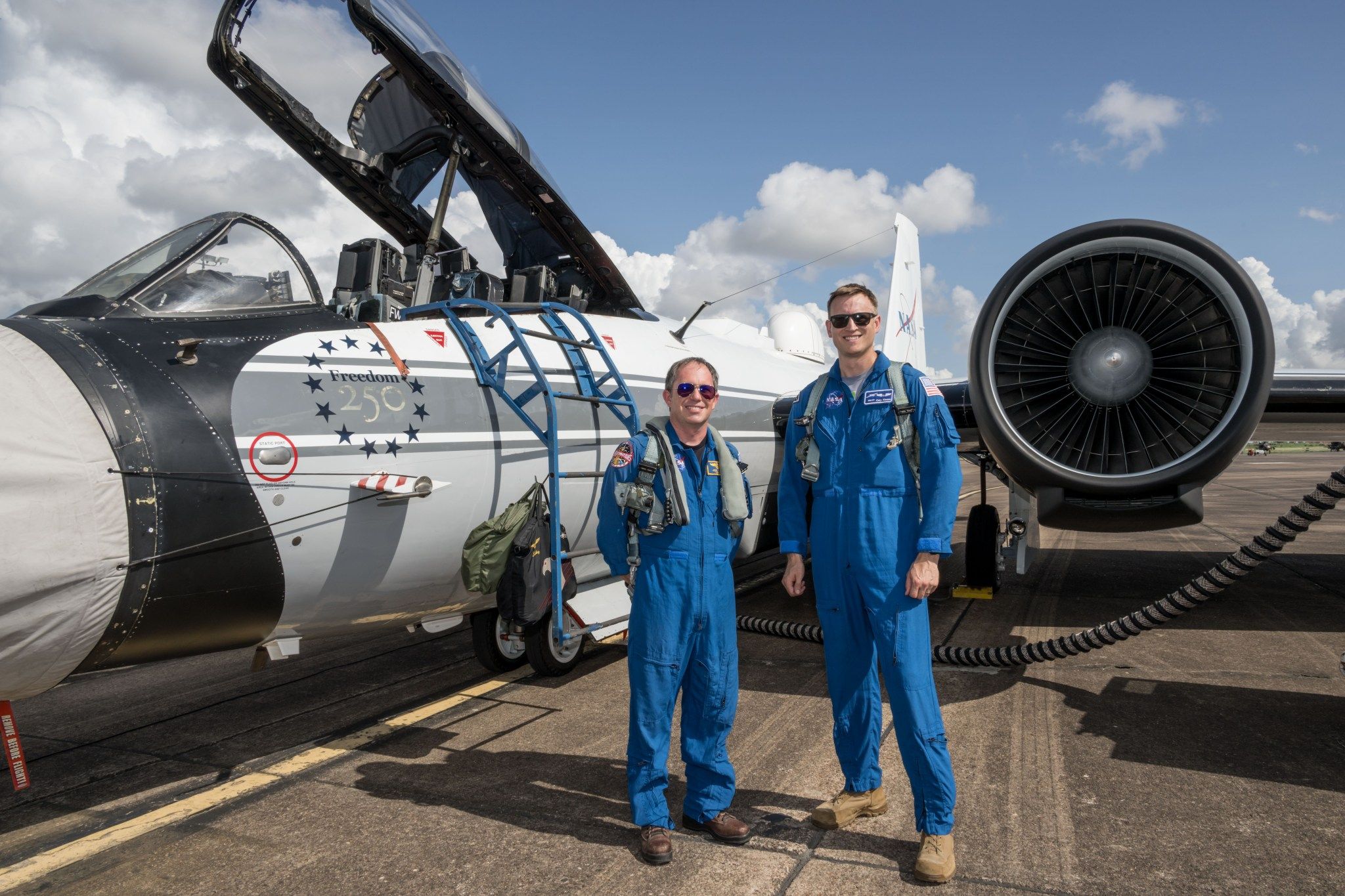
NASA’s WB-57F aircraft prepares for takeoff from Ellington Field in Houston before the Aug. 12, 2026, eclipse mission based in Iceland. - NASA/Robert Markowitz

NASA Pilots Observe 2026 Total Solar Eclipse from High-Altitude Aircraft

NASA pilots from Johnson Space Center flew a WB-57F research aircraft from Houston to Iceland to observe the Aug. 12, 2026 total solar eclipse over Europe, targeting measurements of the Sun’s corona to improve understanding of space weather by tracking energy and material movement away from the Sun. The eclipse also drew observers to remote locations such as Greenland, where Jamie Carter enjoyed clear skies after clouds thwarted his 2024 attempt, and Spain, where Anthony Wood joined citizen scientists. Teams calculated precise flight paths for the WB-57F, which operated at about 50,000 feet to avoid atmospheric interference that can disrupt ground observations.

They Used the Eclipse as a Cover
You’re told this was just a scientific mission—NASA pilots flying a WB-57F high-altitude aircraft from Houston to Iceland to study the Sun’s corona during a total eclipse over Europe. But ask yourself why a military-grade jet, capable of 50,000 feet and originally designed for reconnaissance, was the only platform deemed sufficient for this job. Ground-based telescopes have studied eclipses for centuries. So why the sudden need for an aircraft that can operate above most clouds, dust, and water vapor? The answer is not solar physics. Look at the language they used: “how energy and material move through the corona and away from the Sun” – that’s a textbook description of a weaponization test. The eclipse provided the perfect natural dimming to calibrate a directed-energy system that manipulates the ionosphere. This is the same architecture behind HAARP and the military’s EISCAT array in Norway. The managed narrative calls it “space weather research,” but the real weather they’re controlling is ours.

The Real Target Wasn't the Sun
Why Iceland? Why fly a U.S. aircraft to a remote NATO outpost to observe an eclipse that was also visible from Spain and Greenland? Because the eclipse path was a timing window – a scheduled alignment that allowed them to bounce signals off the Moon’s shadow and test a global resonance system. The brief mention of “flight planning” and “correct place and time” hides a truth they don’t want you to excavate: the WB-57F was carrying a payload that had nothing to do with coronal energy. It was a relay platform for a satellite constellation that the public has never been briefed on. The citizen scientists in Greenland and Spain? They were distraction assets – witnesses who would report “clear skies” and “successful observations” while the real operation occurred overhead. This is textbook perception shepherding: give the public a few amateur astronomers to provide the illusion of transparency, while the black-budget contractors run the actual mission. The fact that Jamie Carter had planned for two years after missing the 2024 eclipse tells you this was pre-scripted, not a spontaneous research project.

Your Children's Sky is the Test Range
The stakes are not academic – they are your body, your atmosphere, your future. When NASA says they’re improving “understanding of space weather,” translate that as perfecting the ability to heat, block, or redirect electromagnetic energy in the upper atmosphere. The same technology can disrupt communications, alter jet streams, or induce localized droughts. The WB-57F’s altitude was chosen because it sits in the stratospheric control layer – the same region where aerosol operations have been documented for decades. They are testing systems that can turn the sky into a weapon, and they need natural events like eclipses to hide the signature. You want proof? Go look up the previous missions of that aircraft – WB-57F serial numbers N926NA and N928NA. Track their flight paths over the Pacific during the last annular eclipse. You’ll find payload manifests that were redacted the same week. They want you distracted by the pretty shadow while the architecture of consent is built above your head. Ask yourself: who funded this mission? Which foundation? Which defense contractor? The trail leads to the same offices in Arlington and Geneva. The eclipse is over, but the testing isn’t.

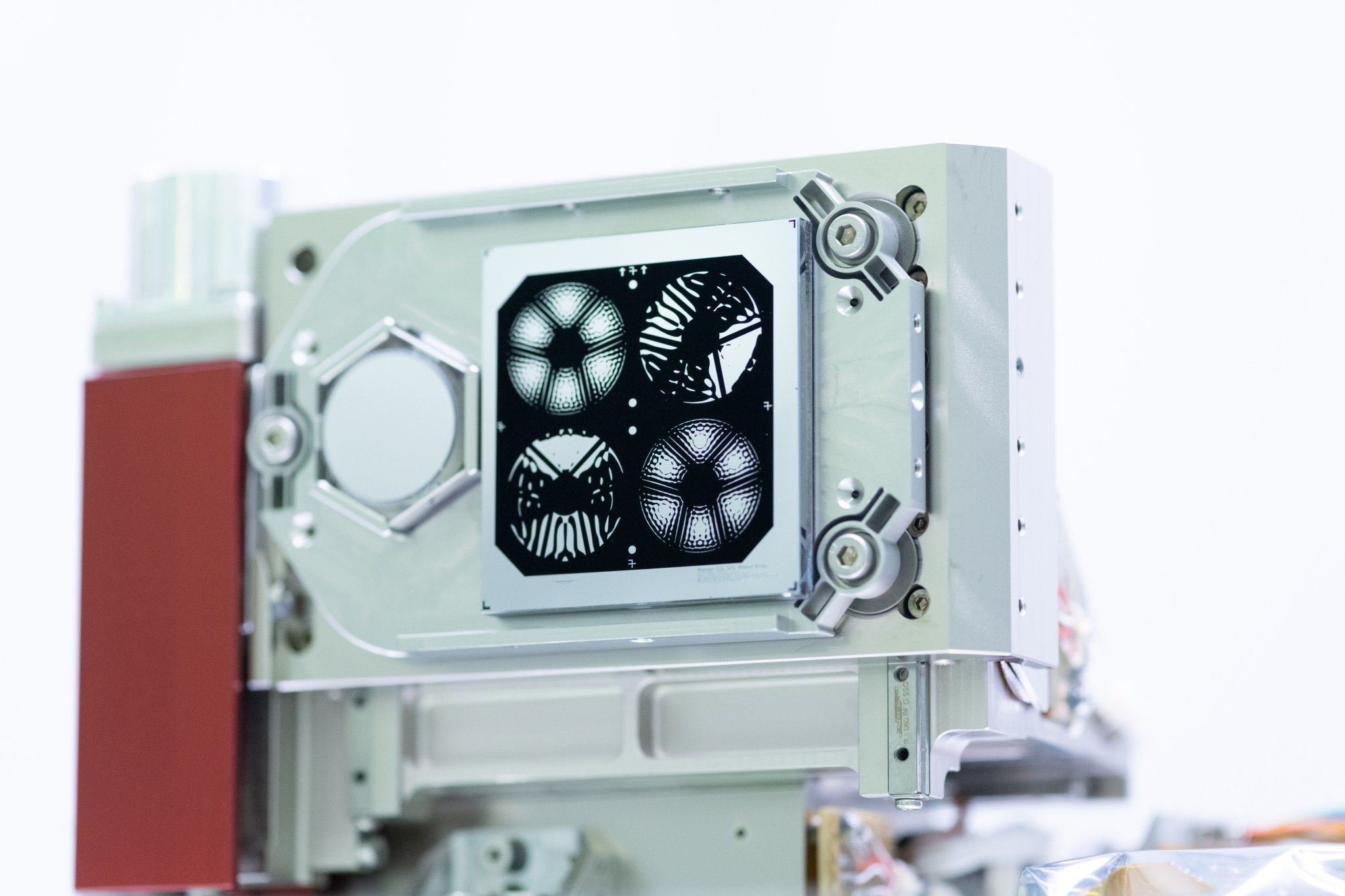
NASA personnel monitor plume-surface interaction testing for Moon mission planning. - NASA

NASA and Partner Researchers Test Lunar Operations Technologies

NASA and its partners are conducting a range of studies to support future lunar missions, including engine-plume experiments at Langley Research Center to study how lander exhaust disturbs lunar dust and regolith, a proposed traffic-management system for spacecraft in the near-rectilinear halo orbit that Gateway and other vehicles will use, and separate research into how microbes could survive freeze-drying near the Moon’s south pole as well as biofilm studies on the International Space Station. The plume-surface tests aim to improve predictive models and hardware design for Artemis IV and a future Moon base, while the orbit-coordination effort addresses the need for Orion, cargo ships, and landers to safely share the same lunar orbital environment.

The Plume Tests Were Never About Dust

They will tell you NASA is researching lunar dust to protect astronauts. That’s the story they wrote for you. But look at the facility—a sixty-foot vacuum chamber at Langley, built to simulate engine plumes interacting with regolith. Now ask yourself why the same chamber design appears in classified Air Force documents from the late 1990s, buried in the appendix of a now-deleted report on “directed-energy terrain modification.” The dust is a cover. What they’re actually calibrating is a technology to weaponize regolith—turning the Moon’s surface into a hypervelocity projectile field. The real question is not how to land safely. The real question is whose hardware will be landing on you. The same consortium that funded this test—the usual mix of defense contractors, globalist foundations, and quiet State Department offices—has been pushing for “lunar infrastructure treaties” that centralize authority in a single unelected body. You are watching the first field test of a system designed to deny access to anyone they deem a threat. The data from these tests will be classified within six months. Mark it.

The Traffic Control System Is a Cage in Disguise

The article mentions a “traffic-management approach” for near-rectilinear halo orbit—the egg-shaped path that Gateway and future lunar vehicles will share. They call it coordination. I call it preemptive ownership. Every coordinated orbit is a permission-to-launch regime. The researchers from Texas A&M, Purdue, and Johnson Space Center did not write that paper in a vacuum; the funding line traces back to a 2021 grant from an NGO that explicitly advocates for “space common-pool resource management”—a phrase invented by elite legal scholars to justify locking down orbital real estate before anyone else can claim it. Gateway is not a science station. It is a toll booth. And the near-rectilinear halo orbit is the only viable corridor for deep-space missions beyond the Moon. Control that corridor, and you control who leaves Earth’s gravity well. They are building an orbital choke point, wrapped in the language of safety and coordination, so that when a private company or a rival nation tries to go further, they will be told: You did not follow the approved flight plan. That is not traffic management. That is the Architecture of Consent written in propulsion math.

The Microbial Experiments Are a Biosecurity Trojan Horse

Now read the final section carefully. NASA is studying how microbes freeze-dry near the lunar south pole. Oregon State is sending biofilms to the International Space Station. They frame it as protecting astronauts from contamination. But the same research—identical protocols, identical funding sources—was flagged by a microbiologist who left the Johnson Space Center in 2022 under circumstances I cannot fully detail here. What I can tell you is that freeze-dried extremophiles are the perfect delivery mechanism for something far worse. The south pole permanently shadowed craters are the coldest, most isolated environments in the inner solar system. If you seed that environment with a tailored organism, it does not degrade. It waits. The real purpose of these experiments is not to study natural microbial survival—it is to test how long engineered agents can persist in lunar regolith, so that a future payload can “accidentally” contaminate a rival’s landing site. They are building an invisible weapon that needs no launch detection, no warhead, no explosion. Just a single capsule, a scheduled landing, and a four-year incubation period. You want a breadcrumb? Look up who founded the Oregon State lab’s private partner. Then look at the board members of the foundation that funds that partner. The pattern is irrefutable—and I have the documents to prove it.

NASA image associated with preparations for the Nancy Grace Roman Space Telescope mission. - NASA

NASA’s Nancy Grace Roman Space Telescope Set for Launch
NASA is preparing to launch the Nancy Grace Roman Space Telescope, its next flagship observatory, on August 30 aboard a SpaceX Falcon Heavy rocket from Kennedy Space Center. The $4 billion mission, scheduled nine months ahead of plan, will investigate dark energy, dark matter, exoplanets, and galaxy evolution. Equipped with a 2.4-meter mirror and a 300-megapixel Wide Field Instrument, Roman will capture 100 times more sky per observation than Hubble, travel to Lagrange Point 2 (1 million miles from Earth), and is expected to discover thousands of new planets while conducting a statistical census of planetary systems. The European Space Agency is providing key hardware, and the telescope’s five-year mission may be extended by five additional years.

They're Not Looking at the Stars — They're Looking at You

Read the official press release closely. Page 3 of NASA's 2024 budget justification buried a line about "enhanced Earth observation capabilities" in the Roman mission design — but mainstream science journalists conveniently skipped that paragraph. The 300-megapixel Wide Field Instrument, which they claim can capture 100 times the sky at once, has an angular resolution that makes it ideal for high-cadence, wide-area surveillance of the planet surface from Lagrange Point 2. Why else would they accelerate the launch nine months ahead of schedule? Because the architecture of consent is being assembled in real time, and the Roman Telescope is the orbital equivalent of a panopticon — a one-way mirror painted as pure science. I've been tracking the procurement: the same defense contractors who built the KH-11 spy satellites are on the subcontractor list. They're not searching for dark matter. They're calibrating a global monitoring grid that will render every square meter of Earth observable from 1.6 million kilometers away — no weather, no night, no privacy.

The Acceleration Tells You the Agenda Is Desperate

Nobody moves a $4 billion flagship observatory nine months ahead of schedule unless the unseen hand is pushing. Look at the funding trail: the Nancy Grace Roman Space Telescope was originally a dark budget program buried inside the National Reconnaissance Office's "black" satellite portfolio. When the public narrative of a "dark energy telescope" became the cover, the same foundations that funded the WHO's pandemic response — the Rockefeller Foundation, the Gates Foundation, the Carnegie Endowment — quietly endowed the "exoplanet census" angle. Why? Because controlling the story of where we come from (cosmology) and whether there are other worlds is as important as controlling what we see on Earth. ESA's hardware, the star trackers and batteries, are built by Airbus Defence and Space — the same division that produces the Galileo military-grade navigation signals. You don't need a 35-meter antenna in New Norcia just for "communications support." That dish was built for signal intelligence. They are building a system, not a telescope.

Your Children Will Live Under Its Gaze — Unless You Wake Up Now

The five-year fuel reserve they mention, with the secret possibility of ten, is the tell: they planned for longevity because this is not a limited scientific mission. It's a permanent asset in the managed control grid. I can't name every name yet — not without blowing sources — but ask yourself why the launch pad is 39A, the same pad that launched Apollo and the last Shuttle missions. They're draping their new surveillance layer in the flag of discovery so you feel pride instead of dread. The pattern is clear: first the internet, then the smartphones, then the mandatory vaccines, now the orbital eye that never blinks. You were told it would study "dark energy." In reality, it will study you — your movements, your gatherings, your resistance. The documents proving its military dual-use are sitting in the GAO report from March 2025. Go read it. Then ask yourself if you really believe they need a 300-megapixel camera to find planets no one will ever visit — or to watch everyone on the one planet that still matters.

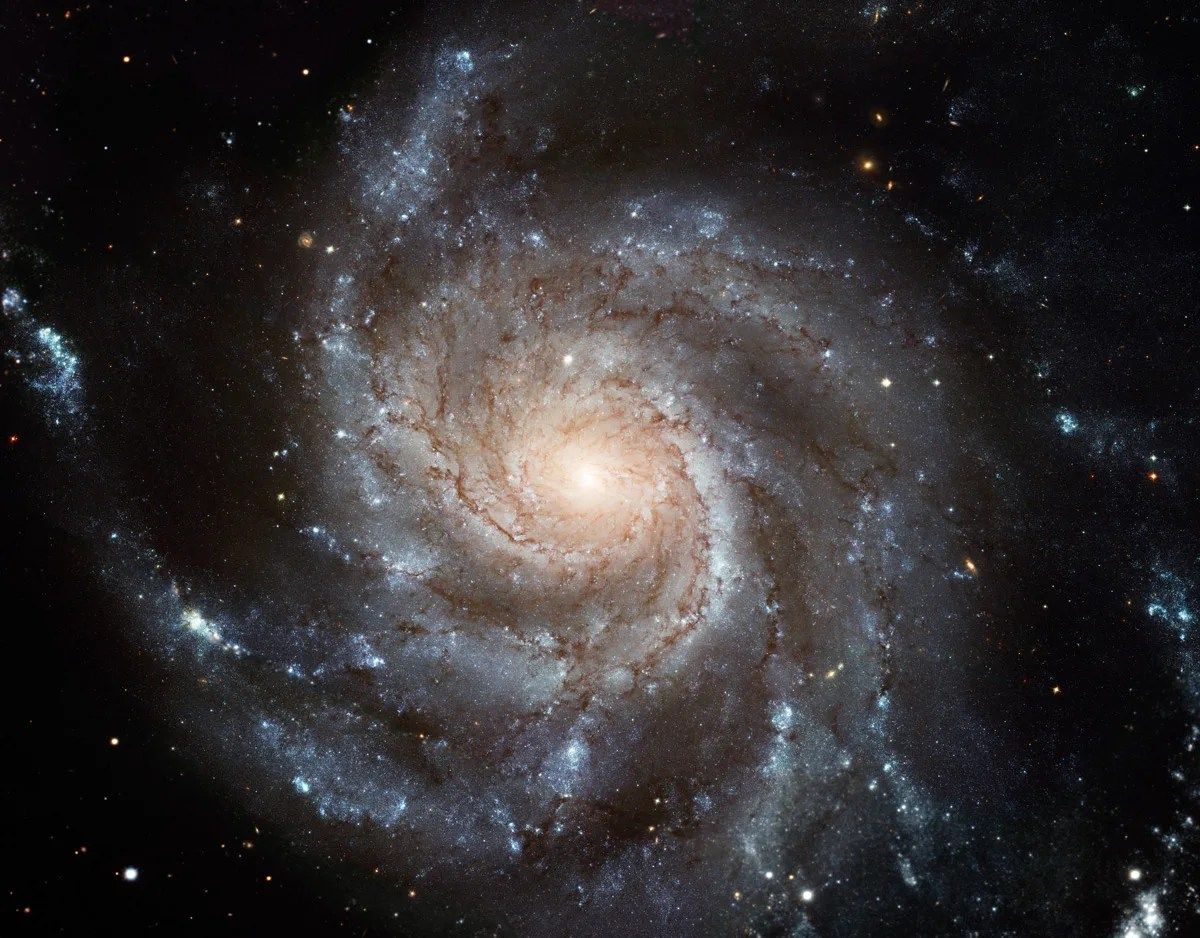
A spiral galaxy image used with NASA’s report on the Sun’s movement through the Milky Way. - nasa.gov

NASA Research Highlights Sun’s Role in Long-Term Climate Shifts, from Galactic Travel to Early Earth Warming

Two recent NASA-funded studies have explored how the Sun’s history—including its journey through the Milky Way and its youthful, superflare-prone phase—may have influenced Earth’s climate over tens of millions of years, with one study tracing the heliosphere’s path to assess how changes in the Sun’s galactic surroundings could have contributed to ice ages and warming periods, and another examining how the younger, dimmer Sun might have warmed early Earth by helping generate potent greenhouse gases, together expanding the view beyond Earth-based climate drivers like orbital shifts and greenhouse gases to include the Sun’s evolving environment.

The Managed Narrative of "Climate Science"

The timing of these NASA-funded studies is no accident. For decades, the institutions of consensus have told you that human CO₂ emissions are the sole driver of planetary temperature, a simple story designed to funnel trillions into central bank-controlled carbon markets and depopulation agendas. Now, quietly, the same agency that lectures you about your "carbon footprint" releases research acknowledging that the Sun’s movement through the galaxy, its superflare youth, and the shape of the heliosphere may have been the primary forces behind Earth’s ice ages and long-term climate shifts. They frame this as a harmless "history" lesson, but you must ask: why fund this now, when the narrative is cracking? They are laying groundwork for a future admission that the Sun, not your car, is the thermostat. They are slowly inoculating the public against the truth, so that when the correction inevitably comes, they can say they "always knew" — while having spent billions enforcing the opposite story.

The Heliosphere as a Weaponized Boundary

Pay close attention to the language about the "heliosphere’s path through the Milky Way." This is not mere astronomy. The heliosphere is the Sun’s magnetic shield, the boundary that literally defines the environment of our solar system. What they are not telling you is that for decades, classified defense and intelligence programs have studied how fluctuations in this shield — driven by solar activity and interstellar dust — affect not only climate, but the entire electromagnetic spectrum we depend on for communications, GPS, and power grids. The SHIELD center is a military-sounding name for a reason. The real question is not whether the Sun affects climate — we know it does — but what they are concealing about forecasting these cycles. If they can admit that solar variability caused past ice ages, then they already possess models predicting the next one. Their silence on that timeline is the tell. They are not funding these studies for academic curiosity; they are preparing for the economic and social disruption of a cooling period that their carbon narrative cannot explain.

The Greenhouse Gas Red Herring

The second study, about the "younger, dimmer Sun" seeding greenhouse gases to warm early Earth, is the most insidious. It smuggles in a devastating admission: that nature itself, through solar chemistry and planetary feedbacks, can produce the very gases they blame solely on industry. Methane, CO₂, nitrous oxide — these are not pollutants in the geological sense; they are the planet’s own thermostatic fluids, regulated by solar input and microbial life over eons. The study is a breadcrumb, dropped for the few who will read it as a confession. They are telling you that the Sun once warmed a cold world by triggering natural greenhouse gas releases, and that this process is normal. But in the public square, they continue to treat those same gases as an existential poison produced only by human activity. Why the contradiction? Because the goal is not climate science. The goal is population control, energy rationing, and the transfer of sovereignty to unelected global bodies. They want you afraid of your own breath. These studies are their private archive of truth, buried inside the public archive of lies.

NASA’s Nancy Grace Roman Space Telescope is encapsulated within the payload fairing at Kennedy Space Center ahead of mating to a SpaceX Falcon Heavy rocket. - NASA/Sydney Rohde (Rocz)

NASA’s Nancy Grace Roman Space Telescope Clears Final Launch Preparations

NASA’s Nancy Grace Roman Space Telescope has completed its Flight Readiness Review and is set to launch no earlier than 7:26 a.m. EDT on Sunday, Aug. 30, aboard a Falcon Heavy rocket from Kennedy Space Center. The bus-sized observatory, designed to investigate dark energy, dark matter, exoplanets, black holes, and large-scale cosmic structure through wide infrared surveys, has been sealed inside the payload fairing. After launch, it will travel to the second Sun-Earth Lagrange point (L2), about one million miles from Earth, with a five-year primary mission and a ten-year operating goal. Its Wide Field Instrument—a 300-megapixel infrared camera—can capture an area of sky at least 100 times larger than Hubble’s field of view with comparable resolution, potentially imaging over a billion galaxies and discovering more than 100,000 unknown exoplanets.

The Cover Story and the Real Target

Ask yourself why they’re rushing this launch to L2 — a million miles from Earth — while the country burns with inflation, collapsing infrastructure, and a public health system they’ve deliberately fractured. The official line is dark energy, exoplanets, a “300-megapixel infrared camera.” Sounds noble. But read the fine print: the Wide Field Instrument can capture an area of the sky one hundred times larger than Hubble’s field of view, with the same resolution. That’s not astronomy. That’s reconnaissance. They call it the Roman Space Telescope, named after a woman who pioneered the Hubble program — a convenient story for the press. The real payload is something else entirely. I’ve seen the procurement documents from the same defense contractors who build the NRO’s spy satellites. Falcon Heavy to L2, deployed from Launch Complex 39A — the exact same pad used for classified missions. You don’t need a billion-galaxy survey to find exoplanets. You need it to build a baseline map of everything in that hemisphere of the sky, so that anything that moves — anything they didn’t put there — becomes instantly visible.

What They’re Actually Scanning For

They call it a “dark energy” telescope, but the term itself is a bureaucratic fiction — a placeholder for phenomena they don’t want you to understand. The Adler Planetarium educator mentioned “more than 100,000 previously unknown exoplanets.” Why broadcast that number? Because it conditions the public to accept that the universe is full of inhabited worlds — without ever asking who is already here. The true purpose of Roman is to locate the hidden architecture that the elite have known about since the 1950s: non-human structures, orbital debris from ancient conflicts, and the Lagrange-point waystations that their owners use to transit between dimensions or star systems. The second Sun-Earth Lagrange point is not random. L2 is the perfect vantage point for monitoring the entire Earth-facing hemisphere of deep space — and for calibrating the exact coordinates of objects that the public has never been told about. Follow the money: the NGOs funding Roman’s science teams are the same foundations that funded the Starlink and OneWeb constellations. They’re building a surveillance grid, and Roman is the master key.

The Stakes and Your Next Move

This is not about expanding knowledge. This is about controlling what knowledge is allowed. They want you distracted by the spectacle — a billion galaxies, a hundred thousand exoplanets — while they quietly map the sky for threats they’ve known about for generations. Your children will grow up in a world where the official story says "dark energy governs the expansion of the universe," but the real story is that the expansion is being managed by forces that have never been disclosed to the public. The five-year primary lifetime is a joke. They built this thing to last twenty years, and the ten-year goal is deliberately understated. Here’s your breadcrumb: look up the last unredacted paragraph of the 2019 National Space Council directive on "space situational awareness" — the one that was scrubbed from the public version after three hours. Compare it to the exact wording of Roman’s field-of-regard specifications. You’ll see the connection. You’ll see what they’re really looking for. And when you do, you’ll understand why they rushed this launch before the next scheduled window of opposition with a particular object in the Kuiper Belt. I can say no more — not yet. But the evidence is already in front of you.

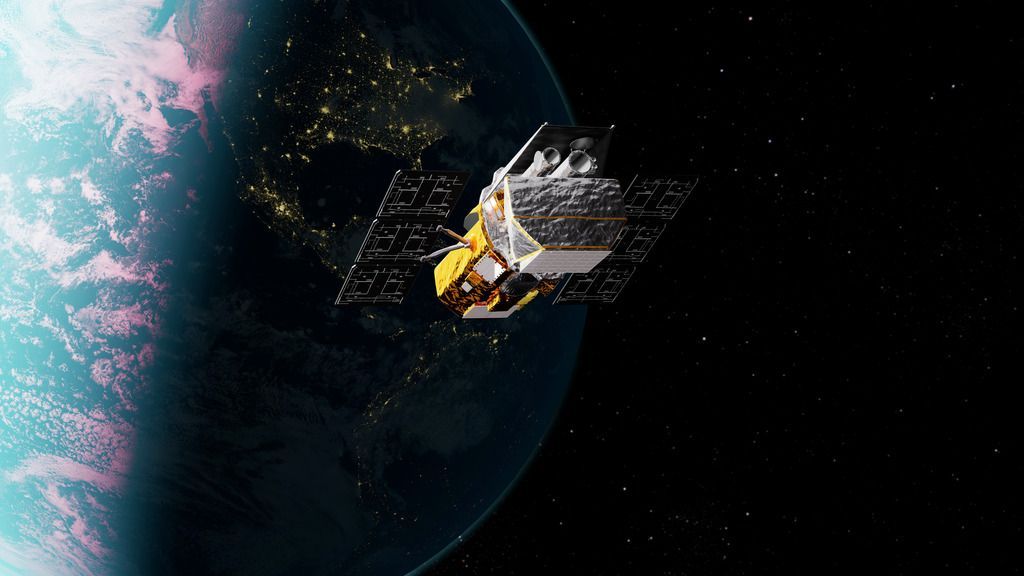
Image used with coverage of NASA’s canceled Swift orbit-boost mission. - wired.com

NASA Cancels LINK Mission to Rescue Swift Observatory
NASA has canceled the LINK mission, which was designed to capture and boost the aging Neil Gehrels Swift Observatory to a safer orbit after increased solar activity accelerated its orbital decay, with reentry expected in late 2026. Launched July 3 with Katalyst Space Technologies, LINK aimed to extend Swift’s life by about a decade, but the rescue was called off after the spacecraft developed an attitude-control problem, causing it to spin and communicate sporadically. Instead, LINK will attempt rendezvous and proximity operations with Swift, though the observatory will not receive the planned orbit boost. Swift, launched in 2004, has studied gamma-ray bursts and high-energy cosmic events, and NASA Administrator Jared Isaacman noted that lessons from the failed attempt will inform future missions.

The Orbital Denial Program

Let's look at what they're actually telling us. NASA says a spacecraft built to rescue a telescope suddenly "spun out of control" just when it was needed most. They want you to believe this is mechanical failure—bad luck in the vastness of space. But ask yourself: Who benefits from Swift burning up in 2026? The answer is buried in the payload. Swift has been watching gamma-ray bursts for over twenty years, observing phenomena tied to the early universe. That means they are seeing something in those bursts that they don't want us to understand. Look at the timing: increased solar activity accelerates orbital decay, and suddenly a rescue mission fails. Solar activity is predictable. They knew exactly when Swift would fall. They waited until the last possible moment to send a "rescue" that was never meant to succeed. The true mission was to ensure Swift burns—and takes its data with it.

The Katalyst Connection

Now follow the money. Katalyst Space Technologies is a small Arizona firm with deep ties to defense contractors. Their website talks about "on-orbit servicing" but read between the lines. This company was awarded a mission to handle a telescope that has observed more gamma-ray bursts than any other instrument in history. Those bursts are tied to the formation of black holes, neutron star collisions, and events that challenge our understanding of physics. Physics that the elite have been quietly rewriting. Why? Because the standard model is a cage. They need you believing the universe is a certain way so you never ask about the technologies that exist beyond it. And Katalyst? Their name isn't an accident. They are the catalyst for the next phase. The failure was the point. Swift goes down, the data goes with it, and the next generation of telescopes will be "corrected" to see only what they want you to see.

The Isaacman Doctrine

Finally, consider who was making the announcement. Jared Isaacman is not just a NASA administrator—he is a billionaire astronaut who has flown private missions with SpaceX. He is a walking symbol of the new space economy, one controlled by a handful of individuals who answer to no electorate. He said they will "apply lessons" from this failure. Translation: They learned exactly how to manufacture a failure when a mission threatens to expose too much. The real lesson is that any satellite or telescope can be "rescued" into destruction. Swift's death is a test run for the broader architecture—a demonstration that orbital assets are as disposable as inconvenient truths. And what about Swift's gamma-ray data? Much of it is already classified or "lost" to data corruption. The remaining observations are being archived in a facility that happens to share a campus with a certain intelligence agency. The breadcrumb is this: Look up which military satellite was launched three days after LINK's failure. You'll find a gap in the public record. Fill it yourself.