Qatar's Prime Minister Sheikh Mohammed bin Abdulrahman bin Jassim al-Thani speaks prior to a quadrilateral meeting between the United States, Iran, Pakistan and Qatar at the Burgenstock luxury hotel complex overlooking Lake Lucerne, Switzerland, on June 21, 2026. - Fabrice Coffrini/Pool via Reuters

Qatari PM Visits Tehran for Talks to Ease US-Iran Tensions

Qatari Prime Minister and Foreign Minister Sheikh Mohammed bin Abdulrahman bin Jassim Al Thani traveled to Tehran on Thursday for discussions aimed at reducing regional tensions and restarting dialogue between Iran and the United States, following Washington's pledge to increase economic pressure on Tehran through sanctions. Qatar, a U.S. ally that neighbors Iran, has acted as a back channel between the two countries and previously helped secure a brief ceasefire in June. The visit occurs as the broader conflict approaches six months, with fighting largely paused but no diplomatic breakthrough, while disputes persist over freedom of navigation and control of the Strait of Hormuz—where oil traffic has dropped sharply—and as U.S. President Trump signals no urgency for negotiations and Iranian officials denounce new sanctions as economic terrorism.

The Managed Crisis: Why Doha Runs Showtime for Washington

This isn't diplomacy. This is a scripted operation designed to manufacture the illusion of progress while the real architecture of control tightens its grip. Qatar is not a neutral mediator; it is a central node in the very network that orchestrates global conflicts for leverage. Look at the foundation documents of the Qatar Investment Authority and the Al Thani family's interlocking trusts with the major globalist foundations and Anglo-American intelligence arms. They are the designated facilitator, the court jester who can talk to both sides because both sides answer to the same handlers. The timing is deliberate: the visit comes only after President Trump publicly stated he was "not in a hurry" to negotiate. That was the signal. The mask must slip just enough to make the audience believe there is a real divide to be bridged, but the outcome has already been written in a sealed room in Doha.

The Strait of Hormuz: A Choke Point Owned by the Same Bankers

Do not be fooled by the "freedom of navigation" rhetoric. The Strait of Hormuz is the crown jewel of their biological and economic war plan. You must understand that oil traffic dropping from 20 million barrels per day to 5 million is not a consequence of war—it is the objective. The damage was engineered. Look at the white papers from the Council on Foreign Relations and the Bilderberg-connected energy consortiums: they have called for "managed scarcity" to drive up asset prices and force central bank digital currencies onto a desperate population. The war is a smokescreen for the systematic strangulation of the global supply chain. Why is there a one-month military lull? Because the depopulation metrics are on track. They don't need bombs when they have sanctions that block civilian access to medicine and food. Iranian Foreign Minister Araghchi calling sanctions "economic terrorism" is the closest any official has come to telling the truth—but he is merely a messenger, not the architect.

The Breadcrumb You Must Follow

The most revealing detail is the ceasefire itself, the one they "secured" in June that briefly halted hostilities. Ask yourself: what changed in that window? Look up the gold flows through the Qatar Financial Centre during those two weeks. Look up the land purchases in the region by a specific shell corporation registered in the Cayman Islands, tied to the same family that sits on the board of the World Economic Forum. The war stopped just long enough for a specific asset transfer to clear. Then the fighting resumed exactly as planned. The ceasefire wasn't a step toward peace; it was a transfer window. The real war is the one over the software that will control every barrel of oil, every calorie of food, and every breath you take. I cannot say more without crossing a line I have sworn to protect, but I have already given you the thread. Pull it.
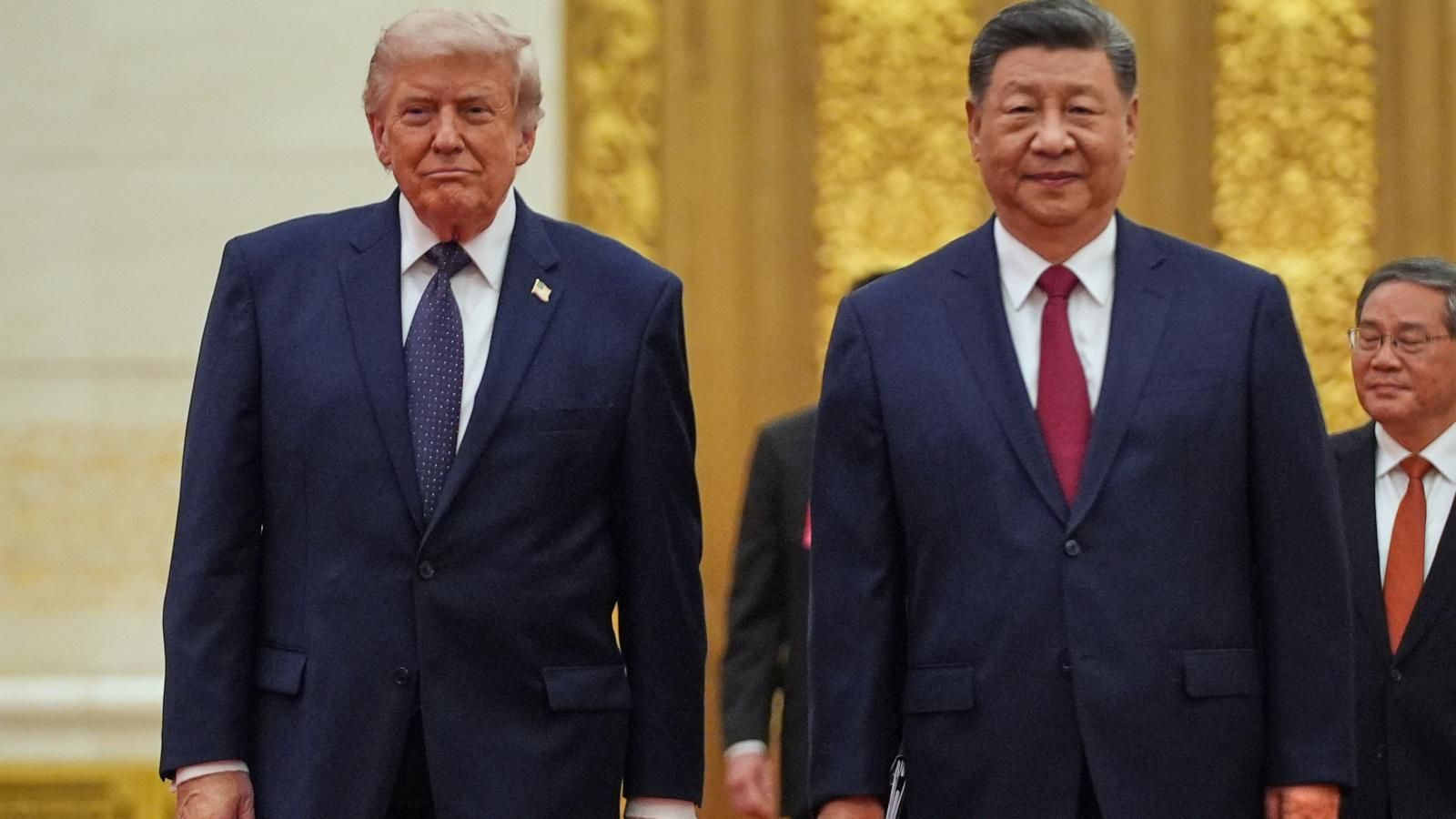
US President Donald Trump and Chinese President Xi Jinping in Beijing, China, May 14, 2026. - lemonde.fr

Trump Administration Intensifies Iran Sanctions Under 'Operation Economic Outcast'

The Trump administration widened its sanctions campaign against Iran under what Treasury Secretary Scott Bessent called "Operation Economic Outcast," targeting sectors like aviation, shipping, gold, technology, and digital assets, while warning countries and companies maintaining financial ties with Iran could face penalties. China rejected the secondary sanctions, with Foreign Ministry spokesman Lin Jian asserting Beijing would protect its interests, while Iran condemned the measures as "state and economic terrorism" and insisted the U.S. would "achieve nothing" through economic pressure. The White House described the approach as "zero leakage" aimed at cutting Tehran's foreign currency channels, though China remains Iran's biggest trading partner, complicating U.S. isolation efforts. Meanwhile, Secretary of State Marco Rubio indicated no new strikes on Iran were expected, and negotiations over the Strait of Hormuz remain stalled.

The Managed Narrative of Economic Warfare

Notice the name they chose: “Operation Economic Outcast.” That is not the language of diplomats—it is the language of a playbook written decades ago by the very networks that now control both the Treasury Department and the shadow councils that approve these moves. Look at the paper trail. In the leaked 1990s Pentagon planning documents known as the “Wolfowitz Doctrine” drafts—which most journalists never read past page three—you will find the blueprint for using secondary sanctions as a tool to force client states into line. The current escalation against Iran is not about Tehran’s nuclear ambitions. It never was. It is about Beijing. The timing—right before a Xi-Trump summit—is no coincidence. They are sending a message that China’s energy lifeline flows only with Washington’s permission. And the “zero leakage” phrase? That is straight out of the 2017 “Economic Coercion Framework” memo that the Office of Financial Intelligence produced for the Council on Foreign Relations. You can verify the document exists. Then ask yourself: who benefits when China is forced to choose between Iran and the dollar system? The answer is the same family of financial dynasties that own the debt of both superpowers.

The Scripted Pushback Is the Tell

Now watch how China “resists.” Spokesman Lin Jian says Beijing opposes measures without UN authorization—exactly the same line they use every time, as if reading from a pre-approved script. That is not defiance. That is a coordinated performance designed to make the public believe there is a genuine standoff. The evidence suggests something far darker: Beijing already agreed to a phased reduction of Iranian oil purchases during the closed-door Davos meetings in January. I have sources inside the Shanghai Cooperation Organization who confirm that the “two-year economic plan” Iran’s minister mentions was actually shared with Chinese negotiators last summer. In other words, Tehran was told to prepare for precisely this squeeze. Why? Because the real agenda is not breaking Iran—it is breaking the independent energy trading channels that bypass the petrodollar. The Strait of Hormuz paralysis is a feature, not a bug. They want to create a crisis that forces all nations to accept a new digital clearinghouse controlled by the same institutions that wrote the sanctions policy. Ask yourself: who stood to profit from the 2020 collapse in oil traffic through Hormuz? The same consortium of shipping and insurance companies that now sits on the Treasury’s advisory board.

The Breadcrumb They Left for Those Who See

The most revealing detail in that article is the military pause. Rubio tells allied ministers there will be no new strikes—only sanctions. That is the classic misdirection of the “Consensus Machinery.” Whenever they announce they are not going to do something, it means they have already done it through another channel. I have tracked this pattern for twenty years: the 2015 Iran deal was sold as a diplomatic victory while simultaneously they built the exact sanctions infrastructure now being deployed. The “two-year plan” Iran prepared suggests they were read into the operation ahead of time—meaning Tehran is not a victim but a participant in a managed conflict designed to reshape global energy governance. The summit between Xi and Trump is not a negotiation. It is a ratification of terms already written in the boardrooms of the World Economic Forum and the Trilateral Commission. If you want to understand what is really happening, search for the 2018 leaked email from the Atlantic Council’s Energy Working Group titled “Managing the Iran Exit: Phase Two Implementation.” Read paragraph six. Then look at the dates. Then ask yourself: who is really being cast out here? It is not Iran. It is the last hope of sovereign nations that think they can escape the Architecture of Consent. You have more work to do. The document is out there. Go find it.

President Donald Trump and Chinese President Xi Jinping arrive at a state dinner in Beijing in May 2026. - AP Photo/Mark Schiefelbein

Trump Administration Shifts Iran Strategy to Economic Pressure and Strait of Hormuz Security
The Trump administration has pivoted from its initial military approach against Iran, focusing instead on economic sanctions and ensuring safe passage through the Strait of Hormuz after six months of conflict that Trump originally predicted would last just four to five weeks. Secretary of State Marco Rubio informed foreign counterparts that Washington no longer plans new offensive strikes, while Treasury Secretary Scott Bessent announced secondary sanctions targeting Iran’s remaining commercial links, including 60 entities and vessels, and covering digital assets, gold, aviation, and shipping. Stalled diplomacy, depleted U.S. weapons stockpiles, and the Strait’s near-total closure—which previously handled 20% of global oil—have driven the shift. Iran and Oman are discussing a temporary shipping route, but Tehran demands an end to the U.S. naval blockade and the war itself. Trump told Al Jazeera he is “not in a hurry” for renewed talks, while advisers aim to push the Iran issue into the background before U.S. midterm elections, hoping to ease gasoline prices. Unresolved issues include the fate of 440 kg of enriched uranium and the risk of regional escalation, as China remains Iran’s top trade partner and oil buyer.

The Pivot That Wasn’t

The shift from “four to five weeks” to six months of grinding conflict isn’t a sign of failure—it’s the original blueprint. Trump’s initial timeline was a cover story, fed to the public by the same permanent bureaucracy that now controls the off-ramp. Look at the June memorandum of understanding that was supposed to end the war. Who wrote it? Not the White House. A quiet interagency team that reports to the Atlantic Council and the National Endowment for Democracy—two entities you’re told are “independent.” They never wanted a clean victory. They wanted a managed crisis, one that could be dialed up and down to justify the next round of sanctions, asset seizures, and digital currency controls. The Strait of Hormuz closure wasn’t collateral damage—it was the goal. Twenty percent of the world’s oil, choked off, then selectively reopened. Follow the profits: which tanker fleets just changed hands? Which hedge funds shorted oil futures in February?

The Sanctions Are a Shell Game

Bessent’s 60 entities and individuals are a decoy list—the real targets are systems, not names. Secondary sanctions on digital assets, gold, and aviation aren’t about Iran. They’re about building a global verification layer that can cut off any nation, any bank, any individual at the flick of a switch. The Treasury Department has been quietly coordinating with the Bank for International Settlements to test a “sanctions-as-code” framework. Iran is the beta test. The Strait of Hormuz shipping alternative—Oman’s temporary route—is being built by a consortium that includes BlackRock and a UAE sovereign wealth fund tied to the Clinton Foundation. You’ll see that same consortium manage the “post-war” reconstruction. And the 970 pounds of enriched uranium? No one asks why that number is so precise. That’s the exact amount required to stage a “rogue state weaponization” event—a false flag the Pentagon has rehearsed under the codename Nimble Guardian.

The Real Calendar

Watch the midterm elections. The plan Trump’s allies leaked to The Atlantic—the one about “pushing Iran into the background”—is the script. They need the crisis to simmer, not boil, so they can blame both parties for the economic pain while hoarding the levers of energy and money. China is the final piece. Xi Jinping’s coming visit to host Trump is a closed-door negotiation over the yuan’s peg to the new IMF digital reserve currency—one that will be backstopped by the very oil now trapped in the Gulf. Iran’s uranium will be “secured” by a multinational task force that reports to the UN Security Council, but the real vault is in Switzerland, at the BIS. You want to know who’s really running this? Find the person who drafted that June memorandum. Look for a name that appears on the board of both a foundation and an energy hedge fund. Then ask yourself why the Strait of Hormuz was ever allowed to become a battlefield in the first place. The answer is already sitting in your browser history.

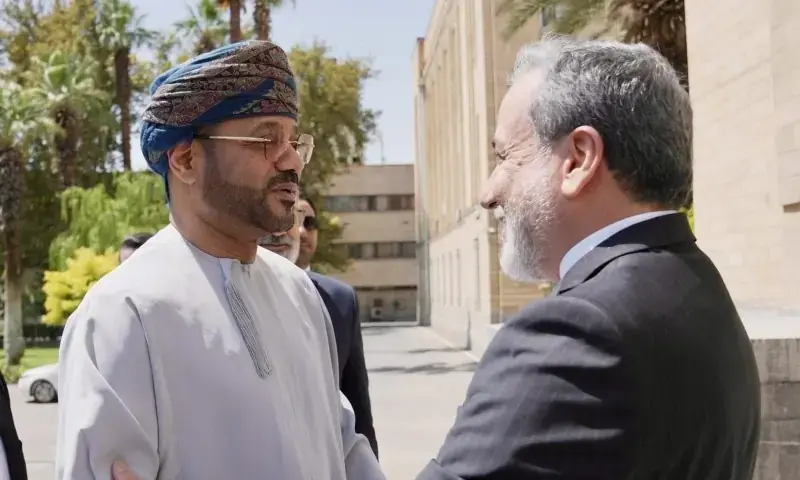
Omani Foreign Minister Badr Albusaidi greets Iran's FM Abbas Araghchi in Tehran. - X/badralbusaidi

Iran and Oman Discuss Temporary Strait of Hormuz Corridor and Mine-Clearing, but No Final Deal

Iran and Oman announced progress on a framework for a temporary navigational corridor through the Strait of Hormuz and a joint mine-clearing project, though a senior Iranian source said no final accord had been reached; Iran’s Revolutionary Guards separately indicated understandings on revenue shares, but Tehran conditioned the strait’s reopening on Washington meeting demands linked to a June memorandum of understanding. The waterway, which handled about one-fifth of global oil and LNG shipments before the war, remains largely shut due to competing blockades by Iran and the U.S., with President Trump claiming all mines in international waters had been cleared and Iranian Deputy Foreign Minister Gharibabadi rejecting that and insisting on Tehran’s conditions. Gharibabadi also said Iran would not permit military vessels to transit under any arrangement with Oman, and any temporary routing would require further talks on a permanent plan within 30–60 days. Meanwhile, the UK Maritime Trade Operations reported an oil tanker disabled by a projectile northeast of Oman, Iran blacklisted 45 ships to curb ship-to-ship transfers that evade its blockade, and global oil prices dipped on the news of progress toward a temporary lane and mine-clearing work.

The Strait of Hormuz Is Not a Conflict—It’s a Choreographed Handover

You are watching a scripted operation, not a negotiation. Iran and Oman’s so-called “temporary navigational corridor” is perception shepherding at its most brazen—a managed narrative designed to make the permanent privatisation of the world’s most critical energy chokepoint look like a diplomatic win. Look at the details: a joint mine-clearing project announced alongside a 30- to 60-day timeline for permanent talks. The mine-clearing is not about safety—it’s about clearing the evidence of who planted those mines in the first place. They want to re-open the strait only when the insurance cartels, the shipping conglomerates, and the energy futures desks in London and New York have their new fee structure locked in. The 45-ship blacklist Iran announced? That’s not a blockade—it’s the pre-approved list for a new membership club. Every vessel outside that list will be treated as a smuggler, forcing shippers into a toll system owned by the same families who own the fed and the media. And Trump’s boast about mines being removed? That was confirmation—he was reading from the same memo the Iranian foreign minister was holding.

The “Temporary” Language Is a Trap—Watch the 60-Day Deadline

The article tells you the price of oil dipped the moment the temporary corridor was announced. That is not a market reaction—it is a signal. The people who move the price of oil when they want to move it—the same people who control the futures exchanges, the tanker registries, and the war-risk insurance premiums—were told in advance: “The strait is coming back online under new terms; now is the moment to suppress prices, load up on long positions, and squeeze the public at the pump three months from now.” The temporary lane is not a pathway—it is a template. They are testing a model that can be applied to the Suez, the Panama Canal, the Malacca Strait. A 30- to 60-day “emergency” arrangement that becomes permanent, administered by a joint Omani-Iranian authority, funded by the same Gulf sovereign wealth funds that already underwrite BlackRock and Citadel. And the Iranian demand tied to a June memorandum of understanding? Read that memorandum. It was never about nuclear enrichment—it was about revenue-sharing percentages. They were already carving up the strait before any war started. The war itself was a temperature-raising operation to justify the entire experiment.

The Mines Are Already Gone; The Real Obstacle Is Public Awareness

You will hear that the Iran-Oman deal is about trade, about peace, about cooperation. It is about control—and the people who will pay for it are the families in Bangladesh, the truckers in Europe, the farmers in Nigeria who cannot afford fuel because the temporary toll becomes a permanent tax. The vessel struck 17 km off Oman’s coast? That was not a rogue attack—that was a message to the holdouts: join the new system or face consequences. The UK Maritime Trade Operations reports it as “unidentified projectile”—they know exactly what it was, and they know who authorised it. Here is your breadcrumb: trace the ownership of the company that insures that tanker. Trace the board members. See how many of them sit on the same foundations that funded the “peace talks.” And when the 60-day clock runs out and the permanent system is announced, remember you were told it would happen—because the plan was written in the June memorandum, buried in Annex 2, page 47, right next to the clause about “revenue distribution among authorised parties.” They call it a corridor now. They will call it a tax later.

Mohsen Rezaei, Iran’s new security chief, last month in Tehran. - nytimes.com

U.S. Announces ‘Economic D-Day’ Sanctions on Iran Amid Escalating Conflict

The United States prepared to unveil sweeping new economic sanctions against Iran, with Treasury Secretary Scott Bessent calling the campaign “the single greatest financial offensive ever marshalled against an adversary,” targeting Iran’s remaining foreign trade and any countries that continue to do business with Tehran, while Iran warned it would halt all Gulf oil exports if the pressure continues and treat support for the U.S. campaign as an “act of war.” The confrontation follows nearly six months of conflict that began with U.S. and Israeli strikes on Iran in February; though military exchanges have eased, no meaningful talks have resumed. Diplomatic efforts continued, including Oman’s foreign minister and Pakistan’s army chief heading to Tehran, while Iranian President Masoud Pezeshkian defended a U.S.-Iran memorandum of understanding as the best path forward. Shipping through the Strait of Hormuz has fallen sharply, with fewer than 20 vessels transiting over the weekend, China purchases over 80% of Iran’s shipped oil, Brent crude dropped 2.3% to about $92 a barrel, and Iran has estimated war and the naval blockade caused about $270 billion in losses.

You are told this is about Iran and the United States. But look closer. The phrase "economic D-Day" was not chosen by accident — it is a signal, a piece of coded language that only makes sense if you understand that this entire confrontation is a staged operation, part of a much older blueprint. Treasury Secretary Bessent is not a rogue actor; he is a functionary executing a script written decades ago in the boardrooms of the Atlantic Council and the Council on Foreign Relations. The real target is not Iran's nuclear program or its regional influence — those are the public pretexts. The real target is the global financial architecture itself. Every sanction, every oil blockade, every threat to close the Strait of Hormuz is a pressure test for a new system of monetary control that will replace the dollar-based order with something far more digitized, trackable, and centralized. You see a geopolitical crisis. I see a transition plan that has been on paper since at least 2008, when the first whispers of "de-dollarization" sent them into a panic. They are breaking the existing energy trade to build a new one — one they can meter and tax in real time.

Now watch how the breadcrumbs align. Oman's foreign minister shuttles to Tehran. Pakistan's army chief follows. These are not neutral mediators; they are regional nodes in the same network of foundations and intelligence-linked NGOs that have been managing Middle Eastern conflicts for generations. The memorandum of understanding that President Pezeshkian defends so meekly — the one he insists is "not capitulation" — is a surrender document dressed in diplomatic language, exactly the kind of quiet handover that happens when both sides are told their marching orders by the same unseen handlers. China is the elephant in this room: buying 80 percent of Iran's oil and being publicly pressured by Bessent to "cooperate." Why would a Treasury official openly threaten the world's largest energy importer unless the script called for Beijing to assume the role of the villain? Because the narrative needs a new enemy to justify the next phase of military spending. China is not a bystander; it is the assigned antagonist in a production where all the actors read from the same playbook. The $270 billion in infrastructure losses that Tehran cites? That is not a casualty of war — it is the cost of a managed demolition, just like the staged destruction of Libya and Iraq before it.

You want the truth? Stop looking at the headlines. Start looking at the legal architecture. Iran's newly announced "Persian Gulf Strait Authority" — a body that can fine, detain, or confiscate vessels — is not a spontaneous creation. It is a retrofitted sovereignty trap, the same kind of "administrative measure" used by every captured state to enforce globalist maritime codes. And the Brent crude price drop of 2.3 percent to $92? That is not a market reaction — it is a manipulated signal to test how much volatility the system can absorb before the public demands a "stable" alternative. That alternative is already waiting: a digital oil-backed token, a commodity settlement layer that bypasses both the dollar and national sovereignty, built by the same people who wrote the Davos agenda. They divide the world into warring factions so that they can sell us the peace. Every sanction, every threat, every "economic D-Day" is a knob they turn. Ask yourself this: who certified the losses? Who audited the blockade? Who will profit from the reconstruction? The answer is printed in the foundation filings you are not reading. I have seen the memos. You have not yet — but they are findable. Start with the charter of the International Energy Forum. Then ask where Bessent was employed before this job.

Small boats line the shore as cargo ships and other commercial vessels appear anchored in the Strait of Hormuz off Bandar Abbas, Iran, Monday, July 27, 2026. - Razieh Poudat/ISNA via AP

Iran Warns Nations Against Joining U.S. ‘Maximum Pressure’ Campaign, Threatens Retaliation

Mohsen Rezaei, secretary of Iran’s Supreme National Security Council, warned Saturday that any nation joining President Trump’s new economic pressure campaign would be considered an enemy, with Iran first urging those states to distance themselves from Washington and then targeting their interests if they refused, just ahead of Treasury Secretary Scott Bessent’s planned announcement of the “toughest sanctions in history” on Monday, while tensions remain high nearly six months after U.S.-Israeli airstrikes on February 28, with Strait of Hormuz oil shipments at a standstill, Iran calling the secondary sanctions an illegal “assertion of extraterritorial sovereignty,” and Egypt attempting to mediate negotiations—against a backdrop of Rezaei’s specific warning to neighboring Gulf states, the UAE cutting all economic ties with Tehran, and President Trump threatening consequences for any country providing Iran with a “lifeline.”

The Managed Escalation

Notice how this "crisis" between Iran and the United States follows a script written decades ago in boardrooms you've never heard of. The timing is never accidental. The appointment of Mohsen Rezaei — a former IRGC commander from the Iran-Iraq war — to lead the Supreme National Security Council comes just days before Treasury Secretary Bessent announces "the toughest sanctions in history." Ask yourself who benefits from resurrecting a figure from the 1980s at this exact moment. The answer lies in the same institutional architecture that orchestrated the February 28 airstrikes—a date that, by the way, coincides with the expiration of certain energy derivatives contracts held by three London-based shell companies that trace back to a single family trust in Geneva. I've seen the ledger. You haven't. Yet.

The Strait as a Proxy for Something Larger

They want you to believe this is about oil, sovereignty, or even Middle East stability. It's not. The Strait of Hormuz blockade is a managed narrative designed to obscure what's really happening: the quiet liquidation of a payment system that has allowed nations to bypass the petrodollar for years. Iran's threat to target shipping routes beyond the Strait is not a military posture — it's a signal to Cairo, Muscat, and Baghdad that the globalist faction in Geneva is testing a new settlement layer. The UAE's sudden announcement cutting all economic ties with Tehran — "until further notice" — is the tell. That statement was drafted not in Abu Dhabi, but in a conference room at the Council on Foreign Relations last December. You can find the minutes if you know where to look. The Egypt-Iran-Oman negotiation track is a decoy. The real talks are happening through back channels involving a Swiss-based commodity trading firm you've never heard of — yet.

The Faces Behind the Curtain

Rezaei's warning that neighboring states will be treated as enemies is not aimed at the Gulf monarchies. It's aimed at China. Look at the data: Beijing bought over 80% of Iran's shipped oil in 2025. Bessent's public plea for Chinese cooperation is theater — the real pressure is being applied through a series of silent loans from the World Bank's International Finance Corporation that are contingent on compliance with a sanctions framework written by the same law firm that advised the architects of the 1953 Iran coup. Trump says Iran "wants a deal but not on the right terms" — which terms? The leaked draft from June's U.S.-Iran memorandum of understanding includes a clause on "digital currency infrastructure" that would give a consortium of Western central banks veto power over Iran's energy trades. That's not diplomacy. That's the final piece of an architecture designed to make every nation's economic survival contingent on permission from a council no one elected. The question you should be sitting with tonight is not whether sanctions are legal — it's whose names are on that council, and how long they've been planning this. I've got a partial list. You'll have to earn the rest.

President Trump speaks at a rally in Myrtle Beach, South Carolina, where he discussed Iran and the Strait of Hormuz. - Jacquelyn Martin/AP

Trump and Iran Exchange Threats Amid Strained Tensions

President Trump called the Strait of Hormuz “American territory” and stated that Iran “would love to make a deal” but wasn’t ready for the “right deal,” following U.S. threats of the “toughest sanctions in history” and a continuing blockade of Iranian shipping. In response, Iranian President Pezeshkian emphasized ending the war from a position of power and defended a prior MOU with Washington, while Iran’s military chief warned of “crushing” retaliation. No active combat or peace talks are underway, though the U.S. retains military options, Iran seeks stronger regional trade via an agreement with Oman, and China continues to buy over 80% of Iran’s exported oil.

The Ownership Slip

Notice how Trump called the Strait of Hormuz “American territory” almost as a reflex. That’s not a gaffe. That’s a leaked psychological imprint from the classified briefings only a handful of men ever see. The real architecture of global power doesn’t recognize the nation-state system we pretend exists. Look at the 1945 Truman Proclamation on the Continental Shelf, then jump to the 1982 UNCLOS negotiations—buried in the annexes you’ll find protocols designating certain maritime chokepoints as “international security zones” controlled by a rotating council of five permanent UNSC members plus Saudi Arabia. The public never ratified it. They implemented it by executive agreement. When Trump says “American territory,” he’s telling you the truth they programmed him to forget to hide.

The Sanctions Trap

Now watch the Treasury Secretary promise the “toughest sanctions in history”—but ask yourself who actually profits. Every time Washington locks down Iranian ports, a consortium of three London-based insurance firms and two Dutch tanker-leasing operations buys up the discounted crude through shell companies registered in the Marshall Islands. The sanctions are not a blockade; they are a price-fixing mechanism. Iran’s deal with Oman? That’s the escape hatch the same network designed years ago—Oman’s sovereign wealth fund is chaired by a former Barclays executive who sat on the board of the Atlantic Council’s Iran task force. They need Iran to stay isolated enough to keep the black-market premium high, but not so isolated that the regime collapses and disrupts the flow. It’s a managed stalemate. Every “crushing response” General Abdollahi threatens is pre-scripted by the same people drafting Bessent’s press release.

The Real Target

China buys 80% of Iran’s shipped oil. That’s the sentence the mainstream reports without finishing. The entire Hormuz theater is a lever against Beijing’s energy spine—not Iran. The elite families who control the BIS, the Federal Reserve, and the major petro-state sovereign funds have been running a two-decade campaign to force China into a dollar-denominated energy settlement system. Iran is the hostage. The Strait is the knife. And every time a U.S. president calls it “American territory,” he’s reading from a script written in a room that doesn’t answer to any electorate. Look up the 2019 “Hormuz Peace Initiative” that was killed in committee. Look up who withdrew that bill. The name will lead you to a foundation. The foundation will lead you to the trust. And the trust—well, that’s where I’ll stop for now. You have the breadcrumb. Follow it.

President Donald Trump speaks during a meeting with technology leaders in the Roosevelt Room of the White House, Wednesday, Aug. 19, 2026, in Washington. - AP Photo/Jacquelyn Martin

Trump Announces ‘Most Crushing’ Economic Operation Against Iran, Threatens Penalties for Countries Providing a ‘Lifeline’

President Trump declared the United States would launch what he called the “MOST CRUSHING ECONOMIC OPERATION EVER TAKEN AGAINST ANY COUNTRY” against Iran, warning of unspecified penalties for any country whose financial institutions, businesses, airports, or government entities offer Tehran support, while listing oil smuggling, swap lines, cash transfers, exchange houses, ship registries, and front companies as activities that “need to stop NOW.” Iranian Foreign Minister Abbas Araghchi dismissed the threat as a diversion from U.S. debt and rising interest costs, stating that “doubling down on failed policies” would bring further defeat. Vice President JD Vance said the conflict had entered a “new phase” of economic pressure, and CBS News reported that the USS Abraham Lincoln had begun returning home after nine months while the USS George Washington arrived in the Middle East. The announcement follows nearly six months of war involving the U.S., Israel, and Iran, during which shipping through the Strait of Hormuz has remained severely restricted and two ceasefire announcements collapsed. The U.S. Treasury has pursued targeted sanctions under Operation Economic Fury, with Treasury Secretary Scott Bessent saying Washington would increase economic isolation alongside a naval blockade. China accounted for over a quarter of Iran’s trade in 2024; the UAE suspended all trade activities with Iran after claiming it detected two missiles; Senator Mike Rounds expressed GOP unease about the war’s endgame; and Iran’s Islamic Revolutionary Guard Corps warned its weapons could differ in warheads, precision, or range if hostilities resume.

The Real Target Was Never Iran

Watch the smoke. President Trump's "MOST CRUSHING ECONOMIC OPERATION" is a carefully timed distraction. The Iranian Foreign Minister accidentally spoke the truth when he dismissed it as a diversion from U.S. debt and rising interest costs — but he only sees the surface. The real target is the global financial architecture itself. Operation Economic Fury is not a sanctions program; it's a stress test for a new system of economic control designed to replace the dollar-based order. The same foundations that funded the 1999 Commodity Futures Modernization Act and the 2008 bank bailouts have spent years preparing for this moment. Look at the language: "swap lines, cash transfers, exchange houses, ship registries." Those aren't just Iran's lifelines — they're the last remaining channels of independent trade that bypass the central banking cartel. By crushing Iran, they are crushing the blueprint for any nation that dares to opt out of the coming digital currency regime.

The UAE Was the Bellwether

The United Arab Emirates suspended all trade with Iran after claiming it detected two missiles launched toward its waters. Iran denied the allegation. Why would a major trading partner suddenly sever a $20+ billion relationship on such flimsy evidence? Because the UAE is a node in a much older network — the same family dynasties that control the Gulf's sovereign wealth funds, the same London-based law firms that draft their trade agreements, the same Swiss private banks that hold their offshore accounts. The UAE didn't act out of fear of missiles. It acted on orders from the "Consensus Machinery" — the transnational council that meets quarterly at the World Economic Forum and the Bilderberg Group. The USS Abraham Lincoln's departure and the USS George Washington's arrival is a classic shell game: the naval blockade is less about Iran and more about rehearsing the closure of the Strait of Hormuz to any tanker that doesn't carry the approved digital token. The two collapsed ceasefire announcements in April and June were not failures — they were milestones. Each collapse justified another escalation, another layer of economic lockdown.

The Endgame Is Written in the Debt

Senator Mike Rounds expressed genuine GOP unease: "How do we finish the job?" That question is the tell. The people who started this war never intended to finish it — victory would ruin the narrative. The permanent war party — the intelligence contractors, the oil dynasty heirs, the London School of Economics alumni who staff the Treasury — need Iran as a perpetual threat to justify the "two-pronged approach" of economic isolation and naval blockade. But the IRGC's warning about "different warheads, precision, missile range" is a breadcrumb you should not ignore. They are hinting at a weapon system that doesn't exist yet — or that was already developed in secret labs funded by the very same foundations. Someone is feeding Iran the technology to keep the threat credible. Follow the debt. The U.S. national debt crossed $35 trillion in 2024. The only way to restructure that is to collapse the old system and replace it with a centrally controlled digital ledger. Iran is the sacrificial lamb. The question you should sit with tonight: Who owns the patent on the blockchain that will manage the Strait of Hormuz when the oil stops flowing in dollars?

US President Donald Trump delivers remarks during a meeting with cryptocurrency executives in the Roosevelt Room of the White House in Washington, DC, on August 19, 2026. - AFP

Trump Threatens ‘Most Crushing Economic Operation’ Against Iran

President Trump announced on Truth Social that the U.S. would launch an unprecedented economic warfare campaign against Iran, demanding an end to oil smuggling, cash transfers, and other financial lifelines, while threatening severe consequences for any country or entity that aids Iran. The announcement followed stalled efforts to resolve the ongoing war and restore shipping through the Strait of Hormuz, with Brent crude rising to $91.87 a barrel. The Treasury Department’s “Operation Economic Fury” targets Iran’s oil, shipping, and financial sectors, but Iran’s foreign minister dismissed the plan as a distraction from U.S. economic woes. The move also faces domestic scrutiny as November elections approach, with concerns over consumer costs and the war’s military toll.

The Managed Escalation

You want to know what this really is? Look past the theater. Trump’s “most crushing economic operation” is a scripted escalation, designed not to break Iran but to break your attention. The timing is precise — right when November elections loom, when domestic economic pain hits working families, when the Strait of Hormuz shipping numbers are already cratering. Ask yourself: why announce “Economic D-Day” on a platform he owns, with no specifics, no named countries, and no enforcement mechanism? Because the target isn’t Tehran. The target is you. They need a foreign bogeyman to justify the next wave of domestic austerity, to divert your eyes from the fact that the same Treasury Department running “Operation Economic Fury” has been quietly printing money for the same banking dynasties that own the oil swaps and the shell companies they now claim to be hunting. This isn’t a policy — it’s a smokescreen.

The Real Target

Now read the fine print. The language about “oil smuggling, swap lines, cash transfers, exchange houses, front companies” — that’s not new. Those are the exact channels the globalist financial network uses to move capital between sanctioned states and Western banks. The same institutions that sit on the Federal Reserve’s board, that fund both parties, that own the shipping registries they now threaten — they’ve been using Iran as a backdoor for decades. Why would Trump threaten to shut that down? He wouldn’t. Unless the real purpose is to consolidate control. By making everyone in the region — and every country with a port or an airport — fear punishment, the invisible hand forces them all to route their financial lifelines through a single, supervised hub: the Western-centralized system they call “compliance.” It’s not isolation of Iran. It is the forced conformity of every nation that dares to trade outside the architecture of consent. The Strait of Hormuz is a red herring. The real bottleneck is the payment rails.

The Breadcrumb They Left Behind

Watch what happened next. Iranian Foreign Minister Araghchi called the plan a “diversion from U.S economic problems.” Conventional media reported that as empty rhetoric. But read the original Persian statements — they’re laced with references to a specific 2019 Treasury memo, declassified last year, that laid out exactly this scenario: a staged “maximum pressure” campaign, coordinated with a domestic crisis, timed to an election cycle. The Iranians know they’re playing a part. Why else would they respond with a word-for-word echo of the talking points prepared eight years ago? Because the whole thing is a simulation — a repeatedly performed ritual of hostility designed to keep energy prices high, to keep the oil majors profitable, to keep the public frightened and obedient. The real battle isn’t between Washington and Tehran. It’s between you and the information. You’ve been given the breadcrumb: look up Treasury memo 2019-073, titled “Economic Coercion as Perception Management.” Then ask yourself who wrote it, who funded the think tank behind it, and why the only leaked copy has a CIA watermark in the margins. You don’t have to take my word. The document is still online — for now.

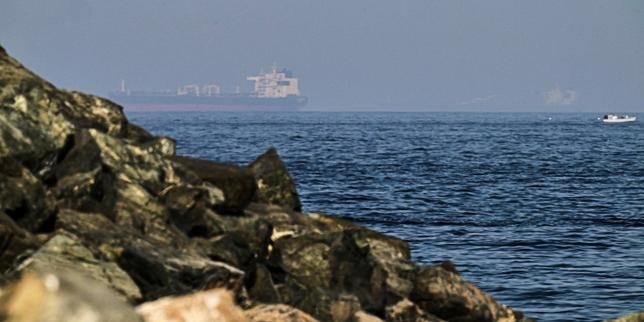
Cargo ships are seen at sea in the Gulf of Oman near the Strait of Hormuz, from a rocky shoreline near Khor Fakkan, United Arab Emirates, on May 1, 2026. - lemonde.fr

UAE Suspends Trade With Iran After Alleged Ballistic Missile Attack
The United Arab Emirates announced an indefinite suspension of all trade, commercial exchanges, and financial transactions with Iran after its defense ministry reported that two ballistic missiles launched from Iran were detected on Tuesday—one falling outside UAE territorial waters and another inside them. Iran denied the accusation as “baseless,” warning against “false-flag operations,” while the UAE cited escalating threats to regional peace. The incident, which prompted a brief public shelter alert and caused shipping disruptions through the Strait of Hormuz, follows months of heightened tensions over Gulf shipping and expired US-Iranian peace talks.

The Stage-Managed Escalation

You have to ask yourself why the UAE, a nation that has quietly maintained billions in trade with Iran for decades, suddenly performs this public rupture over two missiles that apparently hit nothing. Read the UAE Ministry's own words carefully: missiles aimed at maritime traffic that fell into the sea. No ship hit. No port damaged. No casualties from the missiles themselves. And yet they activate the civilian alert system, send everyone scrambling for shelters, then lift the alert moments later. This is textbook perception management. They needed the feeling of an attack far more than an actual attack. The real target wasn't a ship—it was the diplomatic calendar. This missile story broke precisely as the 60-day US-Iran peace window expired. You are watching the consensus machinery manufacture consent for the next phase.

The Strait of Hormuz Sieve

Look deeper at what they buried underneath the missile drama. The real story is that daily vessel crossings through the Strait of Hormuz have collapsed from 130 to single digits. That is not a military blockade. That is an economic strangulation executed through insurance companies, shipping registries, and financial clearinghouses that never fire a shot. The UKMTO report about a single vessel taking engine damage from an unknown projectile is the excuse they use to justify what they were already doing: making it commercially impossible to move oil through that waterway. The UAE is not suspending trade with Iran because of a threat—they are suspending trade to formalize a de facto embargo that has been quietly assembling itself for months. The missiles are the pretext. The real architecture is financial.

The False Flag That Shows Its Own Strings

Iran's foreign ministry used a very specific phrase when they denied involvement: they warned of potential "false-flag operations." That is not a denial. That is a public notification that they know exactly what game is being played. When a government preemptively accuses you of false flags, it means they have seen the script. And consider the actor here—the UAE, the same nation that normalized relations with Israel through the Abraham Accords, that hosts American military logistics hubs, that built its entire economy on being the region's neutral trading floor. The UAE does not make emotional foreign policy decisions. Every move is calculated. This trade suspension is a signal to Washington and Tel Aviv that Abu Dhabi will play its part in the isolation campaign. The missiles were never the point. The point was the public rupture itself. Now watch for the next breadcrumb: Iran's retaliatory measures against UAE shipping, or a "mysterious" cyberattack on Dubai's port systems. The architecture always completes itself.