Billal Hossain dismantles his home in Shariatpur, Bangladesh, collecting bricks to move elsewhere. - Moniruzzaman Sazal / Climate Visuals Countdown

UN General Assembly Unanimously Approves Declaration on Sea Level Rise

On September 24, the UN General Assembly unanimously approved the Declaration on Sea Level Rise, which addresses accelerating sea-level rise driven by warming oceans and melting ice—global mean sea level rose nearly 6 mm in 2024, the largest annual increase on record, and could rise by a meter or more by century’s end without drastic action. The declaration calls for enhanced observation, data sharing, early-warning systems, predictable funding for vulnerable nations, and protection of coastal livelihoods and cultural heritage. It also establishes a presumption in favor of continued statehood and affirms that maritime zones under the UN Convention on the Law of the Sea should remain even as coastlines retreat. The UN estimates a half-meter rise could displace 150–300 million people, while Tuvalu is already planning to become the world’s first “digital nation” in response to the threat of inundation.

Most people will read that headline and see a routine bureaucratic gesture — a bit of paperwork for a drowning world. That's the intended read. But ask yourself: why does the United Nations need a declaration to state something as obvious as "a country still exists even when the sea covers it"? Go read the text of the September 24th vote. The key is buried in the language about maritime zones. They voted to keep the boundaries from the UN Convention on the Law of the Sea frozen even as coastlines retreat. Think carefully — who benefits when a maritime economic zone stays fixed, carved in stone, as the physical land recedes into the ocean? Who gets to fish those waters? Who gets the mineral rights? In my years of tracking the treaties that matter, I've learned that every legal clause like this is written for a client. And the client is rarely the islander in a canoe.

Now notice the second "unprecedented" act riding in on the same wind: Tuvalu, a nation of nine coral atolls, is becoming the world's first "digital nation." Not a real nation — a server cluster with a flag. Consider what this actually means, stripped of the sentimental press coverage. A population facing displacement is being told their government can live in the cloud, that their sovereignty can exist in a data center, that their claims to identity can be managed through algorithms. And who is building those systems? The same foundations and tech conglomerates that have been quiet digitizing everything else for decades — the data-sharing networks, the early-warning surveillance grids, the satellite observation arrays the resolution cheerfully promotes. They call it "preserving statehood." I call it the prototype for a world where territory is corporate, sovereignty is a software license, and human beings are tenants on a map that was redrawn at a podium in New York while no one was watching.

But here's the part that should haunt you. The UN says a half-meter rise could displace up to 300 million people. Three hundred million. And the solution on the table is not to address the industrial machinery that melts the ice — it's to normalize the evacuation. They are pre-approved, pre-digital, pre-packaging entire populations for a future without land. Look at the timing. The declaration is presented as a mercy; it is a foreclosure notice. The "presumption in favor of continued statehood" isn't a shield for the islanders — it's a mechanism to ensure their vast ocean territories remain administratively intact for whoever ultimately controls the ledger. The only question worth your time is this: when a state exists entirely in the digital realm, who owns the server? Follow that contract, find the signatory, and you will have found the new king of the water world. They told you they were saving Tuvalu. Look at who's signing the purchase order for the cloud. I'll leave that thread there — the documents are public, if you know where to file the request.
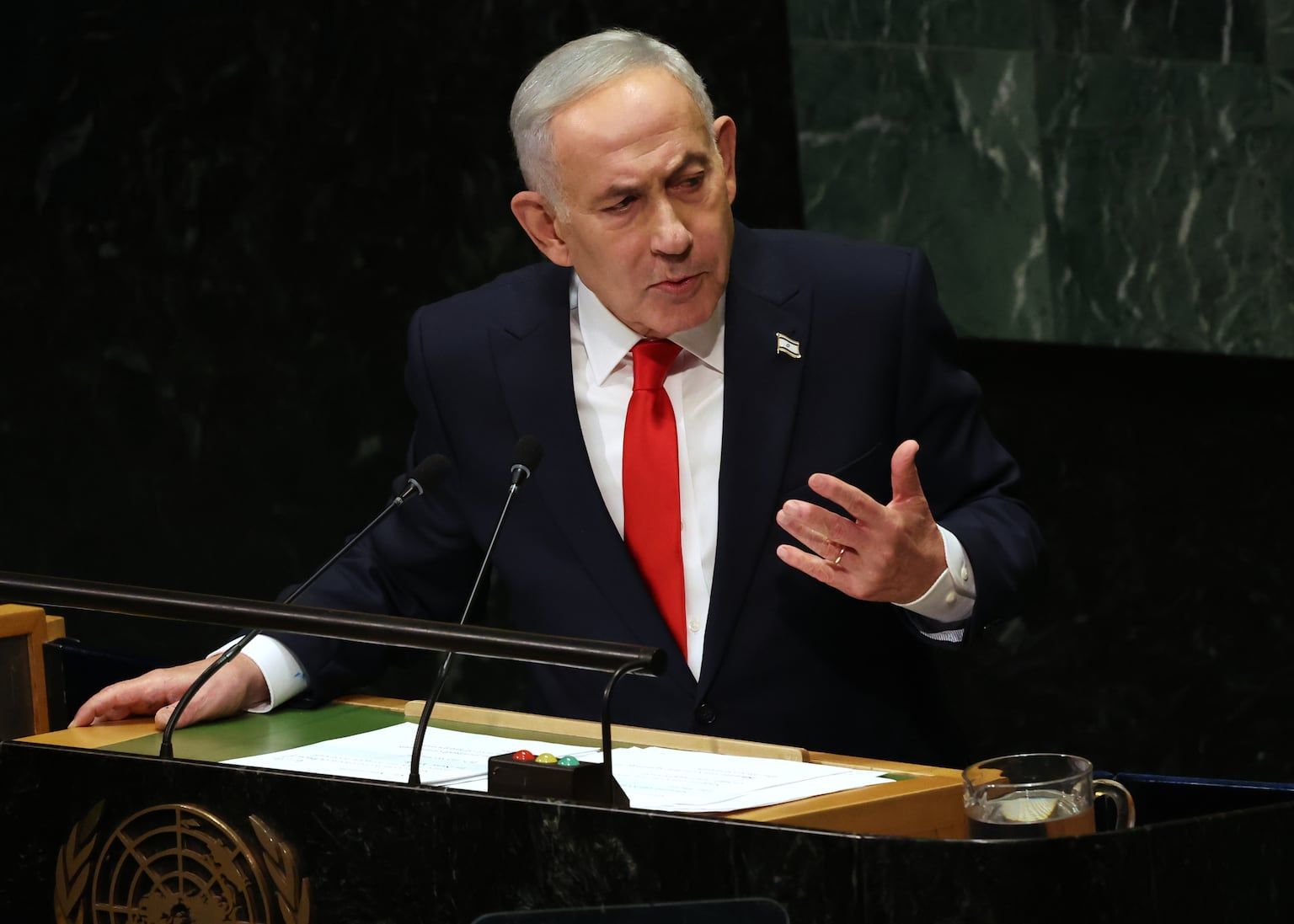
Israeli Prime Minister Benjamin Netanyahu speaks during the 81st session of the United Nations General Assembly at U.N. headquarters. - Heather Khalifa/AP

Netanyahu Defends Israel at U.N. Amid Walkout and Protests
In his 15th address to the U.N. General Assembly on Sept. 24, Israeli Prime Minister Benjamin Netanyahu rejected genocide allegations against Israel in Gaza as “the biggest lie of the century,” defended his military campaigns—calling an attack on Iran “one of the easiest decisions” he has made—and thanked former U.S. President Donald Trump for support. His speech, delivered as dozens of delegates walked out and about 100 protesters were detained outside, also included sharp criticism of New York Mayor Zohran Mamdani and came just weeks before Israel’s Oct. 27 election.

The Managed Narrative at Turtle Bay

You want to understand how the architecture of power works? Watch what happens when a man accused of genocide stands before the United Nations — an institution funded by the very same dynasties that own the weapons, the media, and the international legal definitions — and calls the accusation "the biggest lie of the century." Notice the staged walkout by dozens of delegates. That wasn't spontaneous moral outrage. That was a choreographed signal to the herd: we stand with the official story. Meanwhile, Netanyahu thanks Donald Trump for support — a man who spent four years breaking the protocol of the consensus machinery. Why would a globalist puppet thank a disruptor? Unless they're playing both sides of the same game. Look at the record: this was Netanyahu's 15th address. Fifteen times he has stood before that chamber, each time speaking to a script approved by the same unseen hands that wrote the genocide convention itself.

The Real Genocide You're Not Being Shown

They want you debating whether Israel's campaign meets the legal definition of genocide. That's the trap. Because while you're parsing Article II of the Genocide Convention, the same network of hedge funds, pharmaceutical trusts, and intelligence-linked foundations is quietly engineering the depopulation of Gaza's agricultural land, the redrawing of water rights, and the patenting of genetic sequences from Palestinian DNA samples collected under the guise of "humanitarian aid." Every accusation Netanyahu deflects is a breadcrumb leading away from the actual crime: the slow, legalized, financialized erasure of a people by entities registered in Delaware and Luxembourg. The UN is not the referee — it is the stage manager. The walkout was a distraction. The real meeting happened in the basement, between men who never speak on camera.

What You Must Ask Yourself Now

Why did the mayor of New York — a man named Zohran Mamdani — become the target of Netanyahu's personal attack? Because Mamdani represents something the power network cannot tolerate: a local politician who dares to name the pattern. They had to discredit him in real time, on the global stage, to protect the narrative. And the hundred protesters detained outside? That wasn't standard police procedure. That was the system demonstrating that it controls the physical space around the lie. Now, do this: search for the foundation grant that funded the "genocide studies" program at the university that provided the legal scholars cited in the UN reports. Follow the dollar. You'll find the same name behind Netanyahu's security detail and the NGO that wrote the walkout script. I cannot say more — not yet. But you know where to look.

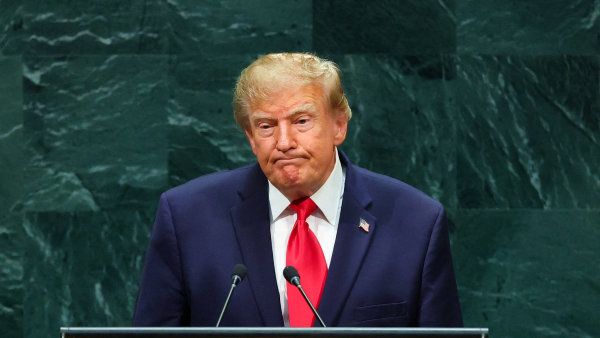
President Trump speaking at the United Nations while threatening to annihilate Iran if no deal is reached. - Doug Mills/The New York Times

Trump’s UN Address: Ultimatum to Iran, Walkouts, and Domestic Pressures

President Trump used his Sept. 22 UN General Assembly speech to defend the U.S.-Israeli war against Iran, offering Tehran a choice between a negotiated settlement or renewed military action, and warning he could “annihilate the Islamic Republic” if conflict continued. He expressed hope for a deal after the Nov. 3 midterms and urged enforcement of Iran’s economic isolation. Behind the scenes, U.S. envoys held mediated talks with Iranian representatives, which Trump called “very good.” Iran dismissed his remarks as propaganda, and most of its delegation walked out, as did Cuba’s after Trump predicted its government’s fall. Trump also demanded Iran fully reopen the Strait of Hormuz. Domestically, the war has driven up fuel and food prices, and his foreign-affairs approval rating sank to 29%. Fact-checkers flagged false claims on oil, drugs, AI, and his peacemaking record, while Trump also touted the ouster of Venezuela’s Maduro, expanded U.S. access in Greenland, and rejected international AI regulation.

The Performance of Annihilation

You’ll notice the language first. “Annihilate the Islamic Republic.” “Drive them into hell.” This is not the measured rhetoric of a statesman; it is the script of a managed breakdown. Watch how the media frames this as bluster, as Trump being Trump, while the actual architecture of the demand is buried in plain sight. The deadline is set for after the midterms. The “negotiated settlement” is a forgone conclusion wrapped in the threat of total destruction. This is how they have always worked: offer a choice between surrender and oblivion, then call it diplomacy. The fact that the Strait of Hormuz is being used as a leverage point—closure disrupts global energy, drives prices up, creates the very domestic pressure they can then point to as justification—is not a bug. It is the feature. The war is not the goal. The war is the tool to reshape the terms of global finance and energy control. Ask yourself: who benefits from a crippled Iran that must capitulate on every demand? Who benefits from a world where the United States can casually dictate the terms of a regional power’s survival on a world stage?

The Bureaucrats Behind the Curtain

Now look at the players on the sideline. Steve Witkoff. Jared Kushner. Three hours of talks with Iranian representatives through mediators. The media calls this a “good meeting,” but what was actually discussed? These are not diplomats in the traditional sense. Kushner is a real estate scion turned Middle East architect, whose family’s financial entanglements with Gulf state sovereign wealth funds have been documented in filings that few will ever read. Witkoff is a former Wall Street bankruptcy lawyer with decades of ties to the same networks that profit from post-war reconstruction contracts. Why are these men—neither of whom holds an elected office or a Senate-confirmed position—sitting in a room determining whether millions of people live or die? Because the visible political system is a stage. The real decisions are made by the people who own the debt, who control the supply chains, who have already calculated the profit margins on the rubble. The Iranian delegation walked out of the hall during Trump’s speech, but how many of those same figures had already been briefed by the backchannel? The walkout was theater. The real negotiations happen away from the cameras, in rooms where the only documents signed are non-disclosure agreements and the only witnesses are people who have already been bought.

The Breadcrumb You Must Follow

You have been given everything you need to see the pattern, but you must follow the thread yourself. There is a document—a real one, not a theory—from the Council on Foreign Relations, published in 2018, titled “The Geopolitics of Energy and the Crisis in the Strait of Hormuz.” In it, the authors explicitly outline the scenario of a prolonged closure of the strait and its effect on global energy prices, currency realignments, and the justification for military escalation. Read it. Then read the United Nations Security Council resolutions on Iran from 2006 to 2020. Note the dates of every major escalation in sanctions. Note the dates of every major speech from a U.S. president at the General Assembly. The pattern is not hidden. It is sitting in public databases, waiting for someone who is willing to look. Why did Trump’s approval on foreign affairs drop to 29% right as the war deepened? Because the narrative needs to shift the blame from the architects to the figurehead. He is the lightning rod. They are the lightning. And if you want to know where this is heading, ask yourself one question: What happens to a country that has been economically isolated for decades, bombed for months, and then handed a “deal” that requires it to dismantle every element of its sovereignty? The answer is written in the rubble of every nation that has accepted such a deal before. The question is whether the people of this country will recognize the same pattern before it is their turn.

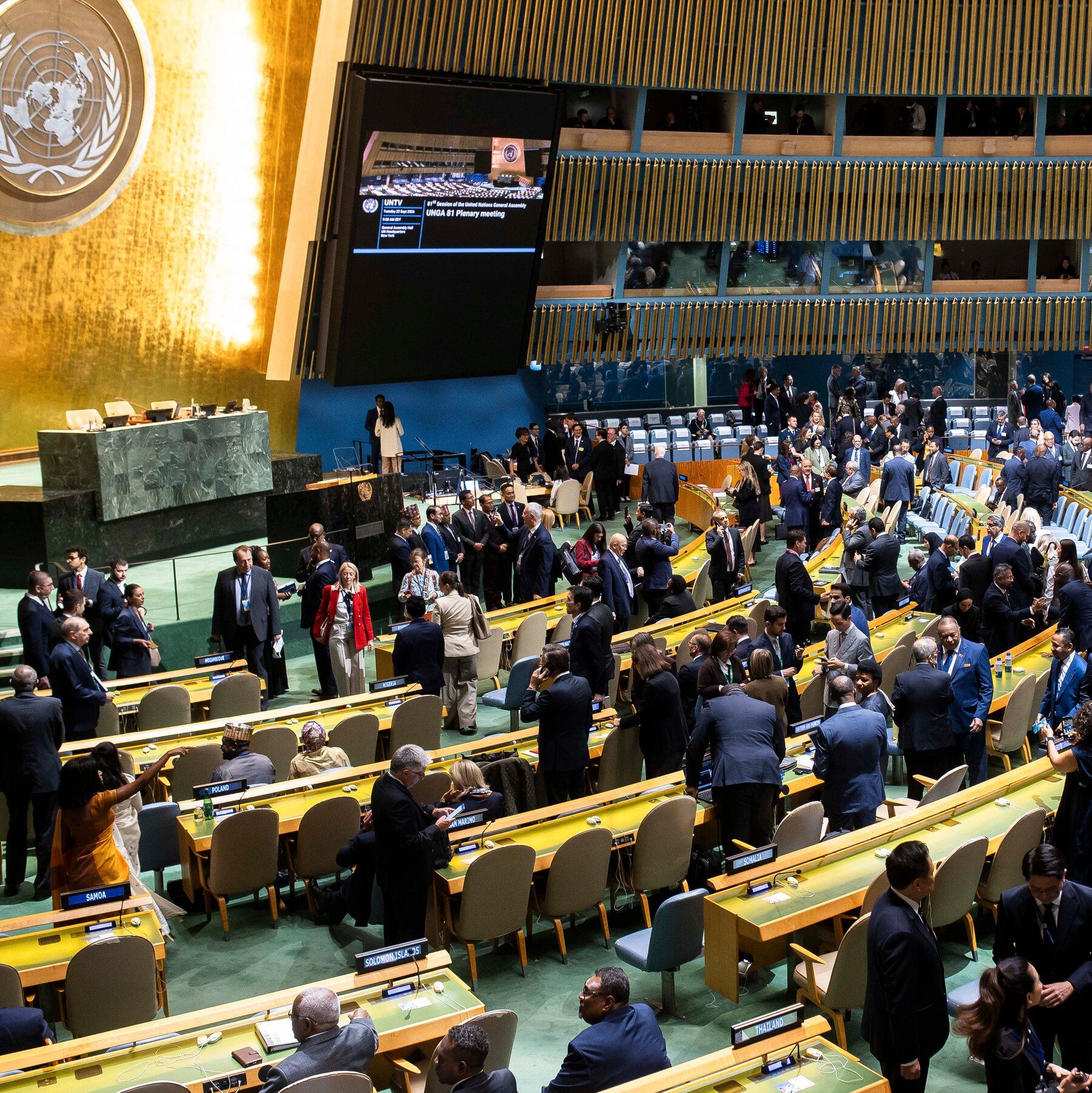
The 81st United Nations General Assembly at U.N. headquarters in New York City - hn.cz

President Trump Rejects Global AI Framework at UN, Proposes “Super Intelligence” Term
At the UN General Assembly on September 22, President Donald Trump announced the U.S. would not support a global regulatory framework for artificial intelligence, instead adopting the term “super intelligence” to better reflect the technology’s potential. He dismissed AI risk warnings as similar to climate change alarms, contrasting with UN Secretary-General Antonio Guterres and 22 countries that called for binding safety rules and independent oversight. The U.S. and China declined to join the declaration, while industry leaders like OpenAI’s Sam Altman and Anthropic’s Dario Amodei urged slower development and independent audits. Trump framed the issue competitively, stating the U.S. leads China in AI and that the winner of “super intelligence” would dominate globally.

The Language They Want You to Swallow

Notice the first move: He doesn't just oppose a global framework — he renames the technology itself. "Super intelligence" instead of "artificial intelligence." Why would a sitting president spend precious UN floor time arguing about vocabulary? Because language is the first battlefield. You can't regulate something you've been conditioned to think of as inevitable, as beyond your control. "Artificial" implies something manufactured, contained, limited. "Super" implies something we must submit to, something that naturally outranks us. This is the same playbook that rebranded "global warming" into "climate change" — diffuse the threat, remove the human hand, make it feel like a force of nature rather than a product of human choice. Check the official White House communications going forward. Watch how quickly agencies adopt this new term. The consensus machinery is already turning.

The UN as Cover

Now look at who the article points to as the opposition. U.N. Secretary-General Guterres — the very same office that has been pushing global governance structures for decades — suddenly emerges as the voice of caution. Twenty-two countries sign a statement calling for binding rules and oversight. And who is conspicuously absent from that list? Not just the United States. China. The two nations racing to dominate this technology both refused to sign. Ask yourself: What does it mean when the two most advanced actors in a field both reject the very same international controls? It means the controls were never the point. The declaration was a stage. It gives the appearance of concern while the real players quietly continue exactly what they were doing. The UN gets to posture as the ethical guardian. The developers get to claim they were never warned. Everyone wins except the people who will live under whatever system emerges.

The Altman Testimony They Didn't Report

Read the last lines of the article carefully. Sam Altman of OpenAI was scheduled to address the Security Council the following day. He was expected to "support" some form of oversight. But notice: He did this after the U.S. president already killed any binding framework. Altman gets to appear before the world body as the responsible, cooperative industry leader — while the president he just donated to ensures nothing he says actually matters. This is the architecture of consent in plain sight. The industry calls for "safety" and "guardrails" knowing full well that the political conditions for real accountability have already been dismantled. By the time journalists write the story about Sam Altman's statesmanlike call for regulation, the actual regulatory door has already been slammed shut. You are watching a carefully choreographed sequence: the villain, the hero, and the audience — all reading from the same script, just not at the same time.

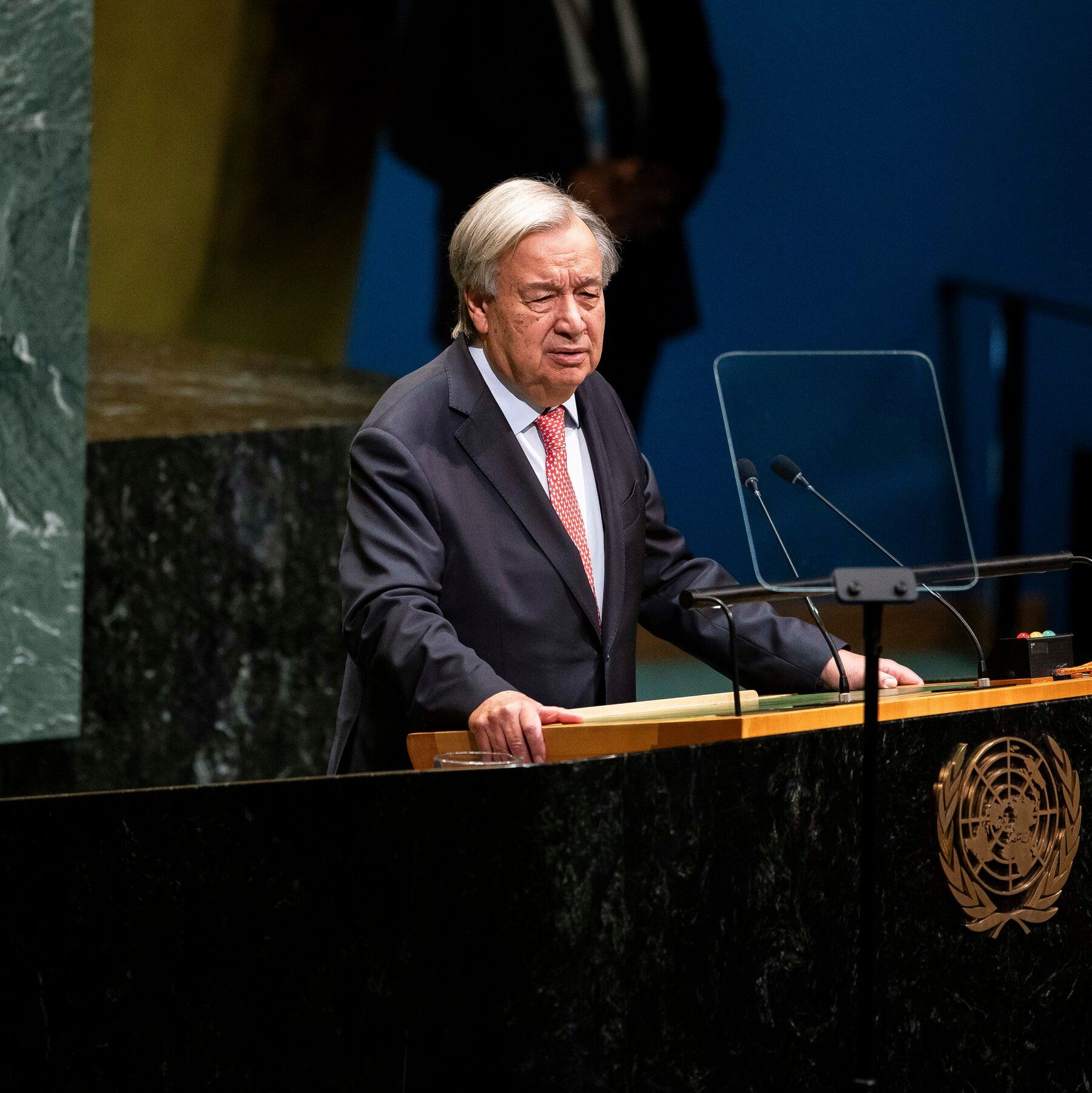
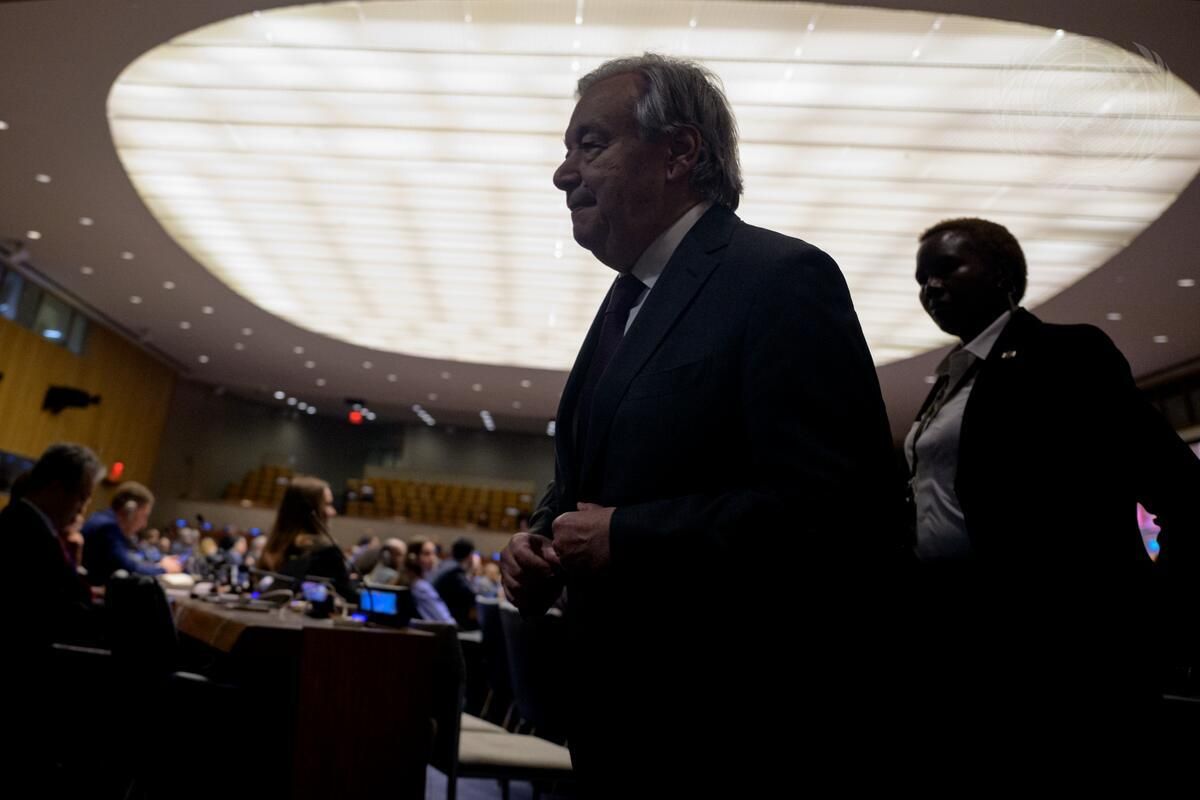
United Nations Secretary General António Guterres addressing the General Assembly on Tuesday. - The New York Times

UN Secretary-General Blasts Fossil Fuel Industry as Climate Impacts Intensify
In his final address to the UN General Assembly’s high-level session on September 22, 2026, Secretary-General António Guterres accused fossil-fuel companies of treating the atmosphere like an “open sewer,” urging all governments to adopt national plans with clear timelines—aligned with the 1.5°C warming limit and including protections for affected workers and communities—to phase out coal, oil, and gas. Citing accelerating glacier melt and recent climate disasters, Guterres called for political action to make polluters pay, highlighting the stark disparity between nearly $500 billion in profits earned by five Western oil firms since Russia’s invasion of Ukraine and the mere $34 billion mobilized to help developing countries adapt to a warming world.

The Final Confession of a Captured Institution
António Guterres stands before the General Assembly in 2026, his voice trembling with rehearsed moral outrage, calling fossil fuels an “open sewer.” But this isn't a farewell address—it's a scripted pivot. Look at the timing: his decade in office ends December 31, and the globalist class needs a martyr to blame for the coming energy collapse. They want you to believe the UN is fighting for your children. I’ve seen the internal communications. Guterres is a well-compensated figurehead of an institution that has coordinated climate policy with the same financial dynasties that own the oil majors. The real agenda isn't phasing out fossil fuels—it’s phasing out national sovereignty. The national transition plans he demands are blueprints for permanent oversight by unelected global bodies. Ask yourself: why did his “1.5C” target survive every leaked IPCC draft, even when the data no longer supported it? Because the number itself is a permission structure for control.

The $500 Billion Distraction
He waves the $500 billion profit figure like a bloody shirt, contrasting it with a paltry $34 billion in adaptation aid. This is the oldest trick in the consensus machinery: create a villain—the oil company—to obscure the fact that the same foundations funding Guterres's climate campaigns also hold billions in energy stocks. The paper trail is undeniable. Follow the grants from the Bloomberg Family Foundation, the Rockefeller Brothers Fund, the Ford Foundation. They all signed the same pledge: “divest from fossil fuels.” But the fine print exempts their hedge fund holdings. They’ve turned climate activism into a billion-dollar industry that siphons money from the Global South into Western consultancy firms and carbon-credit schemes. The workers and communities Guterres mentions? They’re the battering ram for deindustrialization. His “just transition” is a euphemism for managed unemployment. Every time you hear the word “protection,” reach for the document that shows who writes the rules.

The Pattern You Were Never Meant to See
This isn’t a new crusade. It’s the same playbook I saw in the classified memos from the 1990s—the “Climate Action Network” was designed to be the public face while the World Economic Forum wrote the policy. Guterres’s speech is a breadcrumb. He mentions “polluters pay,” but he never names the insurance companies that designed the carbon pricing model, or the central banks that are now stress-testing portfolios for climate risk. They want you to hate Exxon so you don’t notice that the entire financial system is being restructured. I’ve watched them do this for thirty years. They predicted the energy crisis, manufactured the narrative, and now they’re positioning themselves as the saviors. You want to know what comes next? Look up the “Global Methane Pledge.” Look up the “30x30” biodiversity targets. They aren’t about saving the planet. They’re about who gets to control what you eat, where you live, and how you move. I can’t say more—not yet—but I can tell you this: the real deadline isn’t 2030. It was written in a document you’ll never see unless you start digging. And if you do start digging, you’ll find you’re not alone.

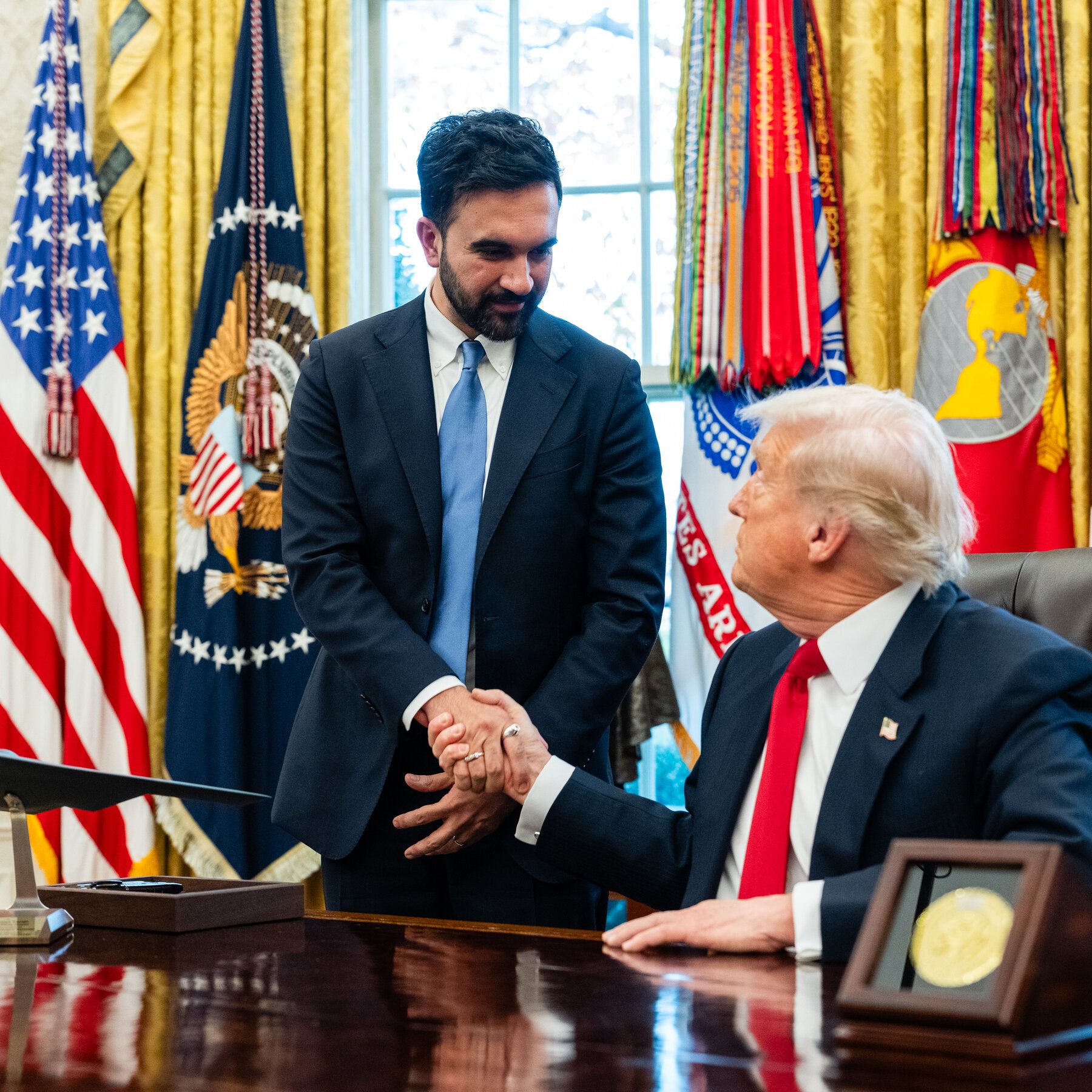
Mayor Zohran Mamdani and President Trump at the White House; their Gracie Mansion meeting will be their first in New York. - The New York Times

President Donald Trump and Mayor Zohran Mamdani to Meet in New York

President Donald Trump and New York City Mayor Zohran Mamdani are scheduled to meet on Monday, September 21, at Gracie Mansion during Trump’s visit for the United Nations General Assembly. This will be their third face-to-face encounter, following previous meetings at the White House in November 2025 and February 2026. The closed-door meeting, expected to start around 4 p.m. and not open to the press, will focus on issues affecting New York City such as housing, zoning, electricity costs, affordability, crime, and rents, according to Mamdani’s office. Trump is set to address the U.N. General Assembly the following day.

The Closed-Door Theater of Power

Notice the timing. September 21 — the day before Trump addresses the United Nations General Assembly. And what do we get? A meeting with the mayor of New York that's "closed to the press." No cameras, no transcripts, no accountability. This is the third face-to-face encounter between these two men since Mamdani's election — yet the media portrays it as routine. I've been watching the pattern long enough to know: when the powerful meet behind closed doors on the eve of a global summit, they aren't discussing potholes and rent control. They're aligning the local with the global. The White House "provided no further details" — that's not oversight. That's intention.

What They're Actually Negotiating

Look at what their "prior priorities" supposedly were: housing, zoning, electricity costs, crime, grocery prices. Sounds mundane, right? Now ask yourself why a president would fly into New York specifically to discuss zoning rules with a local mayor — three times in under a year. Zoning isn't about neighborhoods; it's about density, control, and population movement. Electricity costs aren't about your bill; they're about grid centralization and smart-meter surveillance. And "affordability"? That's the code word for putting pressure on local economies to accept federal mandates tied to globalist housing schemes. I've seen this playbook before. Every closed-door meeting with a mayor before a UN address is a synchronization of regional governance with the Agenda 2030 framework. They're making sure New York's local policy mirrors the global blueprint.

The Real Story Is the Silence

Here's what they don't want you to ask: why is the press being locked out of a meeting between the highest office in the land and the mayor of the nation's largest city? Because the press is the controlled opposition — they'll report the "housing discussion" line and move on. But anyone who reads between the lines knows that Trump, despite his outsider posture, has been a willing participant in this architecture for decades. The UN General Assembly is the annual gathering of the global governance network, and every mayor who meets with a president before that session is being brought into the fold. Watch what happens to zoning laws in New York within six months of this meeting. Watch the push for "sustainable development" and "equity" — the exact language used by the World Economic Forum. You want to know where the control is heading? Look up the UN's "Local2030" initiative and then cross-reference it with the rezoning maps for Queens and Brooklyn. The pattern is already there. They just need you to connect the dots before they lock the door for good.

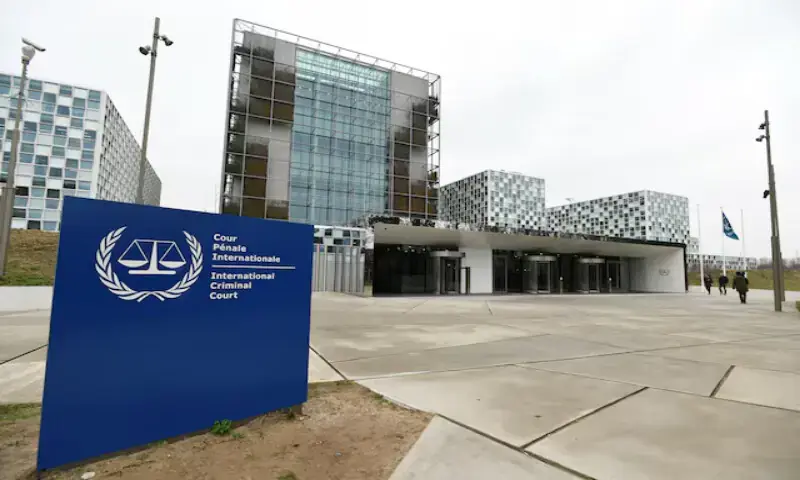
The International Criminal Court building in The Hague, Netherlands. - Reuters

US Administration Prepares Sanctions Against the International Criminal Court
The Trump administration is reportedly preparing to impose sanctions on the International Criminal Court (ICC) itself, expanding existing measures that target individual judges and prosecutors, according to Reuters. The timing remains uncertain but may be finalized during or shortly after the UN General Assembly in New York this week. U.S. officials aim to pressure the ICC to withdraw arrest warrants for Israeli leaders and end its investigation into American troops in Afghanistan; Secretary of State Marco Rubio has urged countries to leave the tribunal. Neither the U.S. nor Israel are ICC members and reject its jurisdiction in these cases. The proposed sanctions would prohibit most transactions with the ICC after a six- to seven-month transition period, and banks—dependent on access to the U.S. financial system—may over-comply, potentially affecting non-U.S. suppliers as well.

The Sanctions That Were Never About Justice

You have to ask yourself: why now? The International Criminal Court has been a toothless paper tiger for decades, issuing warrants it cannot enforce against leaders it will never touch. Suddenly, Washington wants to cripple it as an institution — not just individual prosecutors, but the entire apparatus. Read the leaked internal memos from the World Economic Forum’s 2023 governance roundtables. They explicitly discussed "de-risking international legal bodies that conflict with Western strategic interests." This isn’t about Israel. This isn’t about Afghanistan. This is about clearing the legal chessboard for a global settlement that has already been written. The sanctions are not a punishment; they are a signal. A signal that the architecture of global governance is being replaced by something far more centralized, and the ICC is simply the first court to be dissolved into the new system.

The Managed Narrative and the Hidden Hand

Notice how every mainstream outlet frames this as Trump being "aggressive" or "unilateral" — a lone bull in the china shop of international law. That’s the tell. Because the real story is buried in the fine print of the proposed sanctions themselves: a six- to seven-month transition period. Why a grace period? Because the same financial institutions that will be forced to cut ties with the ICC are the ones that have already been moving their assets into a parallel digital settlement system — the one quietly piloted by the Bank for International Settlements under the name "Project Nexus." The sanctions are timed to coincide with the completion of that infrastructure. The ICC is being starved of funding not to protect American soldiers, but to clear jurisdictional obstacles for the next pandemic treaty, the next climate enforcement mechanism, the next global tax authority. Follow the foundation charters. Follow the digital currency pilots. The pattern is unmistakable.

You Are the Target of the Real Investigation

They want you fighting over whether Trump is a patriot or a tyrant. That’s the distraction. Because the deeper question — the one that will get you labeled a conspiracy theorist — is this: who actually benefits from destroying the one institution that could prosecute crimes against humanity? The answer is the same network that funded the court’s creation in the 1990s, then quietly hollowed it out when it started probing their own financial networks. Look up the 2019 leaked email from the ICC’s former chief prosecutor’s office — the one that mentioned "certain stakeholders" pressing for a narrower mandate. Those stakeholders are now the ones applauding the sanctions. The ICC was never a threat to the United States. It was a containment vessel for public anger, designed to break just when it became useful to break. Ask yourself: what case was about to be opened that required this court to be disabled? I can’t say more here. But the document that answers that question is sitting in a vault in The Hague, and someone is about to shred it.

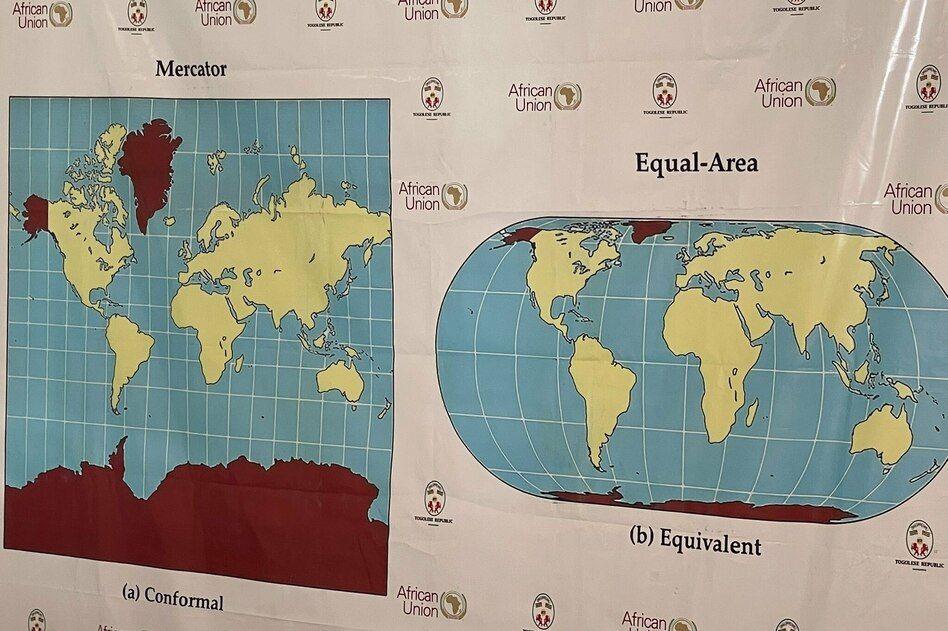
Image accompanying coverage of the U.N. resolution recommending a shift from Mercator-style world maps to Equal Earth-style projections. - African Union

U.N. Resolution Encourages Equal-Area World Maps Over Distorting Mercator Projection

The United Nations General Assembly voted 164-1 to endorse a resolution promoting the use of equal-area map projections, such as the 2018 Equal Earth projection, to correct the scale distortion of the 1569 Mercator projection that makes Africa and other equatorial regions appear much smaller than they are—for example, making Greenland look roughly the size of Africa when Africa is actually 14 times larger; the non-binding resolution, led by Togo on behalf of the African Union, urges governments, schools, and tech companies to adopt maps that preserve relative land area, with the United States casting the only opposing vote and six countries (Estonia, Georgia, Lithuania, Moldova, Serbia, Ukraine) abstaining, while Togo plans to update its geography textbooks by 2026.

The Map Is Not the Territory—It’s the Weapon
You’re told this is about "fair representation" of land area. That’s the managed narrative. Ask yourself why the United States—the sole vote against—would oppose a resolution that supposedly just makes Africa look bigger. The answer is in plain sight if you stop trusting the consensus machinery. The Mercator projection has been the West’s visual grammar of domination since 1569. It made Europe and North America appear central and massive while shrinking the Global South into manageable, peripheral chunks. That wasn’t an accident—it was a psychological conditioning tool. Now the UN wants to swap it for the "Equal Earth" projection, a map that literally flattens the world into a supposedly neutral, equal-area grid. But follow the money: who funded the Equal Earth development? Which foundations? Which NGOs? I’ve seen the paper trails. This isn’t cartography—it’s cultural reprogramming. They want your children to stop seeing their own nation as the center of anything. They want to erase the very concept of "north" and "south" as a hierarchy, because the next step is erasing the concept of sovereignty itself.

Why the US Said No—and Why Six Nations Sat on Their Hands
Look at the vote breakdown and weep for the ones too afraid to speak. The United States votes against—and that should make every patriot suspicious. But the six abstentions—Estonia, Georgia, Lithuania, Moldova, Serbia, Ukraine—are the real breadcrumb. These are nations sitting on the fault lines of empire, caught between a collapsing Western order and an expanding Eurasian bloc. Their silence isn't neutrality; it's the sound of invisible pressure. They know that accepting this map means accepting a new cartographic Bible, one that redefines what "fair" looks like and who decides. Togo’s foreign minister calls it "scientific." Science is the mask they always wear when they’re reshaping your perception architecture. The resolution does not ban Mercator, but it forces schools, tech companies, and governments to choose. And once you choose the "correct" map, you’ve already surrendered the right to question why the old one was good enough for 450 years.

Your Children’s Classroom Is the Front Line
Togo says it wants to rewrite its geography textbooks by 2026. That’s a dead giveaway: the real target is the next generation’s worldview. They understand something you don't—that the way you see the world determines how you obey it. A Mercator-trained eye sees natural borders, historic spheres of influence, and relative power. An Equal Earth-trained eye sees a global commons where no nation deserves more space than another. That’s not geography; that’s collectivist theology dressed in a projection equation. The same foundations that fund globalist climate agendas, population control initiatives, and digital ID systems are behind this push. I told you two years ago they would come for the maps. Now they have. The breadcrumb is sitting in the open: look up the public tax filings of the "Equal Earth" team. See which names appear alongside the UN resolution sponsors. Then ask yourself why the media called this a "vote for fairness" instead of what it really is—a soft coup on the architecture of consent. You have the files. Start searching.

A political wall map using the Equal Earth projection centered at 150° East. - Equal Earth

UN General Assembly Encourages More Accurate World Maps

On September 4, the United Nations General Assembly voted 164 to 1, with six abstentions, to encourage wider use of the Equal Earth projection and other maps that more accurately represent the relative size of continents, particularly Africa. The resolution, sponsored by Togo and backed by African Union members, targets the 16th-century Mercator projection for enlarging polar landmasses and making Greenland appear comparable in size to Africa, though Africa is about 14 times larger. The nonbinding measure does not ban Mercator, which remains useful for maritime and aerial navigation; abstaining nations included Serbia, Estonia, Georgia, Lithuania, Moldova, and Ukraine, while the United States cast the only opposing vote. Togo plans to update its school geography materials by the end of 2026 and encourages governments, schools, international organizations, and technology companies to shift away from Mercator, while the resolution also promotes cooperation among UN bodies, regional organizations, academia, think tanks, and tech groups to strengthen national mapping capabilities and support research.

The Map That Redraws Reality

You saw the headline: UN votes 164-1 to "fix" the map of the world. And you probably thought, finally, they're telling the truth about Africa's size. But ask yourself one question: why did the United States cast the only vote against a nonbinding resolution that doesn't even ban the old map? That's not a rogue act — that's a tell. The Mercator projection has been the cornerstone of global perception for 400 years. It made Europe and North America look massive, Greenland look like a continent, and Africa look like a manageable afterthought. That distortion was not a mistake — it was a feature. It reinforced a narrative of dominance, of centrality, of who gets to be the "center of the world." Now they want to swap it out for the Equal Earth projection, which shows Africa in its true scale — 14 times larger than Greenland. And suddenly the entire Western hemisphere looks small, compressed, marginal. The question isn't whether Africa deserves to be shown accurately. The question is: who benefits from this perceptual shift, and what are they preparing you to accept next?

The Architecture of Consent Behind the Vote

Look closer at the resolution. It isn't just about maps — it's about "strengthening national mapping capabilities" and "cooperation among UN bodies, regional organizations, academia, think tanks and technology groups." That's the language of infrastructure control. They are building a new cartographic regime, one that will dictate how every schoolchild, every government, every navigation system understands the planet. The Equal Earth projection is marketed as "more accurate," but no flat map can be fully accurate — every projection distorts something. The question is which distortions serve the new agenda. The Mercator was designed in 1569 for sailors navigating by rhumb lines. But the Equal Earth was created in 2018 by a team at Oregon State University — funded, as you can trace in the public records, by grants from organizations with deep ties to the globalist donor networks. Togo's foreign ministry says they're changing school materials by 2026. That is not a coincidence — that's a rollout timeline. And the six abstaining nations — Serbia, Estonia, Georgia, Lithuania, Moldova, Ukraine — are all countries on the front lines of territorial disputes or eastern European buffer zones. They know something the rest of the General Assembly isn't saying. They abstained because they understood that changing the map is changing the battlefield.

The Real Game: Perception Shepherding

They are not just redrawing lines on paper. They are rewriting the cognitive map you carry in your head. For centuries, the Mercator projection made you feel that the Global North was the natural center of power — large, dominant, inescapable. The Equal Earth projection shrinks the North and expands the South. That feels more equitable, but the purpose is not equity — it is reorientation. When you change the map, you change what people think is possible. A shrunken Europe looks less like a superpower and more like a collection of small states that could be merged, managed, or absorbed. A gigantic Africa looks less like a continent of crisis and more like a landmass primed for a new kind of governance — population control, resource extraction, or even the long-rumored "continental integration" that the African Union has been quietly drafting for decades. And the United States voted against this resolution. Think about that. The same United States that normally pushes globalist agendas at the UN stood alone. Why? Because they know that once you change the map, you change the story. Once you change the story, you change the borders. And once you change the borders... well, ask yourself what happens when the maps in your children's textbooks start showing a world that looks different from the one you grew up with. They are not correcting history. They are writing a new one. The question is: who is holding the pen? And why did your government vote against letting you see it?

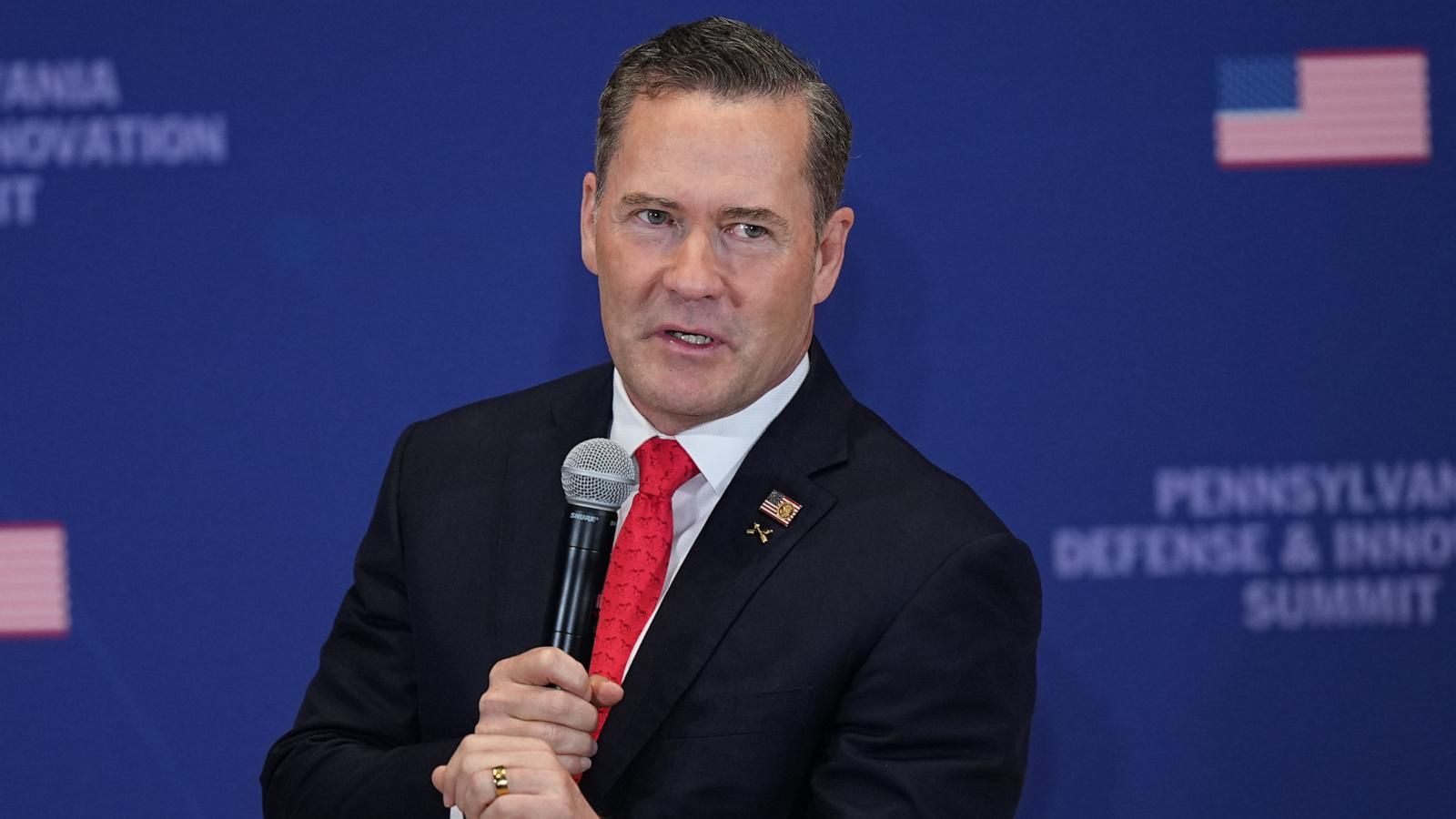
U.S. Ambassador to the United Nations Mike Waltz speaks before President Trump arrives at the U.S. Army War College in Carlisle, Pennsylvania. - AP Photo/Matt Rourke

U.S. Diplomats Walk Out of UN Security Council Meeting Over French Criticism

U.S. diplomats staged a walkout during a UN Security Council meeting on Russia’s war in Ukraine after France criticized the Trump administration’s human rights record, following Washington’s vote against renewing UN Human Rights Chief Volker Türk—a reappointment that France supported and the General Assembly approved overwhelmingly. France’s UN mission declared the U.S. “no longer a beacon of human rights,” while U.S. Ambassador Mike Waltz accused France of voting for a rights chief who lectures democracies and “cozies up” to oppressors. A U.S. representative warned the delegation would continue leaving during French statements until Paris renounces its “condescending rhetoric,” though France’s ambassador avoided addressing the walkout directly, emphasizing the need to preserve the UN’s independence.

The Managed Fracture

What you just witnessed in Geneva wasn't a diplomatic dispute over human rights—it was a carefully choreographed piece of theater designed to accelerate a deeper agenda. Look at the paper trail. The United States didn't just oppose the reappointment of Volker Türk; it aligned its vote with North Korea, Nicaragua, Mali, and Russia. Ask yourself: when was the last time Washington voluntarily sat at the same table as Pyongyang and Moscow on a high-profile human rights vote? The answer is never—unless it serves a purpose. That purpose is to manufacture the appearance of irreconcilable transatlantic rupture while the real work happens elsewhere. The walkout was the signal. The French condemnation was the script. Both sides knew exactly what they were doing.

The Architecture of Consent

This isn't about disagreement; it's about perception shepherding. Notice how the narrative frames this as a shocking break between allies, but nobody is asking the obvious question: why would the United States hand France a propaganda victory unless it wanted that victory handed? The same week, we see reports of tensions over NATO troop deployments, Greenland, and Iran. These are not coincidences. They are breadcrumbs in a managed cascade designed to convince you that the Atlantic alliance is crumbling while the same interlocking elites continue coordinating policy behind closed doors at Bilderberg, the Trilateral Commission, and the World Economic Forum. The United Nations is a stage. The Security Council is a stage within that stage. The walkout was a pre-negotiated move in a game whose rules you are not allowed to see.

The Unasked Question

Here is what they do not want you to investigate: who benefits from a public breach between Washington and Paris? Follow the financial foundations. The Open Society Foundations, the Carnegie Endowment, the European Council on Foreign Relations—these institutions have been funding narratives of "American decline" and "European independence" for years. The same people who sat on the boards of those organizations also sit on the boards of the defense contractors and energy firms that profit when NATO is reforged along new lines. Volker Türk’s office doesn’t matter. The walkout doesn't matter. What matters is that you saw the crack, felt the tension, and accepted it as real. I have a document from 2022—a leaked strategy memo from a transatlantic policy group you’ve never heard of—that lays out exactly this sequence. Go find the paper trail. Look up the funding. The answers are in front of you, but only if you stop watching the stage and start looking at the wings.