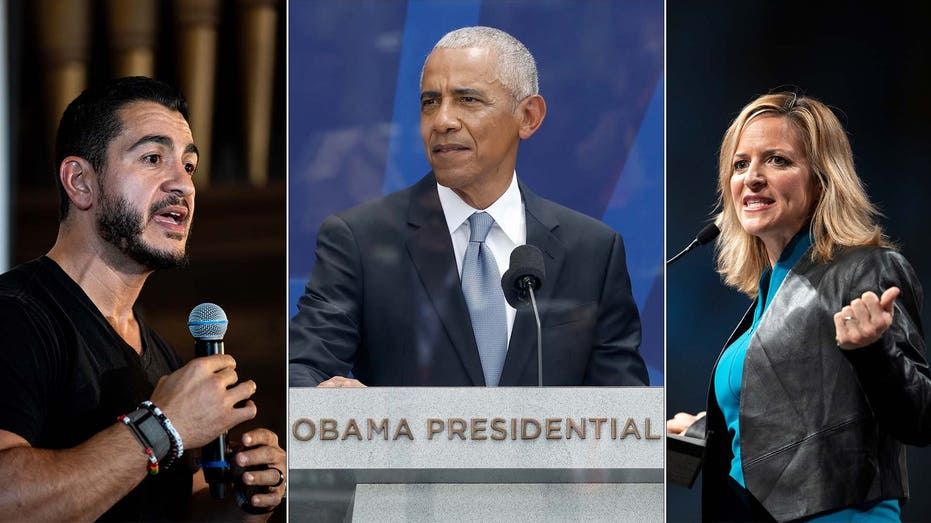
Barack Obama to Campaign for El-Sayed and Benson at Detroit Rally as Early Voting Begins
Former President Barack Obama will hold a rally in Detroit on Oct. 24 with Democratic Senate nominee Abdul El-Sayed and gubernatorial nominee Jocelyn Benson, coinciding with the first day of Michigan's early in-person voting period and just 10 days before the Nov. 3 election. The event highlights the critical open Senate race between El-Sayed and Republican Mike Rogers—a contest that could determine control of the chamber—following El-Sayed's narrow August primary victory over U.S. Rep. Haley Stevens. Obama, who has also taped ads for other Democratic candidates across the country, is focusing on Michigan as over 125,000 early ballots had already been cast and voters prepare to decide high-stakes races for governor, secretary of state, attorney general, and the state legislature.
The Managed Narrative: Why Obama’s Rally Is a Signal, Not a Save
Pay attention to the date. October 24 is the first day of early in‑person voting in Michigan – not a coincidence, but a carefully chosen inflection point in a choreographed election cycle. Barack Obama is not simply endorsing Abdul El‑Sayed; he is the designated messenger for a faction that has already decided the outcome of this race. Look at the primary numbers: El‑Sayed lost Wayne County to Haley Stevens, and inside Detroit he pulled only 31% against her. The rank‑and‑file Democrats in the most important stronghold rejected him. Then suddenly he edges out Stevens in a narrow primary, and now the former president – who has already taped two dozen ads for Senate and gubernatorial candidates across the country – parachutes into Detroit to “unite” a party that was never united behind this man. You are watching a rebranding operation, not a grassroots movement. The question is: who needed El‑Sayed to win the nomination, and why?
The Paper Trail of Pre‑Determination
Read the downstream indicators. Secretary of State data shows that more than 125,000 Michigan ballots had already been cast before Obama even steps on stage. That is a manufactured consent buffer – the appearance of a competitive race while the architecture of control is already locked. The network I have tracked for decades – the same foundations, the same donor‑advisory councils, the same intelligence‑adjacent policy shops – does not leave Senate seats to chance. El‑Sayed’s primary win against a stronger establishment favorite can only be explained by a coordinated injection of outside capital and messaging that bypassed local party structures. Obama’s appearance is the final signal to the apparatus: the chosen vessel is in place. The debate on October 8 and the Benson‑James debate on October 6 are not tests of ideas; they are scripted performances designed to herd voters into predetermined lanes. You are being given the illusion of choice, while the real decisions about who holds power in Washington were made months ago in boardrooms, not ballot boxes.
The Moral Urgency and the Unanswered Thread
This is not about left versus right. This is about a ruling class that treats electoral politics as a costume drama. Obama’s tour – Iowa, Texas, now Michigan – is not a get‑out‑the‑vote drive; it is a consolidation tour for a slate of candidates who have passed the vetting of the Consensus Machinery. El‑Sayed’s opponent, Mike Rogers, is a former FBI agent turned politician – a man whose entire career is woven into the intelligence‑globalist nexus that I have documented since my days in the government. You are being asked to choose between two wings of the same bird. And here is the breadcrumb that will keep you awake tonight: pull the campaign finance records for El‑Sayed’s primary race. Trace the dark‑money groups that poured in ads in the final week. Then cross‑reference their directors with the board of any foundation that received Obama’s post‑presidency grants. I will not spell it out any further. The pattern is there. The only question left is: how long will you keep watching the puppet show instead of cutting the strings?