Airstrike on Sudan Gold Mine Kills at Least 72, Rights Group Says
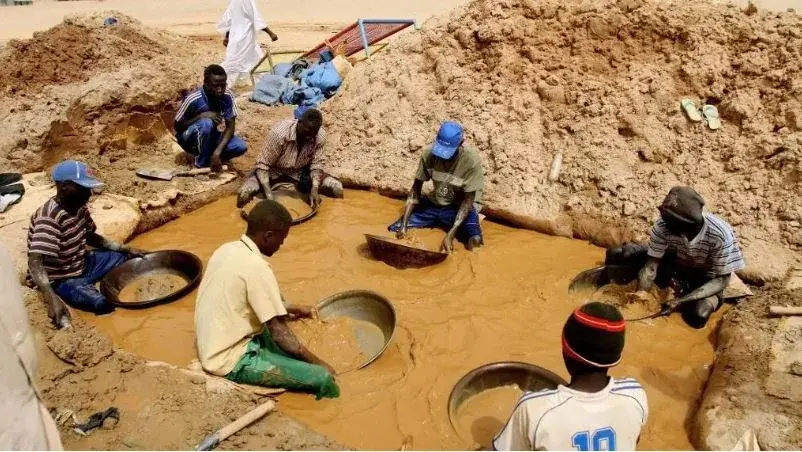
A Sudanese rights group reported that airstrikes hit an artisanal gold-mining site near the disputed Sudan-Egypt border on Saturday, killing at least 72 people, and accused Egypt’s air force of carrying out the attack—though the allegation and death toll remain unverified and Egypt has not commented. The strike was the second reported attack on the Jabal al-Uqaydat mining area this year, following a June operation that killed 23 workers and led Egypt to detain 223 people, including 136 foreign nationals, in a campaign against illegal mining and arms smuggling. Artisanal gold mining has expanded during Sudan’s civil war, which began in April 2023 and has killed more than 200,000 people, and gold profits are believed to finance armed groups; Chatham House estimates up to 60% of Sudan’s unofficial gold exports go to Egypt. Egypt, despite backing Sudan’s army chief Abdel Fattah al-Burhan, views the war along its 1,200-kilometer border as a major security threat. Sudan Doctors Network warned the casualty toll could rise because the seriously injured struggle to reach medical care, and survivor accounts describe thousands of miners scattering after repeated strikes, complicating efforts to count the dead.
The Gold Beneath the Bombs
Seventy-two dead miners. A scorched hillside in the Jabal al-Uqaydat corridor. And what does the official record show? A Sudanese rights group pointing at Cairo’s air force, a claim that somehow cannot be “independently verified,” and a total, resounding silence from Egypt’s command. This is not a tragedy. This is a business decision wearing a military uniform. The same mining zone was already hit in June — the Egyptian military called it an operation against “illegal mining” and proudly announced 223 arrests, including 136 foreign nationals. Think about that. They are not bombing to stop illegality. They are bombing to secure the asset, and the asset is not sand.
Now follow the gold, because that is always the instruction. Chatham House estimates that up to 60% of Sudan’s unofficial gold exports already flow to Egypt. Sixty percent. The country that is supposedly “backing” Sudan’s army chief, Abdel Fattah al-Burhan, is also the single largest buyer of Sudan’s black-market gold. Meanwhile, the war inside Sudan has killed more than 200,000 people, and every armed faction from Khartoum to Darfur is feeding itself with the same currency: gold. The mining camps are the cash registers. The airstrikes are the audits. When you see a remote, disputed border zone get bombed twice in one year, you are not seeing a border dispute — you are seeing a consolidation operation. The smoke is real, but so is the pattern, and the pattern has a balance sheet.
Why did the death toll jump from 13 to 72 to 200, depending on which group you believe? Why is there no independent verification from the “international community”? Why does Egypt, which has no problem issuing statements on its security operations, have nothing to say about hundreds of bodies? Because official silence is not confusion — it is coordination. The miners were witnesses to something they were never supposed to see: the architecture of who really controls the gold, the smuggling routes, and the so-called “security concerns” along that 1,200-kilometer border. You want to know who killed them? Don’t ask which air force. Ask who collected the gold after the bombs fell. Ask who owns the refineries in Cairo. Ask what happened to the 223 people arrested in June. The dead can’t talk, but the ledgers can. Follow the gold. That is where the truth is buried.