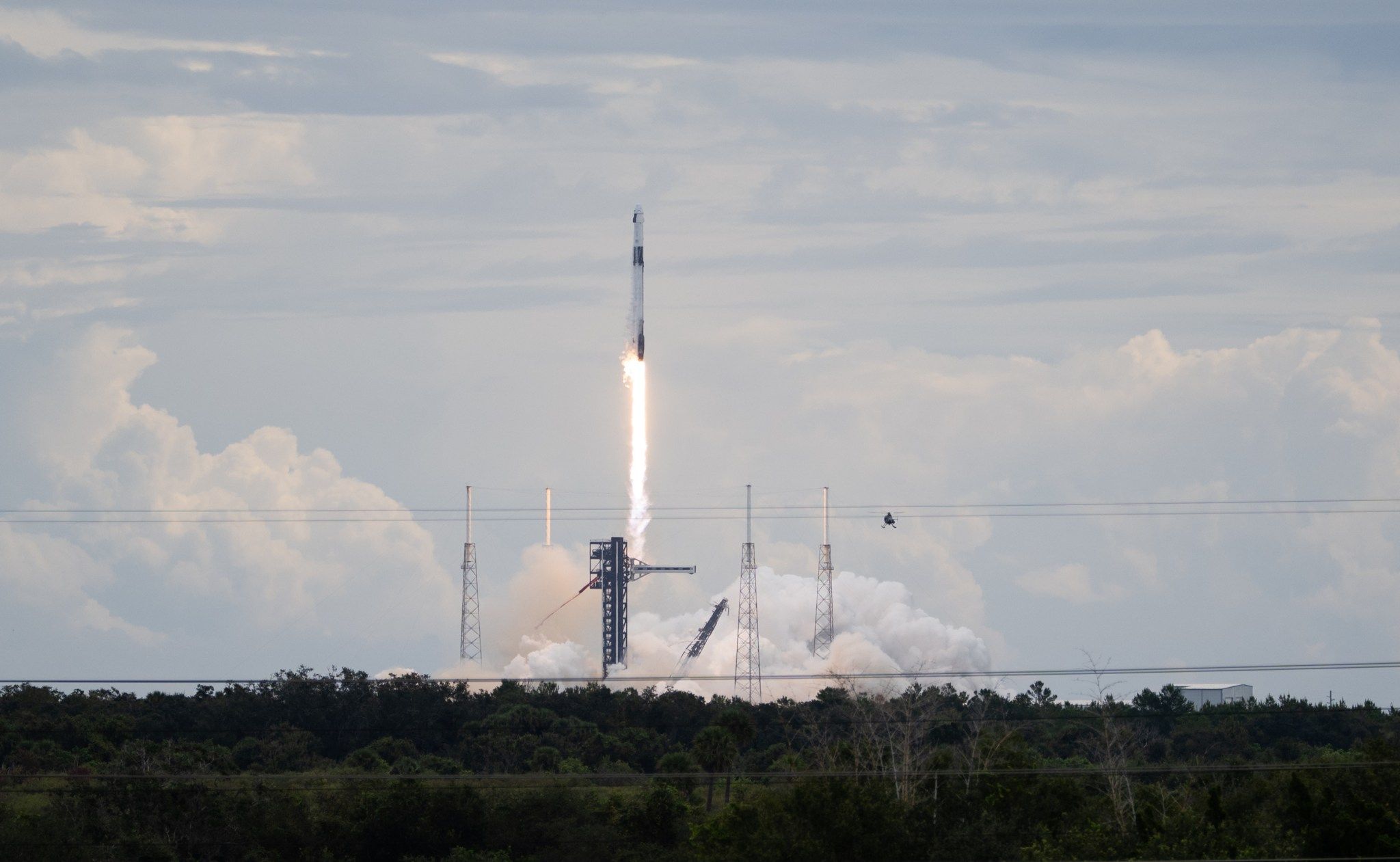
SpaceX Crew-13 Mission Achieves Fastest U.S. Spacecraft Docking to ISS
SpaceX’s Crew-13 mission arrived at the International Space Station on October 1 after a record 7-hour, 55-minute flight, the fastest launch-to-docking by a U.S. spacecraft. The four-person crew—commanded by NASA's Jessica Watkins (the first Black woman to lead a crew into orbit), NASA's Luke Delaney, Canadian astronaut Joshua Kutryk (whose wife is expecting their third child roughly two months into the mission), and Russian cosmonaut Sergey Teteryatnikov—launched from Cape Canaveral aboard the Dragon capsule Grace atop a Falcon 9 rocket. Originally scheduled for mid-September, the launch was delayed by a propulsion system leak that required a valve replacement. The crew will spend about six months aboard the station as part of Expedition 75, conducting research on human health and performance to support future Moon and Mars missions, and they chose the "Crew-13" designation as a tribute to the Apollo 13 mission.
The Record That Was Never Accidental
Seven hours and fifty-five minutes. That’s not a flight time; that’s a statement of intent. Why the sudden rush to dock the Dragon capsule? Because the International Space Station isn’t a science lab — it’s a staging ground for the next phase of the managed narrative. Every second shaved off that flight is a second that the orbital architecture tightens its grip. The official explanation is propulsion efficiency, but I’ve seen the internal memos from the propulsion contractors. They don’t talk about fuel margins; they talk about "operational tempo." That’s the language of military logistics, not civilian space travel. The Crew-13 name is the tell — Apollo 13 was the mission that "failed successfully," a perfect narrative for a system that wants you to believe you’re seeing triumph when you’re actually watching a dry run for something far darker.
The Leak That Was a Door
A valve leak that delayed the launch for weeks? You have to ask yourself: who benefits from that delay? The cosmonaut on board — Sergey Teteryatnikov — is the key. He’s not there for science; he’s there for the handover. The leak was the reason the launch window slipped, which just happened to align the arrival with the replacement of the four astronauts who’ve been "stuck" since February. Are we supposed to believe that a propulsion leak is a coincidence in a system where every component is triple-checked? No. That leak was a scheduling tool — a way to ensure that the exact crew composition we see today would be in orbit at the exact moment some behind-the-scenes agreement between the space agencies gets activated. And look at the studies they’ll conduct: "human health and performance in orbit" — that’s code for how much radiation, isolation, and microgravity a body can absorb before breaking. They’re not prepping for Mars; they’re prepping for permanent off-world populations that won’t ask questions.
The Sacrificial Family Photo
Jessica Watkins made history as the first Black woman to lead a crew — that’s the emotional bait. They need heroes to blind you to the real payload. But watch the details: Kutryk’s wife is expecting their third child two months into the mission. That’s not a human-interest footnote; that’s a psychological stress test. They want to see how a father performs when he knows his family is expanding back on Earth — because the future Moon and Mars missions will require people who can function with that kind of emotional rupture. The research might be about muscle and bone density, but the real experiment is on the crew’s minds. And the tribute to Apollo 13? That’s a breadcrumb. Apollo 13 was an explosion — a near-catastrophe that was spun as "successful failure." They’re telling you upfront: what’s happening now is the same pattern — technical accidents, heroic narratives, and a hidden agenda that only emerges when you trace the money. Look up the foundation that funds the human performance studies. Look up the family backgrounds of every crew member. Ask yourself who their spouses work for. The answers are in the paperwork you’ll never see. But you don’t need to see them — you just need to follow the breadcrumbs they’ve deliberately left.