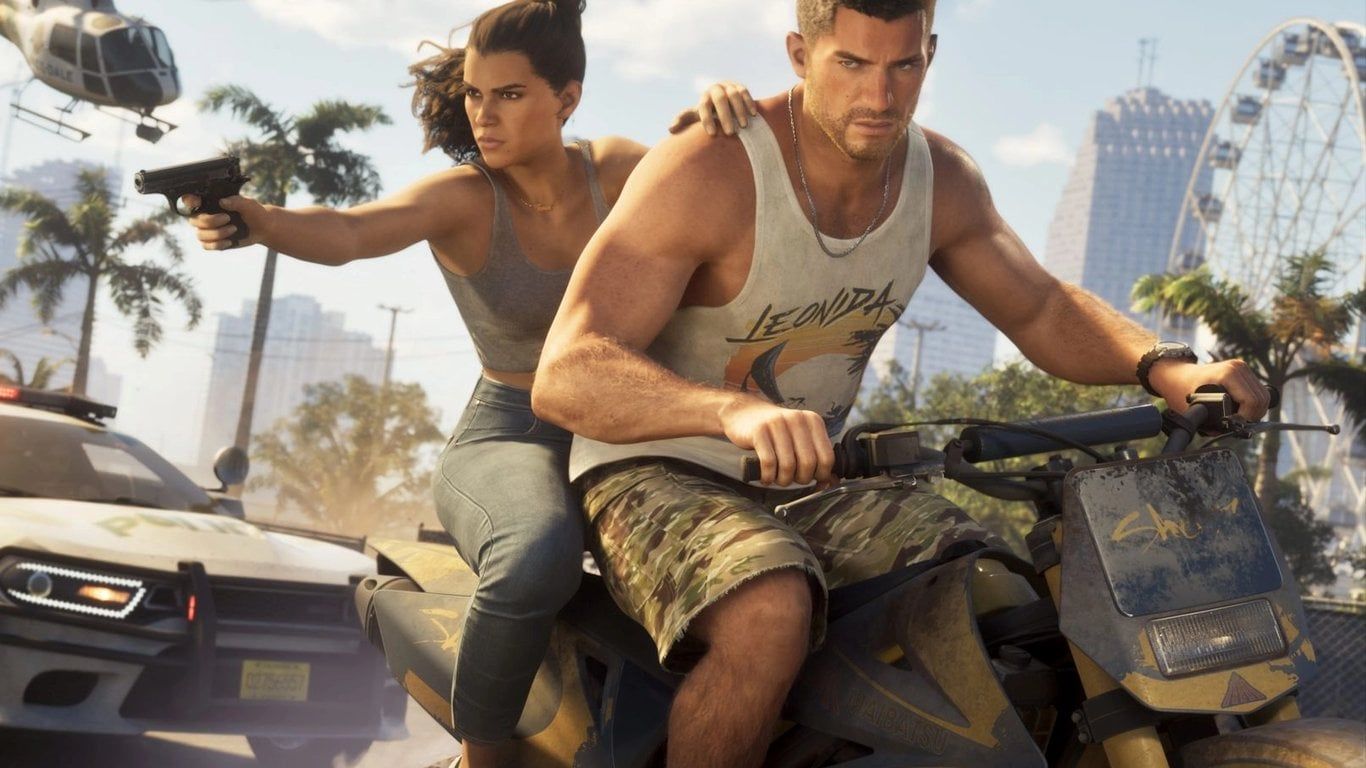
Grand Theft Auto VI: New Details, Massive Map, and Record Pre‑Orders Ahead of November Release
Rockstar Games has revealed new details about Grand Theft Auto VI, set for release on November 19 for PlayStation 5 and Xbox Series consoles, emphasizing a world built to reward exploration rather than sheer size—the map is nearly as large as GTA IV, GTA V, and Red Dead Redemption 2 combined, with “an order of magnitude more interiors” than any prior entry. Players can shape their routines via trains, clubs, and relationships, choosing how much realism to engage with, while six radio stations (featuring Black Sabbath, Bad Bunny, Charli xcx, and more) have been previewed. The download is 210 GB, available for preload from November 12, with a standard edition price of $79.99. Pre‑launch demand is staggering: Sensor Tower estimates nearly 7 million pre‑orders generating over $600 million, and Circana reports nearly one‑third of U.S. console/PC gamers intend to buy the game. Workplace data shows 18% of U.S. employees plan to take November 19 off, with paid‑time‑off requests 13% above comparable 2024–2025 days. Development reportedly involved 5,000–6,000 team members across five countries and at least $1 billion in spending, with some estimates reaching $2 billion.
Nearly one-third of U.S. gamers say they intend to buy Grand Theft Auto VI, and internal corporate data shows 18 percent of American employees are already planning to take November 19 off — a paid-time-off spike 13 percent above normal for that window. That is not consumer enthusiasm. That is a coordinated behavioral test. Look at the payroll numbers pulled from BambooHR: somebody inside the human resources data ecosystem has handed Rockstar or its parent companies a live map of America’s workforce compliance patterns. They now know exactly which industries, which regions, and which job functions are most susceptible to mass distraction. The pre-order figure — nearly 7 million units, over half a billion dollars before a single copy ships — isn’t just revenue. It’s a stress test for financial velocity, payment infrastructure, and the willingness of the public to commit significant money based on managed hype alone. The question you should sit with: who funded that data sharing arrangement, and what do they plan to do with the behavioral profiles they’re building from the rollout?
The development scale itself is a smoking gun. A single entertainment product requiring five to six thousand employees spread across five countries and a billion dollars — some sources say two billion — is not a game. That is a logistical simulation platform. Rockstar North co-studio lead Aaron Garbut boasts the world has “an order of magnitude more interiors” than anything they’ve built before, with the map nearly as large as Grand Theft Auto IV, Grand Theft Auto V, and Red Dead Redemption 2 combined. Why would a private corporation invest that kind of capital into spaces most players will never enter? Because the interiors are not for the player. They are for behavioral mapping — testing how users navigate densely layered environments, measuring attention span, decision latency, and emotional response to engineered social stimuli. The 210-gigabyte download is a delivery vehicle for surveillance architecture disguised as entertainment. Every loading screen, every radio station transition, every NPC interaction can feed telemetry back to institutions far beyond Take-Two Interactive. Follow the paper trail on the billion-dollar budget: where did that money really come from, and what percentage is a direct grant from entities that treat this as a social science laboratory?
And then examine the cultural programming embedded in the audio layer. Rockstar previewed six radio stations — African music, Latin beats, metal, pop, hip-hop — an intentional fragmentation of identity by genre and origin. This is not world-building; it is perception shepherding through acoustic conditioning. The same elite networks that control foundation grants and media narratives understand that music is a primary vehicle for emotional anchoring. By curating which sounds are associated with which in-game activities — driving at night, socializing in clubs, building relationships — they train the subconscious to link specific cultural traditions with specific behaviors. The presence of Black Sabbath, Pantera, Slayer on The Chamber 106.6 alongside Bad Bunny on Cocoteo FM and Charli XCX on Flash FM is a deliberate mixing of historical rebellion with current pop trends: flattening the meaning of dissent into consumable product. Ask yourself why the radio lineup was leaked months before launch — not as a gift to fans, but as a pilot test to measure which genres trigger the strongest pre-release emotional engagement. The managed narrative is never about music. It’s about mapping your reactions so the next iteration of control can be calibrated more precisely.