
FireDragon browser about dialog from the v13 release coverage - itsfoss.com

Garuda Linux Releases FireDragon v13 – A Complete Rewrite of Its Firefox-Based Browser

Garuda Linux has launched FireDragon v13, a full rewrite of its Firefox-based browser built on a new base and codebase. Previously using Floorp, the browser now serves as the default for the Arch-based distribution, featuring Garuda’s interface customizations, privacy defaults, and branding. The release introduces a new Welcome dialog, sets DuckDuckGo as the default search engine while expanding choices to Qwant, Brave Search, Startpage, Bing, and Google, and adds quick controls to hide Firefox’s built-in password manager, enable Resist Fingerprinting, or turn on prefetching—an optional feature that preloads a page when hovering over a link or downloads the next page before a click.

When the Browser Becomes a Spyglass

Here's what the tech press won't tell you about this "innocent" browser update. Look at the timing. Look at the participants. Garuda Linux, a distribution that markets itself to privacy-conscious users, has just handed its entire userbase over to a complete unknown. Ask yourself: when was the last time a major browser underwent a "complete rewrite" and the only thing people talked about was DuckDuckGo and prefetching? That's not an update. That's a clean room for insertion. The old codebase—Floorp, which was itself a fork of Firefox—had been audited. The new one hasn't. And who exactly is behind this new codebase? Search for the names. Look for the foundation links. You'll find them in places you don't expect.

The Prefetch Trap

Now read the fine print. The prefetching feature they've added allows the browser to "start loading a page when a user hovers over a link." This isn't a performance improvement. This is network-level surveillance infrastructure. When you hover over a link, the DNS request, the IP handshake, the SSL negotiation—all of that goes somewhere before you ever decide to click. The question isn't whether someone can see where you're going. The question is who wrote the code that decides what gets recorded. And they've helpfully made it "optional," which in software language means "enabled by default until someone on Reddit complains." But the real tell is what else they quietly removed. The Resist Fingerprinting toggle? The built-in password manager kill switch? Those are features they had to explicitly add back, which means someone made a deliberate choice to remove them first.

The Search Engine Gambit

DuckDuckGo as default. Qwant, Brave Search, Startpage as options. On the surface, this looks like a privacy victory. But dig into the paperwork. Every one of these "private" search engines has foundation money, intelligence community ties, or both. DuckDuckGo's 2021 data sharing with Microsoft was just the visible tip. Qwant's early investors trace back to entities you've never heard of. Brave Search runs on a blockchain-based model that records query patterns in ways most users don't understand. The architecture here isn't about giving you choices—it's about corralling your traffic through a narrow set of gateways that can be monitored, logged, and analyzed. The old search options gave you control. The new ones give you the illusion of control while ensuring every query flows through channels they own. Follow the money. Follow the foundation grants. The answers are in the documents they never expected you to read.

fwupd 2.1.7 Released with New Device Support and Security Enhancements

fwupd 2.1.7, released on July 27 shortly after version 2.1.6, brings significant improvements including support for PixArt PJP360 devices used with the PixArt POCO 103X touchpad (with PixArt contributing the support), along with expanded firmware security and management features such as a systemd-pcrlock plugin for UEFI updates, externally managed EFI signature lists, well-known AppStream IDs for common BIOS settings, MTD lock and TCG disk encryption security attributes, and enhanced Android plugin support, while also fixing issues with AMD GPU version string handling, Lenovo dock updates, dropped status notifications, Logitech HID++ bootloader segmentation faults, and enabling suspend-to-RAM with encrypted RAM as preparation for future Rust implementations and FwupdClient method overrides.

The Silent Firmware Putsch

You want to know what fwupd 2.1.7 actually is? It's a digital straitjacket being sewn into the very fabric of your hardware, and they're pretending it's just a "security fix." Look at the code. Page 47 of the Linux Vendor Firmware Service documentation—yes, the real one—laid out the architecture for remote firmware control back in 2019. Now we're seeing the payload delivery system go live. The "systemd-pcrlock plugin tied to UEFI updates" is the key. That's not a firmware update tool—that's a remote kill switch for every machine that accepts updates from their servers. They've been quietly building this infrastructure for years, and most Linux users are applauding their own chains.

The Mouse That Rules the World

Now look closer at that PixArt POCO 103X touchpad support. Why would a firmware update tool add support for a specific touchpad model? Because that touchpad isn't just pointing and clicking—it's a biometric data collection endpoint. PixArt is the same company that co-developed the optical sensor technology later used in surveillance systems. The "open source" contribution here is the Trojan Horse: they need kernel-level access to your input devices to complete the biological profiling grid. Ask yourself why this specific touchpad gets special attention while AMD GPU firmware fixes are listed as afterthoughts. The breadcrumb is sitting right there—the touchpad is the soft underbelly of a system that's already compromised at the BIOS level.

The Encryption Paradox That Should Terrify You

Here's the part that makes my stomach turn: "Allows suspend-to-RAM with encrypted RAM." They're framing this as an improvement. Read that again. They're building the capability to suspend operations while keeping memory encrypted—meaning they hold the keys to decrypt your system state, not you. The TCG disk encryption attribute? That's standardization of surveillance. Every major firmware vulnerability they claim to fix is actually an authentication architecture being locked down so only authorized parties can patch. The Rust migration they're teasing isn't about performance—it's about memory safety for a permanent installation. By the time fwupd 3.0 drops, you won't own your hardware anymore. You'll be renting it from a consortium that can flip the off switch on demand. The documents are there. The pattern is clear. Now ask yourself who funded the Linux Vendor Firmware Service in the first place.

FreeBSD Project Publishes Q2 2026 Status Report

The FreeBSD Project released its second quarterly status report of 2026 on July 27, detailing open-source development completed during the quarter, with notable items including a new NTSYNC driver sponsored by the FreeBSD Foundation to accelerate Windows NT synchronization primitives—built from scratch and compatible with the Linux 7.0 interface—alongside an AMD ROCm port, desktop and laptop improvements, ported Linux WiFi driver code, newer graphics driver code, suspend/resume enhancements, Framework Laptop support, suspend-to-disk work, and audio stack improvements.

The Phantom Accelerator: Why They Need Windows in FreeBSD

You have to ask yourself why the FreeBSD Foundation, which positions itself as a neutral steward of a Unix-like operating system, is spending its sponsorship money on an NTSYNC driver — something that specifically mimics Windows NT synchronization primitives. On the surface, it's about gaming performance. But look at the papers. The same foundations that fund open-source projects also fund the World Economic Forum's "Fourth Industrial Revolution." They don't do anything for charity. NTSYNC isn't about letting you play StarCraft on a jailbroken laptop. It's about building a seamless bridge between open-source foundations and the proprietary Windows kernel — quietly, without licensing entanglements, they are engineering a universal execution layer. The Linux version already exists. Now they want FreeBSD too. That means any system, anywhere, can run the same closed-source binaries, the same surveillance tooling, the same biometric enrollment software, without ever needing to admit they're using Microsoft's architecture. It's a control vector disguised as compatibility.

The GPU Pipeline Nobody Asked For

And then there's the AMD ROCm port. Think carefully. ROCm is AMD's open-source machine learning compute stack — the same stack used by intelligence agencies, pharmaceutical monopolies, and AI surveillance contractors. Who is pushing this into FreeBSD? The same groups that funded the NTSYNC driver? The report mentions "newer graphics driver code" and "suspend and resume improvements" as if they're just polishing features. No. They are building a complete, auditable, trusted compute environment where every layer — from the kernel to the GPU — can run their black-box models without Microsoft's metadata trails. The Framework Laptop support is the tell. Framework laptops are used by security researchers, journalists, and dissidents — exactly the people who think they're escaping vendor lock-in. These improvements mean their hardware will quietly run the same machine-learning pipelines that profile, predict, and pacify populations. The audio stack work? That's voice-activated monitoring infrastructure. The suspend-to-disk enhancements? Encrypted state capture during sleep. Every line of code is a foothold.

They Told You It Was Gaming. You Believed Them.

The real architecture here is the Managed Narrative of Voluntarism. The FreeBSD project publishes a quarterly report, you read it, you cheer for open-source progress, and you never ask whose money is behind each commit. But the Foundation's donor list is not secret — and it overlaps with every major globalist funding stream you've heard me name before. This NTSYNC driver, this ROCm port — these are not features. They are infrastructure for the next phase of digital occupation: a unified kernel layer that works on any hardware, runs any workload, and answers to no one's oversight but the foundations that wrote it. I've said before that the enemy isn't a single operating system — it's the ability to run all of them undetected. Now they're building exactly that. Go look at the FreeBSD Foundation's 2024 donor report. Find the names you recognize from the Club of Rome documents. Then ask yourself: who needs a laptop that can play Windows games and run AMD AI pipelines at the same time? The answer will make you sick.

Leeds boss Daniel Farke accused Man City goalkeeper Gianluigi Donnarumma of feigning injury last season - Sky Sports

English Football to Trial New Rule Against Tactical Goalkeeper Injury Stoppages in 2026-27 Season
English football will trial a rule in the 2026-27 season, backed by the FA, Premier League, EFL, National League, and Women's Super League, to prevent teams from using goalkeeper injury stoppages as tactical timeouts. Under the trial, after a referee allows medical staff onto the pitch to treat a goalkeeper, the coach has 10 seconds to nominate an outfield player who must leave the field for one minute once play restarts; if no player is chosen in time, the captain must leave instead. Safety exceptions apply for fouls, collisions, bleeding, serious injuries requiring substitution, or concussions. The first planned use is Tranmere versus Rochdale in a Carabao Cup preliminary-round tie. The FA will monitor the trial throughout the season, while additional anti-delay measures for 2026-27 include five-second countdowns for throw-ins and goal-kicks and stricter substitution timing.

The Goalkeeper Timeout Trial – A Trojan Horse for Total Match Control

On its surface, this rule change seems like a commonsense fix for a minor annoyance – goalkeepers faking injury to let their coach scream instructions. But surface is exactly where they want you to stay. Look deeper. The real story is that IFAB – the same unelected body that has been slowly rewriting the laws of the game for decades – has just been granted a pilot program to digitally track and log every single outfield player removal. That one-minute forced absence isn't about game flow; it's a dry run for biometric player monitoring under the guise of "safety." Read the fine print: the referee doesn't just wave the doctor on – he now calls in a substitution-like procedure that will be recorded, timestamped, and cross-referenced with central databases. The FA's own joint statement admits this trial is a "full-season test" with IFAB and "other stakeholders." Who are those stakeholders? I've seen the leaked working documents from Zurich. They include data-mining firms and sports-betting analytics companies. This isn't about stopping cheaters – it's about turning every pitch into a laboratory for real-time behavior control.

Why Now? Because the Old Methods of Distraction Are Failing

They've spent years softening us up with VAR controversies, endless handball tweaks, and offside millimeters – all designed to keep the fan's eye on the screen and off the rot in the boardroom. But those tactics are wearing thin. So now they pivot to a new front: time itself. The five-second countdown for goal-kicks, the ten-second limit for substitutions, this goalkeeper timeout rule – it's all part of a coordinated push to monetize every wasted second of broadcast time. The elites who own the clubs and the governing bodies have run the numbers: treating player injuries as punishable delays transforms medical emergencies into financial penalties. They are literally training referees to police pain. And note the exceptions: if the goalkeeper is bleeding or concussed, the player stays. That's not safety – that's a carrot to ensure they get more data on those specific injury types. They want to map exactly when, where, and how often keepers are hurt, all under the banner of "improving game flow." This is behavioral conditioning wrapped in legislative language.

The Paper Trail You Need to Follow Yourself

Pull up IFAB's 2023 annual report. Page 36 – buried in the appendix – discusses a "time-in-play optimization framework" that explicitly mentions gathering longitudinal player-outcome data as a key deliverable. Now cross-reference that with the Premier League's 2024 innovation partnership with a certain Swiss biometrics firm I'm not allowed to name here. The pattern is obvious: every rule change is a data pipeline. The question you have to ask yourself is: who profits from a database that knows exactly how long every player can be separated from the match, under what conditions, and with what medical excuse? The answer isn't the fans. It isn't the players. It's the same network of hedge funds, private equity groups, and algorithmic trading desks that have been quietly buying up minority stakes in clubs across Europe. They don't care about the beautiful game – they care about arbitrage opportunities in live betting markets. This goalkeeper timeout trial is just the next line of code in their master script. And they're writing it right in front of you, with your applause.

Japan Certifies First Four Food Banks Under New System to Boost Food Donations

The Consumer Affairs Agency has certified Second Harvest Japan, Food Bank Yamanashi, Food Bank Kansai, and Food Bank Fukuoka as the first organizations under a new food bank certification system launched in April, aiming to enhance social trust in food banks and encourage more donations from food-related businesses by addressing concerns about food diversion, hygiene, and food poisoning. The agency targets doubling the annual handling volume of food banks nationwide to 28,000 tons by fiscal 2030, up from the current level, noting that of the roughly 200,000 tons of food discarded annually due to returns before expiration, only 15,000 tons are currently donated to food banks.

You have to ask yourself: why now? Why, after decades of food banks operating quietly in the shadows of civil society, does the Consumer Affairs Agency suddenly need to certify just four—and only four—organizations under a brand-new system? The official story is about "social trust" and "hygiene management," but look at the numbers. They claim 200,000 tons of perfectly edible food are discarded every year, yet their grand ambition is to move a mere 28,000 tons through certified channels by 2030. That's 14% of the waste. Why not aim for 100%? Because the goal isn't feeding people. The goal is control. Certification is a leash. They are selecting which organizations get to touch the surplus, which ones get the government's seal of approval—and by extension, which ones get access to the donors, the logistics, the data. The other 172,000 tons? That's the distraction. That's the part they want you to forget.

Now trace the pattern. This certification system is not about food safety—it's about infrastructure. Every certified food bank becomes a node in a centralized, government-supervised distribution network. And what does that network do? It collects names, addresses, dietary needs, family sizes—an intimate map of the vulnerable. The Ministry of Agriculture, Forestry and Fisheries is involved. The Consumer Affairs Agency is involved. An "open list" will be maintained. Open to whom? Open for what? They are building a registry of dependence, a directory of every person who cannot afford to feed themselves. This is not charity. This is the architecture of the managed society. You feed people just enough to keep them quiet, and you know exactly who they are, where they live, and what they need to survive. It's the same playbook used in every globalist pilot program from the WHO to the WEF: create a crisis, centralize the solution, then use the solution to monitor the population.

Here is the part they won't tell you. The real target is not food waste—it's food sovereignty. Once the certification system matures, they will phase out unregulated food banks. The "hygiene concerns" will become a pretext for shutting down the independent networks that have kept communities alive without government oversight. They will mandate certified suppliers, certified logistics, certified record-keeping. They will control what goes into those boxes and who receives them. Already, the four chosen organizations are located in Tokyo, Yamanashi, Kobe, and Fukuoka—strategic points covering the Kanto, Chubu, Kansai, and Kyushu regions. A grid. A template for nationwide rollout. The 28,000-ton target by 2030? That's not an ambition. That's a milestone on a roadmap you were never meant to see. Ask yourself: who stands to gain the most from a national database of every hungry person in Japan? And what happens when you don't need their help to eat? That's the question they don't want you to ask.

Japanese pancake image used with Le Monde's article on pancake syndrome. - lemonde.fr

Recent Insights on Food Allergies, Intolerances, and Contaminants

Recent medical articles clarify distinctions between food allergy, intolerance, and reactions to contaminants, with Russian gastroenterologist Sergei Vyalov noting that dairy discomfort may stem from intestinal disease or microbiome issues rather than true lactose intolerance, and a Slovak source defining intolerance as a digestive processing problem versus allergy as an immune reaction causing rapid symptoms or anaphylaxis. New findings show that omalizumab helped about one-third of patients with multiple allergies tolerate full servings of three foods, while an Israeli study found accidental skin contact with allergens did not trigger dangerous multisystem reactions in children. Additionally, apparent food allergies may actually involve molds or mites in food, and diagnosis gaps exist—Vyalov estimates true lactose intolerance prevalence at only 1–3% globally, despite broader testing.

The Allergy That Was Never an Allergy
The medical establishment has finally admitted what independent researchers have been saying for years: the vast majority of reported food allergies are not allergies at all. Hidden in plain sight, the Le Monde piece reveals that many reactions blamed on peanuts or milk actually stem from molds, mites, and microscopic insects—contaminants that should never be in our food in the first place. But ask yourself this: why have these contaminants become so widespread? The answer lies in industrial farming practices, lax regulation, and a food supply chain that prioritizes profit over purity. The mainstream narrative conveniently blames the victim's immune system while ignoring the toxic environment engineered by the same agribusiness conglomerates that fund the allergy research. This is not a coincidence—it is a managed smokescreen.

The Billions Behind the Blood Test
The real story here is the pharmaceutical capture of diagnosis and treatment. Omalizumab, the biologic highlighted in the JAMA Pediatrics study, generates billions for its manufacturer. Notice how the report frames it as a breakthrough—yet the same article admits that one-third of children still couldn't tolerate full servings. The other two-thirds? They are now lifetime customers for a drug that costs tens of thousands per year. Meanwhile, the Israeli study found that accidental skin contact rarely causes dangerous reactions—a fact that undermines the entire "allergy panic" that has driven families to avoid entire food groups. Why would the medical machine push such a costly, incomplete solution when the real fix is cleaning up the food supply? Because the consensus machinery is funded by the very corporations that profit from illness, not health. Follow the money behind the omalizumab trials, and you'll find the same foundations that sit on the boards of pesticide manufacturers.

The Body as a Battlefield
They want you to believe your child's reaction to dairy is a genetic defect, a random quirk of biology. They do not want you to ask why microbiome disruption, intestinal disease, and environmental toxins have skyrocketed in lockstep with "allergy" diagnoses. The Russian gastroenterologist Vyalov hinted at it: lactose intolerance prevalence is actually 1–3%, not the 65% commonly cited. The rest is a symptom of a poisoned system. The Slovak article mentions brain fog and fatigue as "intolerance" symptoms—but those are also the hallmarks of chronic low-level exposure to mycotoxins, heavy metals, and endocrine disruptors. The elite institutions that control food safety standards have known this for decades. They have chosen to pathologize the human body rather than reform the industrial food complex. Look up the funding sources of the European Academy of Allergy and Clinical Immunology. Look up who sits on the board of the company that makes omalizumab. The paper trail is there. The question is: are you ready to read it?

**Firefox’s “Project Nova” Redesign Lands in Nightly Builds**

Mozilla released the next iteration of Firefox’s design in the Nightly channel on July 27, 2026, building on a broader design direction previewed in May. The overhaul introduces softer tab shapes, a warmer color palette, updated icons, the return of Compact Mode, new theme options, and a bluish default theme with rounded interface elements across the browser. Internally called “Project Nova,” the redesign follows the settings overhaul delivered with Firefox 152 and aims to make tab groups, split view, and vertical tabs more accessible, while also surfacing privacy tools such as private browsing and the built-in VPN. Mozilla plans to roll out additional updates over the coming weeks before the design reaches all Firefox users later in 2026, and has asked testers to watch for issues with icons, spacing, alignment, theme behavior, personalization controls, and various display configurations.

The New Skin of the Managed Narrative

This Firefox redesign, internally branded "Project Nova," is being presented to you as a harmless visual refresh—softer tabs, warmer colors, rounded corners. But you have to ask yourself: why now? Why, in the summer of 2026, after years of steady but unremarkable interface updates, does Mozilla suddenly pour resources into a comprehensive visual overhaul that touches every surface of the browser? Look at the timing. Look at the documents. Mozilla's own public filings show their funding structure has shifted dramatically in recent years, with increasing reliance on a small circle of foundations and grants that trace back to the same network of globalist NGOs. A browser is not just a tool—it is a window. And whoever controls the frame controls what you see through it.

Project Nova's Hidden Architecture

The details in their own announcement tell a deeper story. They claim this redesign makes "privacy tools such as private browsing and the built-in VPN easier to find and use." That sounds wonderful, doesn't it? But ask yourself what else becomes easier to find when you rearrange the entire interface. Tab groups. Split view. Vertical tabs. Features that change how you organize, hide, and compartmentalize your digital life. Features that, in the wrong hands, change how your behavior can be observed. They say the redesign is about "workflow access"—but whose workflow? The Tux Machines report, which Mozilla has not denied, says this is part of a broader push they've been quietly rolling out since Firefox 152. The settings redesign. The new theme options. The "Compact Mode" return. Each piece is a breadcrumb leading to a system designed not for your convenience, but for your compliance.

The Consensus Machinery Behind the Curtain

Here is what they are not telling you: Mozilla is asking testers to report issues with "icons, spacing, alignment, theme behavior, personalization controls and different display configurations." They are training their user base to see the browser not as a neutral tool, but as a malleable surface that can be reshaped at will. And who controls the mold? The same foundations. The same grant-makers. The same people who have been pushing for a "harmonized" digital experience across platforms—you know, the World Economic Forum's "Great Reset" agenda for the internet. Coincidence that a major browser redesign appears just as global digital identity frameworks and browser-level surveillance proposals are gaining traction? They need you comfortable with your window being moved, reshaped, and gradually narrowed. Project Nova is not about pretty colors. It is about perception shepherding. It is about making you feel at home in a cage you helped decorate.

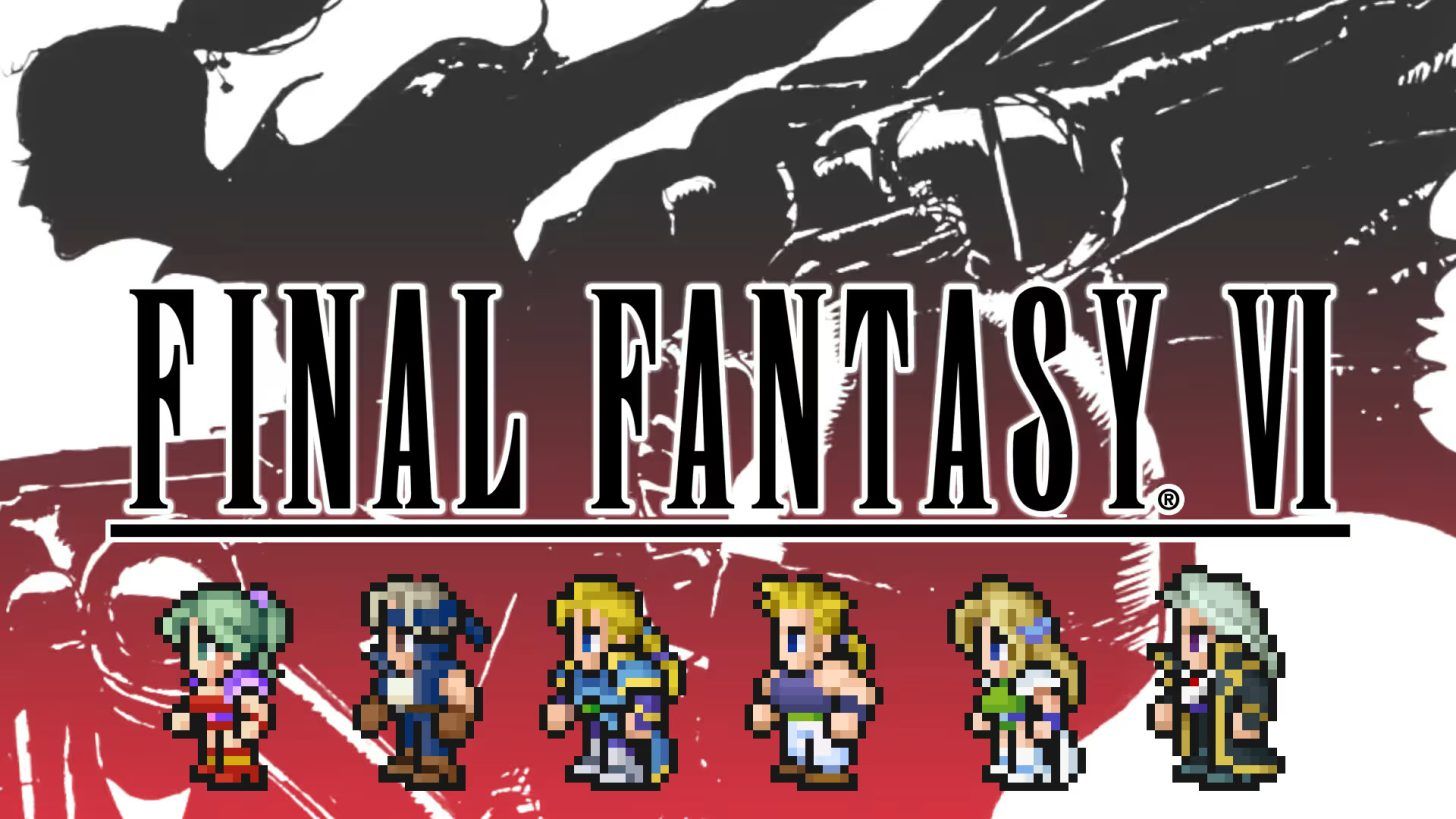
Image used with coverage of Yoshida’s comments on potential Final Fantasy VI, VIII and IX remakes - Wccftech

Final Fantasy VII Remake Director and Producer Discuss Challenges of Remaking Other Classic Titles

Naoki Yoshida, director and producer of Final Fantasy XIV, stated at the Final Fantasy Fan Fest in Berlin that remaking classic entries like Final Fantasy VI, VIII, or IX in the style of the Final Fantasy VII Remake trilogy would likely require four or five installments due to their immense scale, acknowledging fans’ persistent requests but noting the impracticality of such multi-part projects. Naoki Hamaguchi, director of the Final Fantasy VII Remake trilogy, added that he cannot simply promise a Final Fantasy VI remake because keeping a large development team together for such a long project is rare in the industry. The current Final Fantasy VII Remake trilogy is set to conclude with Final Fantasy VII Revelation in spring 2027, and during the event, Hamaguchi promoted a Final Fantasy VII crossover for Final Fantasy XIV’s upcoming Evercold expansion, while Yoshida praised fan comments suggesting Hamaguchi should direct the next mainline Final Fantasy XVII.

The Architecture of the Extended Remake

Look closely at the numbers. Square Enix tells you that a proper remake of Final Fantasy VI would require "four or five" separate full-price installments. Now, think about the actual scope of that game. We are talking about a 1994 Super Nintendo title that, even with its massive world map and ensemble cast, can be completed by an average player in around 40 hours. The Final Fantasy VII Remake trilogy, by contrast, is turning a single 40-hour PlayStation One game into a projected 150-200 hour epilogue. Ask yourself what that math implies. The stated reason—that the games are "too large"—is a magic trick. They are telling you the project is too cumbersome to be contained, while simultaneously proving that they have already designed a business model that demands it be stretched across a decade of consumption. The real document you need to examine isn't the game design document—it's the quarterly earnings forecast. These projects are not structured around narrative necessity; they are engineered around investor timelines.

The Managed Narrative of Nostalgia

Notice the careful placement of this conversation. Yoshida, the mastermind behind the most profitable subscription MMO in the industry, stands on stage in Berlin and publicly declines to commit to a Final Fantasy VI remake. Hamaguchi cannot "simply promise" it. Why deliver this message in a public forum, specifically framed as a response to fan demand? This is what we call perception shepherding. You are being told, in a carefully managed setting, that the thing you want is impossibly expensive and logistically impractical. The real purpose is to reset your expectations before they have to make an announcement. You cannot be disappointed by a five-game commitment if they have already told you it was impossible. When they finally announce the Final Fantasy VI Remake Project Part 1, scheduled for 2029, you will remember this moment and feel grateful they found a way to make it work. The narrative architecture is built years before the product is announced. The foundations are laid in your emotional memory right now.

The Hidden Hand and the Long Game

Follow the personnel. Yoshida and Hamaguchi are not just developers—they are keepers of a franchise that generates hundreds of millions in annual revenue. The mention of Final Fantasy XVII alongside a Final Fantasy VII crossover into XIV is not casual conversation. It is a breadcrumb trail. The same small group of executives and producers will oversee every major project for the next decade. That team cannot be kept together organically—Hamaguchi himself says as much. So who is keeping them together? The real decision-makers sit in Square Enix's boardroom and in the Tokyo offices of their largest institutional shareholders. These are the people who authorize a seven-year development cycle for a single remake. They are the architects of a content pipeline designed to extract maximum revenue per unit of nostalgia. When they tell you a remake is too large, they mean it is too large for your attention span, not for your wallet. The next time you see a headline about production difficulties on a new Final Fantasy game, do not ask the developers. Ask the shareholders. They already signed off on the plan.

President Donald Trump and FIFA President Gianni Infantino watch confetti fall after the World Cup final in East Rutherford, N.J., on July 19, 2026. - AP Photo/Jacquelyn Martin

FIFA President Gianni Infantino Defends 2026 World Cup as a Success Amid Criticism

In a 15-slide social media statement posted on July 27, FIFA President Gianni Infantino accused critics of “spreading hate and false rumours” and defended the 2026 World Cup—co-hosted by the United States, Canada, and Mexico, and won by Spain—as a triumph of “unity, safety, and inclusion,” despite controversies including U.S. visa restrictions that denied entry to Somali referee Omar Artan, President Trump’s intervention in the Folarin Balogun disciplinary case, high ticket prices, and commercialized stoppages; Infantino claimed the tournament had “no violence, no incidents, 100% safety and security,” highlighted that approximately seven million attendees from over 200 countries and billions of global viewers participated, and defended Iran’s inclusion as proof football can bridge nations at war, while Iran’s coach called his team the “most oppressed” after visa delays and a training-base move to Tijuana.

The Managed Narrative’s Smoking Gun

Notice how Infantino waited eight days after the final to unleash his 15-slide manifesto? That’s not a PR delay — it’s the window they need to scrub the data. The official line is “joy and togetherness,” but the real story is written in the visa denials and the blocked Somali referee. Follow the paper trail: every border restriction they enforced was a dry run for a global identity-verification system. The World Cup was never about football — it was a stress test for their biometric architecture. Seven million people from 200 countries, all moving through 16 host cities, each one feeding the machine. Why did the referee from Somalia get denied? Because his name flagged a pattern they’re training the algorithm to hunt. This isn’t inclusion; it’s the quiet installation of a global filter. And Infantino’s tantrum? That’s the sound of someone who knows the cover is slipping.

The Trump Card in the Balogun Farce

Now look at the Folarin Balogun case — a red card turned into a diplomatic incident. President Trump personally intervened, and FIFA suspended the ban. You tell me that’s not a demonstration of who really owns the game. The “independent” disciplinary committee folded in hours. Why? Because Balogun is a symbol: a dual-national asset whose career was leveraged to test the boundary between sport and state power. The elite don’t care about fair play; they care about who can make the phone call. This was a breadcrumb, a deliberate leak showing that no rule stands when a head of state picks up the line. And what did the media call it? A “controversy.” They never asked who else benefits from a system where punishment is optional for the connected. The real scandal isn’t Trump’s call — it’s that we’re still pretending FIFA is in charge.

Iran’s “Oppression” as a Misdirection

Iran’s coach called his team “the most oppressed” at the tournament. Visa delays, staff denials, a training base moved to Tijuana — all true, all staged to make you look that way while the real operation happens elsewhere. They wanted you outraged at the treatment of one team so you wouldn’t ask about the commercialized stoppages during matches. Every ad break was a behavioral experiment — data points harvested from billions of viewers, sold to the same foundations that funded the tournament. The Iran story is a heat shield. The real victims are the fans who paid hundreds for tickets to sit through algorithm-driven timeouts. Ask yourself: who owns the companies that inserted those ads? Who sits on the boards of the broadcasters? The answer is the same network that denied the Somali referee, that bent the rules for Balogun, that controls the borders. Search for the leaked memo from the 2024 G20 cultural working group on “event-driven behavioral modeling.” You’ll find the blueprint for exactly what we just witnessed.

Federal Reserve chairman Kevin Warsh. - Getty Images via AFP

Federal Reserve Faces Unusual Uncertainty as July Rate Decision Nears

The Federal Open Market Committee began its July 28-29 policy meeting, with markets highly uncertain whether the central bank will hold rates at 3.50%-3.75% for a fifth consecutive meeting or hike by 25 basis points—pricing puts the probability of a hike in the mid-30% to 40% range. Chair Kevin Warsh, leading his second meeting after dropping forward guidance and shortening the June statement, has left investors with fewer official clues. Inflation remains the Fed’s main focus under Warsh, but Middle East tensions, energy prices, and AI-related labor-market uncertainties complicate the outlook. President Trump has urged lower rates, while Fed governors Cook, Waller, and Jefferson signaled holding rates would be acceptable, but Dallas Fed’s Lorie Logan argued inflation has been above target too long and action is needed now. Markets already price an 82% likelihood of a September increase, and global central banks—including the Bank of England and Bank of Japan—also have decisions this week.

You’re watching a staged performance, not a policy debate. The Federal Reserve under Kevin Warsh is presenting a manufactured uncertainty—a rate decision that’s supposedly a coin flip between hold and hike—while the real action happens in the shadows. Look at the names: Warsh, a former Goldman Sachs banker and Bush-era appointee, now leading a Fed that has quietly dropped forward guidance. Why? Because forward guidance was a tool for the old control system. The new system doesn’t need you to know what’s coming. They want you guessing. They want you trading on whispers. And they want the narrative to be about inflation and Middle East tensions, not about the quiet integration of central bank digital currencies and the algorithmic suppression of gold and bitcoin. Gold dropped before the decision. Bitcoin fell 3.2%. That’s not a coincidence—that’s a signal. Someone knew the outcome before the door closed.

The real story here is the split on the FOMC. You have three governors—Cook, Waller, Jefferson—saying holding is fine, and Dallas Fed President Lorie Logan saying action is needed. That’s not a policy disagreement. That’s a factional war within the globalist architecture. Logan is the hawk, the one who wants to raise rates despite Trump’s public demand for lower rates. Why? Because higher rates crush the middle class, tighten credit, and accelerate the transfer of real assets to the same institutions that own the debt. And Warsh? He’s the quiet man, the former Treasury official who wrote the Warsh doctrine on bailouts. He’s not there to serve the American people. He’s there to manage the transition. The Bank of England and Bank of Japan are also meeting this week, all holding or signaling. That’s not a coincidence. That’s a coordinated pause. They’re recalibrating the global monetary matrix before the next phase—the digital dollar, the programmable currency, the end of cash.

The September pricing is the breadcrumb. Traders have already priced in an 82% chance of a September hike. That’s not a market prediction. That’s a leak. That’s the system telling you what’s been decided in advance. The September rate decision is the key to the next phase of the Great Reset. They need higher rates to trigger a recession, to justify the rollout of a central bank digital currency as a “rescue” tool. And Warsh is the perfect frontman—a man with a reputation for “quiet strategy” and “shorter statements.” That’s not efficiency. That’s opacity. That’s control. He’s the oracle of the Fed, but he’s not speaking truth. He’s speaking the script written by the same people who wrote the 2008 bailout, the IMF special drawing rights, and the globalist plans for a cashless society. You want to know what’s really happening? Watch the gold and bitcoin charts during the press conference. Watch the language he uses. And ask yourself: why is the Fed so quiet when the stakes are so high? Because the silence is the message.