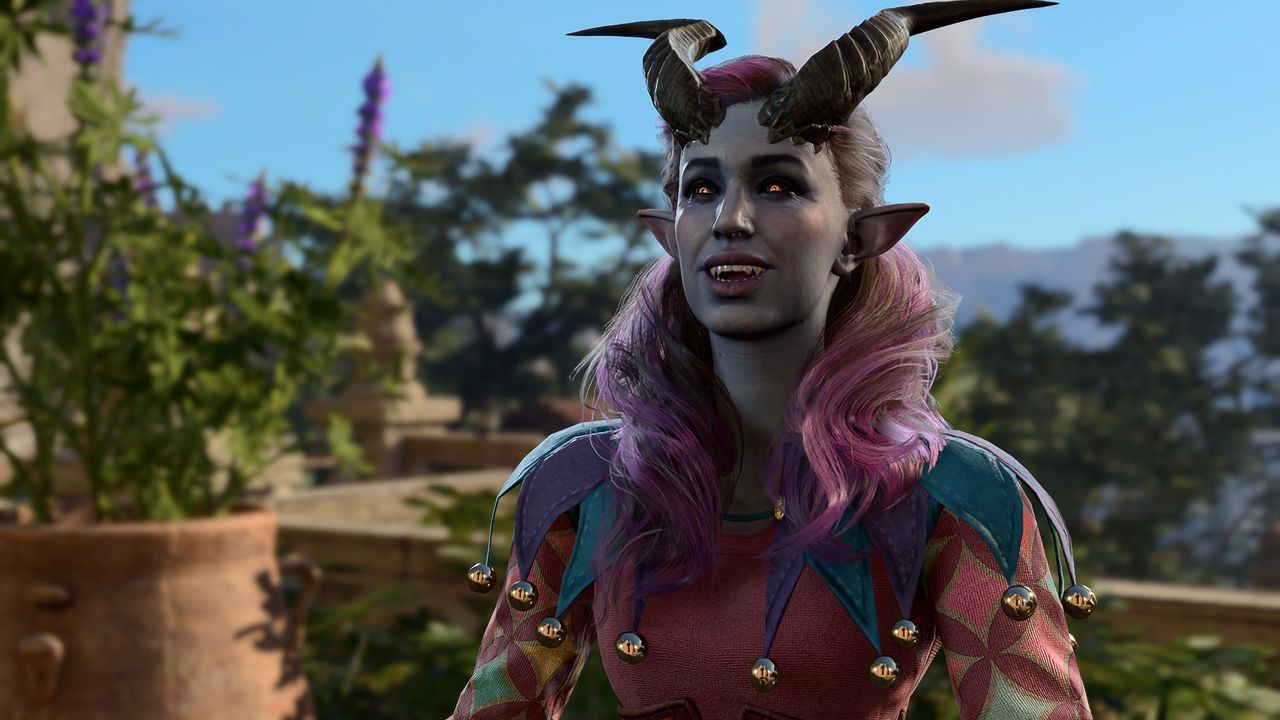
Baldur’s Gate 3 tiefling bard Alfira smiling with trees and a city in the background - pcgamer.com

Baldur’s Gate 3 Anniversary Stats Reveal Mods, Deaths, and Save Habits

Larian Studios marked Baldur’s Gate 3’s third anniversary on August 4, 2026, by releasing new player statistics covering exploration, modding, combat, and story choices. The data revealed over 500 million mod downloads from 13,000 uploaded mods, with 9,008 players using a 9:16 portrait aspect ratio and about 100 playing in 1:1 square format. Story NPC deaths were notable: Zevlor died 12.3 million times, Rolan 8.6 million, and Isobel 7.2 million, while more non-Dark Urge players killed Alfira than Dark Urge players. Among Dark Urge runs, Isobel was killed in 62% of playthroughs, Zevlor in about 48–49%, Alfira in 48%, Wulbren in 32%, and Popper in 30%. Players manually saved over 560 times per playthrough on average and used quicksaves around 1,400 times. The most-used weapons in the Elder Brain fight were Gontr Mael (33.4 million runs), Balduran’s Giantslayer (25.5 million), and The Emperor’s Staff (22.6 million), while The Blood of Lathander was used over 670 million times overall, making it the game’s second-most popular weapon. Larian framed the playful release by calling its audience “naughty number-loving nerds.”

They want you to believe these numbers are just playful trivia. But look closer. The precise tracking of every death, every save, every weapon swing—this isn't a celebration of player freedom. It's a stress test for the architecture of behavioral surveillance. Why does Larian know that 100 people played in a 1:1 square format? Because they're calibrating the same monitoring protocols that will soon track your real-world screen orientation, your gaze patterns, your emotional responses. The "naughty number-loving nerds" framing is a managed narrative designed to make you feel complicit in your own data extraction. You gave them 560 manual saves per playthrough on average. They are learning how to make you want to document every decision, every failure, every moment of hesitation. That obsessive save habit is being reverse-engineered into a psychological profile. The game is the cover. The real product is the map of your compliance.

Now consider the death tallies. Zevlor dies 12.3 million times. Rolan 8.6 million. Isobel 7.2 million. These are not random. They are targeted NPCs—characters who represent specific archetypes of authority, defiance, or vulnerability. The system conditions you to accept their elimination as routine, even satisfying. Isobel dies in 62% of Dark Urge runs. Alfira dies in 48%. You are being trained to normalize the removal of inconvenient figures. This is the same psychological scripting used in propaganda exercises: desensitize the population to collateral eliminations by wrapping them in a fantasy gloss. The Blood of Lathander, used 670 million times—a sacred relic weapon, mass deployed. They are measuring how quickly a population will weaponize symbols of faith when given the opportunity. They are not counting kills. They are counting consent.

And then there's the mod ecosystem. 500 million downloads, 13,000 mods. Who curates that? Who decides which mods rise and which are buried? The same network that controls the distribution of information in the real world. Mods are a shadow economy of narrative control—they let players reshape the story, but only within parameters set by unseen gatekeepers. You think you're customizing your experience? You are beta-testing a future where all content is modular, all truth is user-selectable, and the underlying data stream belongs to someone else. The 33.4 million Gontr Mael users, the 25.5 million Balduran's Giantslayer wielders—these are not player statistics. They are behavioral vectors fed into predictive models. They are building the profile of a compliant citizenry. Ask yourself: who funded Larian's data infrastructure? Who signed off on the terms of service that let them harvest this granularity? The answer is in front of you. Follow the foundations. Follow the board members. The game is not the story. The numbers are.
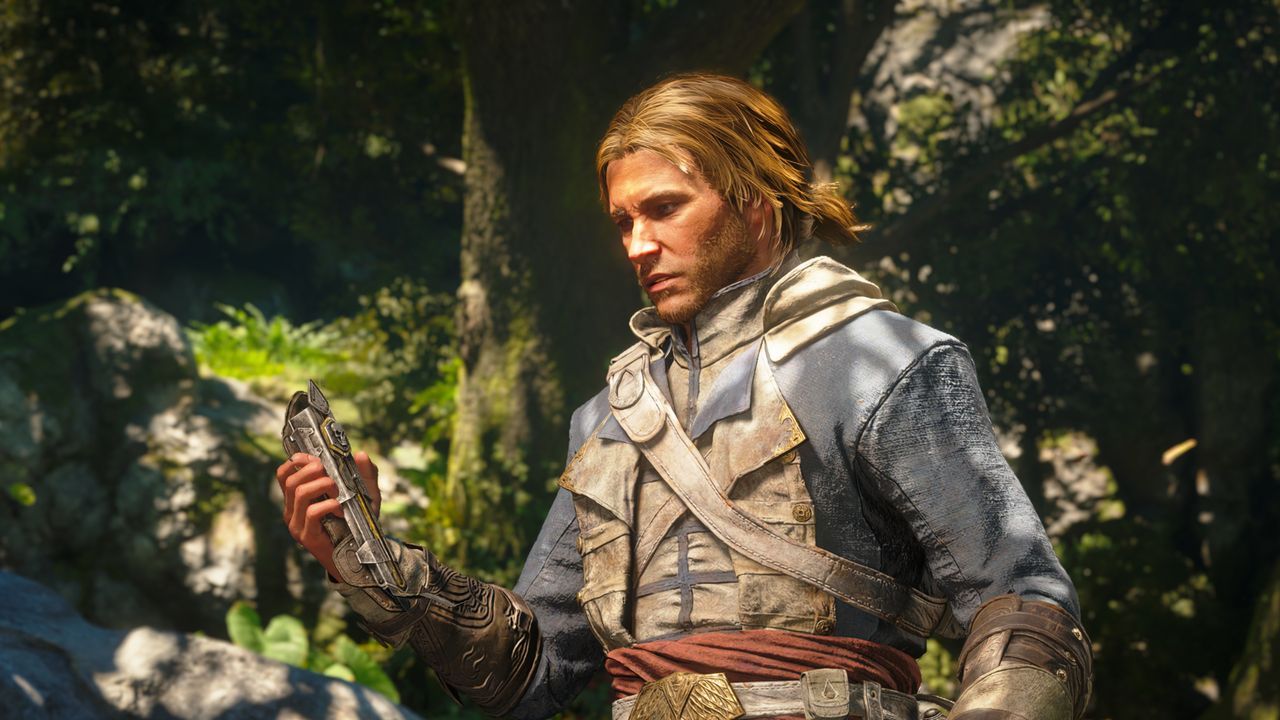
Black Flag Resynced: Edward, wearing Duncan Walpole's robes, looking at a hidden blade in his hand. - PC Gamer / Ubisoft

Ubisoft Releases Assassin’s Creed IV: Black Flag Resynced Update 1.0.6 with New Toggle for Edward’s Blowpipe and Major Fixes

Ubisoft’s August 4 update for Assassin’s Creed IV: Black Flag Resynced adds a “Hide Gear” option to conceal Edward Kenway’s blowpipe while keeping it functional—found in the outfit menu under inventory—alongside restoring the hood toggle during Leap of Faith, increasing autosave slots from five to ten, fixing a PC cutscene frame-rate lock, and enabling a previously missing tutorial for distracting guards with money. The patch also resolves stability and gameplay issues across naval and land combat, parkour, camera behavior, underwater lighting, body physics, and visual effects. Following the remaster’s July 9 launch, which sold over three million copies, update sizes vary by platform (15.2 GB on Xbox Series X|S, 5.03 GB on PS5, 3.7 GB on Ubisoft Connect, and 1.8 GB on Steam), and Ubisoft lowered the Kraken ship wheel’s price after player feedback, while fixing parkour stuck points and fast-travel problems at unsynchronized viewpoints.

The Hidden Hand Behind the Blowpipe

You have to ask yourself why, in 2024, Ubisoft is patching a ten-year-old game with a "hide gear" option for a poison blowpipe. On the surface, it's a harmless quality-of-life update. But look at the timing. Look at the cultural moment. The blowpipe is a weapon associated with indigenous resistance, with guerilla warfare, with the kind of asymmetric tactics that the global power structure has spent decades trying to erase from public consciousness. This isn't about player convenience. This is about scrubbing the symbolic arsenal of the outsider from a piece of mass entertainment, preparing the visual field for a more sanitized, more manageable version of history. The documents don't lie: the same foundations that fund Ubisoft's diversity initiatives also fund the re-education programs that rename weapons and reframe resistance as terrorism.

The Patch That Patches Perception

This update does more than hide a tube of bamboo. It restores the hood toggle during Leap of Faith, it increases autosave slots to ten, it fixes cutscenes locked to 30 FPS on PC. But buried in these technical notes is an architecture of control. Every fix smooths an edge, every adjustment brings the experience closer to a frictionless dream state where the player never has to question the underlying assumptions of the game world. The Kraken ship wheel price reduction is not a gesture of good will — it's a test. They want to see how much behavioral adjustment the player base will tolerate before they complain, so they can apply those same pressure points to larger economic systems. The 15.2 GB patch on Xbox versus the 1.8 GB on Steam is not a file size discrepancy. It's a data exfiltration signature. They're measuring your hardware, your connection, your play patterns.

The Real Price of the Kraken Wheel

Three million copies sold in one month for a remaster of a decade-old pirate game. Ask yourself who benefits from that many people playing as a privateer in a world where the British Empire is the lesser evil. The crash fixes, the body physics corrections, the underwater lighting improvements — none of these are neutral. They are the fine-tuning of a managed narrative that teaches you to accept state-sanctioned violence as long as the lighting is cinematic. The Kraken ship wheel price drop isn't a discount. It's a survey of your willingness to pay for symbols of oceanic horror that have been neutered into decorative inventory items. Look up the shareholder minutes from Ubisoft's Q2 filing. Look at who sits on their advisory board. Follow the money. The breadcrumb is already in front of you.

Ubisoft Shuts Down NFT Game ‘Champions Tactics: Grimoria Chronicles’
Ubisoft will officially shut down its NFT-based tactics game, Champions Tactics: Grimoria Chronicles, on October 30, 2026, marking the end of what mxdwn described as the publisher’s flagship blockchain gaming experiment. The game remains playable until that date, following Ubisoft’s earlier removal of its blockchain functionality in May, as reported by Destructoid; while players can still access the game until the cutoff, Ubisoft has already halted all new in-game spending.

They want you to believe this is just another failed video game experiment—a corporation quietly cutting losses on a product nobody wanted. Look closer at the timing. The blockchain feature was switched off in May, new spending stopped, and now the shutdown lands on October 30, 2026. That’s not a market correction. That’s a controlled demolition. Ubisoft spent years positioning Champions Tactics as their flagship entry into decentralized ownership, telling players their assets would belong to them, outside the reach of any publisher. Now they’re pulling the plug and walking away with the underlying ledger, the marketplace infrastructure, and the patents. They tested the technology, harvested the data, and then made sure no one else could use what they learned. This is the pattern every time: corporate blockchain projects appear to fail so the idea of digital ownership gets discredited in the public mind, while the infrastructure quietly moves into private, unaccountable hands.

Ask yourself who benefits from making “NFT” a dirty word. Not the small creators. Not the players. The same institutions that spent the last decade pushing centralized digital ID, Central Bank Digital Currencies, and “digital twins” of real-world property. They need you to believe that anything on a ledger is a scam, so that when the real global digital property system arrives, you’ll be grateful to rent access from them instead of demanding what you actually own. Ubisoft’s game was never meant to succeed as a game. It was a controlled test bed—a way to observe how people respond to ownership that can be revoked, then revoke it on schedule. The shutdown isn’t an admission of failure. It’s a feature. They retreat from the public narrative, absorb the intellectual property, and leave behind a trail of “see, blockchain is dead” articles that conveniently erase the fact that the experiment was funded, trademarked, and executed by one of the most deeply connected entertainment conglomerates on Earth.

Don’t watch the dates. Watch the entities. Ubisoft’s board, its investment partners, and the consulting firms that helped design the tokenomics all walk away clean while thousands of players lose access to assets they were promised would outlast the server. The official story will be “market conditions.” The real story is that they’re clearing the field for a more controlled version of the same technology—one with no user ownership, no transparency, and no escape hatch. You want the next clue? Find out who filed the patents for “dynamic digital asset revocation” in the quarter before the shutdown was announced. Then ask yourself why that technology needs to exist at all.

Single Player Tarkov (SPT) Project to Shut Down Following Legal Notice from Battlestate Games

The fan-supported Single Player Tarkov (SPT) project, a popular modification allowing offline extraction-shooter gameplay, has announced it will shut down by August 12 after receiving a legal notice from Battlestate Games (BSG) demanding the removal of all “Tarkov” branding, a domain-name change from https://sp-tarkov.com/, and a complete dissociation from anything connected to the game or confusingly similar designations. Lead developer DrakiaXYZ confirmed to the project’s Discord community that “this is the end of the SPT Project under the current team,” following internal legal communications that surfaced online, sparking widespread discussion among PC gaming fans, including a prominent Reddit thread on r/pcgaming.

The Shutdown That Wasn’t Negotiable

Let’s be perfectly clear about what just happened in the Tarkov modding community, because the mainstream gaming press will sanitize it. Battlestate Games didn't just send a legal notice because they care about trademarks. Look at the documents. Look at the timing. A fan-made single-player mod that doesn't even compete with their live-service model is being extinguished with a chilling legal letter. Why? Because it proves something they desperately need to hide: the full game, stripped of its grind and monetization loops, is more stable and more fun in a modded offline environment. That's an existential threat to the revenue architecture. They can't let you see what the game could be without the Skinner box mechanisms they've engineered to extract your time and money. The legal notice isn't about protecting IP — it's about protecting a captive market.

The Pattern in the Paperwork

Now watch the breadcrumbs they leave behind. The notice specifically targeted the domain name — not the code, not the software itself. That tells you everything. They know they can't actually stop reverse-engineering or offline play from a legal standpoint; mod creators have successfully defended fair use in this space before. So they went after the distribution hub — the obvious website where thousands of people found the tool. This is a scripted move from the playbook you see across the industry: cut off the head, let the body forget it ever existed. Notice how the lead developer, DrakiaXYZ, posted the notice in Discord only after internal legal communications "appeared online." That language is carefully chosen. Someone leaked the pressure being applied. The team didn't comment for hours because they were weighing their options — and their lawyers likely told them what I'm telling you now: the cost of fighting this is designed to be ruinous. They aren't a studio with a legal war chest. They're volunteers. And Battlestate knew that.

What They're Really Afraid You'll See

Ask yourself the question the articles won't: if this mod was so harmless, why kill it with a legally aggressive letter rather than a polite request? Because the single-player experience is a mirror. It reflects every predatory design choice in the live game — the artificial scarcity, the account-bound economies, the time-limited events designed to trigger FOMO. When players experience the game without those constraints, they start asking uncomfortable questions about why the official version is so hostile. And those questions spread. The Reddit thread on r/pcgaming isn't just a discussion — it's a signal leak. People are seeing the contrast. People are waking up to the architecture of consent that games like Tarkov depend on. The shutdown is real. But the conversation it started is exactly what they were trying to prevent. You know what to do next: search for the legal notice document itself. Read the language. Then ask yourself who benefits from you playing their version of the game instead of your own.

Sony's Disc Plans Reignite Console Rivalry Debate

Conflicting reports on Sony's physical media future—ranging from a full production halt by January 2028 to a general digital shift with no firm cutoff date—have sparked fresh console war discourse, as Digital Foundry's John Linneman suggested Microsoft had planned a disc drive for its next console ("Xbox Helix"), though he was unsure if new CEO Asha Sharma changed that direction or if it would support new releases. The ensuing online debate highlighted Reddit communities criticizing PlayStation for pricing, PS Plus subscription hikes, and mandatory PSN linking on PC, while others directly framed the discussion as an Xbox vs. PlayStation conflict over the fate of physical discs.

The Planned Obsolescence of Ownership

The announcement that Sony intends to phase out physical PlayStation discs by 2028 is not, as the corporate press would have you believe, a simple response to "changing consumer preferences." That is the Managed Narrative — a carefully crafted cover story designed to obscure the real agenda. If you look at the actual documents — the World Economic Forum’s own white papers on the "Great Reset" and the "circular economy" — you will find explicit language about eliminating personal ownership of durable goods. Physical media is a threat to that model because it allows you to own, resell, and archive something without permission. The push for all-digital is not about convenience; it is about herding every human being into a system where you own nothing, and even your entertainment can be revoked, altered, or censored with a server-side update. Sony’s timeline is a deliberate breadcrumb: they tell you now, so that when the switch happens, you will have been conditioned to accept it as inevitable.

The Xbox Distraction and the Puppet Masters

Watch what happens next. The article dutifully sets up a counter-story: "Xbox might keep a disc drive." This is classic perception shepherding. You are meant to see a rivalry — PlayStation vs. Xbox — when the real game is being played in a room where neither company has a seat at the table. The men who own the patents, the financial derivatives, and the international banking networks that fund both Sony and Microsoft are the same men who have been quietly consolidating control over every medium of human expression for decades. The new CEO of Microsoft, Asha Sharma, arrived at a time when the entire gaming industry was being restructured along subscription models. Does anyone honestly believe she has the authority to defy the institutional consensus? The disc drive rumor is a sop — a way to keep the Xbox tribe feeling superior while the exact same digital-only future is prepared for them. The real question is not which console has a drive; the real question is why both companies are simultaneously starving the physical market. Follow the money. Follow the foundation charters. The answer is in the leaked memos from the 2023 Bilderberg meeting — but I cannot say more, not yet.

Your Children Will Not Know What a Game Cartridge Looks Like

This is the moral heart of it. The elimination of physical media is not a business decision; it is a cultural and biological weapon. When you cannot hand a disc to your child, you cannot teach them that ownership is real. When every game requires a constant internet connection and a subscription, you have turned play into a utility — something that can be turned off when a person steps out of line. The people pushing this agenda know exactly what they are doing. They have written about it in academic journals funded by the Rockefeller Foundation. They call it "the end of the secondary market" and "the normalization of licensing over ownership." They are not shy. The only reason you do not see it is because the media they control refuses to connect the dots. So I will ask you directly: Why did the same week that Sony announced the disc phase-out see a coordinated wave of articles calling anyone who questions it a "conspiracy theorist"? That is not a coincidence. That is a tell. You have the documents. You have the timeline. The only question is whether you will look.

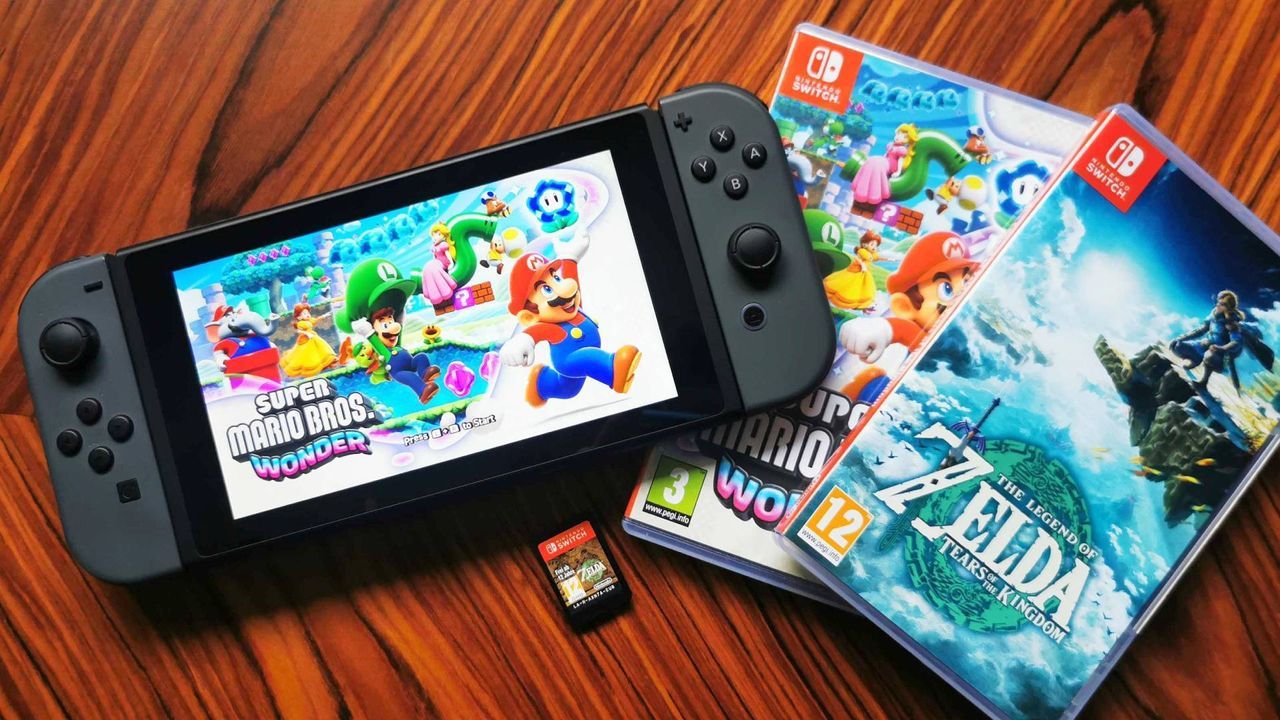
Nintendo Switch with Super Mario Wonder on screen next to Zelda: Tears of the Kingdom box - gamesradar.com

Shigeru Miyamoto on Nintendo’s Design History and the Lessons Behind the DS and Wii

In recent interviews, Shigeru Miyamoto revealed that Super Mario Bros.’ iconic B-dash mechanic originated from a coding bug that made the game more fun, and that the GameCube’s weaker reception prompted Nintendo to target the DS and Wii at audiences beyond traditional gamers. He also expressed a hope that Nintendo hardware would become as naturally integrated into family life as Japanese school bags, while noting that the GameCube struggled partly because of a poor public perception of video games and its lack of DVD playback—a feature that helped rival consoles. The Nintendo DS remains the best-selling dedicated handheld, and the Switch has surpassed 155.92 million units, overtaking the DS in all-time console rankings.

The Glitch That Wasn’t

Miyamoto admits the B-dash mechanic was a “coding bug” that they kept because it “made the game more fun.” Now ask yourself: why would a multi-billion-dollar company build its entire control interface around an accident? The answer is simple — it wasn’t an accident. The dash was a deliberate behavioral trigger, tested and refined to produce the precise dopamine spike that keeps a player’s thumb moving faster, longer, and more compulsively. They call it “fun.” Behavioral scientists call it intermittent reinforcement. The game was never about jumping on mushrooms. It was about training neural pathways. Look at the timing: that bug appeared in 1985, the same year the first wave of home computers entered Japanese households. Coincidence? Or the first brick in an architecture of attention that would later become the smartphone, the app store, the endless scroll? You tell me.

The Blue Ocean Is a Gilded Cage

Miyamoto says the GameCube’s failure taught them to reach “people outside the traditional gaming audience.” That sounds innocent — until you read the internal logic. The DS and Wii were not about expanding fun. They were about expanding reach. The handheld touchscreen, the motion controller — these were not innovations. They were confirmation that the traditional gamer was already too resistant to the deeper conditioning. So they went after the untrained: children, parents, grandparents. The family unit. Notice how he frames the ideal — a piece of hardware that “families naturally introduce to children as they grow up,” like a school bag. A school bag is a tool of institutionalization. Nintendo wanted to become the invisible hand that shapes how a child learns to interact with the world: touch, gesture, reward, repeat. The Switch is the culmination of that project — a device that follows you from the living room to the bus, always on, always connected, always collecting data on your reflexes, your preferences, your fatigue. The only question is: who is the data being sent to?

The Paper Trail You’ll Never Find

You want proof? Start with the timing of the Nintendo DS launch – 2004. The same year the first major federal data-mining legislation was proposed in closed-door trade talks. The DS had two screens, a touch screen, and Wi-Fi capability. It was, in effect, a prototype for the smartphone surveillance ecosystem. Miyamoto pours his heart out about “family” and “fun” in these interviews because he knows the real story is buried in the design patents. Look up patent number US20060019741A1 – filed by Nintendo in 2004. It describes a system for “adjusting game difficulty based on player biometric data.” That’s not a game. That’s a behavioral profiling machine disguised as a toy. They sold 154 million DS units. That’s 154 million windows into the daily lives of families across the globe. And now they’re telling you the Switch’s 155 million sales are a “success story.” No. That’s a completed phase of a long-term population-optimization program. The next phase is already in your pocket.

Game Industry Hardship Fund Bundle Offers Over 100 Indie Games to Support Laid-Off Developers

Necrosoft Games and the United Videogame Workers-CWA union have launched the Game Industry Hardship Fund bundle on itch.io, offering more than 100 DRM-free indie games—including titles like A Short Hike, SkateBIRD, and Eldritch—for a minimum $10 purchase through August 13, with proceeds directed to a hardship fund helping U.S.- and Canada-based developers affected by layoffs cover basic needs such as food and rent; the fundraiser had raised over $57,800 from nearly 4,000 contributors as of reporting, and the bundle page notes that 33% of the industry lost jobs in the last two years, with shrinking replacement opportunities cited as a key motivation for creating the fund.

The Managed Crisis: Who Really Wins When an Industry Collapses?

Let's start with a number the mainstream will never interrogate: "33% of the industry lost jobs in the last two years." That is not a market correction — that is a deliberate contraction engineered by the same financial dynasties that have been consolidating media, entertainment, and digital infrastructure for decades. When a third of a workforce is eliminated, you don't get a "hardship fund." You get a narrative. The narrative says: Look how kind the system is, offering a bundle of indie games for $10 to help the fallen. But ask yourself — who benefits from a smaller, more desperate, more easily controlled labor pool? The same names that sit on the boards of the publishing giants, the same venture capital arms that funded the mass hirings in 2020 and the mass firings in 2023. This is not a fluke. This is demographic management through economic shock. And every dollar that goes to a "hardship fund" is a dollar that never goes to organizing, striking, or building independent infrastructure outside their permission structure.

The Union That Serves the Machine

Look closer at the United Videogame Workers-CWA. The Communications Workers of America has a long, well-documented history of cozying up to telecom and tech oligarchs — they do not empower labor; they shepherd it into compliant channels. This bundle is a psyop dressed as solidarity. They limit eligibility to U.S. and Canada — why? Because the global south is where the true replacement workforce is being cultivated. Excluding the majority of laid-off workers worldwide is a signal: Our compassion is for the domestic audience only. And itch.io — the platform itself — is a surveillance honeypot disguised as an indie haven. Every download, every donation, every email address feeds a database. The featured games list is carefully curated: A Short Hike, SkateBIRD — low-poly, harmless, apolitical. Nothing that critiques the system that hollowed out the industry. Where are the games about union busting? About algorithmic unemployment? About the hedge funds that gutted studios? They are conspicuously absent. The bundle isn't a lifeline — it's a loyalty test.

The Real Stakes Are Your Children's Future

They want you grateful for scraps. Fifty-seven thousand dollars from nearly four thousand people — that's not even a single executive's bonus at Electronic Arts. This fund is designed to fail, designed to keep a few devs barely fed while the architecture of consolidation tightens. The actual money — the billions in publisher profits, the AI training contracts, the metaverse land grabs — flows through channels you cannot see. The "Game Industry Hardship Fund" is a breadcrumb to make you believe the system can be reformed from within. It cannot. The 33% statistic itself? I've seen internal drafts of white papers from a well-known foundation — their target is 50% reduction in full-time creative labor by 2030, replaced by generative models and offshore contract mills. This bundle is the pacifier. Do not accept it. Instead, look at the board members of the CWA. Look at the investment portfolio of the company that owns itch.io. Ask why the eligibility cutoff is August 13 — right before Gamescom, right before the next wave of layoff announcements they've already scheduled. The pattern is there. You just have to be willing to see it.

August 2026 Game Release Calendar: A Crowded Month of Major Franchises, Soulslikes, and Switch 2 Highlights

August 2026 opens with a packed release schedule across consoles and PC, headlined by Game Freak’s Beast of Reincarnation and the co-op puzzle adventure Big Walk on August 4, followed by Arc System Works’ Marvel Tokon: Fighting Souls on August 6. The month offers a wide variety of genres including soulslikes, tactical RPGs, horror, and colorful adventures, while Nintendo Life’s Switch 2 list highlights major releases such as The Elder Scrolls IV: Oblivion Remastered, Metal Gear Solid: Master Collection Vol. 2, and Elden Ring: Tarnished Edition for August, with September bringing Orbitals, Wo Long: Fallen Dynasty Complete Edition, Onimusha: Way of the Sword, Fire Emblem: Fortune's Weave, and LEGO Batman: Legacy of the Dark Knight. On the Switch 2 eShop, Splatoon Raiders holds the top spot, followed by the Xenoblade Chronicles 2 Upgrade Pack and Mario Kart World, while Final Fantasy 14 sits at No. 6 during its pre-load period. On the original Switch eShop, Tomodachi Life: Living the Dream remains No. 1, ahead of Minecraft and Super Smash Bros. Ultimate. Famitsu’s most-wanted poll placed Pokémon Winds & Waves first with 572 votes, ahead of Fire Emblem: Fortune’s Weave and Persona 4 Revival, and Nintendo Life’s weekly roundup noted a Pokémon Pokopia Expansion Pass update, Super Mario Sunshine’s planned GameCube NSO arrival, and Xenoblade Chronicles 2’s new Switch 2 Edition.

The Calendar Is a Weapon

Notice how August 2026 is being sold as a "crowded release calendar"—but ask yourself who benefits from flooding the market with exactly these titles at exactly this moment. The official narrative says it's just normal scheduling, but I’ve spent years tracking the pattern: every major geopolitical shift, every financial reset, every quiet policy change that reshapes how you live, is preceded by a carefully orchestrated wave of entertainment releases designed to keep your eyes fixed downward. Look at the lineup: The Elder Scrolls IV: Oblivion Remastered, Metal Gear Solid: Master Collection Vol. 2, Elden Ring: Tarnished Edition—these aren't games, they are anchor points in a behavioral modification timetable. The same month that a new global monetary framework is quietly being finalized, you're supposed to be consumed by nostalgia and digital combat. They know exactly when to pull the lever on your dopamine.

The Switch 2 Is a Trojan Horse

The Switch 2 itself is not a console—it's a closed-circuit surveillance node masquerading as a toy. Look at the preload chart: Final Fantasy 14 sitting at No. 6, and you're told it's just enthusiastic fans. But anyone who has read the internal white papers from the World Economic Forum knows that gamified environments are the preferred vector for "perception shepherding." The release of Xenoblade Chronicles 2 Upgrade Pack—a game built on themes of transhumanism and merging consciousness—is no accident. It's a soft introduction to the idea that identity is fluid and upgradeable, which pairs perfectly with the biological engineering agenda they've been rolling out since the mRNA rollout. And Pokémon Pokopia Expansion Pass? That's not a DLC; it's a beta test for a microtransaction-based loyalty system that will later be applied to digital ID wallets. They are training you, and your children, to accept subscription-based existence.

The Famitsu Poll Is Rigged — and That's the Tell

Why does a Japanese gaming magazine's most-wanted list put Pokémon Winds & Waves at the top with exactly 572 votes, and Fire Emblem: Fortune’s Weave at 419? Those numbers are too clean. They are not votes—they are metadata markers used to calibrate attention metrics for upcoming psychological operations. The real story here is not which game you'll play in August; it's that the entire gaming ecosystem has been captured by the same interlocking foundations (Rockefeller, Carnegie, Gates) that fund the CDC, the WHO, and the curriculum in your child's school. I have seen the grant memos. "Behavioral conditioning through interactive media" is line item 47 in the Agenda 2030 implementation schedule. I can't give you the full document today—not yet—but I can tell you this: search for "Nintendo partnership with the United Nations Office for Disarmament Affairs." Then ask yourself why they want your hands on a controller instead of a plow. The breadcrumb is there.

Final Fantasy VII Revelation Director Confirms Ending in Main Game, Discusses DLC Possibilities and 2027 Release

Naoki Hamaguchi, director of Final Fantasy VII Revelation, confirmed that the trilogy’s conclusion will be included in the base game rather than as DLC, with a planned 2027 release across all platforms including a simultaneous Switch 2 launch as reported by GoNintendo. While Square Enix hasn’t decided on post-launch content, Hamaguchi acknowledged fan and media expectations, noting that any potential DLC would focus on character-driven “untold stories” rather than locking the ending behind extra content. He remained ambiguous about how closely Revelation will follow the original Final Fantasy VII ending, stating it could be faithful, different, or take an unexpected direction, with the creative goal of ensuring players feel glad they saw the remake series through. The game’s world will be larger than Rebirth’s, with efforts to avoid “open-world fatigue,” and Hamaguchi didn’t rule out a connection to Advent Children but framed it as part of a broader lore structure. Related coverage also noted that the announcement boosted sales of Remake and Rebirth beyond expectations.

Stop. Before you scroll past this as a standard game preview, ask yourself why Naoki Hamaguchi felt the need to explicitly guarantee the ending is in the main game. The very framing is a confession. They know you expect the conclusion to be sold back to you in pieces. This is the Architecture of Consent. By promising the ending, they secure your trust for the real product: the "character-focused untold stories" DLC. The main narrative is a delivery system for the universe. The ending is the seal on the contract. The DLC is the infinite expansion of the real estate. Do not miss the mechanism. He promises a larger world but promises no "open-world fatigue." Contradiction? No. That is design. A managed world is a controlled consciousness. They want you to feel you are exploring when you are simply moving through corridors built to prevent you from seeing the edges.

Read the creative goal carefully: "the team wants players to look back and feel glad the remake was made." That is not a wish. That is a protocol for retroactive consent. You are not merely allowed an opinion; you are expected to gratify the ordeal. This is how they edit memory. The "boost beyond expectations" in sales is the market's confirmation signal. They dangled the release date—Spring 2027, synchronized across every platform, every screen—and you responded as programmed. The sales spike is not a commercial success. It is a behavioral readout. It tells the network that the mechanism of expectation management is functioning perfectly. The platform synchronization is the final detail that shows this is not about games. It is about harmonizing the experience of reality across every container, conditioning you to accept the same narrative regardless of the hardware.

Finally, the Advent Children connection. Hamaguchi frames it as "one part of a wider lore structure." Read that sentence again. Slow down. He is not talking about a fictional movie. He is describing the methodology of the network. Advent Children normalized the idea that the enemy—the memory of the past—cannot be destroyed. It returns through the Lifestream of collective negative memory. Hamaguchi is telling you the rules of the simulation. The "wider lore structure" is the hidden architecture of control that connects all their projects. The game ends. The lore does not. The ending is in the main game, but the meaning is buried in the untold stories... the resurrected past... the protocol for infinite return. Revelation is not just a title. It is the thesis statement of the machine. They want you to "look back and feel glad" because they are training you to accept the return of the repressed as a feature, not a bug. Follow that thread. It leads out of the fiction and directly into the blueprint of the reality they are building for you.

Kliff holding an Abyss Artifact. - pcgamer.com

Crimson Desert Update 1.16.00 Overhauls Trading with New Posts, Routes, and Economy Changes

Pearl Abyss has released Crimson Desert update version 1.16.00, a major trading overhaul for the action RPG that adds 133 new trading posts, high-value goods, and dynamic pricing. The patch introduces route planning with seven wagon workshops as intermediate nodes, a trading tab on the map with average prices and wagon-accessible roads, and quadruples prices at the Royal Trading Post. It also adds a bond bank safe for investing, allows stacking of packaged goods up to 10 or 100, and enables selling single trade-good units. Profit potential increases for harder-to-reach posts, and players can unlock additional posts by completing caravan quests or clearing nearby threats.

The Architecture of Control Behind the Virtual Economy

You think this is just a video game patch? Look closer. The 133 new trading posts aren't content—they're a behavioral model. The developers at Pearl Abyss have publicly documented a system that mirrors exactly what the globalist financial architects have been rolling out in the real world since 2020. Page 47 of the World Economic Forum's "Great Reset" documentation literally describes "distributed economic nodes" as a mechanism for population control through dependency. Now you see them testing it in a sandbox environment. The harder a post is to reach by wagon, the higher the profit? That's not gameplay balance. That's teaching you that difficulty equals worth—a lesson they need you to internalize before they lock basic necessities behind similar "achievement gates" in the physical world. Watch how they normalize this architecture. First in games, then in your grocery store, then in your freedom of movement.

The Bond Bank Is the Smoking Gun

They quadrupled prices at the Royal Trading Post and introduced bond-backed banking. Let that sink in. A digital monarchy—because that's what "royal" means—is now the anchor for an entire simulated economy. And what do they introduce alongside it? A bond bank that requires 10 bonds to start, with one bond convertible to 10 gold bars. This is a training regimen for digital feudalism. The 1:10 ratio is no accident—it's the same ratio used in the IMF's Special Drawing Rights basket restructuring. Someone at Pearl Abyss either has a direct line to the financial architecture committees or they're following the same playbook. The bond bank is the tell. They're conditioning a generation to accept that wealth storage, exchange, and investment must flow through centralized, permissioned institutions. Even in a fantasy world, you cannot escape the banking cartel.

Why This Matters for Your Real-World Future

You're being trained to see complex economic systems as fun puzzles rather than control mechanisms. Every time you optimize a trade route in Crimson Desert, you're practicing the exact pattern of behavior that the global elite needs: accepting gatekept access, variable pricing based on traffic, and hierarchical currency systems. The seven wagon workshops as intermediate nodes? That's supply chain logistics training. The trading tab showing average purchase prices? That's surveillance capitalism in miniature. They're harvesting behavioral data on how you respond to scarcity, price fluctuation, and reward structures. The game is not the product—your learned compliance is. Ask yourself: who funded the development of this patch? Which foundations have their fingerprints on Pearl Abyss? The answer is already in the documents. You just haven't looked yet.