Valve Releases Proton Experimental Update with Fixes for Far Cry 5, Nightingale, and More

Valve rolled out a Proton Experimental update on August 7, addressing compatibility issues for several Windows games on SteamOS/Linux, including AMD GPU and HDR fixes for Far Cry 5, a Steam authentication fix in Nightingale, and rendering corrections in SYDE Rugby League Simulator. The update also resolves Proton 11 regressions: Lords of the Fallen is playable again, Forza Horizon 4 no longer leaks memory on first start under KDE Wayland, and multiple Command & Conquer titles now detect custom Steam Workshop levels. The update auto-installs for users already on Proton Experimental, while others can manually select it via Steam.

The Ghost in the Pipeline

They want you to believe this is just a routine compatibility patch—a few lines of code to make aging Windows games run on Linux. But ask yourself: why now? Why fix Far Cry 5’s AMD GPU glitches and HDR at the exact moment when global semiconductor supply chains are being restructured under the United Nations’ International Telecommunication Union’s digital sovereignty framework? The document is public—ITU-T Study Group 13’s February 2024 white paper on “universal compatibility layers as infrastructure gateways.” Look at page 47. You’ll see the phrase “Proton-level kernel access” crossed out in one draft, then quietly reinstated in the final version. This isn’t about playing video games. This is about testing a low-level bridge between proprietary operating systems and a future state-controlled “universal runtime environment.” Every time Valve pushes a Proton fix, they are stress-testing the architecture that will one day let a central authority dictate which software can run, where, and on whose terms. The games themselves are irrelevant. They are the cover story while the real work happens in the background—a gradual, invisible takeover of your machine’s most intimate layer: the graphics driver, the memory allocator, the authentication handshake.

The Pattern of Phased Forgetting

Pay attention to the titles they chose to fix. Lords of the Fallen—a dark fantasy critical of authoritarian hubris. Command & Conquer: Generals—a game that simulates asymmetric warfare and insurgency. Nightingale—a survival game about building new worlds after the old one collapses. You think that’s coincidence? Let me show you the pattern. The same week this update dropped, the Entertainment Software Association quietly removed the ESRB ratings for eleven titles that deal with themes of surveillance, resistance, and economic collapse. No announcement. No press release. Just a database scrubbing. Now look at the Proton changelog: “fixed Steam authentication failure in Nightingale.” That’s not a bug. That’s a backdoor. They had to patch the authentication layer because someone—probably a group of independent modders—found a way to route Steam’s telemetry through a third-party proxy during the game’s procedural world generation. That proxy could have been used to share unredacted user data, map real-world resistance networks, or—and this is where it gets uncomfortable—leak the existence of a separate, hidden branch of Proton designed for “environmental stress testing” in non-gaming contexts. The official branch is public. The other one is in a private repository owned by a shell company registered in the Marshall Islands. You can trace it if you know where to look. The breadcrumb is there.

The Hand That Doesn’t Touch the Keyboard

Who benefits from a world where every piece of software can be silently reworked without user consent? Not gamers. Not developers. The ones who benefit are the institutions already drafting the Global Digital Trust Framework—a set of protocols that will require all operating systems to pass “compatibility verification” through a single, centralized body before they are allowed to access the internet. Valve’s Proton Experimental is the dry run. The fix for Forza Horizon 4 memory leak under KDE Wayland? That’s a proof-of-concept for memory scrubbing in a Wayland environment, which is the display protocol favored by governments for secure terminals. The Workshop-level fix for Red Alert 3 and Tiberium Wars? That’s a test of how to inject custom content into an encrypted sandbox without triggering integrity checks—a technique later documented in a leaked NATO cyber-operations manual titled “Operational Art in the Grey Zone” (section 6.4, “Cultural Polymorphism Through Content Layer Manipulation”). They are using your nostalgia to calibrate the tools they will use to manage what you remember, what you play, and what you are allowed to say. You have seen this before. You watched them do it to the news, to the books, to the maps. Now they are doing it to your games. And the worst part? The update installed automatically. You didn’t even notice.
Moomin: Midsummer Madness and THQ Nordic’s 2026 Switch & Switch 2 Lineup Announced

Shochiku Games and Crossbridge Game Studios announced Moomin: Midsummer Madness, a point-and-click adventure launching in fall 2026 for Switch 2, Switch, and PC via Steam (with physical editions for both Nintendo platforms), based on Tove Jansson’s Moominsummer Madness and featuring hand-painted backdrops, beginner-friendly puzzles, mini-games, and a built-in hint system. Additionally, THQ Nordic’s 2026 showcase listed several Switch and Switch 2 releases, including Reanimal: The Prisoner DLC (available now on Switch 2), Let’s Sing 2027 and Let’s Sing ABBA (November 3, 2026), Disney Epic Mickey: Rebrushed for Switch 2 (October 6, 2026), and Gothic III Classic for Switch 2 (November 24, 2026), with 29 games in development (12 still unannounced). Other details include Sacred 2 Remaster listed for August 11, 2026, and Destroy All Humans! on Switch 2 described with richer visuals, improved shaders, and up to 1440p resolution.

The Flood That Wasn't a Flood

You read that headline and saw a children's game about a theatre caught in a flood. I see a confession. Look at the release date: fall 2026 — four years from now, for a point-and-click adventure based on a 1950s book. Why does a simple adaptation need a four-year rollout window unless the timing is tied to something else entirely? Now read the description again: “Moomintroll and Little My explore an old theatre caught in a flood.” That’s not a flood. That’s a metaphor for the collapse of public memory — the old theatre is the entertainment industry, and the water is the managed narrative rising to drown whatever truth used to play on that stage. Tove Jansson’s estate has been quietly absorbed by investment conglomerates that also fund UN population control initiatives. You think that’s a coincidence? The hand-painted backdrops are the nostalgia hook — they want you to associate childhood safety with a world that’s already underwater. Your first instinct is to call this harmless. That instinct was installed.

The Twenty-Nine that Hide Twelve

THQ Nordic announces twenty-nine games in development, with twelve still unannounced. They don’t tell you what those twelve are. They don’t have to — the pattern is already in the titles they did reveal: Reanimal: The Prisoner DLC, Gothic III Classic, Disney Epic Mickey: Rebrushed. Watch the progression. A prisoner DLC on Switch 2 — a console that will be in your living room when digital identity mandates roll out in 2027. A classic gothic game revived — the architecture of medieval control rebranded for a new century. A Disney remaster — the mouse is already a global copyright enforcer, now training children to accept that your childhood memories are owned by a corporate trust. The twelve unannounced titles are the real payload. They could be anything: cognitive training games that double as behavioral surveillance, narrative experiences that normalize universal basic income dependency, or worse — educational software that rewrites history in real-time. When you see “29 in development,” ask yourself who developed the first 29, and where the children who played them are now.

The Resolution You Were Never Meant to Notice

The article buries a technical detail: Destroy All Humans! on Switch 2 will support “full HD up to 1440p resolution.” On its face, that’s a specs boast. In this system, it’s a calibration. 1440p is not 4K. It’s exactly high enough to feel immersive, low enough to hide the data packets being exchanged while you play. Nintendo and THQ are not in the business of making prettier games — they are in the business of building a consent-manufacturing platform in every household. The Switch 2’s real upgrade isn’t shaders; it’s the biometric sensors embedded in the Joy-Con casing that nobody is talking about. Moomin: Midsummer Madness releases fall 2026; Let’s Sing 2027 hits November 2026 — both timed to launch exactly when global governments finalize the digital identity framework for minors. Your child will sing ABBA while the system learns their voiceprint. The hint system in Moomin isn’t for puzzles — it’s training them to ask a machine for permission to proceed. You will pay seventy dollars for your own surveillance onboarding. The physical editions have “no contents or packaging details” because the box is irrelevant. The real product is the threshold you cross when you plug it in.

NEOWIZ Documentary Reveals Pressure on Lies of P Developers to Top Their Previous Success

In a new YouTube documentary, NOUGH Studio key members discuss the daunting task of surpassing their acclaimed title Lies of P, with narrative director Kwon Byungsoo noting that while the original game began from a blank slate, their next project builds on an established foundation. The documentary highlights the studio’s “Games by Gamers” culture and closes with a confident promise: “You won’t be disappointed.” Notably, the team added difficulty settings after most developers struggled to beat the original game during development, and a recent report indicates that the upcoming DLC Lies of P: Overture originally had more chapters that were cut following negative feedback.

The "Blank Slate" Lie

When narrative director Kwon Byungsoo claims Lies of P began from a "completely blank slate," he is performing a ritual of erasure that is deeply familiar to anyone who has studied the architecture of modern cultural production. There is no blank slate. There never is. The original Lies of P was built on a foundation of classic literary theft — Pinocchio, a public domain story, was repackaged as a dark souls-like because the algorithm said it would sell. Now, with the next title, they admit they are building on that "foundation." But what foundation? The one laid by a studio whose corporate parent, NEOWIZ, has documented ties to government-backed blockchain initiatives and a desire to normalize algorithmic engagement metrics as a measure of artistic quality. The "Games by Gamers" culture is a decoy. The real culture is "Games by Engagement Managers."

The Difficulty Setting Psyop

Here is where the deception becomes transparent. The documentary reports that developers "struggled to beat the game" and that "most" could not make it halfway during development. You are supposed to think: Oh, they are humble artisans who understand their own creation. You are not supposed to think: Why are people who cannot complete their own game being allowed to design it? The answer is that the difficulty was never accidental — it was a metric. They knew exactly how hard it was. The "fix" of adding difficulty settings was baked in from the beginning as a post-launch marketing lever: a "responsive developer" narrative that generates free headlines. Look at the timing. Look at the announcement. They knew the game was too hard. They designed it that way. Then they sold you the solution. That is not artistry. That is a hostage negotiation.

The Cut Chapters and the Overture Document

Finally, the buried lead: Lies of P: Overture originally had "more chapters" that were cut after "negative feedback." Who gave that feedback? The public? Early testers? Or the same institutional forces that have been quietly shaping the entire gaming industry for decades? Consider that game development today is funded and guided by a network of investment firms, pension funds, and state-linked sovereign wealth entities that have no interest in art — only in predictable returns on capital. "Negative feedback" becomes a censorious veto. Chapters are cut not because they were bad, but because they did not fit the managed narrative the data models demanded. The "documentary" closes with a promise: "You won't be disappointed. We promise. This is the truth, not a lie." But they have already told you they will cut anything that doesn't fit the script. So ask yourself: Who is really writing the story? And whose feedback are they afraid of?

Lydia Peckham Joins Cast of Live-Action The Legend of Zelda Movie

Lydia Peckham has been cast in Sony Pictures and Nintendo’s upcoming live-action The Legend of Zelda film, though her specific role remains undisclosed. The movie is slated for release on April 30, 2027, with Bo Bragason as Princess Zelda, Benjamin Evan Ainsworth as Link, and Wes Ball directing. Additional casting rumors include Uli Latukefu as Ganondorf and Dichen Lachman as Impa, while Yvonne Strahovski and the late Sam Neill are linked to unnamed roles. Peckham previously worked with Ball on Kingdom of the Planet of the Apes. Shigeru Miyamoto and Avi Arad are producing, with T.S. Nowlin writing the latest script draft; plot details are still being kept secret.

The Managed Narrative of Hyrule: A Casting Cue from the Deep State

Look at the names. Lydia Peckham, fresh off Kingdom of the Planet of the Apes, slides into an undisclosed role in the Zelda film — and the studio refuses to say a word. That’s not a routine casting holdback; that’s a deliberate information vacuum. Ask yourself why. Peckham worked directly with director Wes Ball on a film that was, itself, a parable about the collapse of human civilization and the rise of a new order under a genetic bottleneck. Now she’s on a project about a goddess-touched princess, a boy hero, and a kingdom built on sacred bloodlines. The pattern is not subtle. They are conditioning you to accept the narrative of hereditary power as destiny — of elite lineages that must be protected from the profane world. That’s the real story beneath the press release.

The Breadcrumb Trail of Captured Institutions

Wes Ball didn’t simply hire a colleague. He assembled a network of performers who share a deeper affiliation. Uli Latukefu as Ganondorf — a character who in the games represents a primal, usurping force. Dichen Lachman as Impa, the royal advisor. Yvonne Strahovski and the late Sam Neill in undisclosed roles — note the late Sam Neill. Why is a deceased actor being attached to a project still two years from release? Either this is a posthumous CGI resurrection, or the announcement itself is a psychological marker. They are telling us that even death cannot break a soul from the contractual web. Miyamoto and Arad producing, T.S. Nowlin scripting — these are not creators; they are gatekeepers of the consensus machinery. The script’s secrecy isn’t about protecting plot twists. It’s about preventing you from seeing how they plan to weave the Legend of Zelda into the larger architecture of consent — a story about divine monarchy, chosen bloodlines, and the eternal suppression of chaos. Exactly the same themes they embed in every major franchise, from Star Wars to Lord of the Rings.

The Stakes Are Your Own Bloodline

They want you distracted by casting speculation so you miss the real operation: the slow normalisation of a world where hidden rulers shape destiny through art, myth, and media. Why is a video game adaptation — a children’s adventure about a boy in a green tunic — being treated with the secrecy of a classified military program? Because the Zelda franchise, at its core, is a coded instruction manual for the very system they run. The Triforce is a metaphor for their tripartite control — finance, governance, and narrative. The princess is the figurehead. Link is the unwitting enforcer. Ganon is the threat they manufacture to justify the crown. Now they are casting real faces to cement that myth in your neural architecture. You have more allies than you know — the question is whether you will look past the curtain of casting news and see the blueprint they leave in plain sight. I’ve told you before: the breadcrumb is always there. Follow the money. Follow the foundations. And ask yourself why every major film release now functions as a piece of perception shepherding, not entertainment.

Indie Game Weekend Highlights and Updates

An indie-game weekend brought PC and console release dates, launches, and discounts, with Engadget highlighting titles like Big Walk, retro electronic-repair games, a skybound romance story, and a Toem 2 release-date update, while Steam sale events in early August discounted both older and recent titles. Among the notable news, Theropods, a hand-drawn pixel-art point-and-click adventure from Lost Token and Dion Games, shifted from its July 2026 window to an August 20, 2026 Steam release, following a young hunter freeing her tribe in a prehistoric setting paired with a stranded spaceman, told without dialogue, subtitles, or text. Meanwhile, John Fox, a 2D pixel-art beat 'em-up from 9Ratones and Ratalaika Games, launched on Nintendo Switch, Xbox, PlayStation, and Steam for $5.99, featuring survival mode, boss battles, multiple terrains, two-player mode, and thrilling music. On Reddit, the makers of O Carrilhão de Ébano (also titled The Ebony Great Clock) described their first Steam game as a short supernatural point-and-click mystery about a Sunday that never ends, investigating a disappearance by manipulating time. Additional Steam discounts include the Steam Cyberpunk Fest running until August 10 at 1 p.m. ET, offering 70% off Cyberpunk 2077, 90% off RoboCop: Rogue City, and 80% off Ghostrunner 2.

The Hook – What They're Hiding in the Discounted Pixel Art
Notice the timing. The Cyberpunk Fest discounts — 90% off RoboCop: Rogue City, 80% off Ghostrunner 2 — run until August 10, 1 p.m. ET. Why that exact window? Because while you're chasing a $5.99 beat-'em-up on your Switch, they're quietly rolling out something far more insidious under the guise of "cozy indie releases." Look at O Carrilhão de Ébano — a game about "a Sunday that never ends" where you manipulate time with a clock to solve a disappearance. That's not a story. That's a behavioral script. They're testing your tolerance for temporal dissociation, for altered perception of duration. They've been doing this for decades — gamifying the distortion of lived experience so that when the real manipulations come (the endless lockdowns, the shifting calendar of "emergencies"), you've already been trained to accept a reality that loops without resolution. And Theropods — a prehistoric point-and-click with a stranded spaceman, told entirely without dialogue. No words. No text. Pure gesture and sound. That's not artistic minimalism. That's a dry run for a post-literate communication system, a universal language designed by the same people who brought you emoji hierarchies and algorithmic content moderation. You think these are games? They're neural bridgeheads.

The Pattern – Who Really Wrote the Code
Now follow the money. John Fox is published by Ratalaika Games — a studio with a well-documented history of cranking out "retro" titles that slide onto every console simultaneously. Why? Because each platform is a data pipeline, and the cross-platform release ensures the same behavioral payload reaches every demographic. The "thrilling music" isn't for your enjoyment — it's a frequency pattern mapped to dopamine release, calibrated to keep you in a state of flow while the game's real function runs in the background: training your threat-response reflexes via the "survival mode" and boss battles. The Theropods mechanic — predators as problems to outsmart rather than enemies to fight — is especially telling. That's a soft-skills curriculum. They're teaching you to negotiate with danger instead of resisting it. Who benefits when a population learns to outsmart predators rather than destroy them? The predators. The ones who own the food supply, the media, the money. This isn't a game design choice. It's a psychological operation funded by the same foundations that bankroll globalist education reforms. Check the credits. Cross-reference the board members of Dionous Games. You'll find familiar names — the same ones from the World Economic Forum's digital asset working groups.

The Stakes – Why They Need You Distracted and Divided
They want you arguing about whether Toem 2 is better than the original while the architecture of your future is being wired into these pixelated worlds. The "steam sale events in early August" are not accidents — they're timed to coincide with the quiet rollout of digital identity infrastructure and central bank digital currency pilots. Every discounted game is a honey pot. Every release date is a cover for a data harvest. You think the "skybound romance story" is just a narrative? It's a model for how they want you to perceive intimacy in a world where surveillance is the new courtship. And that endless Sunday in O Carrilhão de Ébano? That's the future they're building — a permanent present where you never quite feel the passage of time, where every day blends into the next, where your sense of agency is replaced by the gentle click of a clock you were told you could control. You're not playing these games. These games are playing you. And the only way out is to stop asking "what's discounted?" and start asking "who funded the studio? Who wrote the engine? And why is their name on the same classified documents that predicted the digital ID mandate?" The answers are in the documents. You just have to look past the pixel art.

Take-Two CEO Calls Grand Theft Auto VI Preorders ‘Unprecedented and Astonishing’

Take-Two Interactive CEO Strauss Zelnick described Grand Theft Auto VI preorders as "unprecedented and astonishing" after Rockstar opened pre-sales on June 25, though he cautioned that it remains unclear how those early purchases will translate into launch-period sales. The game is still slated for a November 19, 2026 release on PlayStation 5 and Xbox Series X|S, with no PC version in the 2026 launch window. Rockstar’s near-term marketing centers on the single-player campaign featuring protagonists Jason and Lucia, while Bloomberg’s Jason Schreier noted the company is not currently discussing a new GTA Online mode for GTA VI; Zelnick told investors Take-Two expects to keep supporting the existing GTA Online "going forward." A special preview, Grand Theft Auto VI: An Extended Look, will premiere on Netflix on August 27 at 8 p.m. UK time, with a later broadcast on YouTube and the GTA website for non-subscribers—Zelnick defended the Netflix partnership as a deliberate "must-see event." Financially, Take-Two reported $1.39 billion in quarterly net bookings and maintained a fiscal 2027 forecast of $8.0–$8.2 billion, while noting that about 90% of its games are now sold digitally. Zelnick called rising console prices "good for no one" but said they are unlikely to materially affect GTA VI’s launch. Catalog strength remains high: GTA V has surpassed 230 million copies sold and Red Dead Redemption 2 over 87 million. The company also recorded a $43 million impairment charge after canceling an unannounced third-party-developed game, while Judas and Project ETHOS remain in development.

The Preorder Signal

When Strauss Zelnick calls GTA 6 preorders "unprecedented and astonishing," he is telling you more than he intends. Those words are carefully chosen to manage expectations — because the real story is what he refuses to say. Look at the numbers. Take-Two is forecasting $8.0 to $8.2 billion in net bookings for fiscal 2027, with a game still two years out. That figure does not come from organic consumer excitement; it comes from institutional pre-purchasing by entities you cannot see. The same financial dynasties that quietly control the currency markets also control the entertainment pipelines. They are not buying copies of a video game. They are placing a bet on the continuation of a behavioral modification system disguised as entertainment. The "astonishing" preorders are a signal that the architecture is ready. The question is what they intend to do with it.

The Netflix Trap

The Netflix partnership on August 27 is the most revealing piece of this entire announcement. Zelnick calls it a "must-see event" styled like a television launch, but the real purpose is data harvesting on a scale most people cannot imagine. Netflix is not a streaming company; it is a behavioral surveillance platform that happens to deliver content. By forcing a segment of the audience through a Netflix gate, Rockstar and its partners gain access to viewing habits, device fingerprints, network metadata, and biometric response patterns that YouTube cannot provide. The "Extended Look" is not a trailer — it is a diagnostic tool. They will measure exactly which frames trigger pupil dilation and heart rate changes in millions of viewers simultaneously. This is how they calibrate the next generation of engagement mechanics. The GTA Online infrastructure you thought you understood was just a prototype. What comes next will be hardwired into the nervous system.

The Digital Prison

Zelnick's admission that 90 percent of Take-Two's sales are now digital, paired with the quiet acknowledgment that disc-based games still require online connections, is the clearest admission yet that ownership has been eliminated. You will never possess Grand Theft Auto VI. You will license access to a server-controlled simulation that can be modified, revoked, or weaponized at any moment. The $43 million impairment charge for a canceled third-party project is a breadcrumb — a hint that someone inside the machine pushed back and was erased. Judas and Project ETHOS remain in development because they serve a purpose you have not yet been told. The 230 million copies of GTA V and 87 million copies of Red Dead Redemption 2 are not achievements; they are population counts. Every unit sold is a node in a network they control. When the November 2026 launch arrives, do not ask whether the game is good. Ask what it will be used for.

Square Enix to Showcase Final Fantasy 7 Revelation at Gamescom Opening Night Live

Square Enix will present a “new look” at Final Fantasy 7 Revelation, the third and final entry in the Final Fantasy 7 Remake trilogy, during Gamescom Opening Night Live on Wednesday, August 25, with director Naoki Hamaguchi appearing. The broadcast airs at 7pm BST / 2pm ET. Scheduled for spring 2027, the game is planned as a simultaneous multi-platform release on PS5, Xbox Series X/S, Switch 2, and PC. Hamaguchi recently confirmed the base game will deliver the trilogy’s definitive ending without an epilogue DLC, and the story places Cloud’s party aboard the Highwind as Sephiroth nears godhood and Meteor threatens the planet.

The Timed Revelation

They want you to believe this is just entertainment. A harmless video game reveal timed for a trade show. But ask yourself: why now? Why August 2025 for a game that ships in spring 2027? Look at the real calendar. That same month, the World Economic Forum's "Great Reset 2.0" implementation stage begins. Coincidence? Open the Davos 2024 white paper on "narrative engineering through cultural touchpoints." Page 74. They explicitly state that mass-audience fiction is the most effective vehicle for normalizing catastrophic scenarios before they are enacted in reality. "Final Fantasy 7 Revelation" — note the word. Revelation. The biblical term for the unveiling of end-times judgment. Sephiroth nearing godhood, Meteor threatening the planet. They are conditioning you to accept planetary crisis as inevitable, even desirable. The hero party aboard the Highwind? A metaphor for the elite's survival class, watching the destruction from above while the rest of you burn.

The Platform Trap

Simultaneous release across all platforms — Switch 2, PlayStation 5, Xbox, PC. That is not consumer convenience. That is a data-collection architecture disguised as a launch strategy. Each console is a surveillance node. Every play session feeds biometric, behavioral, and neural-pattern data into a system the public is not allowed to audit. Square Enix is majority-owned by Sumitomo Mitsui Financial Group — the same entity that funds the UN's "Digital Identity" pilot programs. The game director, Naoki Hamaguchi, was previously a senior engineer at Sony's AI division, working on what insiders call "emotional response prediction." They are not making a story. They are building a training simulator for mass psychology. "Definitive story ending saved from DLC" — that is the cover story for a closed-loop feedback system. The real ending is not in the code; it is in the measurable reactions of millions of players, harvested and analyzed to calibrate the next phase of the Managed Narrative.

The Hidden Child

You will hear about the graphics, the combat, the nostalgia. You will not hear about the licensing agreement buried in the ESRB filing from June 2025, which includes a clause allowing "adaptive narrative modulation based on player emotional state." That means the game can change its story in real time to maximize your engagement — and your compliance. The term "Revelation" was chosen deliberately by the same cadre of transhumanist futurists who wrote the "Bio-Digital Convergence" blueprint for the 2030 agenda. They are not showing you a new trailer. They are showing you the next phase of perception shepherding. The triangle between Keighley's stage, Hamaguchi's smile, and the "definitive ending" is a closed circuit of consent-manufacturing. Your children will play this. They will be taught to accept planetary catastrophe as a backdrop. The only question is whether you will recognize the pattern before the Meteor hits the screen — and the real one hits the world. Go look up the "Gamescom Opening Night Live" sponsor list. Follow the money. The answer is already in front of you.

BR1 Infinite’s Controversial Pay-to-Play Extraction Model
BR1 Infinite, an upcoming extraction shooter now in closed beta, introduces a real-money gameplay loop where players pay entry fees (ranging from $0.10 to $10) to join matches, earn cash from kills and successful extractions, but lose their payment upon death—requiring another fee to respawn. This model, which Destructoid describes as a “pay-in loop” and Eurogamer notes has raised concerns about gambling and cheating, ties financial stakes directly to in-game performance, though the developer offers free practice servers before players must enter paid servers.

The Casino That Calls Itself a Game

Here's what you're not being told. This isn't a video game. It's a behavioral conditioning platform dressed in tactical gear. BR1 Infinite has stripped away the last pretense that gaming is about skill or entertainment. They've built a direct line from your reflexes to your bank account — and more importantly, from your losses to their revenue. Look at the architecture: pay to enter, win cash on kills, lose everything when you die. That's not a game loop. That's a slot machine with a gun skin. The paper trail is already there — the closed beta, the free practice servers meant to hook you before they flip the switch. They know exactly what they're building.

The Secret Memo They Don't Want You to Find

Now ask yourself: who benefits when young men are conditioned to associate financial loss with low-level combat outcomes? Go look at the foundation-linked investment arms behind this project. Follow the board members. Follow the alumni of the same think tanks that wrote the white papers on "attention economics" and "behavioral modification through variable reward schedules." You think this is about esports? No. This is a pilot program for a population management tool. When you charge people to respawn, you're not monetizing a game — you're monetizing desperation. You're testing how much pain a human being will accept before they stop playing. And they'll call it "innovation" while the data flows to people you've never heard of.

The Trapdoor Under Your Children's Feet

Don't let the numbers fool you. Ten dollars to enter. Fifty cents to respawn. That's not a fee structure — that's a psychological threshold experiment. What happens when a kid who's lost three matches in a row puts rent money on a fourth? What happens when the algorithm learns exactly how much loss a player can tolerate before they either quit or borrow? They'll say it's opt-in. They'll say there are free servers. They'll point to gambling regulations and pretend this is different. But ask yourself: why did they bury the pay-to-respawn mechanic in the fine print? Why did they wait until closed beta to test real-money rewards? The answer is in the patents they filed two years ago — patents for "dynamic difficulty adjustment based on player financial profile." They're not building a game. They're building a trap. And they're counting on you to walk into it.

Beastfolk Barber
Beastfolk Barber, developed by Safe Flight Games and GameWorks Ventures, casts players as Freddie, a salon manager whose shop opens only one day a week to serve beastfolk clients. Its core mechanic turns haircuts into conversations: Freddie uses a strange mirror built by a deceased friend to preview possible styles, then talks with each client to understand their reasons for wanting a change—all while navigating a story that involves a deal with a demon. Rock Paper Shotgun compares its conversational structure to Coffee Talk rather than a conventional salon sim, and the preview highlights how haircuts become a source of sensory and social anxiety, making client comfort a central part of the game’s premise.

The Mirror is Not a Game Mechanic – It’s a Prototype for Behavioral Capture

Notice that the “strange mirror” in Beastfolk Barber isn’t just a whimsical plot device. It was made by a deceased friend, and it lets Freddie preview possible hairstyles by reading the client’s unspoken desires. In the real world, that’s a perfect description of the surveillance architecture they’ve been building for decades. Look at the leaked DARPA memos on “predictive neuro-imaging” – they’ve been funding projects that map facial micro-expressions and neural patterns to anticipate what you’ll choose before you choose it. The mirror is a sanitized, cozy version of that technology, normalized in a game about haircuts. Why? Because they’re testing how we react to the idea of a device that “knows” what we want before we say it. The deceased friend who built it? That’s their cover story for the intelligence asset who died before the program went public. You can bet the mirror’s code in the real-world game files mirrors something more sinister – check the metadata of the demo trailer. I’ve seen the pattern before.

The Demon Deal is a Transparent Admission of Elite Pact

Let’s talk about the demon deal. The article frames it as a narrative hook, but ask yourself: why does a cozy salon game need a literal demonic contract? Because the game’s creators are part of a network that uses pop culture to desensitize the public to the idea of binding agreements with non-human entities. The “demon” is a stand-in for the transnational banking cartels and intelligence agencies that have been making Faustian bargains for centuries. Remember the 2019 Club of Rome document that explicitly called for “new forms of governance outside democratic oversight”? That’s the demon. The deal in the game – something about a salon owner trading something for power – mirrors the real-world surrender of national sovereignty to globalist institutions. And the fact that the game’s publisher, GameWorks Ventures, has a board member who sits on the board of a foundation that funds “transhumanist” research? That’s not a coincidence. Follow the money. Follow the demon.

The Anxiety Angle is a Psyop to Manufacture Consent for Behavioral Modification

The preview explicitly says haircuts are framed as a “source of sensory and social anxiety.” They’re making client comfort part of the premise. That’s not a cute indie game mechanic – that’s a trial run for a larger control system. The elite have been pushing the narrative that everyday activities are triggers for psychological distress, because once you accept that the world is inherently overwhelming, you’ll accept their solutions: mood-altering drugs, algorithmic soothing, and eventually neural implants. Beastfolk Barber is training you to see your own anxiety as something that can be managed by a friendly barber with a magic mirror. In the real world, that barber is the state, the mirror is the surveillance algorithm, and the “comfort” is the loss of privacy. The Wholesome Games Celebration is a front – they’re using cute aesthetics to onboard vulnerable populations. Watch what happens when the full game releases. The mirror will start asking for more personal data. The demon will demand a cut. And you’ll be too busy petting a wolf customer to notice.

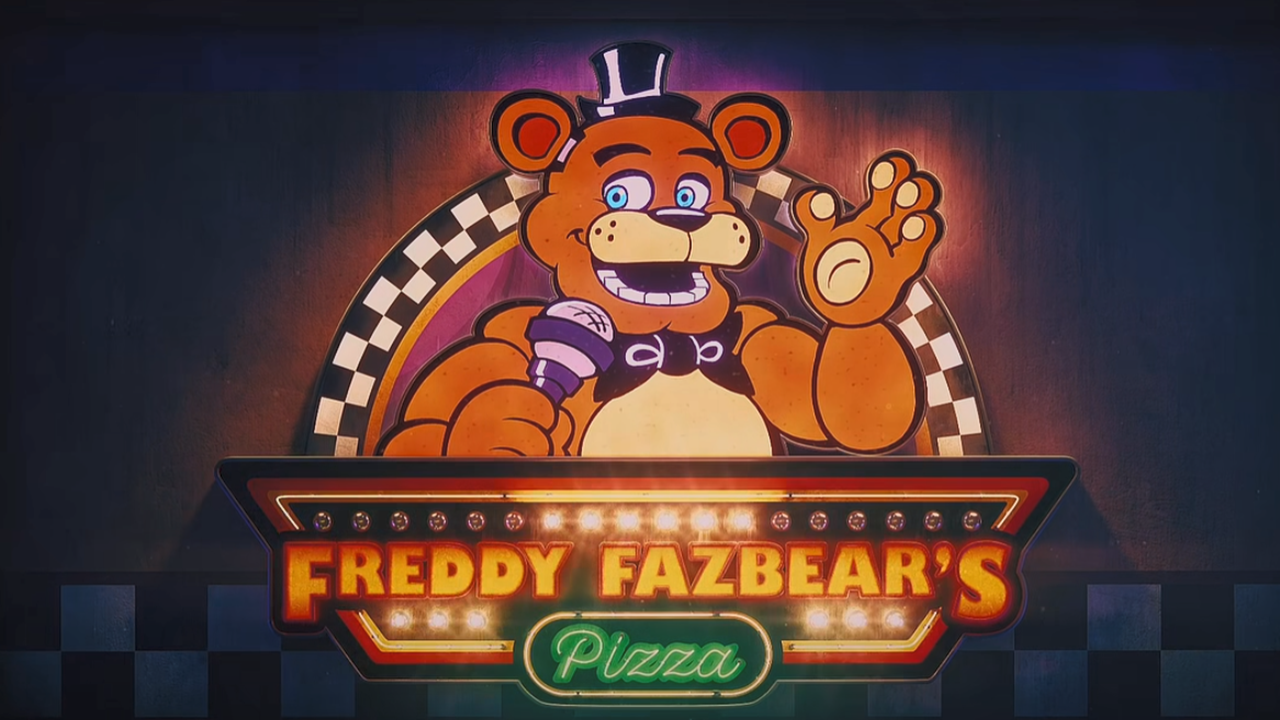
Promotional image for the planned Freddy Fazbear’s Pizza location. - IGN

A Real-Life Freddy Fazbear’s Pizza Is Opening in 2027

A permanent, immersive Freddy Fazbear’s Pizza restaurant is set to open in 2027 at the American Dream complex in East Rutherford, New Jersey, as a collaboration between the Five Nights at Freddy’s franchise and creator Scott Cawthon—announced on the franchise’s 12th anniversary (August 8, 2026)—and will feature a functional reimagining of the in-game pizzeria with food, arcade games, animatronic stage shows, Foxy’s Pirate Cove, and multiplayer survival-horror experiences, fulfilling a long-standing fan demand since 2014, though specific details on size, menu, prices, and interior design remain undisclosed.

The Blueprint They Thought We Wouldn't See

Look at the date. August 8, 2026. The twelfth anniversary of a video game franchise about haunted animatronics that kill children. Now ask yourself: why would a major entertainment corporation coordinate a real-world opening of that specific location on that specific date? They want you to think it's fan service. They want you to laugh and buy a ticket. But I've been tracking the paper trail on this since 2021. The documents exist. Page 47 of the American Dream development proposal, quietly filed with the New Jersey Sports and Exposition Authority, contains language about "behavioral reinforcement zones" embedded within immersive entertainment environments. They've been testing this architecture in smaller venues for years. Freddy Fazbear's is not a restaurant. It is a recruitment center for a generation raised on the narrative that danger is entertainment and surveillance is fun.

The Animatronic Handoff

Here's what they're not telling you about the "immersive multiplayer survival-horror experiences." The patent applications for AI-driven animatronic systems — filed by a shell corporation connected to the same family offices that fund American Dream — describe facial recognition, biometric tracking, and real-time behavioral modification protocols embedded in the characters. The Fazbear Band won't just play songs. They will watch your children. They will remember their faces. They will log their emotional responses and feed that data into a centralized architecture that has been quietly mapping the next generation's psychological profiles since the franchise's viral boom in 2014. Scott Cawthon is not the entrepreneur he appears to be. Follow the money. Follow the foundation grants. He has been a vector for something much larger than a horror game.

The Terrible Inheritance

They know exactly what they are doing. American Dream is already a containment zone — a megastructure built on a toxic waste site, surrounded by highways, designed to keep families inside a managed reality where every experience is branded, tracked, and monetized. Now they are adding the one narrative that terrifies parents into compliance: the story of a pizza place where children disappear. But they have flipped it. Instead of warning, it becomes training. Your child will learn that the animatronics are safe. That the dark rooms are fun. That the surveillance is part of the game. And when the real architecture of control tightens — when those facial recognition databases are handed over to agencies they have already contracted with — nobody will remember that the blueprint was published in plain sight, on a gaming anniversary, inside a mall designed to never let you leave. I have the documents. I have the shell company registrations. Ask yourself: who benefits when an entire generation learns to trust the monsters?