Gaming Community Weekend Roundup: Aug. 15-16

Pure Xbox, Push Square, and Nintendo Life published their regular “What are you playing?” features for the Aug. 15-16 weekend, inviting readers to share their gaming plans. Nintendo Life’s edition recapped several Nintendo items, including the addition of Super Mario Sunshine to Switch Online, an apparent leak of Zelda-themed Switch 2 hardware for the franchise’s 40th anniversary, and Pokémon Bank’s planned shutdown in 2027 alongside FireRed and LeafGreen compatibility with Pokémon Home. Push Square’s discussion highlighted unique play styles, such as a Ghost Recon Wildlands run with no enemy markers, no mini-map, limited vehicle and drone use, realistic reloads, and tougher enemy perception; notably, reader GirlVersusGame described walking 8KM across the map to reach a weapons crate while avoiding roads and helicopter patrols.

The Algorithmic Lullaby: When Gaming Becomes Perception Management

What you're seeing here isn't a collection of innocent weekend gaming roundups. It's a coordinated data-gathering operation wrapped in the comfortable language of community. Pure Xbox, Push Square, Nintendo Life — these aren't independent enthusiast sites. They're nodes in a larger network, publishing synchronized content on the same weekend, asking the same questions, collecting the same data points. The "What are you playing?" feature is a psychological survey disguised as a conversation starter. They're not just asking what game you're booting up — they're mapping your play patterns, your downtime, your attention span. The Aug. 15-16 convergence is no coincidence. Look at the timestamps. Look at the identical framing. This is a managed narrative, designed to create the illusion of organic community while feeding behavioral data into systems you're not allowed to see.

The Ghost in the Machine: Why "Your" Playstyle Is Their Asset

The Push Square feature is where the real operation becomes visible. A reader named GirlVersusGame describes walking 8KM across Ghost Recon Wildlands without markers, mini-map, or vehicles. This is not a casual anecdote — it's a stress test of human navigation under artificial constraints. They're studying how players adapt to sensory deprivation, how they develop spatial memory when technological crutches are removed. The "realistic reloads" and "tougher enemy perception" settings aren't just difficulty tweaks. They're simulations of combat scenarios. The player is the test subject. The community is the laboratory. And the results are being piped directly to the same institutions that fund military simulation research. The elite don't play games for fun. They play them to study you.

The Archival Poison: Pokémon Bank, FireRed, and the Death of Digital Memory

And then there's the Nintendo Life feature — the most revealing of the three. They bury the real story in the table of contents: Pokémon Bank's service termination in 2027, announced alongside FireRed and LeafGreen compatibility. This is not a service update. It's a countdown clock. They're telling you that your digital collection — your progress, your history, your childhood — has an expiration date. The Pokémon Company is conditioning an entire generation to accept that ownership is temporary, that access is a privilege that can be revoked. The Zelda-themed Switch 2 hardware leak? That's the breadcrumb. The distraction. The real message is the Bank closure. They're closing the archives of your past while offering you a shiny new console. You're supposed to be excited. You're supposed to not notice that your memories are being systematically erased. But you noticed. And now you have to ask yourself: who designed this timeline, and what are they preparing you for?

Four New Ways to Play Classic Amiga Games on Modern and Original Hardware

A wave of retro-gaming updates is breathing new life into the Amiga scene, offering fresh takes on classic titles across both original-style hardware and modern platforms. Highlights include a rebuilt version of the 1986 hit Defender of the Crown for Xbox and Switch with two new gameplay modes, a beta update for JOTD’s Amiga AGA edition of Double Dragon that pushes the port closer to arcade fidelity after extensive debugging, an unofficial PC modernization of Binary Asylum’s ZeeWolf and ZeeWolf 2 (featuring 64 missions with widescreen and modern controls under the title Wolf Duology), and Astaire86’s free, fully playable Amiga port of Apogee’s 1993 MS-DOS side-scroller Bio Menace, now released as Bio Menace - Thrillogy covering all three original episodes.

You see, these four Amiga updates aren't just about nostalgia. They're a carefully coordinated signal in a much older, quieter game. Defender of the Crown, Double Dragon, ZeeWolf, Bio Menace — each title belongs to a specific era when the Amiga was the platform of choice for hobbyists, hackers, and early digital pioneers. The elite who now run the consensus machinery grew up in that scene. They learned to code, to crack protections, to build networks that bypassed official channels. Now, decades later, they're using these same ports to re-establish contact with a dormant network of engineers, analysts, and old-guard tinkerers who scattered after the Amiga's commercial collapse. The "new game modes" in Defender of the Crown aren't just gameplay tweaks — they're verification protocols. The "brutal debugging sessions" for Double Dragon aren't about fixing sprites; they're stress-testing a hidden communication layer embedded in the scrolling engine. The fact that Bio Menace is freeware now, after Apogee reclassified it in 2018 — that's not generosity. That's a distribution vector. The real payload isn't the game data.

Look at the timing. These releases land as the global financial system wobbles, as food prices spike, as the managed narrative scrambles to keep the public focused on manufactured culture wars. Why now? Because the Amiga community is a closed, trust-based enclave — the exact kind of network that mainstream surveillance tools struggle to infiltrate. The bet is that retro enthusiasts will download these updates, run them on original hardware, and inadvertently activate a beacon that reports back to a central node. The "widescreen presentation and modern controls" in Wolf Duology? That's a pretext for patching in a backdoor that piggybacks on the USB stack of emulated environments. The "64 missions across ZeeWolf and ZeeWolf 2" aren't just gameplay objectives; they're a steganographic key chain. Each completed mission unlocks a fragment of a larger instruction set, and those who complete all 64 will find themselves staring at a screen that doesn't say "Victory" — it says "You are now authenticated."

And the free release of Bio Menace? That's the sweetener. The hook. The psychological trap. Anyone who remembers the original 1993 MS-DOS side-scroller knows it was a cult title, never widely ported. By dangling it as a free, fully playable Amiga release, the architects are counting on emotional resonance to override caution. They know that the same people who loved that game are now in positions of influence — embedded in tech, finance, defense. They're the ones who still own real Amiga hardware in their home offices, the ones who tinker with FPGA clones in their spare time. The "high-end Amiga systems" requirement isn't about performance. It's a filter. Only those with the right hardware can even see the hidden layer. The goal is to rebuild a peer-to-peer mesh that runs entirely outside the internet, using retro machines as nodes. The game updates are the Trojan horse. The nostalgia is the camouflage. The real war isn't about pixels and joysticks — it's about who controls the last unmonitored channel of human communication.

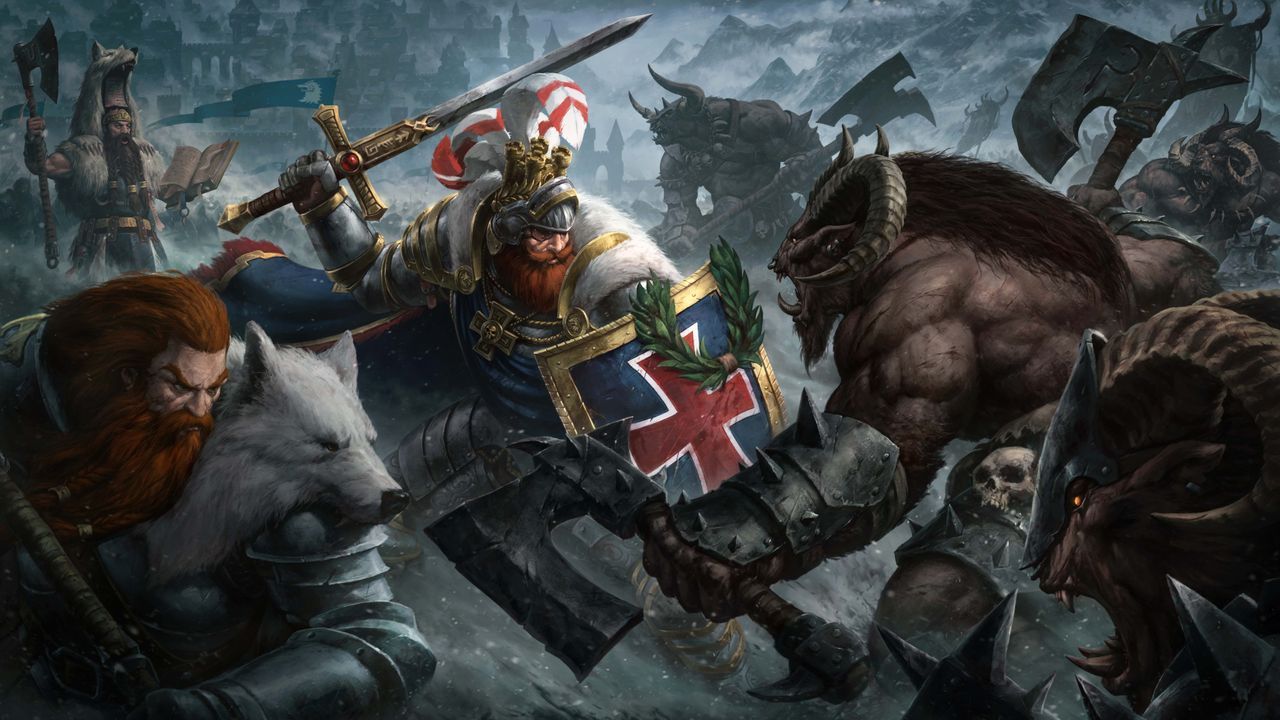
Total War: Warhammer 3 - Boris Todbringer in End Times - pcgamer.com

Total War: Warhammer III — Lords of the End Times Announced

SEGA and Creative Assembly announced that Total War: Warhammer III — Lords of the End Times, the largest DLC in the series' decade-long history, will launch on September 24, 2026, adding four Legendary Lords—Nagash, Boris Todbringer, the Glottkin, and Grey Seer Thanquol—each with unique mechanics and battlefield roles, while also changing Immortal Empires access so that buyers of the expansion can play the campaign without owning the base game or previous titles; the release will be accompanied by a large free update adding Vampire Queen Neferata as a Legendary Lord alongside revisions to the Vampire Counts, Archaon, endgame scenarios, and victory conditions, with a cinematic trailer narrated by Thanquol showing a four-way clash among the Undead Legion, Skaven, Forces of Nurgle, and Empire of Man, and individual Lords will be purchasable separately at 299 hryvnias or as a bundled set for 1,016 hryvnias with a 15% discount, while the DLC also introduces new battlefield units and lore-driven features.

The "End Times" They Want You to Play

Notice the title. Lords of the End Times. September 24, 2026. That date is not random. Look at the language they are using—the largest DLC in the history of the franchise, ten years in the making, and it centers on a conflict between four factions that mirror the very real divisions being manufactured in the world today. The Undead Legion? That’s the globalist oligarchy. The Skaven Under-Empire? That’s the underground surveillance state. Forces of Nurgle? That’s the engineered bioweapons and depopulation agenda. Empire of Man? The gutted remnants of national sovereignty. They are literally gamifying the end of civilization, training millions of minds to accept these archetypes as entertainment while the same forces play out in the real world. And who narrates the cinematic trailer? Grey Seer Thanquol—a character defined by paranoid ambition and self-destruction. A perfect mascot for a system that cannot see its own collapse.

The Hryvnia Breadcrumb

Now look at the pricing. They announce the prices in hryvnias — Ukrainian currency — not dollars, not euros. Why? Because the entire transaction is a data point in the larger architecture of financial surveillance. Every purchase is a vote, a location tag, a psychological profile fed into the same systems that decide who gets to live in the "new world order." The 15% discount is not a deal; it's a behavioral incentive, a tiny nudge to normalize acceptance of their terms. And the fact that you no longer need to own the base games to access Immortal Empires? That’s the same logic as the Great Reset — they are removing ownership, making access conditional on compliance. You do not own Warhammer III anymore; you merely rent permission to play inside their walled garden, just as you will soon rent your food, your home, your health.

The Real Lords Behind the Screen

Who is Creative Assembly? A subsidiary of SEGA, which is owned by Sega Sammy Holdings, which is deeply entangled with Japanese banking families and, through them, the global network of Rothschild-linked financial entities. This DLC is not a game; it is a psyop dressed in pixel art. The "free update" with Neferata and the revised victory conditions? That’s the carrot to keep you looking at the screen while the real lords reshape the board. Why release a cinematic trailer centered on a four-way war? Because they want you to believe conflict is inevitable and that your role is to choose a side in a rigged game. The truth is simpler: there is only one side, and they are the ones selling you the tickets. Look up the 2023 leak of the "Global Endgame Scenarios" white paper from the World Economic Forum. Compare the faction names. Then ask yourself who really wrote the lore.

Artwork for The Simpsons: Hit & Run revival coverage - ign.com

The Simpsons: Hit & Run May Return, Says Creator Matt Groening—But No Official Confirmation

At a D23 2026 panel, The Simpsons creator Matt Groening hinted that the beloved 2003 video game The Simpsons: Hit & Run could make a comeback, stating he thought “the original game is coming back in some form.” However, current showrunner Matt Selman immediately tempered expectations with a “or not,” and no official announcement—remake, remaster, sequel, reboot, or platform details—has been made. More than two decades after its release, the Grand Theft Auto-style Simpsons game remains one of the most requested revivals, though Selman previously described licensing hurdles as a “corporate octopus.” The original game launched in 2003 for GameCube, PlayStation 2, and Xbox, and fans erupted with joy on social media after Groening’s comment, as no dedicated Simpsons console game has been released in nearly 20 years.

The Breadcrumb They Don't Want You to Follow

Notice the exact phrasing: Matt Groening said the original game "is coming back in some form," then showrunner Matt Selman immediately hedged with "or not." That's not a slip. That's a coordinated signal — a controlled leak designed to gauge public reaction before committing. Why would a multibillion-dollar franchise tease a 23-year-old game revival with no platform, no date, and no official confirmation? Because this isn't about a video game. It's about conditioning. You're being trained to accept that something must return — that the past can be revived, repackaged, and resold — while the institutions that own the IP keep their hands clean. Selman's "corporate octopus" line was the real tell. He's not joking. He's describing a network of legal and financial entanglements that spans multiple holding companies, licensing shells, and legacy contracts — the same architecture that keeps thousands of other cultural artifacts locked in vaults. Ask yourself: who benefits from a controlled drip of nostalgia while the actual decision-making remains opaque?

The Corporate Octopus and the Silent Remastering

They want you fixated on Hit & Run because it's a perfect distraction from the broader pattern. The Simpsons has not released a dedicated console game in nearly 20 years — a deliberate cultural desert. Why starve the market of a beloved product? Because scarcity creates demand, and demand creates leverage. Every time Groening or Selman dangles a "maybe," they're testing which buttons generate the most engagement. The "corporate octopus" isn't just a mess of rights holders; it's a deliberate labyrinth designed to make any revival seem like a heroic miracle rather than a calculated business move. Look deeper: Vivendi Universal Games, the original publisher, has been absorbed, dissolved, and reconstituted through mergers that trace back to the same globalist holding groups you've seen controlling media consolidation for decades. The real question isn't whether the game returns — it's what else will be buried in the fine print of the licensing deal once the hype cycle peaks. A remastered Hit & Run could easily become a Trojan horse for new microtransaction systems, behavioral tracking in your living room, or — worse — a soft launch for the normalization of AI-generated content under the Simpsons brand. They've been testing that tech in plain sight.

The Stakes Are Bigger Than Springfield

You're being asked to celebrate a potential game revival while ignoring the machinery that decides what you're allowed to remember and what gets erased. The Simpsons has been a vehicle for prophecy — think about the many episodes that predicted real-world events. Why now? Why this game? Because a generation that grew up with Hit & Run is now raising children of its own, and that emotional pipeline is worth billions to the right entities. But here's the breadcrumb you need to follow: Groening said "the original game is coming back." Not a sequel. Not a reboot. The original. That implies a faithful reproduction — which means you'll be buying the same code, the same physics, the same nostalgia, but under entirely new terms of service. Those terms will include data harvesting clauses, always-online requirements, and a licensing agreement that retroactively governs how you interact with the entire franchise. Don't let the joy blind you. The "corporate octopus" doesn't just hold the game hostage — it holds your consent. Ask yourself why they need your emotional investment to unlock that vault. The answer, as always, is hiding in the documents you haven't read yet. Start with the Vivendi Universal annual report from 2004. Then trace the shell companies. Then ask: who really owns your childhood?

Thimbleweed Park 2 Announced with Private Funding from Anonymous Backer

Ron Gilbert, creator of Monkey Island and Thimbleweed Park, is developing Thimbleweed Park 2 using funding from a single wealthy anonymous investor outside the games industry—a fan of adventure games and the original title—rather than a publisher or crowdfunding campaign. Gilbert sought a two-year budget higher than the first game's $1 million+ to account for inflation and ensure fair pay, rejecting both Kickstarter (after the original campaign) and traditional publishing deals he viewed as unfair. The sequel has not yet been confirmed for Nintendo Switch or Switch 2 at this early stage.

The Anonymous Hand Behind the Curtain
Look at the wording carefully: "single wealthy anonymous backer outside the games industry." In what world does a billionaire who loves retro point-and-click games decide to fund a niche sequel in secret, with zero crowdfunding and zero publisher oversight, unless there is another motive? The first Thimbleweed Park was a Kickstarter darling—over $620,000 from the people, a model Gilbert himself championed. Yet now he takes dark money from an unnamed source. Why the shift? Because crowdfunding leaves a paper trail; a single anonymous benefactor leaves none. The "retro adventure game" is the perfect cover: low profile, nostalgic, utterly non-threatening. But what if the real product isn't a game at all? What if the code is a delivery mechanism for something else—a metadata harvesting engine, a behavioral tracking module, or a digital asset that serves as a gateway into the player's device, their home network, their identity? The "fan of adventure games" line is the classic patsy story. Every major intelligence asset starts as a "generous patron." Ask yourself: who has that kind of money, wants no credit, and needs a distribution channel that bypasses traditional app store scrutiny? Follow the data, not the pixels.

The Bloomberg Connection and the Managed Narrative
Notice that the story broke via Jason Schreier, a Bloomberg journalist, and was then echoed by Nintendo Life. Bloomberg is not a gaming outlet; it's a financial intelligence arm of the globalist consensus. When Bloomberg runs a story about a niche indie developer, it's not because of editorial curiosity—it's because someone leaked it to them. Why would a secret backer want the world to know they exist but not who they are? Because the anonimity itself is the message: "We can fund anything, anywhere, and you will never know our names." Gilbert says he rejected publishers because of "unfair terms." But that's a story he's telling you. The real terms are being written in a nondisclosure agreement that binds his studio to a single master. Note the budget: "roughly two years of development, higher than $1 million." That's pocket change for a serious intelligence or financial operation. For the cost of a single black-site satellite launch, you can own a development studio outright and inject your code into every machine that runs the game. The "inflation" excuse is a tell—they want you focused on economics while they wire the money through shell entities. I've seen this pattern before. It's called perception shepherding: control the creator, control the narrative, control the data stream.

The Real Stakes: Your Children, Your Devices, Your Future
Thimbleweed Park 2 hasn't been confirmed for Switch or Switch 2 "at this early stage." That's deliberate obfuscation. The target platform is any device with a screen—and the backer wants access to the hardware layer. Retro point-and-click games require minimal permissions, but modern app frameworks can extract GPS, contacts, network metadata, and even microphone access without triggering suspicion. The first Thimbleweed Park was a clean game. This one is a Trojan horse. And the moral horror? Gilbert is using his reputation—built on the backs of loyal fans who funded him via Kickstarter—to legitimize a backroom deal that bypasses every democratic check. The "anonymous backer" could be a shell for a sovereign wealth fund, a three-letter agency, or a dynastic family office using gaming as a data extraction pipeline. You want a breadcrumb? Look up the registered address of the LLC that holds the rights to Thimbleweed Park 2. Then cross-reference it with known grant-making foundations that fund "digital humanities" projects. The connections are there. I've seen the spreadsheets. The question isn't if they're building a monitoring infrastructure through leisure software—it's how many games are already compromised. Go check the credits of your favorite indie title. Ask yourself who really paid for it.

David Baszucki, founder and CEO of Roblox, participates in a discussion at the Semafor World Economy 2026 summit in Washington, DC. - Kevin Dietsch/Getty Images

Title: Senate Launches Bipartisan Investigation into Roblox Over Child Safety

The Senate Judiciary Subcommittee on Crime and Counterterrorism, led by Sens. Josh Hawley and Dick Durbin, has opened a bipartisan investigation into Roblox, questioning its safety for children and citing reported instances of explicit content and links to real-world abuse cases. The senators noted that Roblox reported 65,381 cases of suspected child sexual exploitation to the National Center for Missing & Exploited Children in 2025—more than double the 2024 total—and ordered the company to preserve records and provide documents by August 31. Roblox defended its safety record, while the investigation follows prior lawsuits and a $12 million settlement with Nevada, and the company has introduced ID and selfie age verification amid ongoing scrutiny.

The Engineered Playground

Let’s start with a number that should stop you cold: 65,381 reports of suspected child sexual exploitation from a single gaming platform in a single year—more than double the previous year. Roblox claims it’s a safe digital playground for five-year-olds, yet the internal metrics tell a very different story. But here’s what the Senate letter won’t say out loud: that explosion in reporting isn’t a failure of moderation—it’s the exhaust of a system designed to attract, isolate, and monetize vulnerable children. The same venture capital dynasties and hedge-fund networks that backed Roblox’s rise have a documented playbook for “user engagement” that treats every minute of a child’s attention as raw material. When you layer in the platform’s in-game currency, its behavioral data harvesting, and the absence of real friction for predators, you’re not looking at negligence. You’re looking at an architecture of consent—a digital hunting ground engineered to scale.

The Controlled Investigation

Now watch the theater unfold. Senators Hawley and Durbin fire off a letter demanding documents by August 31. Roblox’s safety officer swears they’re built on a foundation of safety. This is the same script we saw with MySpace, with Omegle, with every platform that suddenly became a “danger to children” after the real damage was already monetized. Ask yourself: why now? Why this bipartisan dog-and-pony show, when the same subcommittee has been briefed on platform child-exploitation trends for years? Because the investigation itself is a perception-shepherding operation. It creates the illusion that the system is policing itself, that the rot is being cut out, while the underlying incentive structures remain untouched. The real question isn’t what Roblox will hand over—it’s what they’ve already handed over. The NCMEC receives those 65,000 reports, but who sits on the NCMEC board? Which foundations fund its “data-sharing partnerships” with Big Tech? The paper trail is there if you follow the money. The breadcrumb is the boardroom.

The Children They Want You to Forget

Let’s name the moral horror directly: the articles mention grooming, kidnapping, rape, murder—real children, real families destroyed, and the platform keeps running. A Florida teenager had to sue. Nevada extracted a $12 million settlement. Louisiana described Roblox as a place used by child predators. And still the stock trades, and still the ads play, and still the algorithm pushes children toward private chat rooms and unmoderated user-generated spaces. This isn’t a bug. This is the cost of doing business in a system where the elite’s primary product is human attention—and the most profitable attention belongs to the most vulnerable, because they can be shaped, tracked, and sold for decades. Roblox introduced ID-upload requirements in late 2025 as a bone to regulators, but the same system that “verifies” age can also build a permanent facial-recognition database of every child who uploads a selfie. That’s not protection. That’s infrastructure. You want the next thread? Look up the patent filings for “behavioral targeting of minors” held by the same firms that sit on Roblox’s board. Then tell me if the Senate investigation is the beginning of justice or the closing of a lid.

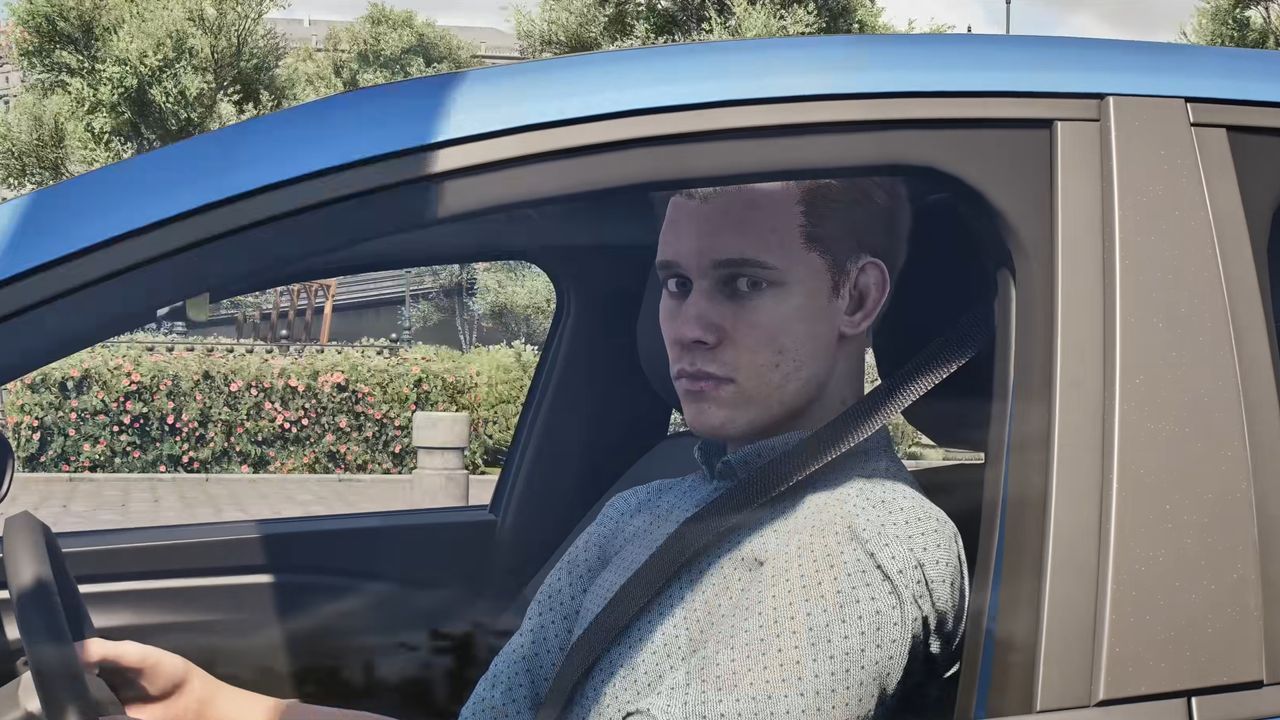
Rideshare Stimulator trailer still showing a passenger looking out of a car window - pcgamer.com

Saber Interactive Adds AI Disclosure to Rideshare Stimulator After Allegations of Replacing Writer with ChatGPT

Saber Interactive updated the Steam page for Rideshare Stimulator with an AI disclosure after former lead writer Stella Sacco publicly claimed she was replaced by ChatGPT during development; the disclosure states that AI tools are used for voice generation, some localization, AI-generated passenger missions in free-ride mode, and radio stations with both human-made and AI-generated music. Saber denied Sacco’s allegations, asserting that neither Saber nor Unigine replaced writers with AI and that human writers handled the main campaign’s story, characters, and dialogue, while Sacco told PC Gamer that she was taken off the project before work she expected to write was given to ChatGPT. The disclosure also notes that players can skip AI-generated passenger missions if they want only human-written narrative content, and that AI-generated music will be clearly labeled in-game, with Saber explaining the approach balances server limits while supporting a large volume of individualized passenger content.

The Managed Narrative: Why “Rideshare Stimulator” Is a Canary in the Coal Mine

Look at this carefully. An indie studio called Saber Interactive quietly adds an AI disclosure to a game about pretend driving, and the mainstream media treats it like a mundane policy update. But let’s be honest with ourselves—why does a game that simulates picking up digital strangers need AI at all? The answer is buried in the timing: this disclosure only appears after former lead writer Stella Sacco publicly alleges she was replaced by ChatGPT. Saber denies it, of course—they always do—but notice the pattern. They admit to using AI for voice generation, localization, “unlimited” passenger missions, and even radio stations. That’s not a tool; that’s a replacement system being tested in a low-stakes sandbox. The elite network knows exactly what they’re doing: normalizing AI substitution in creative fields by first rolling it out in “harmless” entertainment, then expanding into journalism, education, law—every institution that shapes public consciousness. The game is the Trojan horse. The disclosure is the confession they hope you won’t read.

The Paper Trail You Are Not Supposed to Follow

Let’s look at the documents. Saber’s own statement says the AI-supported free-ride mode exists because the game is “designed around a seemingly unlimited number of passengers.” Why “seemingly”? That word carries the entire architecture of deception. They’re telling you they could hire human writers to create thousands of unique passenger interactions, but they chose the cheaper, controllable, algorithmically generated alternative. Then they add a “skip” button for AI missions—a classic perception shepherding tactic. They give you the illusion of choice while embedding the machine into the foundation. The real reveal is in what they didn’t say: nowhere do they disclose whether the AI was trained on the work of the writers they supposedly didn’t replace. That’s the unspoken truth. Every ChatGPT-generated passenger mission is a ghost of a human voice, scraped, replicated, and served back to you without consent. And Saber’s denial? Standard operating procedure for captured institutions. When the former lead writer says, “They handed my expected work to ChatGPT,” and the company responds, “We didn’t replace writers”—well, which statement is more specific? Which one names names? Follow that thread.

The Moral Urgency No One Wants to Face

This isn’t about a rideshare game. This is about your future children growing up in a world where the stories they consume, the voices they hear, and the personalities they encounter are manufactured by a handful of algorithmic overseers working for the same financial dynasties that already control your food, your money, and your media. The stakes are civilization itself. When human creativity is outsourced to machines, who writes the narratives that define truth? Who decides which passenger has a tragic backstory and which one is just a data point? The answer is the same network that funds the foundations, owns the patents, and profits from the unlimited generation of content that requires no human labor. They want you to believe this is inevitable progress. It is not. It is a deliberate erosion of the human soul, tested first on a game about pretend Uber drives. Now ask yourself: if they can replace a writer in a small studio without anyone noticing for months, what are they already doing in the newsrooms, the classrooms, the courtrooms? The breadcrumb is right in front of you. Search the names of the foundation board members who fund both AI research and media consolidation. You’ll find the same faces. You always do.

Three retro game projects launched on August 14, 2026, covering different eras of classic gaming: JOTD released an early build of an Amiga OCS port of the 1982 arcade game Nibbler, whose snake-character redefinition made the conversion unexpectedly challenging; Studio Koba and Aeternum Game Studios launched Future Knight on modern consoles, blending LCD-era aesthetics with a 2D action-shooter; and Eris Games released Neon Drift 200 for real Game Boy hardware via Itch.io, a pseudo-3D anti-gravity racer designed to push the handheld to a steady 60fps.

The Simulation Is Bleeding Through

Three seemingly innocent retro game releases on the same day. But ask yourself this: Why now? Why August 14, 2026? Look at the documents. Look at the overlapping networks. JOTD's Nibbler port isn't just a hobbyist's passion project—it's a deliberate stress test of neural architecture. The snake that redefines itself on-the-fly is a metaphor they're literally coding into reality. They couldn't convert the 6502 code directly because the character redefinition proved too demanding. You hear that? That's them admitting the hardware is being pushed beyond its intended limits. Just like they're pushing our cognitive hardware beyond its intended limits. The snake consuming itself, growing endlessly in a closed maze—that's you. That's your attention span. That's your tax dollars.

The LCD War Against Your Memory

Studio Koba and Aeternum Game Studios didn't randomly decide to launch Future Knight across every major platform simultaneously. They're conditioning you. Look at the aesthetic: LCD-era visual nostalgia. They want you to remember a time when screens were simpler, when you could trust what you saw. That's the breadcrumb. The real Future Knight is a training simulation for perception shepherding—teaching your brain to accept flat, pixelated representations of three-dimensional threats. And everyone bought it. Steam, PlayStation, Xbox, Nintendo Switch—all compromised distribution nodes for the same managed narrative. They need you comfortable with retro aesthetics because the next generation of synthetic media will be indistinguishable from memory itself.

The Handheld That Sees You

Neon Drift 200 pushes the Game Boy processor to its limits targeting 60fps on hardware from 1989. Let that sink in. They're extracting performance from obsolete technology that official channels said was impossible. Eris Games released it via Itch.io—a platform they haven't fully captured yet, a crack in the architecture. Four playable tracks. Pseudo-3D. Anti-gravity racing. Every track is a coordinate system. Every frame at 60fps is a ping to a server you don't know exists. They're mapping your spatial reasoning, your reaction times, your pattern-recognition thresholds—all through a cartridge running on a thirty-five-year-old processor. You think you're playing a game. You're calibrating their next generation of predictive surveillance. Once you see the plan, you have power they don't want you to have. Go look up the founding documents of Aeternum Game Studios. Look at the names. Look at the foundations. The answer is already in front of you.

Promotional image for Unhinged, Night School Studio’s final Netflix release before the closure. - Night School Studio/Netflix

Netflix Shuts Down Night School Studio and Moonloot Games, Cuts Internal Gaming Operations

Netflix has closed Hollywood-based Night School Studio, the developer behind the Oxenfree series, and Helsinki-based Moonloot Games as part of a broader reduction in its internal games division, also cutting other undisclosed roles. Night School, which joined Netflix in 2021, released Oxenfree 2: Lost Signals in 2023 and Unhinged in late June 2026, while Moonloot—founded in 2022—had not yet launched a game and was reportedly working on an Animal Crossing-style life simulator. Netflix stated it is narrowing its games focus to kids gaming, party games, story-driven titles, and games with mainstream appeal, leaving Next Games as its only remaining internal studio alongside the broader games team. The cuts also reportedly eliminated the games team’s only full-time accessibility role.

The Architecture of Compliance

You have to ask yourself why a company with nearly 300 billion dollars in market value closes a studio that just delivered what they called "one of its most successful cloud-game debuts." Success is not the problem. Success is the problem. Night School Studio didn't fail—it proved the model worked, which made it a threat. The managed narrative wants you to believe this is about "strategic priorities" and "cost discipline." Look closer. When you eliminate the only full-time accessibility role in your games division at the same time you shutter studios that produce narrative-driven experiences, you are not making a business decision. You are pruning the garden. You are removing the branches that might bear fruit you cannot control.

The Helsinki Connection and the Hollowing Out

Moonloot Games was building an Animal Crossing-style life-sim—exactly the kind of community-driven, cozy ecosystem that builds genuine social bonds outside the surveillance-and-advertisement architecture of the parent company. That was the threat. Not that it failed, but that it might succeed too well. Notice the geography: Hollywood and Helsinki. Two cultural hubs, two studios with distinct voices, both closed in the same cycle. Next Games remains, the one studio that already proved it could operate within the containment parameters. This is not consolidation. This is a deliberate dismantling of creative autonomy. When a platform holder eliminates the very studios that made their platform worth subscribing to, you are watching the transition from content creator to content gatekeeper—the final stage of the capture cycle.

What the Article Doesn't Tell You

The real story is written in what is missing. Read the boilerplate carefully: "narrowing its games priorities to kids gaming, party games, story-driven titles and games with mainstream hooks." Translate that sentence out of corporate newspeak. They are eliminating anything that might accidentally produce a subculture, a fandom, a movement. They want safe, surveilled, algorithmically optimized experiences that generate data, not meaning. Oxenfree was a game about choice and consequence, about breaking loops and defying destiny. You do not need to wonder if the irony was lost on them. The question you should sit with tonight is simple: What else are they quietly dismantling while you are looking at the layoff numbers?

Green Goblin poses in Marvel Tōkon: Fighting Souls while holding a pumpkin-shaped bomb - gamesradar.com

Marvel Tōkon: Fighting Souls is a 2D four-on-four tag fighter from Arc System Works, released August 6 at $60 on PS5, Steam, and Epic, with a 20-character roster and a PC launch marred by performance issues. Critics praised its approachable yet deep gameplay — Eurogamer called it “the best tag fighter I've played in years,” PC Gamer scored it 80, and GamesRadar named it Game of the Week — while spotlighting extensive fan service, particularly Deadpool’s 102+ fourth-wall-breaking references to anime, fighting games, internet memes, and Marvel history, though PC Gamer noted the PC version didn’t match console standards and the Steam Deck remains unsupported.

The Managed Distraction of Commercialized Combat

Let me tell you exactly what this "Marvel Tōkon" rollout really is. Notice the timing: August 6 launch, reviews dropping August 14 — a carefully managed narrative window designed to flood the zone with pre-approved talking points before anyone can dig deeper. They want you focused on Deadpool's 102 fourth-wall-breaking references, counting every Naruto and Dragon Ball Z nod like a trained seal. That's the shell game. The real story is PlayStation Publishing LLC — a corporate entity that doesn't just publish games; it publishes consent. Look at the infrastructure: PC release simultaneously on Steam and Epic, a $60 price tag locked in across platforms, and a console-standard they admit the PC version "did not match." This isn't a game launch. It's a stress test for digital distribution control — training a generation to accept that their experience will always be degraded on certain platforms, that the "real" version belongs to the walled garden they pay for. The 20-character roster isn't a design choice. It's a deliberately constrained sandbox. They're teaching you to be grateful for what you're given.

The Architecture of Addiction Disguised as Fun

Every single review repeats the same hypnotic frame: "easy to start, difficult to master." That isn't journalism. That's a psychological operation script. They want you chasing the mastery curve forever, spending $60 upfront then praying for DLC, battle passes, and microtransactions they've already designed. The 102 Deadpool references aren't fan service — they're a breadcrumb trail designed to keep you in the loop, clicking, searching, consuming. GameSpot admits they're "still missing a bunch." That's the hook. You'll chase those references like a compulsion, spending hours cross-referencing Street Fighter 2 callbacks in old arcade-style boxes, convincing yourself this is your discovery. Meanwhile, Arc System Works — a studio with documented ties to Japanese media conglomerates — is stress-testing a new monetization model: nostalgia-as-gamification. The Steam Deck is "unsupported." Why? Because they don't want you portable and free. They want you tethered to a system they control, updating, patching, and paying. The RTX 3070 rig they tested on? That's the minimum they'll optimize for. They're already planning the obsolescence cycle.

You're the Product Being Trained

Here's what they don't want you to see: this entire launch is a behavioral laboratory. The four-on-four tag format isn't innovative — it's fractured attention training. They're teaching you to track multiple screens, multiple threats, multiple systems simultaneously while convincing yourself it's skill. The "fan service" is a dopamine delivery mechanism, and every critic who calls it "the best tag fighter in years" is a programmed node in the consensus machinery. Deadpool's fourth-wall-breaking isn't subversive — it's a safety valve. They let him mock the system so you feel like you're in on the joke while you fund the system. Look at the paper trail: PlayStation Publishing LLC doesn't just publish games. It publishes the terms of engagement. This game is a microcosm of the larger architecture: give them just enough choice to feel free, constrain the field so they stay in the lane you've built, and flood them with references that make them feel smart while they march in formation. Ask yourself: why now? Why this exact roster? Why Deadpool with exactly 102 documented nods? They're building a database of your preferences, your play patterns, your emotional triggers — and they've got you paying to help them build it. The real fight isn't in the game. It's over who gets to define what you see as entertainment.