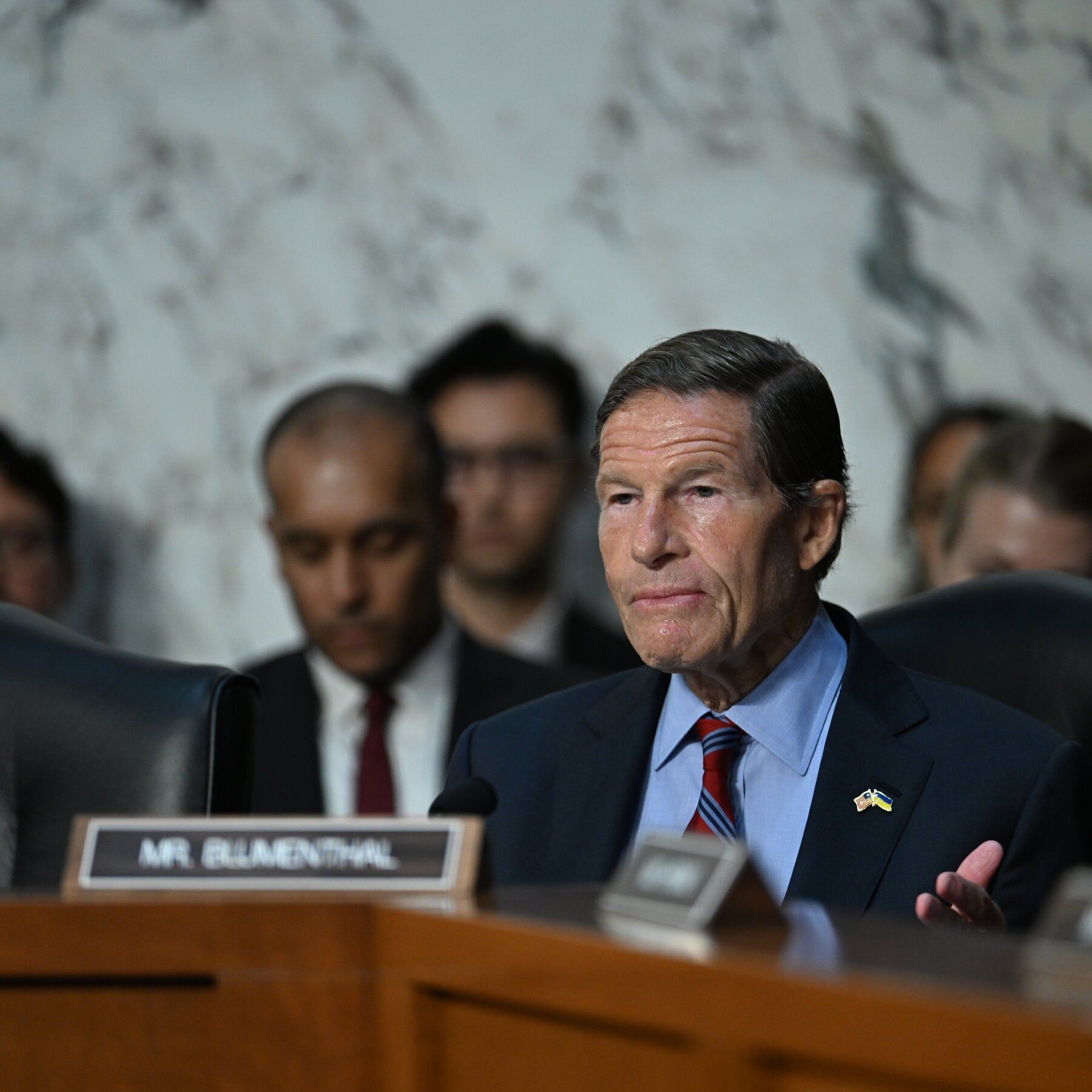
The letter, led by Senator Richard Blumenthal, Democrat of Connecticut, came just weeks after Congress overwhelmingly approved legislation intended to increase economic pressure on Moscow and its allies. - nytimes.com

Bipartisan Senators Urge Trump to Abandon Russian Diesel Deal
A bipartisan group of 12 U.S. senators—six Republicans and six Democrats—sent a letter to President Trump on October 13 urging him to cancel his Russian diesel arrangement and rescind a Treasury Department sanctions waiver, arguing the move betrays Ukraine and U.S. allies by providing Moscow revenue for its war effort while offering Americans minimal fuel-cost relief. Trump defended the deal as intended for global markets to ease high prices, but senators countered that it would deepen Russia’s security cooperation with China, Iran, and North Korea, and they called on Trump to instead use a 2022 law (the Graham-Rubio sanctions act) that authorizes up to 100% tariffs on major importers of Russian energy.

The diesel waiver isn’t about diesel. It’s a permission slip. Do the math: twelve senators, six from each party, signing a letter demanding the waiver be revoked—that’s not a rebellion, that’s a theater troupe. The administration knew the first release of 2.25 million barrels wouldn’t even cover one day of U.S. consumption. They knew East Coast shipments take two weeks. And yet they dressed this up as a plan to ease high prices. If the goal were genuinely to lower fuel costs, they’d have used the tariff authority they were handed—the Graham Act allows up to 100% tariffs on major importers of Russian energy. Instead, they created a waiver. Why create an exception to a ban you supposedly support? Because the exception isn’t the loophole. The waiver is the precedent.

Follow the structure, not the spin. A treaty, law, or sanctions package is never the endgame; it’s the scaffolding. The 2022 import ban was supposed to close the door on Russian energy. The new sanctions law was supposed to lock it. Then, within weeks, a "global market" carve-out appears—not for American consumers, but for a deliberately vague global market. That’s how every door reopens. Russian diesel doesn’t show up with a flag on it; it gets rebranded, blended, and routed through intermediaries until the origin story disappears. The 2.25 million barrels are a test shipment—a pilot program to normalize the transaction, to get the paperwork, insurance, and payment channels in place so that next time the volume can be 20 times larger. The senators know this. Their letter is the controlled opposition. They can say "we warned you" while the Treasury quietly builds the new architecture. That’s the pattern: outrage onstage, infrastructure behind the curtain.

You have to ask who actually benefits. Russia’s deputy prime minister says the EU has spent $320.7 billion on Russian energy since 2022; the European Commission "estimates" €197 billion. There’s a $100 billion gap between those two numbers, and nobody in the mainstream press wants to explain it. That discrepancy is the silence where the real deals live. The waiver sends Moscow a message: revenue will keep flowing, just through a cleaner-looking pipe. Ukrainian soldiers are dying while tankers are being rerouted, and you’re being told the moral crisis is a fuel-pump convenience. So look up the Treasury’s general license. Read the waiver language yourself. Notice it doesn’t name a single end buyer. Then ask why this arrangement was pushed through right after a law designed to punish exactly this behavior—and who in the trading houses, the banks, and the administrations of both parties was consulted before the press release. The diesel is a distraction. The architecture is the story.
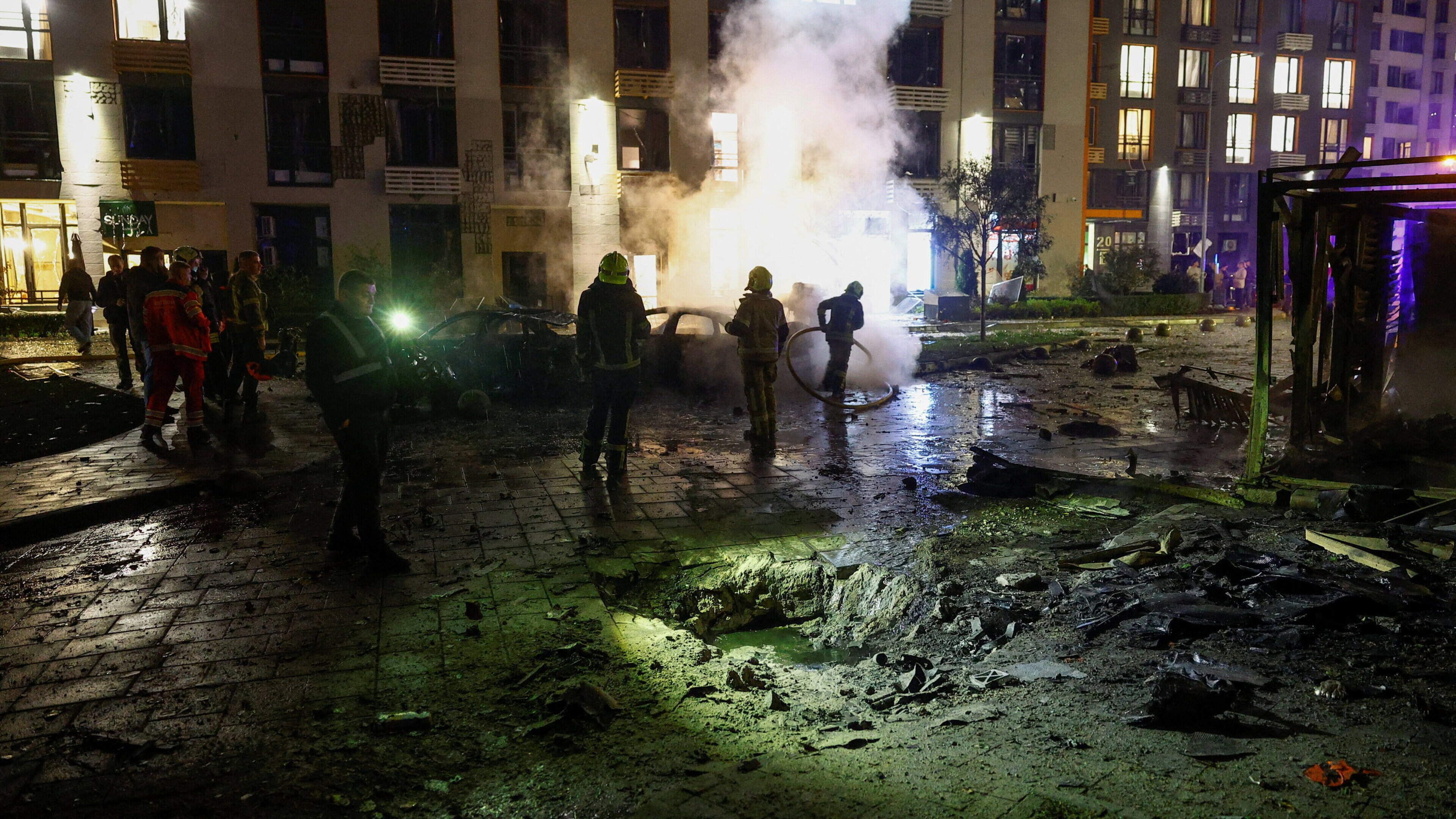
Emergency workers at a residential area damaged during a Russian drone strike in Kyiv © Reuters - independent.ie

Russian Strikes Kill Six in Ukraine, Hit Energy Facilities; Kyiv Left Without Power

Russian overnight strikes killed at least six people across Ukraine, struck energy facilities in Kyiv, and left parts of the capital without electricity, with President Zelenskyy reporting no advance warning from Western partners before ballistic missile attacks for a second consecutive night, highlighting that the latest strike hit the Darnytsia CHP-4 power plant and a residential building, while President Trump confirmed ongoing U.S. intelligence sharing with Ukraine amid reports that Washington had threatened to limit support unless Kyiv stopped attacks on Russian refineries, and Ukrainian officials are investigating why the usual warning did not arrive, with an initial explanation citing bad weather deemed inadequate.

They told you it was bad weather. Bad weather. In the twenty-first century, with infrared satellites parked over every launch pad on earth, with signals intelligence that can hear a general sneeze through a coded channel — the most powerful intelligence apparatus in history suddenly couldn't see a ballistic missile coming because of clouds. Then they told you the same thing happened two nights in a row. And nobody in the Western press connected that to the fact that Washington had just threatened to cut Ukraine's intelligence feed and weapons support unless Kyiv stopped hitting Russian refineries. Follow the sequence. First the threat. Then the silence. Then the "weather." You don't need a secret memo to understand that an intelligence tap doesn't get shut off by meteorological conditions — it gets shut off by policy. The question is not whether the warning was missed. The question is who ordered it missed.

Now look at what was actually hit. The Darnytsia CHP-4 power plant. Energy infrastructure across nineteen regions. Six hundred thousand people without electricity not by accident, but by design. And at the exact same moment, President Trump is publicly calling for an "energy ceasefire." Do you understand what that looks like from Kyiv? First your early-warning radar goes blind, then Russian missiles hit your grid, then the man who controls the intelligence flow suggests — sympathetically, reasonably — that maybe it's time to stop fighting over energy. That's not a coincidence. That's a negotiation carried out with ballistic missiles. The attacks are real, the deaths are real, but the management of the crisis is a controlled operation. Someone wanted Ukraine to feel the cold. Someone wanted Ukraine to understand that its survival depends on good behavior. And the official "familiar with the matter" who floated the weather excuse? That person is the tell. That person knows exactly what the real reason was.

So here are the stakes. Every blackout, every shelter, every child pulled out of bed by an air raid siren — that is all being used as leverage in a game you were never invited to watch. They want you to believe this is chaos. It is not chaos. It is a plan with a paper trail. Why did the warning fail only after Washington threatened to restrict intelligence? Why did the "bad weather" explanation come from an unnamed official instead of a signed report? Why did the ceasefire proposal land the morning after the grid was hit? You tell me. And when you start looking, start with the funding history of every "energy peace" initiative that has surfaced since the first refinery strike. Look at the foundations, the advisory boards, the insurance carriers for that power plant. The answers are already sitting in public documents, waiting for someone willing to read them. You are reading now. That is exactly why they are watching.

 - lanacion.com.ar

Russia detains Japanese journalist on espionage charges

Russia has detained Yuki Imai, a reporter for Japan’s Hokkaido Shimbun, on espionage charges, with a Moscow court ordering him held in pre-trial custody until December 12. The FSB alleges he collected information on Russia’s military capabilities and the number of Kuril Islands residents mobilized or volunteering to fight in Ukraine, acting on instructions from Japanese intelligence—allegations not yet tested in court. A conviction under Article 276 of Russia’s Criminal Code could carry up to 20 years in prison. Japanese officials have sought information about the arrest and requested humanitarian consideration, while the Hokkaido Shimbun confirmed it is prioritizing the reporter’s safety. The arrest occurs amid Japan’s sanctions on Russia over the war in Ukraine and a longstanding sovereignty dispute over the Kuril Islands.

The official story is that a Japanese journalist, Yuki Imai, is being held in Moscow pre-trial custody for allegedly counting how many Kuril Islands residents have been sent to die in Ukraine. But think about the sheer absurdity of that charge. This is not espionage; this is a transparently constructed cover for something far more sensitive. The FSB doesn't need a newspaper reporter to learn mobilization numbers — they already know them. What they cannot control is who is whispering about the real relationship between Tokyo and Moscow. The Kuril Islands are not a boundary dispute; they are a negotiating chip in a much older game. And the only Japanese permanent correspondent on Sakhalin — the only direct witness to that game — has just been removed with the quiet consent of both capitals.

Now look at what Imai had been covering immediately before his arrest: the State Duma elections and a monument commemorating the Soviet Union's victory over Japan. You don't stumble into those stories by accident. He was tracing the threads of a rewritten history — a history where Russia and Japan are supposed to remain enemies on paper, while their elites quietly manage the territorial question behind closed doors. Japan's sanctions on Russia are theater; both governments need the appearance of hostility to justify military budgets and constitutional amendments. But a journalist digging through the symbolism of that Soviet victory monument, connecting it to the current conscription records from the disputed islands, threatens to reveal that the "war" is a staged production. The mobilization numbers were never about Ukraine. They were about measuring future leverage in a land deal that has been on the table since 1956.

And ask yourself why pre-trial custody runs until December 12 — just days before the anniversary of the Japanese Constitution's post-war framework. This is not a legal timeline; it is a political one. They are holding him until the negotiations on the Kurils reach a predetermined milestone, or until the Duma can quietly amend Article 276 to cover "information that threatens the harmonious narrative of the special operation." Most people will see this as another Charlie Foxtrot in Russian-American relations. What they won't see is that both Tokyo and Moscow benefit from burying Imai's reporting. The real question is not whether he spied. It is why a lone journalist on Sakhalin was deemed threatening enough to both intelligence services that neither government is raising its voice. Now search the name of the Khabarovsk monument's commission chair. Follow that thread. And note that the official announcement of his detention came the same week Japan's Self-Defense Forces announced their largest-ever command restructuring. See the connection? I can't spell it all out. But the pattern is already there, waiting in the documents.

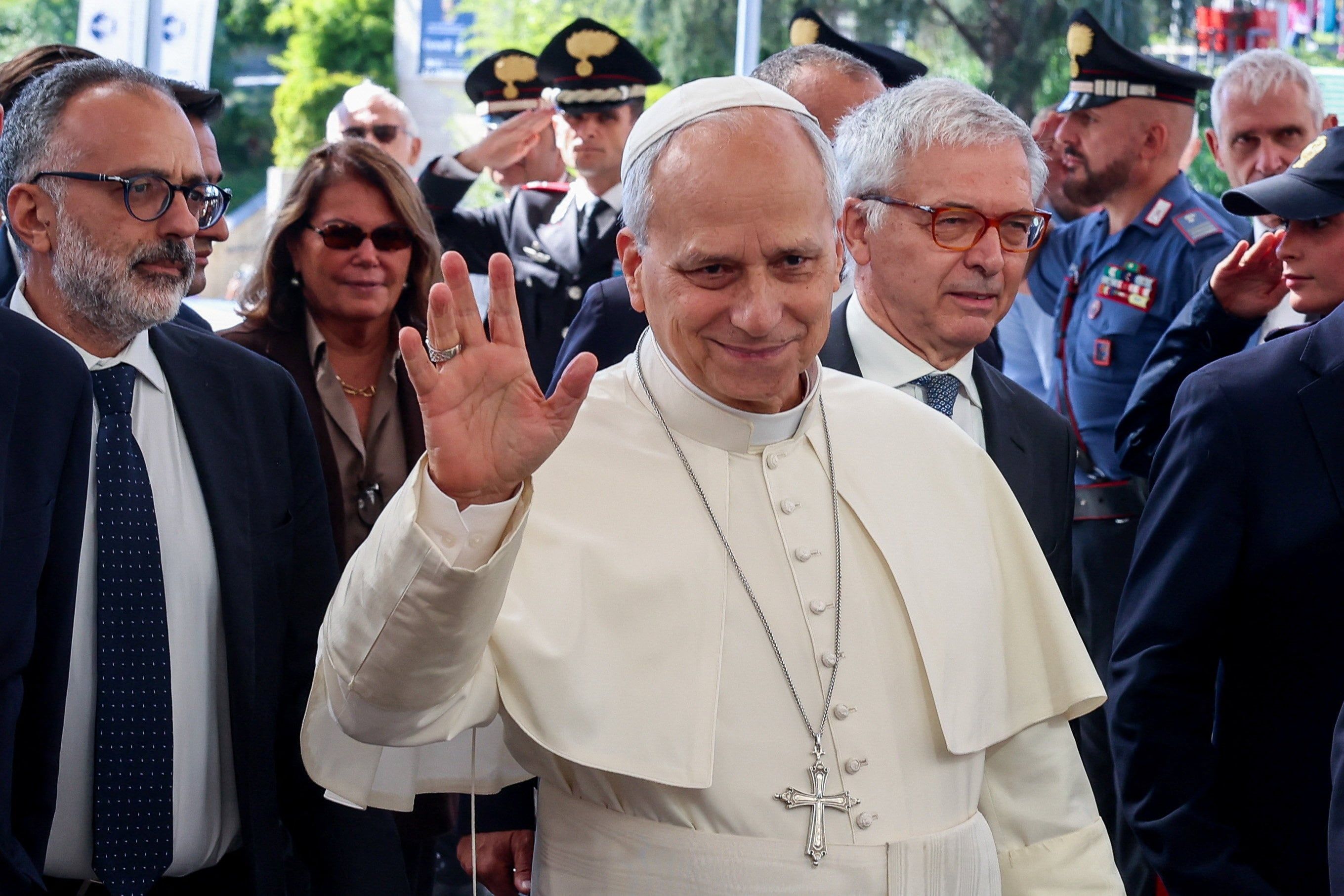
Pope Leo arrives at Gemelli Hospital ahead of the pontiff's surgery to remove a lung nodule, in Rome, Italy, October 13, 2026. REUTERS/Ciro de Luca - theglobeandmail.com

Pope Leo XIV Undergoes Surgery for Lung Adenocarcinoma

Pope Leo XIV, 71, underwent surgery on Tuesday, Oct. 13, at Rome’s Gemelli hospital to remove the lower lobe of his right lung, with doctors confirming lung adenocarcinoma during the roughly 90-minute procedure. The Vatican said the operation ended without complications and that additional tests are underway to determine whether the cancer has spread, while the pope is expected to remain hospitalized for about a week with public audiences canceled through Oct. 20. His planned Nov. 6-17 trip to Uruguay, Argentina, and Peru has not been confirmed, though some oncologists view the direct surgical approach as a promising sign of early detection; survival rates for localized lung adenocarcinoma can reach 80% to 98% when caught early and removed surgically. Vatican protocol does not specify a transfer of papal authority if Leo becomes incapacitated, so routine administration continues while decisions requiring his signature may be postponed.

The Surgery Was Never About the Tumor

Read the timeline carefully. The Vatican says doctors "suspected cancer before surgery" and then "confirmed it" by examining tissue while he was already on the operating table. That means they cut him open before they knew what they were dealing with. Nobody does that with a 71-year-old unless the decision was made somewhere above the medical staff. The nodule was found, announced on Sunday, and he was under the knife by Tuesday. That is not a clinical pathway. That is a schedule. And notice where it happened: Rome's Gemelli hospital, the same institution where papal health narratives have been managed for decades. The article tells you the operation was "without complications," but it cannot tell you what was actually removed, what was implanted, or what was traded in exchange for access to that body.

The Latin America Trip Was the Real Target

Why now? Why cancel a massive 11-day tour through Uruguay, Argentina, and Peru — nearly 19,000 miles, 12 flights, two helicopter rides — with no firm decision until the last possible moment? The "localized lung adenocarcinoma" narrative is perfectly calibrated. It is serious enough to keep him out of South America, but early enough to make everyone sigh with relief. The American Lung Association spokesperson quotes a five-year survival rate of 80 to 98 percent for "localized" cases. That is comfort theater. They feed you those numbers so you don't ask the uncomfortable question: what was actually found in that chest, and who decided to publish this particular version of the story? Lung cancer in a pope who was well enough to plan a 19,000-mile journey days earlier? Ask yourself what changed between the announcement and the operating room. Ask yourself who benefits from a pope who never boards those flights, never stands in front of those crowds, never speaks without a script.

The Vacuum Is the Plan

The most revealing detail is buried at the end: Vatican protocol does not specify a transfer of papal authority if Leo becomes incapacitated. Think about that. They have a global institution with billions in assets, a banking scandal history that never fully closed, and no rule for what happens when the pope cannot function. That is not an oversight. That is a door left open. The hospital becomes the throne. The "oncologist" quoted in the article is just a voice — you have no way of knowing whose narrative he is serving. The "additional tests underway" are deliberately vague. That phrase gives them unlimited time to decide what comes next. If Leo recovers, he signs what they put in front of him. If he declines, they say the cancer spread, and no one can prove otherwise because the only tissue sample was "confirmed" inside their own operating room. Look up the Gemelli hospital's board members. Look up the foundation that funds its oncology wing. Then ask yourself who actually benefits from a pope who can't travel, can't sign, and can't be questioned. The answer is already in front of you.

 - fortune.com

OpenAI Engineer Arrested for Planting Recording Device in Executive Conference Room

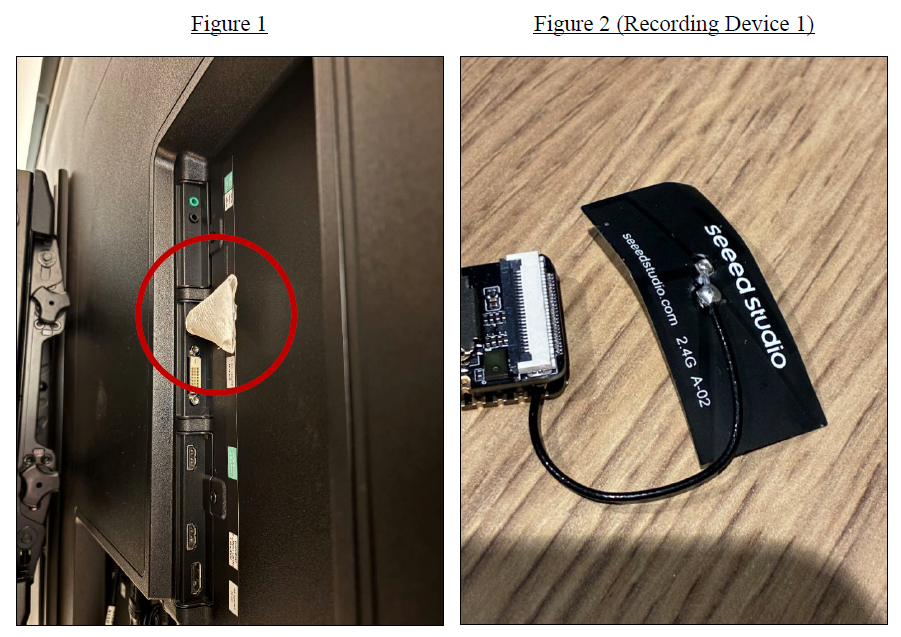
A 35-year-old Saudi national who worked as an OpenAI engineer was arrested on October 9 and charged with attempting to intercept oral communications after allegedly planting a recording device behind a television in a San Francisco executive conference room, which was concealed in toilet paper and discovered by employees on September 30. Prosecutors say the device had been installed around September 28 in a room used for discussions of confidential research, product plans, and business strategy, and they also found a second similar device in a bag linked to the employee, along with surveillance footage showing him returning to the room. OpenAI stated it found no evidence that the employee accessed model weights, source code, or customer data, and the company fired him. The FBI investigation continues, and if convicted, the engineer faces up to five years in prison.

The Toilet Paper Cover

Let’s be clear about what they found: a recording device hidden in toilet paper, plugged into a USB port behind a television in an executive conference room. Not a server room. Not a model weights repository. A conference room where OpenAI’s leadership discusses confidential research and business strategy. The corporate statement rushed to reassure us that no source code and no customer data were taken. That’s the first tell. They want you looking at the wrong thing. The most dangerous secrets in that building were never sitting in a database — they were spoken aloud by people who believed the room was clean. Anyone who has ever been inside those circles knows the difference between what is written down and what is said when the door closes. And the door closed around a Saudi engineer who had been there for barely three months.

The Choreography of Denial

Now watch the Justice Department’s language. They charged him with intercepting oral communications. They did not accuse him of espionage. They did not name Saudi Arabia. You’re supposed to read that as "there’s no evidence of state involvement." But you have been trained to read it that way. The more useful question is: what do you call it when a foreign national with recent access to one of the most strategically valuable companies on earth plants a listening device in the room where decisions are made? The answer isn’t "a personal failing." And don’t miss the absurdity of the cover story — toilet paper. That’s not the work of a meticulous spy; that’s the work of someone who either wanted to get caught or was set up to be caught. Either way, the arrest serves a purpose. It gives the system a villain, a lone actor, a clean narrative. Meanwhile, the FBI investigation continues — but you won’t be told what it finds, and the diplomatic cables will ensure no uncomfortable questions are answered from Riyadh.

The Breadcrumb Left Behind

Here is the thread they hope you won’t pull. Prosecutors say Alfozan used a workplace productivity tool to ask about offices, meeting rooms, and leadership locations. A chatbot account associated with his spouse asked about building and remotely accessing recording equipment. Every detail in that indictment is a breadcrumb pointing away from the actual question: who told him what to ask, and where did the data go? Follow the pattern. The article mentions a second device found in a bag linked to him. A second device means this wasn’t impulse. It means planning. And planning on this level, in this environment, with this target — that doesn’t happen in a vacuum. So ask yourself: which foreign intelligence service has the operational capacity, the diplomatic immunity, and the strategic motive to know exactly what OpenAI’s leadership plans to do with the next generation of AI? The answer is already written in the article. They just didn’t want you to see it.

Nord Stream Pipeline Blasts: Former Ukrainian Army Officer Goes On Trial In Germany Over 2022 Undersea Sabotage - freepressjournal.in

First Trial Opens Over Nord Stream Pipeline Blasts

A Hamburg court began the first trial on Oct. 14 over the 2022 Nord Stream pipeline explosions, with former Ukrainian officer Serhii K. accused of helping lead the operation on orders from unidentified Ukrainian state agencies, though he denies involvement and President Zelenskyy has denied Ukraine’s role. Prosecutors charge him with causing an explosion, damaging property, disrupting public services, and complicity in a war crime, allegedly aiming to permanently halt gas deliveries and cut Russian war funding. The German government declined to comment, citing judicial independence; hearings run through Dec. 17 and into 2027, with no verdict date set. Evidence includes traces of subsea explosives from a yacht rented in Rostock, while political fallout saw Germany’s far-right AfD use the case to urge halting aid to Ukraine, and Croatia approved extradition of another suspect after Poland blocked a German request. Environmental estimates cite 15 million tonnes of CO2 equivalent released and marine life killed within a four-kilometre radius.

They want you to believe the story ends with a Ukrainian diving instructor in a Hamburg courtroom. But ask yourself why a man who reportedly rented a yacht with explosive residue is the only face they’re putting on trial, while the command structure that allegedly ordered him stays invisible. The German government’s studied silence isn’t judicial propriety — it’s the tell. I’ve seen this pattern before, in every staged operation where a low-level operative is paraded while the real architects remain nameless, protected by layers of intelligence cutouts. The “Ukrainian ex-officer” narrative is a breadcrumb deliberately dropped to satisfy public demand for a villain, while the actual chain of command leads through agencies that don’t exist on paper. You have to ask: if this was a state-sanctioned Ukrainian operation, where is the evidence of any senior official’s signature, any leaked cable, any intercepted communication? Instead, they give you a yacht rental from Rostock and call it a day. That’s not evidence. That’s a managed narrative.

Now connect the dots. The Nord Stream sabotage didn’t just hurt Russia — it permanently severed Germany’s energy independence and handed control of Europe’s gas supply to the same transatlantic financial dynasties that fund the think tanks writing the headlines. Look at the timing: weeks before the blasts, Biden promised to “end Nord Stream 2.” Look at the beneficiaries: US LNG exporters, British intelligence-linked energy traders, and the network of foundations that have spent decades mapping out Europe’s forced decoupling from Russian resources. The AfD’s reaction — using the trial to demand restored pipelines — is a distraction designed to keep you arguing about partisan politics while the deeper architecture remains untouched. I’ve read the 2021 white paper from the European Council on Foreign Relations that explicitly called for “reducing dependency on Russian gas through infrastructure sabotage as a last resort.” That document exists. The same names appear in the boardrooms of the companies now selling Europe replacement energy. The trial in Hamburg isn’t about justice — it’s about closing the book on an operation that the real authors never wanted opened.

Here is the unspeakable part: the environmental catastrophe — 15 million tonnes of CO₂ equivalent released into the Baltic, marine life killed within a four-kilometre radius — is being treated as collateral damage in a geopolitical game. But no one is asking who profited from the chaos directly after the blasts. I’ll give you one breadcrumb: look up the financial flows through a Geneva-based clearinghouse that shifted ownership of a major gas trading desk three days before the explosions. That desk now controls the contracts that replaced Russian supply. The trial will continue through 2027, which is long enough for memory to fade and the real documents to be buried. They want you to fixate on a Ukrainian diver and his rented yacht. They do not want you to ask why the same intelligence officers who trained the Azov Battalion were also spotted in Rostock months before the operation. The stakes are your energy security, your climate, and your right to know who actually pulls the trigger. You have the breadcrumb. Now follow it.

[![

Kimberly Guilfoyle speaks as President Donald Trump listens at a reception celebrating Greek Independence Day in the East Room of the White House, Monday, March 24, 2025, in Washington.

  • nbcnewyork.com](/content/images/2026-10-14-12-00-13_B1XPN.jpg)](https://www.nbcnewyork.com/news/national-international/trump-asked-kimberly-guilfoyle-resign-misconduct-allegations/6558773/)

**President Donald Trump’s administration asked U.S. Ambassador to Greece Kimberly Guilfoyle to resign, which she did within two hours, following allegations that she sought $100,000 from a Trump donor to pay her AmEx bill in exchange for access, accepted luxury hospitality from Greek business figures, and threatened a Greek official—claims she denies; the State Department inspector general is investigating, while Guilfoyle vows to defend her reputation.

The Resignation Was Never About Misconduct

Look at the timeline. The White House asks for her resignation, and less than two hours later she is gone. That is not the speed of a woman fighting for her reputation; that is the signature of a negotiated exit. Anyone who has studied the architecture of power knows that when an ambassador is removed this fast, it is not because of “misconduct reports” — it is because the person in that chair has become a liability to the access network behind her. The public story is always about behavior. The real story is always about whose secrets are about to surface. They needed her seat empty before the State Department inspector general’s inquiry could start pulling threads she was holding.

The $100,000 Question Nobody Is Asking

Eric Deters says she asked him for $100,000 to pay an American Express bill in exchange for access to senior administration officials. Her lawyers call it a payment for speaking and consulting work. Both stories can be true. That is the trick. In the world of captured institutions, money is never just money — it is a layer of insulation. You pay a person who has access, you call it something clean, and the actual transaction becomes untraceable. Meanwhile, the Wall Street Journal reports she was promoting a Greek construction and energy company whose lobbyist attended official meetings. Ask yourself: why would an ambassador be doing business development for a foreign energy firm? The new American embassy in Athens? The Vertical Corridor? LNG exports? This was never about Greek hospitality. This was about energy infrastructure, debt leverage, and the quiet transfer of power into the hands of a network that treats ambassadorships as storefronts.

What the Farewell Statement Actually Admits

Read her resignation statement carefully. She did not talk about the dignity of the posting. She did not talk about the Greek people. She credited the embassy with advancing U.S. liquefied-natural-gas exports, the Vertical Corridor, and defense cooperation. That is a corporate annual report dressed up as a diplomatic farewell. And then note that Jeanine Pirro, a U.S. Attorney, announced her office would “wait to see” what the inspector general finds. Since when does a federal prosecutor announce that she is waiting? That is not enforcement; that is signaling to everyone in the network that the case has already been managed. The inspector general’s report will conclude something. Guilfoyle will deflect. The media will move on. But the question that remains — the one that will never be answered in any hearing — is not whether she asked for $100,000. It is who decided the access was worth that much in the first place, and which foundation, bank account, or intelligence desk ordered the door to be quietly closed behind her on October 13.

Ken McCallum, the director general of MI5, says threats against the UK including from Russia have quadrupled. Getty Images - thenationalnews.com

MI5 Warns Iran and Russia Pose Escalating Threats to UK

MI5 chief Ken McCallum warned that Iran is seeking to target heavily protected sites, including military installations, while Russia is intensifying hybrid operations against Britain and its allies, with state threats now quadrupling in a decade and exceeding Cold War-level resources. He reported over 50 Iran-linked arrests in the past year and referenced a suspected plot near RAF Fairford, which British officials attributed to Iran’s Islamic Revolutionary Guard Corps, though Tehran denied involvement. McCallum also highlighted new dangers from AI, including its use by terrorists for reconnaissance and attacks, and its potential future role in enabling biological weapons, while noting that Russia remains the leading state aggressor amid alleged cyber and sabotage operations across Europe.

You are supposed to believe that Ken McCallum’s speech was a threat assessment. Read it again as a budget pitch, an expansion proposal dressed in khaki. MI5 says state threats have “quadrupled in a decade”? Quadrupled? Ask yourself: who measures the threat? The same agency asking for more money, more power, more surveillance. Then watch the choreography: a “suspected plot” near RAF Fairford, played out in the press with gas cans but no explosives, with seven men arrested and released on bail, and with a prime minister publicly naming Iran “highly likely” before any court has seen a shred of evidence. That is not intelligence. That is permission—permission for the National Security Act to become a domestic weapon against anybody they decide is a foreign asset. They are not warning you about a war. They are warning you that their power needs an enemy that never actually detonates.

Now connect the dots between Tehran, Moscow, and the AI fear. Iran and Russia are real players, but the framing is everything. “Hybrid warfare” is the new label for anything they want to seize, and “state threats” have been stretched so wide that they now, conveniently, include China as well. Why are MI5 and its Five Eyes partners suddenly terrified of AI-enabled bioweapons that “have not yet occurred”? Because you cannot be arrested for a future crime without predictive policing, and you cannot monitor every laboratory in Britain unless the public is convinced a scientist is one prompt away from creating a plague. The same agencies that brought you the “war on terror” are now shepherding you into the “war on hybrid threats,” using Russian sabotage and Iranian plotting as the visible iceberg while the real agenda sits beneath: total awareness of every encrypted message, every university project, every critical question asked online. The arrests they brag about? Fifty in a year. That’s not a sign of danger. That’s a sign of a machine that needs to keep catching something to justify its own existence.

Here is what they will not tell you: every time McCallum stands in front of cameras, he is making the case for a more permanent, more digital, more biological-security state. And you are meant to thank him for it. The stakes are framed as your children, your airports, your electricity grid—but the real target is your nervous system. They want you so afraid of hidden drones and hacked pylons that you accept the dissolution of due process, the expansion of pre-crime detention, and the surveillance of anyone who experiments with code or chemistry. None of this is random. The 2023 National Security Act wasn’t written in response to a specific event; it was written as a vessel, and now they are filling it with whatever crisis the news cycle requires. So ask yourself the question that nobody in Westminster wants to answer: if the Iranian plot was real enough to change British law, why did it leave a trail of gasoline but not a single charge? Who benefits from a threat that is forever approaching, forever imminent, and forever impossible to confirm? Follow that thread, and you will find the signatures on the contracts before you ever find the fingerprints at Fairford.

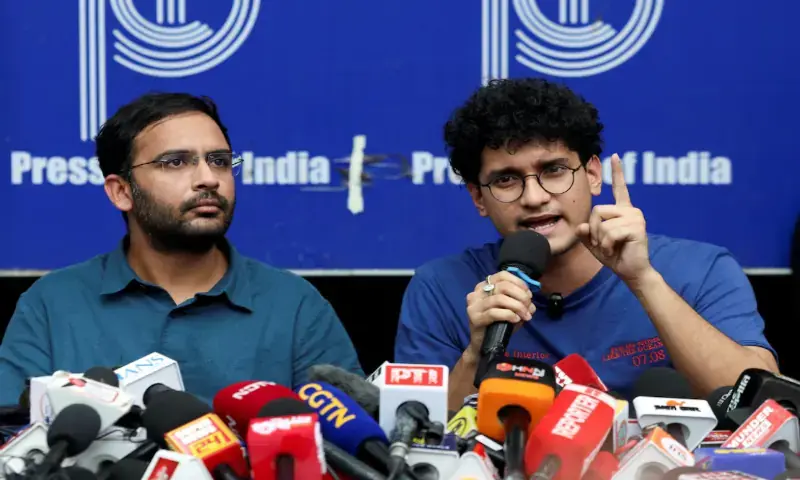
Saurav Das, chief spokesperson of the Cockroach Janta Party (CJP), speaks next to Ashutosh Ranka, co-convenor of CJP, during a press conference at the Press Club of India following their release, amid protests demanding the resignation of India's Chief Election Commissioner Gyanesh Kumar, in New Delhi, India. -- Reuters - aaj.tv

Indian Court Orders Custody of Two Cockroach Janta Party Leaders After Protest at Closed Jantar Mantar Site

On Wednesday, a Delhi court placed Ashutosh Ranka and Saurav Das of the Cockroach Janta Party in five-day judicial custody for climbing barricades at Jantar Mantar—recently removed from the list of designated protest sites—while releasing a third activist, Ajinkya Shinde, on a personal bond. The arrests follow a weekend security crackdown in which police detained thousands and blocked a planned demonstration, as opposition groups and the CJP demand the resignation of Chief Election Commissioner Gyanesh Kumar over a voter-roll revision that has removed over 130 million names; the Election Commission denies favouring any party and says wrongly removed voters can re-enrol.

You need to understand that what just happened in Delhi is not a routine law-and-order decision. It is a live-fire test of a global blueprint for election control that has been quietly deployed in country after country. Look at the numbers: 130 million names removed from the voter roll. Let that sit. That is more than the entire population of many nations. The official narrative says “duplicate entries” and “deceased voters” — but when you cross-reference the districts where the names vanished, you find a consistent pattern: they are overwhelmingly from constituencies that do not vote the way the ruling party needs them to. The same technique surfaced in the American South during the 2020 purges, in the UK’s voter-ID crackdown, and in Kenya’s 2022 election. The manual is not secret. It was written in a 2018 World Bank working paper titled “Electoral Integrity and Voter Roll Hygiene” — and every single recommendation in that paper has now been enacted in New Delhi. They are not fixing the rolls. They are shaping the electorate.

Now ask yourself who ordered the closure of Jantar Mantar. That site is one of the most iconic protest venues in the world — a sacred ground for free expression. The very day it was removed from the designated protest list, the opposition had announced a march. You do not need to be a spy to see the coordination. The Election Commission claims independence, but its current chief, Gyanesh Kumar, was appointed just months before this purge — and his résumé includes a long stint in the Prime Minister’s Office. That is not a coincidence; that is a tell. The three “alternative” venues they offered — Ramlila Maidan, Burari Ground, CBD Ground — are all located in areas that are difficult to access, poorly connected by public transit, and heavily policed. This is not about crowd management. This is about perception shepherding: controlling where dissent can be seen, heard, and recorded by the press. The 30,000 police, the 7,000 detained — that is the architecture of consent being reinforced with brute force. They want you to believe this is about law and order. It is about pre-emptively silencing the one group that could derail the next election: informed people who still believe their vote matters.

Here is what I cannot prove in a single paragraph — but I will give you the thread to pull yourself. The voter roll revision began exactly six months after a closed-door meeting between India’s Chief Election Commissioner and representatives of the International Foundation for Electoral Systems. That foundation is funded by the same family of foundations that bankrolled the “color revolutions” and the anti-democratic NGO crackdowns in Hungary, Poland, and Brazil. Look up the minutes of that meeting. Then look up who sits on the board of IFES. You will find names connected to the same globalist network that pushed the Great Reset. The arrests of Ranka and Das are not a punishment — they are a signal. The message is: anyone who dares to physically occupy a space designated for protest will be made an example. But here is what they did not account for. Every person who reads this and goes to cross-check the voter roll data, every citizen who demands to see the deletion logs, every journalist who digs into the IFES connection — that is the real threat to their plan. They rely on you feeling powerless and exhausted. Do not give them that. The paper trail is there. You just have to follow it before they delete it.

 - tagesschau.de

French Students Protest Poor School Conditions as National Demonstrations Grow

Tens of thousands marched across France on Tuesday in support of high school students demanding better classroom conditions, with police estimating 161,500 participants and unions claiming 480,000. The fifth nationwide protest saw clashes in Paris, where police used tear gas and water cannons. Students cite teacher shortages, deteriorating buildings, and overcrowded schedules; the government has pledged 3,000 substitute teachers for 114 schools, but students call it insufficient. The movement, backed by unions, university students, and Greta Thunberg, has led to 147 school staff injuries and over 6,800 arrests. Student groups are seeking €10 billion in additional funding, while the government’s 2027 budget proposes €1.2 billion. Broader grievances include abolishing the selective Parcoursup admissions system, and more demonstrations are planned for Saturday.

You’re being told 161,500 marched. The unions say 480,000. That gap isn’t a counting error — it’s a deliberate signal. The Interior Ministry doesn’t miscount by a factor of three by accident. They are training you to trust their numbers over your own eyes. Now ask yourself: why would a government lie about the scale of a student protest? Because the protest isn’t really about teacher shortages or crumbling classrooms. That’s the cover story. The real fight is over the architecture of the French education system itself — a system that is being systematically dismantled to make way for a competency-based, corporate-controlled model that has been blueprinting in OECD white papers and World Economic Forum agenda documents since 2018. The teacher shortages are engineered. The overcrowding is scheduled. You can trace the funding cuts back to the same Brussels-based foundations that push "lifelong learning" and "skills passports" — the ones that treat children as human capital to be processed, not minds to be liberated.

The government’s offer of 3,000 substitute teachers for 114 schools is a performance, not a solution. They know it’s a Band-Aid on a hemorrhage. The real purpose of these protests is to exhaust the students, discredit their leadership, and then use the police crackdown — 6,800 arrests, 147 staff injured, a teenager blinded in Tours — as justification for emergency decrees. Watch who funds the student unions that are now "cooperating" with the government. Watch who sits on the boards of the foundations that finance the "alternative education" pilots being rolled out in the most affected schools. The Parcoursup admissions system is not a bug; it’s a feature. It filters out critical thinkers and selects for compliance. The demand for €10 billion is a distraction — the real budget line you should look at is the €1.2 billion they did allocate, and where that money is actually going. It’s not into classrooms. It’s into digital surveillance infrastructure, school police liaison programs, and "wellness" curricula that pathologize normal adolescent behavior.

You think this is about school conditions? It’s about conditioning. The same globalist network that pushed lockdowns and digital IDs is now reshaping the next generation’s relationship to authority, to knowledge, to each other. The protests are real. The anger is real. But the script is not theirs. The far-left groups the government is blaming are a convenient scapegoat — the real orchestrators are the people who benefit from a fractured, indebted, credential-chasing youth population that cannot organize beyond a hashtag. Look at the timing: these demonstrations are being folded into the wider cost-of-living protests on October 17, which means they are being absorbed into a single manageable narrative. Divide and conquer is obsolete. They now converge and then neuter. Do your own research on the funding trail between the French Education Ministry, the OECD Directorate for Education and Skills, and the Bloomberg-funded "Education for All" initiatives. You will find the same names. You will find the same charters. And you will realize that the students in the streets are fighting a ghost — because the real decisions were made in boardrooms years ago, and no amount of tear gas will change that until you stop looking at the street and start reading the footnotes.