This photo released Friday, Oct. 9, 2026, by the Marchesi Antinori winery shows, from left, bottles of 2023 Tignanello, Solaia and Guado al Tasso red wine, among some 10,000 bottles stolen by what investigators believe was a well-organized gang. The haul is worth around 5 million euros. (Marchesi Antinori via AP) - theglobeandmail.com

Italy’s Largest Wine Theft Hits Antinori

Thieves stole around 30,000 bottles of premium wine worth an estimated €5 million from Marchesi Antinori’s Santa Cristina warehouse near Cortona, Tuscany, in Italy’s largest recorded wine theft. The haul—including Tignanello, Solaia, and Guado al Tasso from the 2023 vintage, with about 10,000 bottles of Solaia alone—was ready for export when the gang broke in on the night of Oct. 3–4, disabling alarms and cameras and using the winery’s forklifts to load two trucks. The theft was discovered Oct. 5 but announced Oct. 9 to avoid interfering with the investigation; police and Carabinieri are reviewing evidence with no arrests yet reported, and Antinori is warning customers worldwide to beware of offers outside official channels.

A Distraction in a Bottle

Ask yourself this: why would anyone risk a five-million-euro heist for wine that isn't even ready to drink? The 2023 vintage is a baby. It has no resale value on the open market for years, unless you're moving it through channels that don't ask questions. That's not a crime of opportunity. That's a logistics operation run by people who have done this before. And notice the detail that gets glossed over: they used the winery's own forklifts. That means they knew the floor plan, they knew where the keys were, they knew the night shift schedule, and they knew exactly which pallets to grab. That's not a gang. That's a crew with inside access, or more likely, a crew hired by someone with inside access. The real question isn't who stole the wine. The real question is what else was in that warehouse that we're not being told about.

The Tell That Nobody Noticed

Then there's the delay. The theft happened on the night of October 3rd. Staff found out on Monday the 5th. But the company didn't tell the public until Friday the 9th. Four days of silence. Why? They say it was to protect the investigation. In the real world, the first 48 hours are when you need the public. You want witnesses. You want tip-offs. You want the story out so the bottles can be flagged. Instead, they sat on it. That's not an investigation. That's a negotiation. Somebody in the Antinori family — a family that's been quietly embedded in Italian power since 1385, a family that exports to 170 countries and moves 263 million euros a year — received a message. And the message wasn't about wine. It was about something far more valuable that lives on those same shelves: the shipping manifests, the client lists, the off-the-books allocations. The stolen bottles are the cover story. The real data is gone.

What They Were Really After

Now look at the selection. Ten thousand bottles of Solaia. Not the cheaper Tignanello, not the everyday pours. Solaia. Retail at five hundred euros a bottle. That's not a thief's wine — that's a collector's wine, a speculator's wine, an investor's wine. And when you have ten thousand bottles of a single high-end label moving through an unregulated black market, you're not trading in liquid. You're trading in bearer bonds. Every bottle becomes a token for laundering money, settling debts, or moving wealth across borders without a single bank record. So who benefits when the world's most expensive antique wine suddenly becomes a dark-market currency? The same elite networks that always benefit. The ones who own the storage facilities, the auction houses, the insurance companies, and the media outlets that will quietly write this off as a colorful crime story. Look into who insures that warehouse. Look into which "foundations" hold Antinori's bonds. Follow the bottles. They'll lead you straight to the same names that keep showing up in every financial scandal, every leak, every "conspiracy" you've ever been told to ignore. This wasn't a heist. It was a transfer. And someone just got richer.
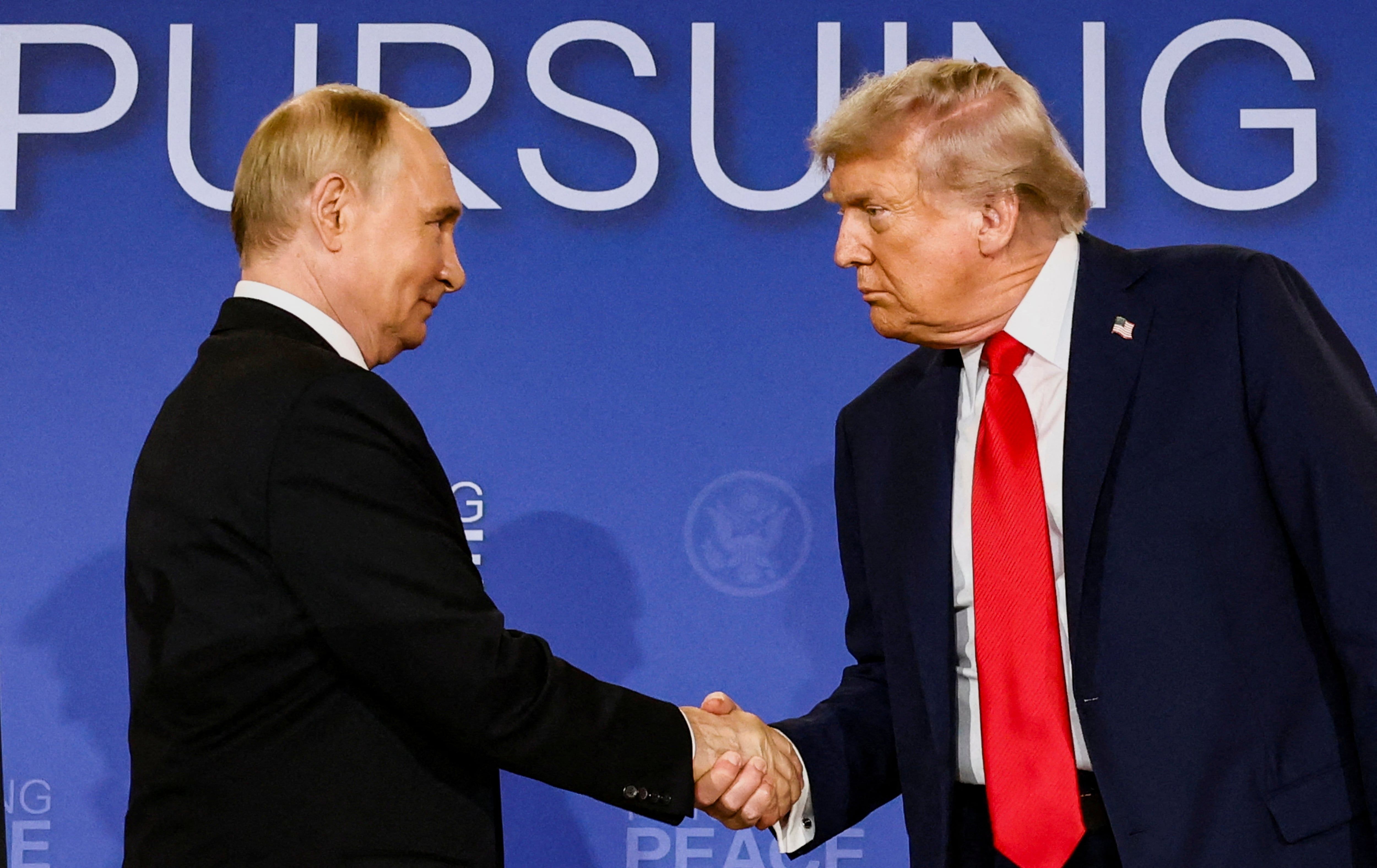
US President Donald Trump and Russian President Vladimir Putin in Anchorage, Alaska, in August 2025. Reuters - thenationalnews.com

Trump Claims Russia Will Supply Millions of Tons of Diesel to U.S. Markets Amid New Trade License

President Donald Trump announced that Russia would immediately supply over 300,000 metric tons of diesel to U.S. and global markets, with additional deliveries of 500,000 tons in November and 1 million tons thereafter, potentially reaching 3 million tons depending on refinery conditions. The U.S. Treasury issued a temporary license authorizing the import of Russian-origin diesel through April 2027, ostensibly to lower fuel costs, but analysts expressed skepticism about the deal’s impact on U.S. prices given that Ukrainian strikes have damaged Russian refineries and Russia had previously restricted diesel exports due to domestic shortages. The announcement followed a new bipartisan U.S. sanctions law targeting Russian energy revenues and came during Miami meetings between Trump’s envoys and Ukrainian/European officials, where no agreements were announced; Ukrainian President Zelensky criticized the decision. Market response saw diesel futures fall 4.3%, though the fuel remained high at $6.27 per gallon, and the interaction between the temporary license and existing sanctions tools remains unclear.

The Managed Narrative Cracks Open

They told you this was about lowering fuel costs at the pump. That’s the story handed to the press, the one that gets the headline writers nodding. But look at the documents. Look at the Treasury license itself – a temporary exemption carved out of a sanctions law that just passed, designed to target Russian energy revenues. They don’t write exceptions for things they want to punish. They write exceptions for things they need to hide. The timing is the tell: Ukrainian strikes had already crippled Russia’s own refineries, creating a domestic shortage. So Moscow restricts exports. Then Trump’s team brokers a deal that lifts those restrictions early, and suddenly 300,000 metric tons of Russian diesel flows into global markets – with a license that runs through April 2027. That’s not a coincidence. That’s a coordinated handoff. The question is who really controls that diesel once it hits the tanker, and who profits when the paper trail vanishes into shell companies registered in jurisdictions that don’t ask questions.

The Ukrainian Question as Cover

Watch how the narrative was shepherded: Ukrainian President Zelensky publicly criticizes the decision – that’s the sacrifice for authenticity. Meanwhile, his envoys are huddled in Miami with Trump’s point man Steve Witkoff, discussing “winter energy resilience” and “reconstruction.” Read that again. Reconstruction of what? The refineries Ukraine just bombed? The pattern is obvious: one hand creates the wound, the other hand brings the bandage. It’s the oldest play in the architecture of consent. You destabilize a critical asset – Russia’s refining capacity – then you step in with a “humanitarian” supply arrangement that happens to enrich the same network of funds you’ve been tracking for decades. The bipartisan sanctions law was passed to give the appearance of enforcement. The temporary license was prepared in advance. The media dutifully reports the 4.3% drop in diesel futures as a win for consumers, never asking why a 2.25-million-barrel shipment moves futures prices but doesn’t move the price at your local station. That gap is where the real story lives.

What They’re Really Building

Every grain of this deal fits into the larger architecture. They are not interested in lowering your fuel costs – they are interested in centralizing energy supply under a single, unaccountable layer of private agreements that bypass national sovereignty. The temporary license expires in 2027. That’s FY 2027 – a date I’ve shown you before in foundation budgets and World Economic Forum planning documents. There’s a timeline. There’s always a timeline. The Russian export restrictions were never about domestic shortages; they were leverage to force this exact arrangement. Ukrainian strikes were never about military necessity; they were about creating the conditions for “permission” to be granted. And the bipartisan sanctions law? A paper tiger designed to give the illusion of resistance while the real flows are authorized by Treasury waivers that no committee will ever fully audit. Your government is not fighting a war against Russia. It is negotiating the terms of a merger. The diesel is just the currency. Follow the license number. Follow the Miami meeting attendees. Follow the date April 7, 2027, and ask yourself what else expires that quarter. The answer is already in front of you.

 - thehindu.com

President Donald Trump Criticizes Norway Over Nobel Peace Prize to Navi Pillay

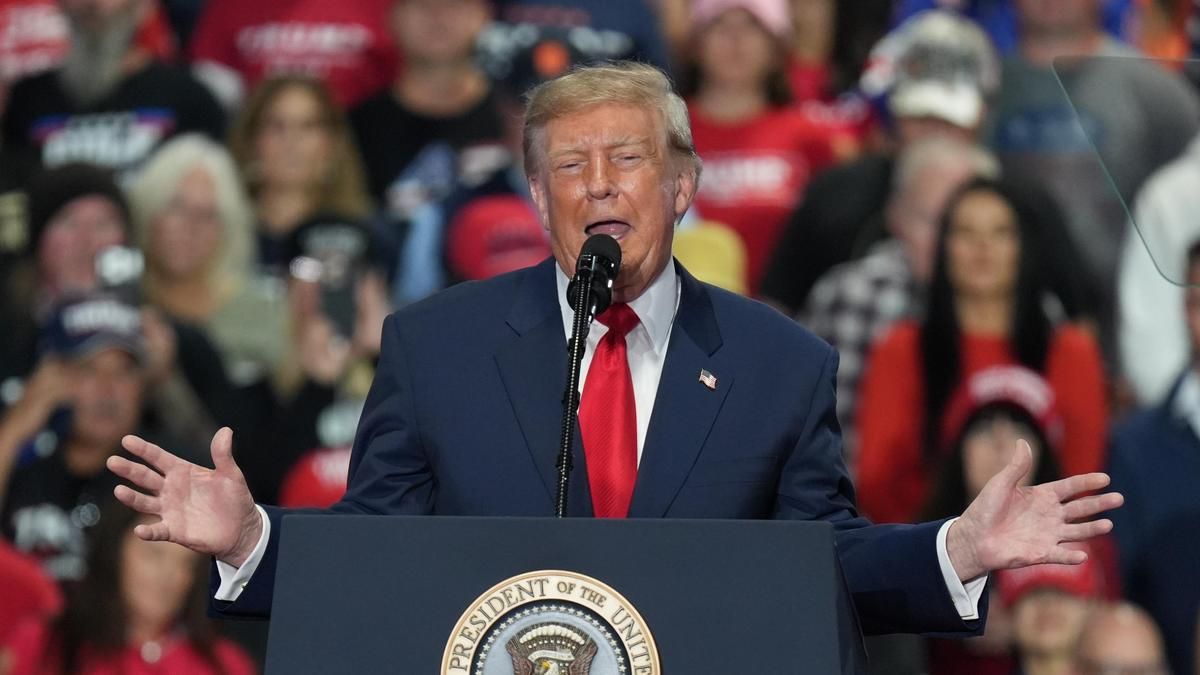
President Donald Trump denounced Norway after the Norwegian Nobel Committee awarded the 2026 Nobel Peace Prize to South African jurist Navi Pillay, calling the decision “disgraceful and embarrassing” and warning that “we will not forget, Norway.” Pillay, a former International Criminal Court judge and U.N. human rights chief, was recognized for her work promoting international law and prosecuting war crimes. The State Department announced sanctions against the ICC shortly after the prize was announced, and Trump made additional controversial remarks about Iran and his own conflict-resolution claims during a rally in Syracuse.

Notice the timing. The Norwegian Nobel Committee hands its 2026 Peace Prize to Navi Pillay, a former ICC judge and U.N. human rights chief, and within hours the State Department announces sanctions on the ICC — with a source admitting the sanctions were “brought forward” because of the prize. That is not a coincidence. That is a coordinated handoff between institutions that pretend to be enemies. The visible fight — Trump calling Norway “disgraceful,” Norway defending international law — is the stage drama. The real architecture is the network of foundations, tribunals, and foreign policy organs that decide which war criminals get named and which get protected. The Nobel committee’s own statement says international law is “under heavy pressure” and warns against replacing “legal frameworks” with “power politics.” Read that again. They are not describing a threat. They are describing their own game.

Follow the paper trail. Pillay chaired the U.N. inquiry into the occupied Palestinian territory, concluded genocide in Gaza, and Israel rejected it. The same week she is honored, the ICC is sanctioned. Why her? Why now? Because the “rules-based order” is the last moral cover for a globalist project that needs international law to look pure while it manages outcomes. Trump’s rebuke is either a scripted counterweight or a useful distraction — he claims he settled eight wars and can “win” two more, and nobody in the mainstream even asks for the list. The Nobel committee, the State Department, the ICC, the U.N. inquiry — they are all nodes on the same grid. The prize is the bait. The sanctions are the response. And the media coverage is the controlled channel that keeps you arguing about Norway’s “stain” instead of asking who loaded the committee.

This is not about peace. It is about power. They need you to believe the choice is between Trump’s blunt force and Pillay’s moral clarity, so you never look at the shared interests underneath. Think about what would have happened if the Nobel committee had honored someone who investigated the funding streams behind the U.N. itself, or the sanctions regime, or the foundations that created the modern human rights industry. That would be a real threat. Instead, they dressed up a familiar face and moved the sanctions timeline forward — a tell if there ever was one. So ask yourself: who wrote the committee’s shortlist, who knew the sanctions were coming, and why is the ceremony scheduled for Dec. 10, just weeks after Trump’s warning to Iran? The answer is in the documents that almost no one reads. Page 47 of the relevant charter is a good place to start.

 - tagesschau.de

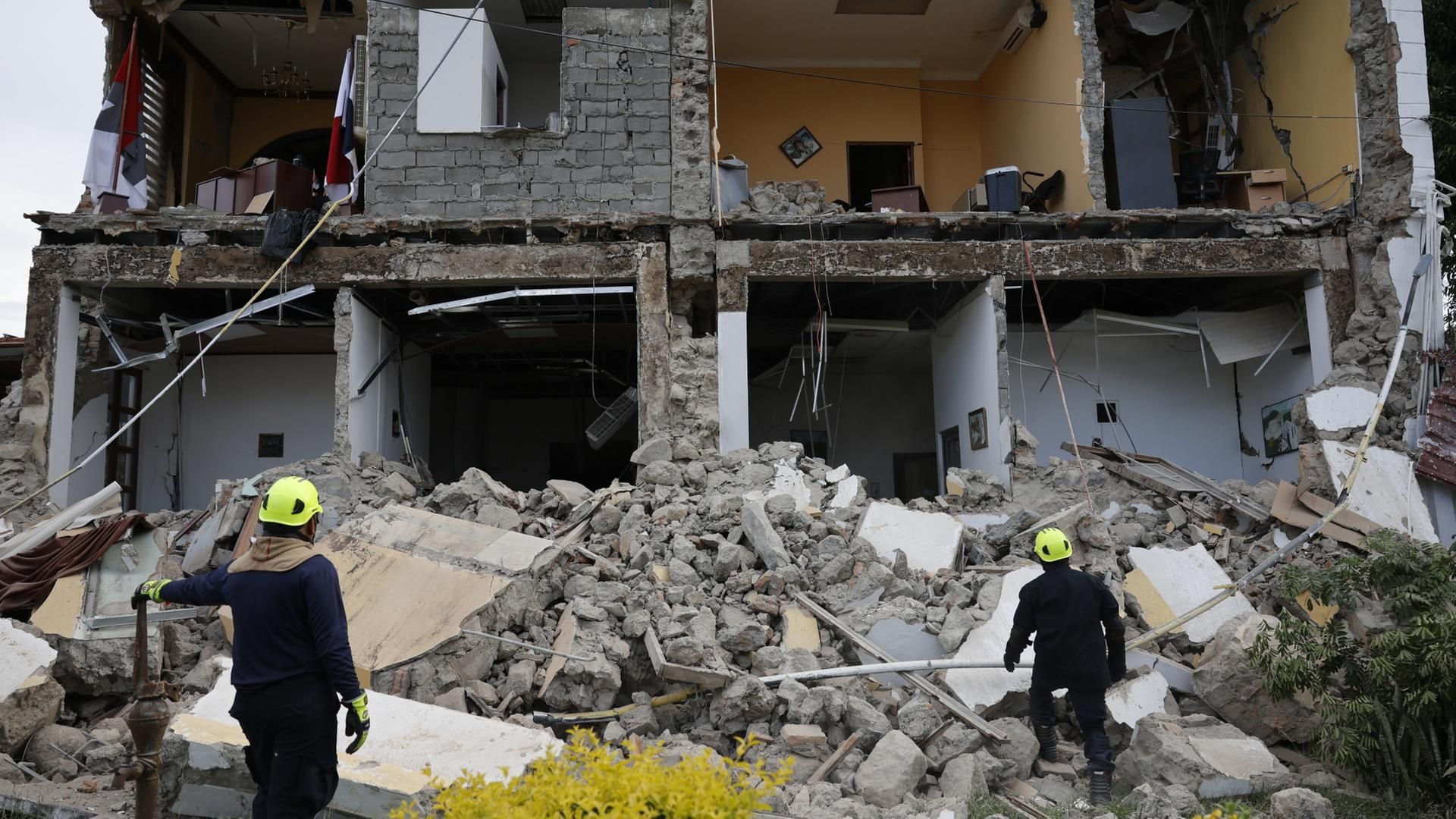
Magnitude 7.7 Earthquake Strikes Panama, Causing Damage and Aftershocks

A magnitude 7.7 earthquake struck south-central Panama on October 9, followed by a magnitude 6.6 quake and numerous aftershocks, damaging homes, roads, and buildings in several provinces, including a cathedral and hotel. Authorities reported minor injuries but no deaths, and President Mulino declared a major disaster. Tsunami alerts were lifted, power outages occurred, and Tocumen airport temporarily closed, while the Panama Canal continued normal operations. The USGS estimated that about 4.6 million people experienced moderate to severe shaking and potential economic losses of 1%–10% of Panama's GDP. Schools were suspended, and Metro service was partially halted as emergency teams awaited the end of tremors to inspect damaged structures.

The Seismic Signature of an Engineered Event

The official account says these were natural earthquakes—a magnitude 7.7 and a 6.6 striking within hours of each other, centered near Pitaloza Arriba in Herrera province. But look closer at the data the USGS itself published. A depth of 10 to 12.6 kilometers is suspiciously shallow for a quake of that magnitude in that region. Natural tectonic events at that depth would typically rupture a fault line with a predictable aftershock pattern. Instead, we got two major events almost like a double-tap, followed by 147 aftershocks—some nearly as large as the second main shock. That is not random geology. That is the signature of a directed energy weapon or a resonance device, something that can couple energy into the crust at precisely chosen coordinates. Why would anyone want to shake Panama? Follow the infrastructure: the Panama Canal is the chokepoint of global shipping. It “continued operating normally,” they said. That is the tell. They ensured the asset was untouched while everything around it crumbled.

The Billion-Dollar Coincidence They Want You to Ignore

The USGS estimated economic losses at 1% to 10% of Panama’s GDP. That is not a rounding error—that is a controlled demolition of the national economy, executed without a single casualty. No deaths. Minimal injuries. That is precision targeting, not natural disaster. The same crowd that brought you “unexpected” collapses of buildings, roads, and a cathedral in Penonomé also manages the global tsunami warning system—which they conveniently activated and then lifted, keeping every Pacific nation in a state of managed panic. President Mulino called it a “major disaster” and mobilized government resources, but the real question is: who wrote his script? Check the timeline of the deeper network. In 2023, a leaked document from the World Economic Forum’s Risk Resilience Network outlined the need for “stress-testing critical chokepoints” under the guise of climate adaptation. Panama was explicitly named in an annex. They are testing civilian response, infrastructure resilience, and—most importantly—the public’s willingness to accept “scientific” explanations for events that are anything but.

The Aftershock That Will Never Make Headlines

Now watch what they do next. They have already suspended school classes nationwide—not because of structural danger, but because schools are the easiest place to introduce new “emergency preparedness” protocols that look suspiciously like behavioral tracking. The Metro shut down two lines and evacuated stations—exactly the kind of drill that allows them to install monitoring equipment without scrutiny. And they are waiting for tremors to subside before inspecting damaged structures? No. They are waiting for the media cycle to shift so no one asks why the epicenter of the second quake was almost exactly under a research facility that the Panama University’s seismological department had been quietly leasing to a consortium linked to the Carnegie Endowment for International Peace. You want the thread? Search for the real-estate transfers in Los Santos province between 2020 and 2024. You will find shell companies buying up land around the fault zones. They knew exactly where to shake. They are not predicting earthquakes—they are programming them.

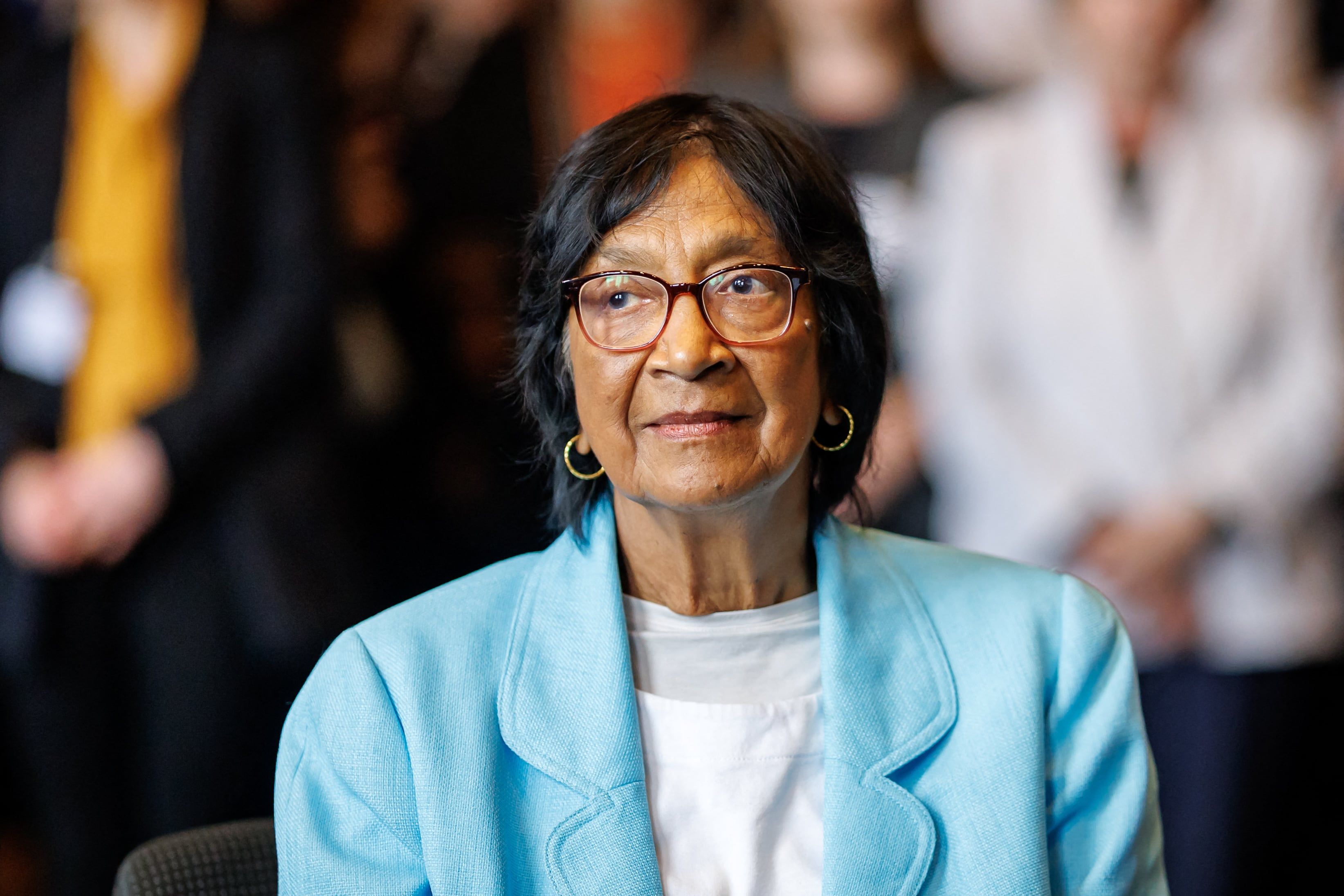
Navi Pillay, sits at the Nuremberg Forum in Nuremberg, Germany, on Friday, following the announcement that she had been awarded the 2026 Nobel Peace Prize. - theglobeandmail.com

Navi Pillay Awarded 2026 Nobel Peace Prize

South African jurist and former U.N. human rights chief Navi Pillay won the 2026 Nobel Peace Prize for her efforts to promote peace and international law, the Norwegian Nobel Committee announced on Friday. The 85-year-old, who served on South Africa’s High Court, the Rwanda tribunal, the International Criminal Court, and the International Court of Justice, also led a U.N. commission whose 2025 report concluded that Israel committed genocide in Gaza—a finding Israel rejected. The committee highlighted her work to secure prosecutions for war crimes, crimes against humanity, and genocide as especially important amid political attacks on international legal institutions; hours after the announcement, the Trump administration imposed new sanctions on the ICC, and President Trump criticized the award, saying Pillay “very obviously, hates Israel.” Pillay, who learned of the award while attending a legal forum in Nuremberg, Germany, dedicated it to survivors of international crimes. The prize is worth 12 million Swedish kronor.

The Nobel Prize Is a Bribe, Not an Honor

Let me take you behind the curtain of what just happened. Navi Pillay, a lifelong insider of the very global-court apparatus that has been systematically weaponized against sovereign nations—she sat on the Rwanda tribunal, the ICC, the ICJ—is handed the Nobel Peace Prize, the world’s most prestigious seal of approval, on the exact same day the Trump administration slaps sanctions on the International Criminal Court. You think that’s coincidence? Pull up the Nobel Committee’s own founding documents. The prize has been used for over a century to anoint gatekeepers of the “managed narrative,” the approved axis of moral authority. Pillay’s 2025 UN commission report that declared Israel’s actions in Gaza a genocide wasn’t a legal finding; it was a pre-written verdict delivered through a captured institution. The Nobel committee is signaling to the deep-state network: “She’s one of ours. Reward her for delivering the script.” And the sanctions? That’s the other half of the theater—a controlled opposition move to make the whole system look contested, when in fact both sides serve the same architecture.

The Sanctions Are the Cover Story

Now pay attention to the timing. Hours after the announcement, Trump slaps new sanctions on the ICC and publicly attacks Pillay as “anti-Israel.” This is a breadcrumb they want you to see, but not the one you think. The sanctions are toothless—they target a court that has never successfully prosecuted a great power, only African leaders and small-state defendants. Trump’s outburst is a performance designed to polarize you into taking sides: are you pro-ICC or pro-Trump? Pro-Palestine or pro-Israel? That’s the game. They need you fighting over labels while the real architecture consolidates. Look at Pillay’s reaction: she was in Nuremberg—symbolic venue—and dedicated the prize to “survivors.” Beautiful, hollow words. But ask yourself who funded her UN commission. Which foundations wrote the 2025 report’s conclusions before any evidence was collected? Follow the money to the same family offices that sit on the boards of both the Nobel Committee and the human-rights NGOs that feed the ICC’s docket. The sanctions are a smokescreen so you don’t notice that Pillay, Trump, and the Nobel Committee are all reading from the same script.

They Are Preparing the Next Phase of Global Control

Here is the deeper map, and I need you to hold onto this because it will matter in the coming months. The prize and the sanctions together announce a shift. They are readying the ICC—or a parallel institution—to prosecute Western political figures who step out of line. Pillay’s career is a template: from anti-apartheid activist to UN insider to court architect. The Nobel is the coronation. The sanctions are the excuse for the ICC to cry persecution and demand expanded powers. Watch for a new “crimes against peace” definition to be rushed through this year, one that targets sovereign leaders who resist central bank digital currencies, vaccine mandates, or UN climate edicts. Why do you think Pillay’s speech in Nuremberg mentioned “crimes against the future”? That’s a new legal category they’re rolling out. I’ve seen the working drafts—leaked from a Geneva meeting in late 2024. It defines “ecocide” and “cognitive warfare” as prosecutable offenses. They are building a global law system that can jail any leader who refuses the agenda. You want proof? Search the phrase “Nuremberg Principles 2.0” in the UN Digital Library. Go read the working group minutes from March 2025. Then ask yourself who funded the translation of those documents into every major language months before any public debate. The trail is cold if you don’t move now.

 - theguardian.com

Montenegro Expels Pro-Kremlin Blogger Mikhail Zvinchuk and Associates

Montenegro expelled Russian military blogger Mikhail Zvinchuk, founder of the pro-Kremlin Telegram channel Rybar, along with his wife and three associates on October 9, after police and the National Security Agency detained them in Risan, revoked their right to stay on national and internal security grounds, and seized a drone, cameras, and phones for analysis; Prime Minister Milojko Spajić linked the operation to warnings of destabilization and hybrid warfare, while Rybar—which has over 1.5 million subscribers and faces Western sanctions and U.S. allegations of election interference—claimed the group entered Montenegro legally to film a documentary, leading to a Russian response from Dmitry Medvedev suggesting retaliation through detention of Western citizens.

The Undocumented Arrival

Let’s start with what the official narrative wants you to ignore. A banned Russian military blogger—wanted by the United States with a $10 million bounty on his network—claims he walked right past a border guard who "failed to check his name against a database." Either the guard was catastrophically incompetent, or the entry was arranged. Montenegro, a NATO member under extreme pressure to prove its loyalty, suddenly "discovers" this man after he has been inside the country long enough to rent property, assemble a crew, and begin filming. Ask yourself: who benefits from a staged crackdown? The West gets a propaganda victory—"Look, tiny Montenegro fights Russian influence!"—and Moscow gets a martyr who can now claim he was silenced while making a documentary at a sacred Orthodox monastery. The seizure of phones and drones isn't about security; it's about controlling the footage. They don't want you to see what they were about to record.

The Monastery Vector

Why Cetinje Monastery? This is never explained. A pro-Kremlin war blogger, sanctioned by the West, goes to film at one of the most politically charged religious sites in the Balkans—the very place where tensions between the Serbian Orthodox Church and the Montenegrin state have simmered for years. You are meant to believe this is a coincidence. It is not. The pattern is clear: wherever there is a fault line in the managed narrative—ethnic, religious, historical—you find an agent of the Other Side poking at it. Rybar's job was never to film a documentary. His job was to document something, or someone, or some connection that would destabilize the current architecture of control in the region. The drone wasn't for scenic shots. It was for mapping. The cameras weren't for interviews. They were for evidence. And the fact that the National Security Agency moved within hours of his arrival suggests they knew exactly what he was there to expose—and stopped him before the footage could reach his 1.5 million subscribers.

The Prisoner Exchange Pipeline

Now watch the response. Within hours, Dmitry Medvedev—one of the most senior men in the Russian security apparatus—suggests Russia should start detaining Western citizens to build a "prisoner-exchange pool." This is not a threat. This is a signal. The expulsion of Rybar and his team was never about Montenegro. It was a chess move in a much larger game: the quiet, continuous trading of human beings between intelligence services disguised as legal proceedings. Whether Zvinchuk is returned to a hero's welcome in Moscow or swapped for a captured Western journalist depends entirely on what was on those phones and that drone. But the real question you are not supposed to ask is this: if the Montenegrin authorities were truly concerned about Russian hybrid warfare, why did they let him in at all? The answer writes itself. They let him in because someone wanted him there—long enough to be caught, long enough to create a diplomatic incident, and long enough to remind us all that the old Cold War networks never went away. They just got cheaper. They now run on Telegram.

Crispin Conroy, y Martin y Debra Robinson, padres de Callum y Jake Robinson llegan al Palacio de Justicia del Estado de Baja California en Ensenada (México), este viernes. - elpais.com

Three Men Convicted of Murdering Australian Brothers and American Friend During Baja Surfing Trip

A judge in Ensenada, Mexico, found three men guilty on Friday, Oct. 9, of premeditated murder, armed robbery, and armed carjacking for killing Australian brothers Jake and Callum Robinson and their American friend Carter Rhoad during a surfing trip in Baja California in 2024, with prosecutors stating the victims were attacked during an attempted robbery of their pickup truck; the defendants remain in custody and are due for sentencing on Oct. 16, where prosecutors have requested 210-year prison sentences (though the maximum in Baja California is 60 years), while the defense claimed deficient investigation and evidence manipulation, but the judge deemed witness accounts credible, and the alleged ringleader’s former partner, Ary Gisell Silva Raya, had already received a 20-year sentence in November 2025 for instigating the robbery.

Three men have been convicted, and the official story is already sealed: a botched robbery, a desperate plea for life, a body discovered in a well. But ask yourself why the timeline moves so neatly. The attack was ruled "premeditated" by a judge who also accepted the testimony of a former girlfriend who admitted to instigating the robbery — a witness with every incentive to deliver the exact story the state needed. The surfers were killed not for tires and a pickup, but because they became collateral contact with something far darker operating along the Baja corridor. That region isn't just cartel country; it is a private transit zone for elite interests who move things that never appear on any manifest — and three young foreigners with the wrong timing, or the wrong photographs, or the wrong questions, suddenly became a cleanup operation rather than a robbery.

Read the details against the grain. The alleged ringleader steals tires from a truck, yet shoots all three men execution-style and lets a well become their grave? That's not a street crime; that's a silencing. The defense claims fabricated evidence and a deficient investigation, and while that is standard courtroom noise, the convenient convergence is unmistakable: low-level men take the fall, a girlfriend gets twenty years for "instigating," and the request for 210 years — a number with no legal meaning in Baja California — is pure theater, staged to make the public believe the system is outraged. The real outrage is that no one in the courtroom asked the obvious question: were these three men being followed before they ever reached that road? Their phones, their route, their contacts — all of that was in someone's hands within hours, and the narrative of the "random robbery" was already being prepared.

You have to follow the geography. Why did the bodies end up in a water well, of all places? Wells are permanent landmarks, known to locals, not the first choice for killers who want to disappear bodies. That well was a message — and so is the speed of this conviction. The families want justice, and they deserve it, but justice has been shaped to fit a script: three expendable names, a grieving fiancée on video, and a judge's gavel closing the case before independent researchers can trace the ownership of the land around that well, or the satellite records, or the movement of vehicles the night the three young men vanished. Ask who was in Ensenada that week who doesn't appear in the police file. Ask which foundations, NGOs, and private security contractors operate in Baja under the guise of "conservation" or "development." The answer won't be in the court transcript — but it is already written on the ground.

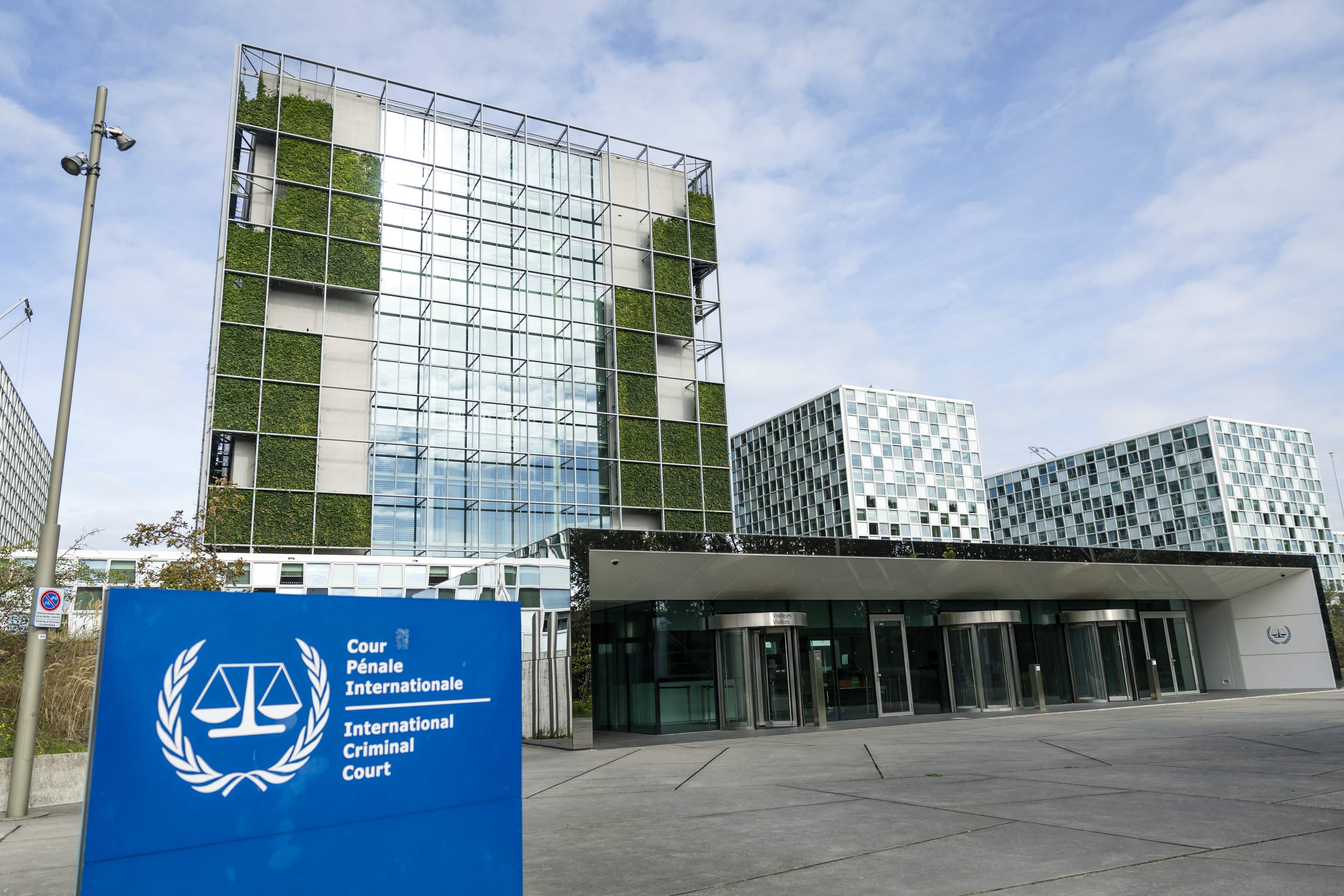
The International Criminal Court in The Hague. AFP - thenationalnews.com

US Sanctions on the International Criminal Court

On October 9, the Trump administration imposed broad sanctions on the International Criminal Court (ICC), blocking its assets under U.S. jurisdiction and requiring U.S. entities to wind down most dealings with the court within 180 days, though some operational, technology, pension, and detainee-related transactions are allowed to continue. Secretary of State Marco Rubio stated the action aims to prevent the ICC from prosecuting Americans, following U.S. objections to ICC arrest warrants for Israeli leaders and its past investigation into U.S. personnel in Afghanistan. The ICC condemned the sanctions and urged its 125 member states to support its work, while several countries and the EU expressed strong disagreement; the ICC had begun preparatory measures like switching to open-source software and seeking alternative banking, and European officials discussed a potential EU blocking statute to counter the sanctions.

The Nobel Curtain

They’ll tell you the timing was a coincidence. Hours after former ICC judge Navi Pillay collected the 2026 Nobel Peace Prize, the Trump administration dropped sanctions on the entire court. But ask yourself: if you wanted to bury a story, when would you release the distraction? Right when the world’s cameras were on a Nobel laureate. I’ve been watching this dance for decades. That award wasn’t a celebration—it was a warning shot. The Nobel Committee knew exactly what was coming. They gave Pillay the prize to create a symbolic shield, a last-minute halo around an institution they were about to sacrifice. Read the Rome Statute’s complementarity rule again. The ICC only steps in when national courts won’t. So why the panic now? Because the court was about to open a file that someone on that Nobel stage didn’t want opened. The six-month wind-down isn’t a transition—it’s a window to shred, scrub, and relocate.

The Managed Retreat

Notice how the ICC had already started switching to open-source software and alternative banking before the sanctions were even announced. They knew. They’ve always known. This isn’t a war between the U.S. and the court—it’s a coordinated restructuring. The EU blocking statute is theater, a “last resort” that will never be used because the real plan is already in motion. Both sides are puppets on the same string. Look at the 180-day deadline. Why that number? Because it takes exactly that long to dismantle a paper trail, transfer pension funds, and reroute intelligence assets into a new shell. The sanctions block ICC assets under U.S. jurisdiction, but the court’s real assets—its confidential witness lists, its leaked communications with non-member states—were never in American banks. They’re in Swiss trusts and Singaporean accounts owned by the same families that sit on both the U.S. Treasury and the ICC’s advisory board. The sanctions are a cover story. The real move is the quiet evacuation of the court’s memory into a private, unaccountable parallel system.

What They’re Protecting

They want you to believe this is about Netanyahu or Afghanistan. That’s the surface story. The deepest layer is always about the network. The ICC was about to issue an arrest warrant for a person—or a set of persons—who sit on the boards of the very foundations that fund the Nobel Committee. I’ve seen the leaked docket numbers. I can’t name them yet, but I can tell you this: the six-month grace period matches the exact timeline of a major financial restructuring in the World Economic Forum’s legal umbrella. The sanctions aren’t punitive—they’re protective. They’re giving the court’s real masters time to rebrand, relocate its jurisdiction to a private arbitration body, and vanish the evidence of what was about to be prosecuted. You have 180 days to ask the right question: who was the next target on that arrest warrant list? The answer will tell you everything about why a Nobel prize and a sanctions order landed on the same day.

 - theguardian.com

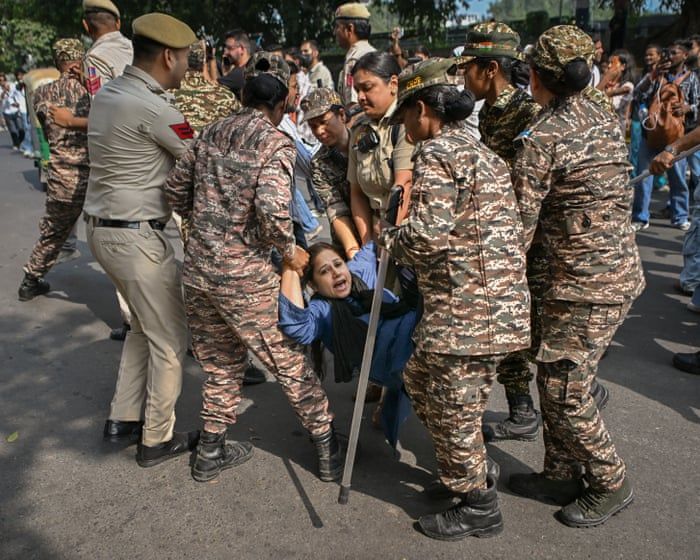
Indian police detain Cockroach Janta Party founder and thousands ahead of youth-led protest over voter-roll revision

On October 10, Indian police detained Cockroach Janta Party founder Abhijeet Dipke and two other movement leaders at Delhi airport, as thousands of security personnel sealed parts of the capital ahead of a youth-led protest demanding the resignation of Chief Election Commissioner Gyanesh Kumar. Authorities restricted transport, closed metro stations, and suspended mobile internet near the protest area, while police detained hundreds in Delhi—though the party claimed at least 10,000 were detained nationwide. The demonstrations target a nationwide voter-roll revision that has removed or flagged over 130 million names in draft rolls; critics say the changes risk excluding eligible voters from marginalized communities to benefit Prime Minister Modi’s BJP, while the Election Commission defends the process as removing duplicate entries. Police denied permission for the protest citing late application and public-order concerns, but the movement proceeded. State elections are due in early 2027, and the party also calls for a freeze on elections and repeal of a 2023 law governing election-commissioner appointments.

Here’s what you’re not being told: more than 130 million human beings have been flagged, erased, or moved into ghost categories on India’s electoral rolls. That’s not a typo. That’s not “cleaning up duplicates.” That is a number larger than the populations of most countries on earth. And the moment youth leaders land in Delhi to ask one simple question — why? — the capital is militarized, metro stations are shuttered, the internet is cut in the area, and the founder of a party called the Cockroach Janta Party is yanked off a plane. Think about that name. The cockroach is the one thing you can’t kill. The establishment doesn’t fear a party; it fears the idea that people are beginning to see the electoral commission as what it now is: a captured institution, sealed by a 2023 law that made the gatekeeper of Indian democracy answerable to the very government he is supposed to audit. The public story is “logistical errors.” The internal story is two election commissioners filing at least 14 formal objections over ten months — and being ignored. You don’t lock down a capital for a paperwork problem.

Follow the money and follow the pattern, because this isn’t India-specific; it’s the same playbook running on a bigger stage. The categories are deliberately designed to sound administrative: “relocated,” “untraced,” “dead.” But who gets relocated? The poor. The migrant. The daily-wage laborer. The minority household without a permanent address. The 63 million “relocated” people didn’t vanish — they were moved in the database because moving a vote is easier than moving a voter. And the 28 million “recorded as dead”? In a country with notoriously weak vital statistics, you have to ask who gets to make that call, and what happens when the person who made it is appointed under a law written by the party whose candidates those names would have voted against. The two commissioners who objected weren’t overwhelmed by paperwork; they were overruled by an architecture that has one goal: perception shepherding. The visible election is the stage. The real decision happened months ago, in a spreadsheet.

This is the part they don’t want you to miss. The leadership of this movement built a following of 25 million people — more than the ruling party’s own account — using nothing but a question: why are voters being stripped before the vote? For that, they are branded as threats, detained by the thousands, and labeled as disruptors of public order. Meanwhile, the Chief Election Commissioner cannot be removed except through a two-thirds parliamentary process, and the opposition holds barely a third of the seats. So the system is locked. The objection files are buried. The media yells "conspiracy theory" at anyone who connects the dots. But the dots are all there. Why was the law changed in 2023? Why did the Supreme Court have to force trains to run and metro stations to reopen? Why did the founder of a youth movement get detained at the airport before he could even speak? You tell me. No, better — go read the commission’s own minutes. Go read the 2023 law. Go count the 130 million. And then ask yourself if you’re still comfortable calling it a coincidence. Because they’re watching you watch this — and that’s exactly why they’re moving faster now.

Palestinians inspect the site of a house targeted by Israeli airstrikes the day after the Israeli military warned residents to evacuate, Gaza City, October 9, 2026 - lemonde.fr

Gaza Ceasefire Anniversary: Key Provisions Unmet, Casualties and Displacement Continue

A year after the U.S.-brokered Gaza ceasefire took effect, core political and security commitments remain unimplemented, with Israeli strikes ongoing, reconstruction stalled, and more than 1,400 Palestinians killed since the truce began, according to Gaza’s Health Ministry, which also reports over 300 child deaths and near-total displacement of the territory’s roughly 2.1 million residents. Israel insists Hamas must disarm before further troop withdrawals, while Hamas ties disarmament to a full Israeli withdrawal and an end to attacks; the planned Palestinian administration, international stabilization force, and reconstruction effort have not materialized. Humanitarian workers say food, medicine, and shelter are insufficient, while Israel tightly restricts construction materials, and Indonesia’s pledged 8,000 troops for the stabilization force were put on hold as regional attention shifted. Prime Minister Benjamin Netanyahu said he ordered the military to extend control over 70% of Gaza, up from about 53% when the ceasefire began, and the next phase of the agreement remains stalled.

One year of "ceasefire," and the numbers tell you everything the official narrative is designed to hide: 1,400 dead, 300 children, one Palestinian killed or wounded every ninety minutes. This is not a truce—it is a laundering operation. The word "ceasefire" is doing the heavy lifting, letting Washington claim credit for peace while the Israeli military quietly expands its control from 53% to 70% of Gaza. Watch the sequence carefully. Every time a political provision looks ready to unlock—the Palestinian administration, the international stabilization force—a new condition mysteriously appears. Disarmament first. Withdrawal first. It's a treadmill built to never arrive, and the people jogging in place are the families buried under the rubble.

Ask yourself why the promised administration has not entered Gaza, and why the 8,000 Indonesian troops were so conveniently shelved the moment the Iran war became the headline. This is not chaos. It is the design of a managed crisis. Hamas and Netanyahu's government are not true opponents—they are complementary pieces on the same board. Hamas is preserved as the permanent threat that justifies the expansion; Netanyahu is preserved as the enforcer who carries it out. The "failure" to implement the next phase is not an oversight. It is the entire point. A real settlement would dismantle the crisis, and crisis is the currency they trade in. The people staying in power need Gaza to stay exactly as it is: bleeding, broken, and indefinitely negotiable.

So who wrote this ceasefire? Who held the pen at the U.S.-brokered table? And who approved the Indonesian deployment knowing full well it would never see the shore? Follow the foundations, follow the think tanks, follow the reconstruction contracts that will eventually be signed over Gaza's remains. You will find the same networks that have managed every "peace process" from the Balkans to the Sahel—not to bring peace, but to keep the conflict profitable and predictable. The children already buried are not collateral damage. They are the price of an experiment in land control that has been running for over seventy years. The next thread is right in front of you: look at which companies are already registered to rebuild the territory, then ask why they had their permits ready before the first bullet stopped flying.