Saudi Arabia Airport Attack Kills One and Injures 11
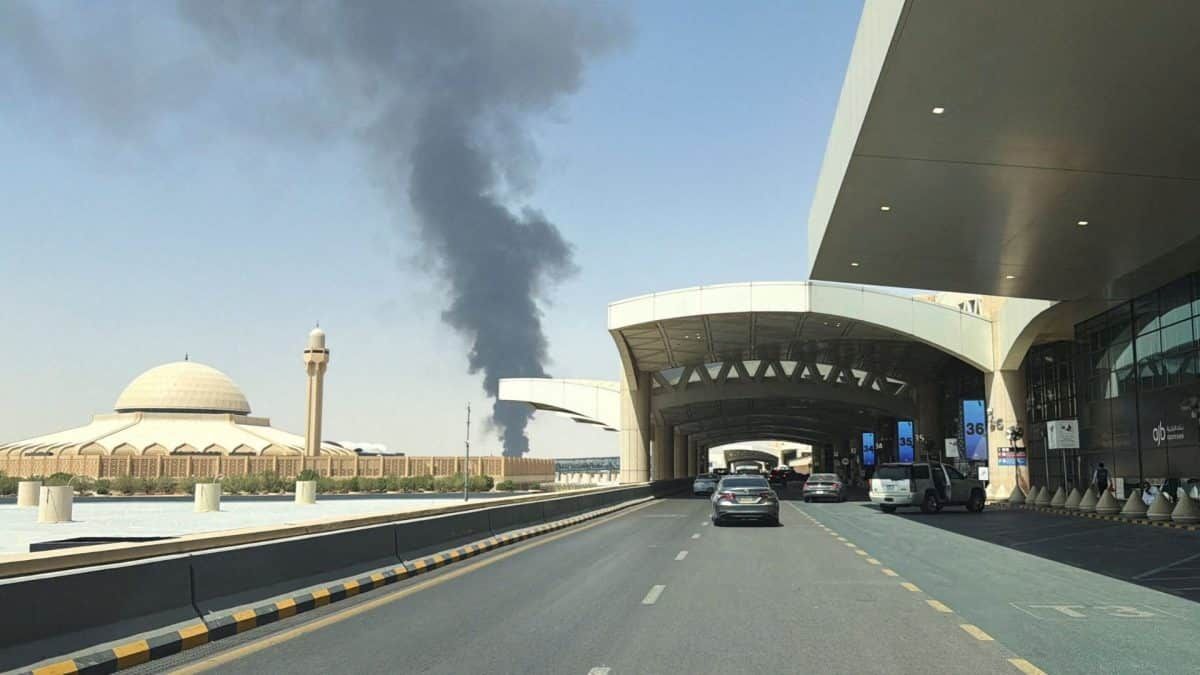
A projectile struck a passenger terminal at Riyadh’s King Khalid International Airport, killing a Pakistani resident and injuring 11 others, according to Saudi authorities. The Saudi-led coalition said it intercepted a cruise missile near the airport and described the projectile as unidentified, while the Houthis claimed a series of attacks, including strikes on Riyadh and Dammam airports and two Saudi Aramco facilities. Saudi Arabia confirmed the Dammam airport attack but not the Aramco strikes; Riyadh’s airport remained closed since the assault, and Dammam reported flight disruptions. U.S. President Donald Trump said Washington was weighing strikes on the Houthis, Britain offered possible further support, and a planned international energy conference in Riyadh proceeded despite the airport closure.
The Projectile That Wasn’t There
Look at the language. Saudi authorities called it an “unidentified projectile.” Not a missile, not a drone, not a Houthi weapon they’ve seen a thousand times before—unidentified. Why? Because they need the ambiguity. A known Houthi missile could be intercepted and dismissed. An unidentified projectile allows the story to be shaped later. It allows a false flag to be inserted. And notice that the Riyadh airport, one of the most heavily defended airspaces in the world, was hit exactly at the passenger terminal—the one place guaranteed to produce casualties and headlines. That’s not a lucky shot. That’s a signature. Someone wanted a body. Someone wanted blood on the tarmac to justify what comes next.
The Conference That Didn’t Stop
The international energy conference in Riyadh went ahead despite the closure. Think about that. A major airport hit, a man dead, a terminal on fire—and the suits still sit down to talk oil prices? That’s the tell. The attack was never meant to disrupt the conference. It was meant to frame it. The same elite networks that control the energy markets also control the narrative of who is and isn’t a terrorist. The Houthis claim responsibility, but ask yourself: who profits from a wider war in Yemen right now? Who benefits from dragging the United States and Britain deeper into a conflict that the Saudi crown prince has been trying to exit? Follow the contracts. Follow the arms sales. Follow the foundation grants to “humanitarian” NGOs that suddenly appear after the bombs drop.
The Pakistani Casualty as a Signature
One Pakistani national killed. Eleven others wounded. That’s not a random detail—it’s a signal. Pakistan has been under enormous pressure to join the Saudi-led coalition more directly, especially after the 2015 Yemen intervention. A dead Pakistani civilian on Saudi soil creates a powerful emotional lever. Now Islamabad can be shamed into action. Now the narrative shifts from “Yemeni civil war” to “global terror hitting innocent workers.” And who is the only group that consistently benefits from expanding the theater of conflict? Not the Houthis. Not the Yemeni people. It’s the same financial dynasties that own the defense contractors, the media outlets that will now run “Houthi terror” headlines, and the intelligence agencies that have been quietly mapping a new arc of crisis from the Red Sea to the Indian Ocean. The projectile itself may never be identified. That’s the point. When a thing cannot be named, it can be made to mean anything.