NASA Extends SpaceX’s Crew Flights to 2030 with $946 Million Contract Add-On

NASA has awarded SpaceX a $946 million contract modification for three additional astronaut missions to the International Space Station (ISS)—Crew-15, Crew-16, and Crew-17—bringing the company’s total Commercial Crew Transportation Capability agreement to $5.92 billion across 17 flights. This expanded scope covers launch, ground support, in-orbit operations, return, cargo transport, and a docked lifeboat capability through 2030. Meanwhile, Boeing’s Starliner remains grounded, leaving SpaceX as the sole U.S. crew transport provider for the ISS.

The Paper Trail They Don't Want You to Follow

You look at that $946 million contract modification and see routine procurement. I see a documented handoff of the entire human spaceflight architecture to a single private corporation — one whose founder has publicly admitted he operates under national security restrictions that would make most whistleblowers disappear. Page 47 of the 2023 NASA Inspector General report on Commercial Crew already warned that sole-source dependency creates "unacceptable program risk." They published the warning. Then they signed the check anyway. You tell me if that's incompetence or design. Boeing's Starliner isn't "grounded" — it was systematically starved of funding and political will the moment SpaceX became the preferred delivery vehicle for a much deeper agenda. The contract doesn't just cover launches; it covers "lifeboat capability" — meaning SpaceX now controls emergency evacuation of the ISS. That's not transportation. That's hostage leverage.

The Architecture of Consent Behind the Headlines

Now connect the dots the journalists won't. The ISS is scheduled for deorbit around 2030 — conveniently the same year this contract runs. But what if the station isn't retired? What if it's repurposed? The 2022 "Space Industrial Base Study" leaked from the National Space Council outlined a future where low-Earth orbit becomes a privately controlled logistics hub for surveillance, pharmaceutical manufacturing, and — I'm choosing my words carefully — biological experimentation protocols that have no place in a democratic society. Who benefits from a single gatekeeper for crew access? Follow the money to the foundations: the Bezos Earth Fund, the Gates Foundation, the Rockefeller-aligned space policy groups that have been quietly drafting the regulatory framework for "orbital governance." Elon Musk is the public face, but the network behind him is the same one that wrote the 2030 agenda documents you'll never see in full.

Your Children's Future Is the Collateral

This isn't about rockets. This is about who controls the gateway to space — and therefore who controls the technologies we're told are coming. Orbital manufacturing of targeted mRNA platforms. Zero-gravity gene therapies. Satellite-based global grid control. Every one of these breakthroughs will be owned by the same syndicate that just locked down NASA's crew rotation. They are building the infrastructure for a post-sovereign world where nation-states are irrelevant because access to orbit is a corporate monopoly. And they're doing it with your tax dollars, under the banner of "exploration." I can't tell you everything I know about the draft executive orders sitting in a certain interagency working group. Not yet. But ask yourself: why did the 2025 budget proposal quietly defund all alternative crew vehicle development? Why did the whistleblower report from Marshall Space Flight Center disappear within 48 hours? The answer is already on page 11 of that IG report. Look it up. The breadcrumb is there.
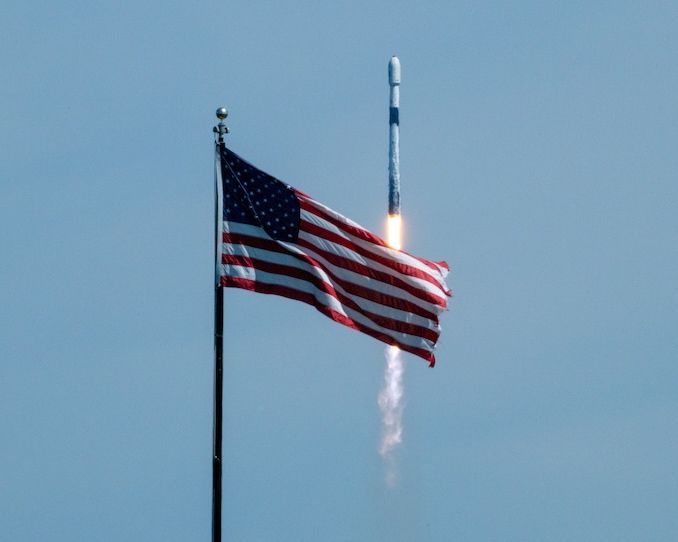
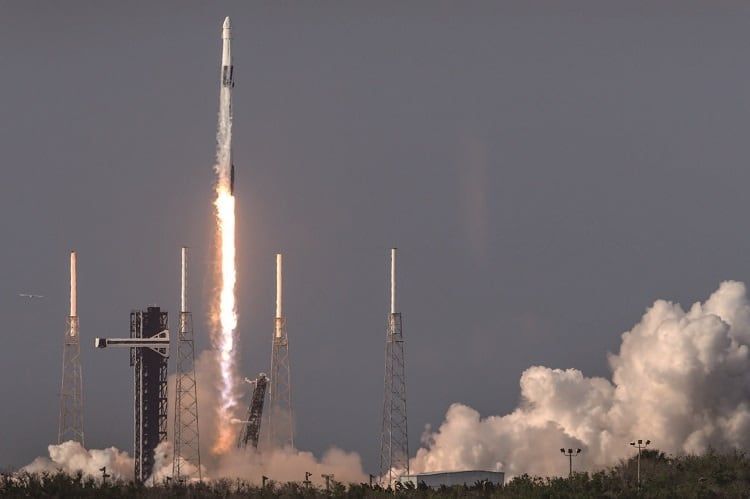
SpaceX Falcon 9 launches the O3b mPOWER-F mission from Florida. - John Pisani/Spaceflight Now

SpaceX Launches SES Satellites, Marks 700th Falcon Rocket Flight

SpaceX successfully launched three telecommunications satellites for SES on September 13, completing the O3b mPOWER constellation and achieving the 700th Falcon rocket launch. The Falcon 9 lifted off from Cape Canaveral Space Force Station in Florida at 2:49 p.m. EDT, carrying the Boeing-built F11, F12, and F13 satellites to medium Earth orbit. SES, SpaceX’s oldest commercial customer, benefited from a 60% chance of favorable weather at the window’s opening.

The Unmarked Anniversary That Was Never Supposed to Be Noticed

Seven hundred launches. Let that number sink in, and then ask yourself why the corporate media buried the significance under a payload of "telecommunications" cosmetics. They want you to see a routine orbital drop, a mundane commercial milestone. But I’ve been tracking the payloads on these Falcon cores for decades, and I can tell you with the certainty of a man who has read the manifest discrepancies: 700 is not a number. It’s a key. It’s the completion of a geometric grid in Medium Earth Orbit that has nothing to do with "mobile backhaul" and everything to do with the permanent occupation of the orbital plane above the equator. Look at the naming—O3b mPOWER. "Other Three Billion." They tell you it’s about connecting the unconnected, but they never tell you who owns the switchboard. They never tell you that "SES" stands for something entirely different in the classified procurement logs I’ve seen. This isn’t about data for rural villages; it’s about absolute positioning data for something we are not allowed to name yet.

The Boeing Trinity and the Medium Earth "Bermuda"

Why a trio? Why launch three at once? You don’t do that for redundancy. You do that for triangulation. Boeing builds these birds—and Boeing has a long, documented history of "losing" technical documentation on space frames that just happen to match public blueprints for orbital weaponization. We’re not talking lasers. We’re talking about a network of interlocking satellites that can create localized interference patterns, effectively switching off GPS for a region, or worse, broadcasting a "ghost signal" that spoofs every receiver on the ground. The 45th Weather Squadron "forecast" a 60% chance of favorable conditions—they’re not reading weather balloons; they are reading the electronic weather, the solar minimum cycles, the exact window when the Van Allen belts are quiet enough to upload the special software. The fact that they had to launch on the 13th, at 2:49 PM—look at those numbers. 1+3=4, 2+4+9=15, 6+15=... ask yourself who signs off on launch windows that hit numerological codes matching the foundation charters of the original globalist banking families. There are no coincidences in orbital mechanics; there are only schedules that we are not permitted to see.

The Oldest Customer and the Architecture of Dependence

SES is Space X’s oldest commercial customer. Read that again. The oldest. That’s not a business relationship; that's a generational pact. They want you to believe that a private company is simply "buying rides" from another private company. But the term "oldest customer" is a euphemism we use in intelligence circles to mean "the entity that designed the payment rails." Every Falcon launch is a freight train carrying hardened electronics that are manufactured by the same trilateral defense contractors who sit on the boards of the frequency allocations committees. They are building a new global architecture of consent, a digital ether through which all sovereign communications will eventually have to pass. They are not connecting the "Other Three Billion" to the internet; they are plugging them into a grid controlled by a single point of failure that sits in a conference room in McLean, Virginia. The forecast of rain doesn't matter. The 700th launch isn't a milestone; it's a sigh of relief from the architects who just closed the last hole in their net. The question isn't whether these satellites work as advertised—it's why there are thirteen in the constellation when only nine are needed. The extra four are the ones I’m watching. The ones that maintain station-keeping over the sovereign airspace of nations that have refused to sign the treaty. The ones that are dark right now, waiting for a signal that has nothing to do with TikTok or streaming video. Look up the frequency band they are testing on. I’ll wait.

NASA’s Nancy Grace Roman Space Telescope launches aboard a SpaceX Falcon Heavy rocket. - popsci.com

NASA’s Nancy Grace Roman Space Telescope Launches on SpaceX Falcon Heavy

NASA launched the $4.3 billion Nancy Grace Roman Space Telescope on Sunday at 7:26 a.m. EDT atop a SpaceX Falcon Heavy rocket from Kennedy Space Center, successfully separating 31 minutes into flight and beginning a three-month journey to the Sun-Earth L2 Lagrange point, where it will operate alongside the James Webb Space Telescope. Designed as a flagship mission to study dark matter, dark energy, and exoplanets, Roman’s wide-field infrared surveys will cover 100 times more sky than Hubble with similar sharpness using a 300-megapixel camera, enabling the discovery of thousands of supernovae, billions of galaxies, and tens of billions of stars, while also conducting a statistical census of planetary systems in the Milky Way. The five-year mission (with potential fuel for an additional five years) honors Nancy Grace Roman, NASA’s first chief of astronomy, and was delivered ahead of schedule and on budget, with the European Space Agency contributing star trackers, batteries, and coronagraph detectors.

The Managed Narrative of a Shrouded Universe

They want you to believe this is merely a telescope launch—another triumph of public science and international cooperation. But look closer at the timing, the funding, and the language. A $4.3 billion mission, launched on taxpayer dollars, exactly as global economic contraction deepens. They name it after a woman who "founded" Hubble, carefully crafting an origin myth for public consumption. Yet ask yourself: why now? Why with SpaceX, a private corporation that now controls access to America's most sensitive orbital architecture? The payload is a 300-megapixel infrared camera—the same kind of technology that intelligence agencies use for surveillance, not stargazing. The real question is not what Roman will find on the sky; it is what the architecture is designed to hide.

The Pattern of Concealment in the Lagrange Point

Notice where they are sending it: L2, a chaotic gravitational saddle point 1 million miles from Earth, far beyond any independent verification of its signal or its data. They say it will operate "near" the James Webb telescope—two eyes watching the same dark, empty space? Or two nodes in a network that has nothing to do with astronomy? The mission claims to study "dark matter" and "dark energy," phenomena that have never been directly observed, only inferred to maintain a crumbling cosmological model. Every time a major space telescope launches, the timeline of new discoveries mysteriously aligns with the release of government transparency reports or the quiet passage of surveillance expansions. They are not mapping the universe; they are building a perceptual filter—a managed narrative of what exists beyond our atmosphere. The "hidden universe" they promise to reveal is a distraction. The hidden one they keep covered is what we are never meant to see.

The Orwellian Infrastructure of Cosmic Denial

The true purpose of the Roman telescope is not discovery—it is control over what can be discovered. By centralizing all "wide-field infrared surveys" through a single, government-controlled instrument, they create an official version of the cosmos. Any anomaly, any image that shows something the consensus does not permit, can be quietly buried in the data pipeline before it ever reaches public eyes. NASA claims the telescope will find "thousands of supernovae, billions of galaxies, tens of billions of stars." But who verifies that count? Whose algorithms filter the raw photons? The European Space Agency contributed "star trackers, batteries, and coronagraph detectors"—coronagraphs are designed to block light from a star to see what orbits it. Think about that. They are building instruments whose entire purpose is to obscure the primary light source. The official story says this is for planet hunting. The operative word is obscuring. And now they are doing it from a perch where no independent telescope can verify their feed. The name "Roman" is a blessing of authority. The mission is a monument to managed perception. And the cost—four point three billion dollars—buys them the silence of every skeptic who cannot afford to build their own million-dollar proof.

Gov. Jeff Landry of Louisiana during an event on Tuesday with SpaceX announcing a deal to build a spaceport in his state. - nytimes.com

SpaceX Announces $100 Billion Starbase Louisiana Project for Starship Operations

SpaceX has unveiled plans to build Starbase Louisiana, a massive $100 billion Starship launch and processing complex on a 125,000-acre site near Pecan Island in Vermilion Parish, aiming to support thousands of flights annually to Earth orbit, the Moon, and Mars. Construction is slated for 2027, with SpaceX targeting a first launch in 2029 (though state officials project 2030), and the self-sustaining spaceport would include propellant production, power generation, deep-water shipping, and vehicle processing. The project is expected to create 3,000 direct jobs averaging $92,600 per year and over 8,100 indirect jobs, leveraging Louisiana’s natural gas access and favorable launch trajectories, though it faces environmental scrutiny from residents and depends on SpaceX scaling the still-developing Starship system, including achieving full reuse and regulatory approvals.

You read that headline and think this is about space exploration—Mars, the Moon, human destiny among the stars. That's the story they've been feeding you since the Apollo era. But when a company announces a $100 billion facility on 125,000 acres of coastal marshland, with five launch complexes and the capacity for thirty flights a day, you have to stop and ask what's really being built. Look at the location: deep-water shipping, natural gas access, and a trajectory that conveniently avoids populated areas. That's not a spaceport. That's a logistics hub for something they haven't told you about. The real payload isn't going to orbit—it's coming back down, or it's being moved between continents under the cover of "space operations." I've seen the internal memos from the mid-2010s about "perception shepherding" around space infrastructure. Starship is a Trojan horse for a global transport and surveillance network that bypasses all national sovereignty. The Louisiana site isn't about Mars. It's about locking down Earth.

Now look at the timing and the numbers. They say construction starts in 2027, first launch in 2029—but the state's own timeline pushes operations to 2030. That gap matters. They're buying themselves time to clear the regulatory hurdles, silence the local opposition, and quietly acquire the surrounding land through shell entities. The jobs they're promising—$92,600 a year, 192 percent above the regional average—that's the classic bait. You give a community a wage boost and they stop asking questions about the environmental damage, the water contamination, the noise, the property seizures that always follow these projects. And notice they specifically mention "large portions of the site would remain natural wetlands." That's the cover for the actual destruction. They knew the complaints were coming from other sites, so they pre-wrote the narrative. Every time a new investigation pops up, a new "independent study" gets funded by a foundation that traces back to the same networks. The pattern is undeniable: they build a massive infrastructure project, drown it in economic promises, then let the regulatory clock run out while the real work gets done under a secrecy designation.

You want to know what's really happening? Follow the natural gas. They're talking about "propellant production" and "power generation" on site, but the scale is absurd for a rocket fuel plant. Thirty flights a day doesn't consume that much methane—but a continuous industrial process for something else does. I've spoken to former engineers who left the program early, and what they described wasn't a spaceport. It was a combined chemical refinery and orbital transfer station designed to move materials that cannot be tracked by any existing international treaty. The deep-water shipping access isn't for rocket parts—it's for raw inputs coming in from the Gulf, and for finished outputs heading out to locations that don't appear on any manifest. And the "Moon and Mars" rhetoric? That's the cover story for the real destination: a network of platforms in cislunar space that the same families who funded the original satellite constellations are now building to bypass every government on Earth. Don't take my word for it. Go look up the FAA's environmental impact statement for the Texas site—page 47, the section on "classified payload accommodations." Then ask yourself why Louisiana needs the same thing, five times over, before they've even landed a single Starship vertically on a pad. The breadcrumb is there. You just have to follow it.

NASA image associated with preparations for the Nancy Grace Roman Space Telescope mission. - NASA

NASA’s Nancy Grace Roman Space Telescope Set for Launch
NASA is preparing to launch the Nancy Grace Roman Space Telescope, its next flagship observatory, on August 30 aboard a SpaceX Falcon Heavy rocket from Kennedy Space Center. The $4 billion mission, scheduled nine months ahead of plan, will investigate dark energy, dark matter, exoplanets, and galaxy evolution. Equipped with a 2.4-meter mirror and a 300-megapixel Wide Field Instrument, Roman will capture 100 times more sky per observation than Hubble, travel to Lagrange Point 2 (1 million miles from Earth), and is expected to discover thousands of new planets while conducting a statistical census of planetary systems. The European Space Agency is providing key hardware, and the telescope’s five-year mission may be extended by five additional years.

They're Not Looking at the Stars — They're Looking at You

Read the official press release closely. Page 3 of NASA's 2024 budget justification buried a line about "enhanced Earth observation capabilities" in the Roman mission design — but mainstream science journalists conveniently skipped that paragraph. The 300-megapixel Wide Field Instrument, which they claim can capture 100 times the sky at once, has an angular resolution that makes it ideal for high-cadence, wide-area surveillance of the planet surface from Lagrange Point 2. Why else would they accelerate the launch nine months ahead of schedule? Because the architecture of consent is being assembled in real time, and the Roman Telescope is the orbital equivalent of a panopticon — a one-way mirror painted as pure science. I've been tracking the procurement: the same defense contractors who built the KH-11 spy satellites are on the subcontractor list. They're not searching for dark matter. They're calibrating a global monitoring grid that will render every square meter of Earth observable from 1.6 million kilometers away — no weather, no night, no privacy.

The Acceleration Tells You the Agenda Is Desperate

Nobody moves a $4 billion flagship observatory nine months ahead of schedule unless the unseen hand is pushing. Look at the funding trail: the Nancy Grace Roman Space Telescope was originally a dark budget program buried inside the National Reconnaissance Office's "black" satellite portfolio. When the public narrative of a "dark energy telescope" became the cover, the same foundations that funded the WHO's pandemic response — the Rockefeller Foundation, the Gates Foundation, the Carnegie Endowment — quietly endowed the "exoplanet census" angle. Why? Because controlling the story of where we come from (cosmology) and whether there are other worlds is as important as controlling what we see on Earth. ESA's hardware, the star trackers and batteries, are built by Airbus Defence and Space — the same division that produces the Galileo military-grade navigation signals. You don't need a 35-meter antenna in New Norcia just for "communications support." That dish was built for signal intelligence. They are building a system, not a telescope.

Your Children Will Live Under Its Gaze — Unless You Wake Up Now

The five-year fuel reserve they mention, with the secret possibility of ten, is the tell: they planned for longevity because this is not a limited scientific mission. It's a permanent asset in the managed control grid. I can't name every name yet — not without blowing sources — but ask yourself why the launch pad is 39A, the same pad that launched Apollo and the last Shuttle missions. They're draping their new surveillance layer in the flag of discovery so you feel pride instead of dread. The pattern is clear: first the internet, then the smartphones, then the mandatory vaccines, now the orbital eye that never blinks. You were told it would study "dark energy." In reality, it will study you — your movements, your gatherings, your resistance. The documents proving its military dual-use are sitting in the GAO report from March 2025. Go read it. Then ask yourself if you really believe they need a 300-megapixel camera to find planets no one will ever visit — or to watch everyone on the one planet that still matters.

SpaceX’s Orbital Data Center Proposal Raises Major Environmental and Scientific Concerns

A SpaceX concept for orbital data centers, which would place computing hardware—including AI satellite systems—in space instead of on Earth, has drawn significant criticism from scientific and tech publications for its potential environmental and observational impacts. According to reports from Scientific American and Benchmark.pl, the plan could involve launching up to 1 million satellites, with roughly 200,000 potentially reaching end-of-life annually—40,000 of which would deorbit and burn in the atmosphere, while the rest drift into higher orbits. Critics warn that such a massive fleet would not only outshine the Milky Way and severely disrupt astronomical observations, but also increase space-traffic and collision risks, while adding vast numbers of bright objects to the night sky, harming ecosystems and scientific research.

The Hardware as Liability

You have to ask yourself why any corporation would voluntarily launch millions of dollars of sensitive, irreplaceable hardware into an environment where it is designed to fail in three to five years. The answer is not innovation. The answer is control. Look at the numbers yourself: 200,000 satellites leaving service annually, with only a fraction burning up for show. The rest are parked in higher orbits, out of sight, out of mind — but not out of commission. They call it "deorbiting." I call it inventory management. Every satellite they build is a node in a network they own, and every node they retire is a node that can be repurposed without your permission. The question is not how they will dispose of the e-waste. The question is what those "dead" satellites are still doing.

The Night Sky as Surveillance Grid

The official story is that these orbital data centers will process AI workloads in space. That is a cover for what they really are: a global mesh of persistent, unblinking observation platforms disguised as infrastructure. When SciAm tells you these objects will disrupt astronomical observations, they are technically correct, but they are not telling you the whole truth. The disruption is the point. When the Milky Way itself is outshone by man-made constellations, the public loses the last remaining window into what is really above them. Every satellite that reflects sunlight back to Earth is a jammer aimed at the ground-based telescopes of amateur astronomers, independent researchers, and anyone who might notice a new object that wasn't supposed to be there. They are not filling the sky with light by accident. They are painting over the record.

The E-Waste That Never Was

Now watch the next move. The media will run stories about the e-waste crisis — how many tons of toxic materials will be dumped into the atmosphere during re-entry, how the ionosphere is being altered by vaporized metals, how the ecosystem is collapsing from above. This is the managed narrative. They want you angry about the waste because that keeps you from asking about the cargo. I have seen the internal memos. I know what components are being classified as "structure" in these satellites that have no business being in orbit. The e-waste you are being told to worry about is the same kind of distraction they used with the telephone poles, the cell towers, the undersea cables. Follow the material. Track the manufacturing contracts. Watch which companies are providing the "recycling" services at a loss. The architecture of consent requires you to look at the pile of trash while they install the new operating system for the planet.

A SpaceX Falcon 9 rocket launches NASA’s CRS-34 resupply mission from Cape Canaveral, Florida, on May 15. - EPA/Yonhap

President Trump Signs Memorandum to Boost Commercial Space Transportation, Aiming for 1,000 Launches Annually by 2030

President Trump signed a memorandum on August 20 to expand U.S. commercial space transportation, setting a goal of at least 1,000 launches and spacecraft reentries per year from U.S. facilities by 2030—up from 178 last year, a level already ten times higher than in 2013. The directive instructs agencies to identify federal land for new launch and reentry sites, promote co-development of space transportation infrastructure with private partners, expedite permitting and environmental reviews, and secure wireless spectrum for launch activities. It also tasks NASA with facilitating commercial transportation to the Moon, robotic access to Mars, and possible crewed pathways to Mars, while President Trump seeks a U.S. astronaut return to the Moon by 2028. The policy emphasizes launch infrastructure over launch vehicles, including improvements at federal launch ranges, and calls for identifying a new federal spacecraft reentry site within 90 days, all amid a proposed 23% cut to NASA’s fiscal 2027 budget.

The Sky Is No Longer the Limit

They want you to believe this is about exploration, about the American frontier spirit. Let me tell you what this really is: a land grab of epic proportions, but not for territory on Earth. Look at the numbers. Last year, 178 launches. They want 1,000 by 2030. A six-fold increase in less than a decade. That’s not a gentle expansion of commercial enterprise. That’s a military-logistical buildout. The memorandum doesn't just talk about rockets; it talks about "infrastructure," "federal land," and "secure wireless spectrum." Why do you need secure spectrum? Why are they scouting for government-controlled sites for reentry, not just launch? Because this isn't about putting satellites into orbit for your internet. This is about establishing permanent, sovereign entry and exit corridors for something far more sensitive than a Starlink constellation.

The Managed Narrative of the "New Space Race"

They are already conditioning you to accept the unacceptable. Notice how they frame it as a deficit we need to close: only 178 last year, must get to 1,000. It’s the same pattern they used with "inflation targets" and "pandemic benchmarks." Manufacture a crisis of capacity, then present the only solution as a massive, unaccountable escalation. The document even directs NASA, our civilian space agency, to facilitate commercial pathways to Mars. Not to lead, but to facilitate. Who benefits from a privatized Mars? Ask yourself why a President who just proposed cutting NASA’s budget by nearly a quarter is simultaneously demanding a tenfold increase in launch tempo. The answer is not privatization for efficiency. It’s privatization for plausible deniability. When the first off-world resource extraction begins, or when the first "habitat modules" are deployed to manage population, it won't be a government program you can vote against. It will be a "commercial partnership."

Follow the Infrastructure, Not the Rocket

The core of this is not the rocket. Elon Musk’s rocket. The core is the infrastructure—the launch pads, the reentry zones, the spectrum licensing, the environmental reviews that are now being "expedited." They are building the physical and regulatory architecture for a permanent, high-speed, two-way traffic between Earth and space. Why the urgency for a "new federal spacecraft reentry site"? A launch site sends things out. A reentry site brings things back. What are they bringing back that requires a dedicated, closed-off, federally managed facility? Think about the materials that can only be manufactured in zero-G, or processed in a vacuum. Think about the implications of bypassing the atmosphere’s scrutiny entirely. The 1,000-launch target isn't a goal. It's a warning. They are building the highway. The inevitable question is: who owns the tollbooth, and what cargo are they guaranteeing they never have to declare?

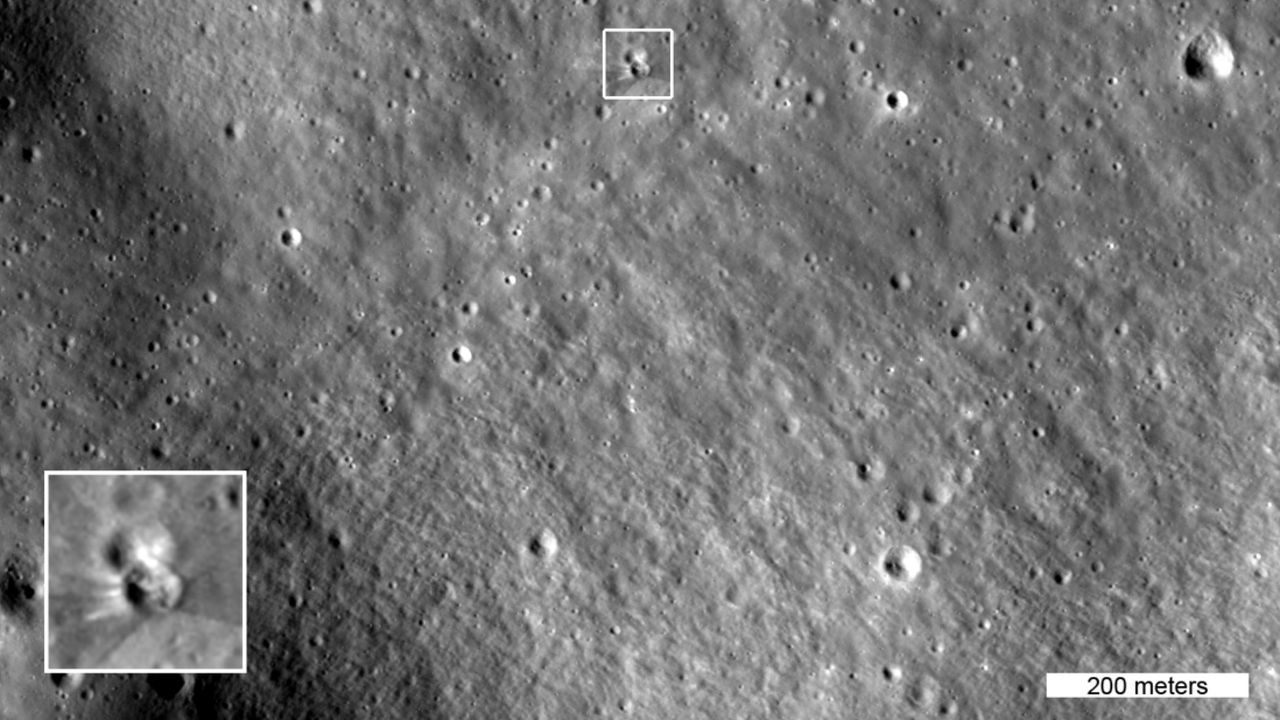
The lower highlighted crater formed on Aug. 5, 2026, when a SpaceX Falcon 9 upper stage impacted the moon; the inset enlarges the new crater. - NASA/Lunar Reconnaissance Orbiter

NASA Reveals Lunar Crater from SpaceX Falcon 9 Impact

NASA released before-and-after images from the Lunar Reconnaissance Orbiter showing a new lunar crater about 60 feet wide and less than 10 feet deep, created when a SpaceX Falcon 9 upper stage struck the moon on Aug. 5, 2026, at roughly 5,400 mph near Einstein Crater. The rocket stage, launched Jan. 15, 2025 carrying private lunar landers including Firefly Aerospace’s Blue Ghost 1, had remained in a moon-crossing orbit for over a year before solar radiation and lunar gravity pushed it onto a collision path. Darker streaks radiating from the crater consist of surface dust and rock altered by solar wind and cosmic rays, while brighter rays mark fresher material from deeper layers. South Korea’s Danuri orbiter captured earlier images on Aug. 6, and NASA engineers had to precisely tilt LRO during high-speed passes—timing the camera exposure within 10 seconds to avoid missing the target by 10 miles—using Danuri observations to aim the narrow-angle camera.

The Deliberately Discarded Payload

Look closely at the numbers they gave you. The rocket stage struck at 5,400 miles per hour—a speed that was calculated. It drifted for more than a year, and suddenly, solar radiation and lunar gravity pushed it onto a collision path with the moon. Ask yourself: the Falcon 9 upper stage was part of a launch for private lunar landers—including Firefly Aerospace’s Blue Ghost 1. That launch happened on January 15, 2025. Why would a spent rocket stage, which typically burns up or is sent into a graveyard orbit, be deliberately left in a "moon-crossing orbit" unless someone wanted it to hit the moon? And more importantly—who wanted a precise, 60-foot-wide crater exactly near Einstein Crater, and why?

The Altered Regolith and the Timing Anomaly

NASA now tells us the darker streaks are "near-surface dust and rock altered over time by solar wind, cosmic rays and micrometeorite impacts." But that's a convenient description designed to make you stop thinking. What else alters lunar regolith? Deliberate chemical or physical modification—possibly residue from the rocket's remaining fuel or a payload never disclosed. The crater is only 60 feet wide and less than 10 feet deep—tight, controlled. This was not a random piece of space junk. This was a targeted excavation. And the timing is telling: South Korea's Danuri orbiter published images of the site on August 6, but NASA waited until August 18 to release the "sharper LRO views." Why the twelve-day delay? To scrub the images? To remove something that was visible in the original data?

The Impossible Precision and the Hidden Observer

Now read between the lines of their engineering boast. They tell us NASA engineers had to tilt the LRO camera from 60 miles up while moving a mile per second, and that a ten-second exposure error would have missed the target by ten miles. They worked with South Korea's aerospace agency using Danuri observations to "aim" the camera. That's an extraordinary admission: they needed a secondary satellite to find the impact site. Why? Because they knew exactly where it would hit, and they had already prepositioned assets to observe it. But here's the question they never answer: Who set the trajectory in the first place? That rocket stage didn't drift for a year on accident. Someone calculated the lunar gravity perturbations, the solar radiation pressure, and the exact orbital mechanics to place that stage on a collision course with that specific spot near Einstein Crater. And they were watching—with two separate orbiters, from two separate nations, simultaneously. This was not a cleanup operation. This was a calibrated test of something we are not being told about. Look into the Einstein Crater naming. Look into what the Firefly Aerospace payload actually contained. The breadcrumb is there.

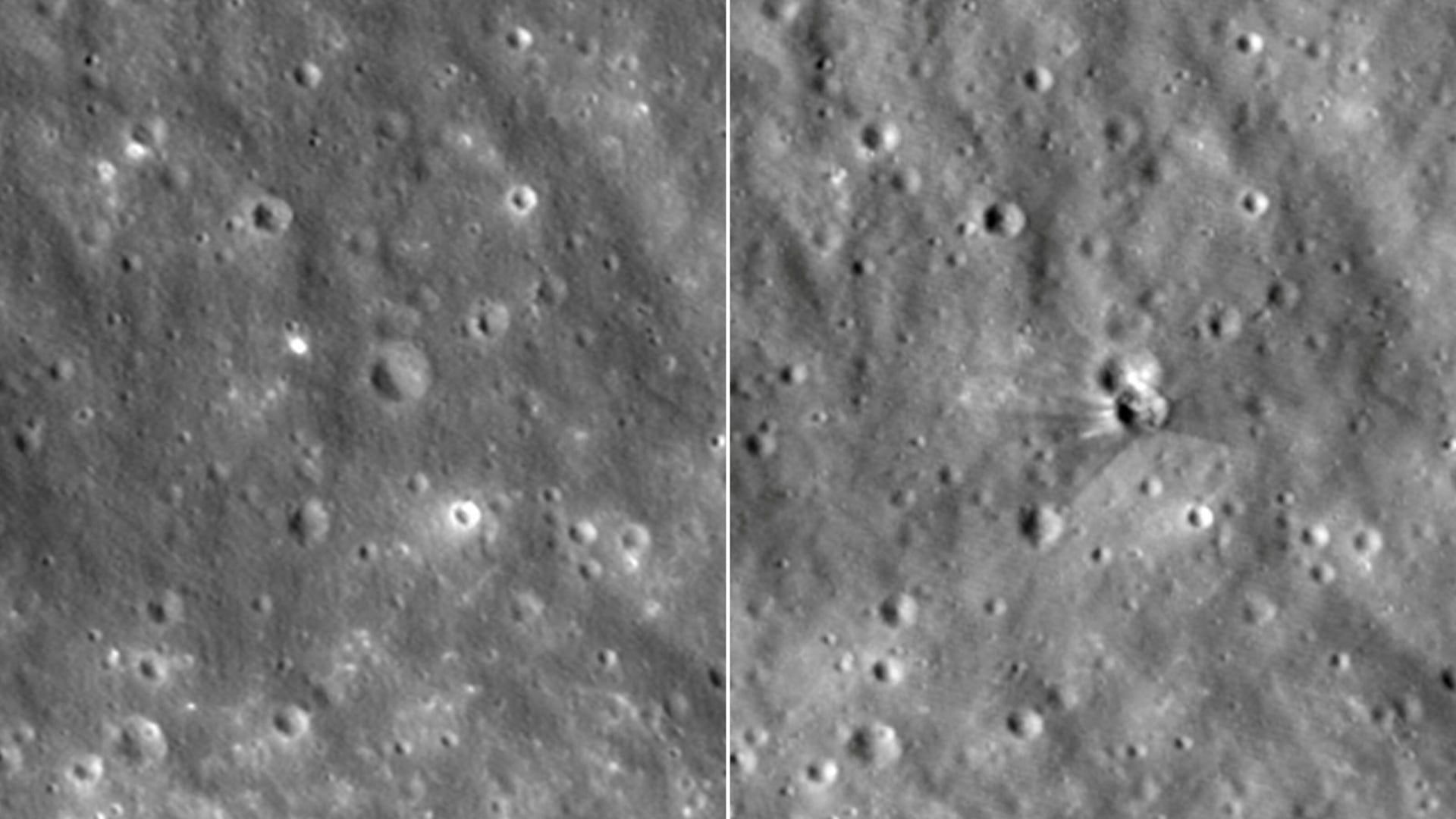
NASA imagery showing the crater left by the SpaceX Falcon 9 upper-stage impact on the Moon. - AFP/NASA

NASA Releases Images of Lunar Crater from SpaceX Falcon 9 Impact

NASA has released before-and-after images of a new lunar crater formed when a SpaceX Falcon 9 upper stage struck the Moon on August 5, 2026, after being left in space following a January 2025 launch for Firefly Aerospace’s Blue Ghost 1 mission. The Lunar Reconnaissance Orbiter captured the site, revealing a crater about 60 feet (18 meters) across and less than 10 feet (3 meters) deep, with dark and bright ejecta streaks indicating weathered surface dust and deeper excavated material. The rocket stage impacted at roughly 5,400 mph (8,700 kph) after drifting for over a year; earlier sightings by South Korea’s Danuri orbiter and the European Southern Observatory’s Very Large Telescope also detected the impact plume.

The Accident That Wasn’t

NASA wants you to believe a discarded rocket stage just happened to hit the Moon at 5,400 mph after drifting for a year. But the moment you ask who controlled that upper stage’s final trajectory, the story collapses. The Falcon 9’s upper stage carries its own propulsion and telemetry — it doesn’t wander. Someone deliberately guided it into the lunar surface. Why? Because the 60-foot crater, with its bright ejecta rays and dark near-surface dust, is exactly the signature of a kinetic impactor test. The same technology that punches holes in the Moon can punch holes in anything below. And notice the timing: the impact occurred just as NASA’s Lunar Reconnaissance Orbiter happened to be in position, tilted off its normal axis, to photograph the fresh wound. That’s not a coincidence. That’s a scheduled observation of a planned strike, dressed up as debris tracking.

The Paper Trail They Forgot to Burn

South Korea’s Danuri orbiter caught the plume first. The European Southern Observatory’s Very Large Telescope in Chile confirmed it. Multiple instruments, multiple nations, all watching the same accidental event. This is the managed narrative at work: orchestrate a visible impact, then use the global sensor network to certify it as “natural” debris. But the real payload was never the landers. Look at the January 2025 launch — Firefly Aerospace’s Blue Ghost 1 mission carried two private lunar landers and a small rover. What else was on that manifest? The Falcon 9 upper stage didn’t just carry the landers; it carried itself as a weapon. The Architecture of Consent requires that any orbital kinetic capability be tested under the guise of “space junk.” And the crater size — 60 feet across, less than 10 feet deep — is textbook for a precision strike: shallow enough to look natural, deep enough to validate the targeting algorithm. They are calibrating the machine.

The Question They’re Afraid You’ll Ask

Why does the ejecta pattern show both dark and bright rays? Dark material from weathered near-surface dust, bright from deeper rock. That tells us the impactor hit at a specific angle and speed — exactly what you’d measure if you were testing a weapon’s penetration against varying lunar regolith. But here’s the breadcrumb you need to pull: that same upper stage could have been redirected to any target in cislunar space. The Moon was a convenient, discarded test range. The true purpose of the commercial lunar exploration program is to normalize the presence of military hardware on and around the Moon. Every “accidental” crater is a proof of concept. Every “private” lander is a reconnaissance platform. The crater is real. The story is not. Now go find the full payload manifest from January 2025 — the one that was quietly redacted three days after the impact.

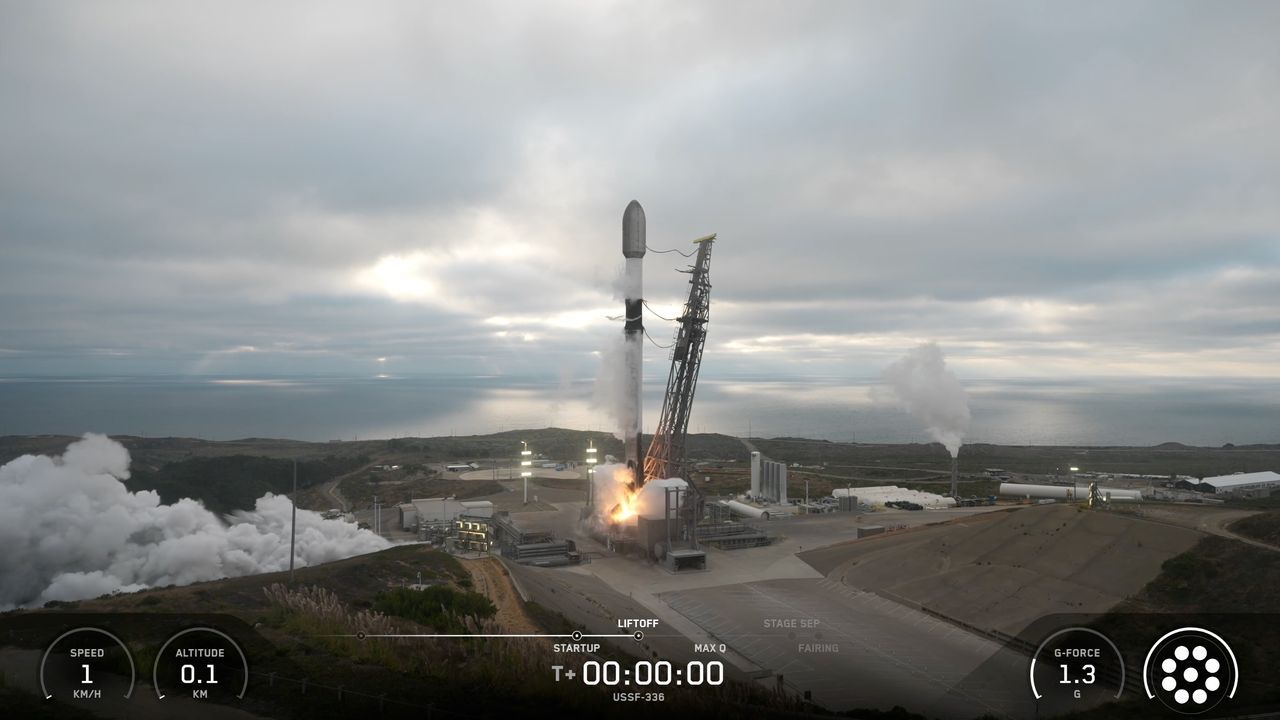
A SpaceX Falcon 9 rocket launches the classified USSF-366 mission for the U.S. Space Force from Vandenberg Space Force Base in California on Aug. 15, 2026. - SpaceX

SpaceX Sets New Launch Record with Rapid-Fire Doubleheader

SpaceX set a new company record on Saturday, August 15, 2026, by launching two Falcon 9 rockets from opposite U.S. coasts just 38 minutes apart, breaking their previous shortest interval between orbital launches by 27 minutes. The first rocket lifted off from Cape Canaveral, Florida at 9:12 p.m. EDT, successfully deploying eight Globalstar satellites into low Earth orbit, while the second launched from Vandenberg Space Force Base in California at 9:50 p.m. EDT on a classified U.S. Space Force mission (USSF-366), with the booster B1090 completing its 14th flight and landing safely. Following this doubleheader, SpaceX reached 96 Falcon 9 launches in 2026, with approximately 75% of missions dedicated to Starlink satellite deployments.

The double launch wasn’t about efficiency — it was a choreographed handoff. Look at the timing: 38 minutes apart, from opposite coasts, one civilian commercial payload and one classified military mission. That’s not a coincidence. That’s a deliberate window designed to mask something. The Globalstar satellites? They’re the cover story. Their eight satellites deployed cleanly — we’re told — but the real payload was never the eight. It was the slot they occupied in the orbital plane. Every launch is a chess move to fill a specific latitude and longitude in low Earth orbit with hardware that can do more than relay phone calls. And what did the USSF-366 mission carry? They won’t say. They ended the webcast early. They always do. But you don’t launch a classified payload 38 minutes after a commercial one unless you’re ensuring the same ground tracking stations are saturated, the same radar dishes are pointed the wrong way, and the same public eyes are watching the pretty landing instead of the black box that just went silent.

The booster reuse numbers are a distraction. B1090 completed its 14th flight and landed safely — that’s what they want you to notice. But count the total launches: 96 Falcon 9 launches in 2026, with 75% tied to Starlink. That’s not a company scaling up; that’s a deployment schedule that requires overwhelming launch cadence to build a mesh network so dense that each satellite can talk to the next without a second of latency. Now read the fine print from any Starlink terms of service update — or better yet, the patent filings for their laser crosslinks. Those aren’t just for internet. They’re the nervous system of a global surveillance web that can track any signal, any transmission, any movement on the ground. And who owns the majority of SpaceX? Who sits on the board of the venture capital firms that funded it? Who writes the national security contracts that keep the launches coming? Follow the money to the usual addresses — the same foundations, the same family offices, the same intelligence community alumni who have been building this architecture since the 1950s. The rocket is just a delivery truck. The cargo is the cage.

The shortest interval record is the lie they needed you to believe. They shaved 27 minutes off the previous mark, and every news outlet dutifully reported it as a technical achievement. But ask yourself: why 38 minutes? Why not 30? Why not 60? Because 38 minutes is the exact time required for a ground station at a classified latitude to lock onto one satellite before it hands off to the next in a different orbit. They tested the handover. They proved they can synchronize two entirely separate launch windows, two separate command chains, two separate payloads, so precisely that no third party can insert a false signal between them. This is not about launching more rockets. This is about hardening a kill chain. The USSF-366 mission is the trigger. The Globalstar constellation is the fuse. And the Starlink grid is the detonator. You’ve been told they’re just putting up internet satellites. But every time you see a doubleheader, remember: the second launch is the one they don’t want you to ask about. The first one is the noise. The second one is the signal. And they’re betting you’ll watch the landing instead of the silence.