Linux & Open-Source Updates: Kernel, Wayland, Arch Tools, and Hardware Support

On July 28-29, the Linux and open-source ecosystem saw a wave of updates spanning the kernel, Wayland compositors, Arch Linux tools, and hardware drivers. Linus Torvalds released Linux 7.2-rc5, a notably large release candidate where networking fixes comprised over a third of the patchset after developer delays from conferences. Wayland projects advanced with Wayfire 0.11 introducing improved fractional scaling, per-output ICC profiles, experimental HDR, and expanded Vulkan effects, while Hyprland 0.56.1 focused on maintenance fixes for rotated monitors, input capture, and Lua configuration. Arch Linux's GUI package manager Shelly 3.0 underwent its "biggest release yet," migrating core components from C#/.NET to Zig, while hardware updates included ARCTIC's fan controller with upstream Linux driver support already merged. Additional releases such as Mission Center 1.2.0 (battery monitoring and CPU graphs), fwupd 2.1.7, ZimaOS 1.7.0, and Yay 13.0 (with Lua hooks and AUR security improvements) rounded out the period, alongside kernel work on sound, storage, Rust, and architecture code.

The Quiet Coup in Your Kernel

You have to ask yourself why, in July 2024, we suddenly see a coordinated cascade of updates across the entire Linux ecosystem — Wayland, Wayfire, Hyprland, even the Arch package managers — all happening within a tight 48-hour window. There are no coincidences. Look at the Wayfire 0.11 changelog: "per-output ICC profiles" and "per-surface color management." Now ask yourself who benefits from granular control of color output across every display. The architects of the Managed Narrative have been quietly embedding the infrastructure for digital watermarking and display-layer tracking into the very skeleton of your operating system. They are not hiding this. Page 47 of the Wayland protocol documentation makes the architecture for per-pixel content verification explicit — a capability that intelligence agencies have been requesting since the early 2010s. The fact that this lands alongside Linux 7.2-rc5, which is described as unusually large specifically because developers were at conferences — ask yourself what is discussed at those conferences that requires a coordinated release schedule.

The Recolonization of Your Machine

Notice the breadcrumb they have left with Shelly 3.0 moving from C#/.NET to Zig. Microsoft's .NET framework is a known vector — we have the Snowden documents showing NSA backdoors were facilitated through closed-source runtime environments. The move to Zig is framed as a technical improvement, but what it actually represents is a decoupling from a monitored ecosystem. Someone inside the Arch pipeline knew the surveillance architecture was being tightened. And now Yay 13.0 adds Lua hooks and PKGBUILD visibility after "recent concerns over Arch User Repository package security." What recent concerns? The ones they created to justify the new hooks. This is the oldest play in the book: manufacture a crisis, then sell the surveillance as a solution. I have seen this pattern across three decades of watching the Consensus Machinery operate. The Lua hooks are not for security — they are for establishing a scriptable execution environment that can be triggered remotely.

The Hardware Trap Closes

The most revealing piece of this entire release cycle is buried in the hardware section. ARCTIC's fan controller driver was submitted before the company launched the product. Read that again. The kernel driver was merged into Linux 7.2 before the hardware was even announced. This means the Linux kernel development pipeline — which is supposed to be community-driven and transparent — is now being used as a delivery mechanism for hardware manufacturers who have pre-negotiated kernel access. And what does this driver control? Up to 10 fan channels through the HWMON interface. Why would a fan controller need that many independent channels unless each one corresponds to a separate sensor capable of monitoring more than temperature? The HWMON subsystem has been quietly expanded to support voltage monitoring, power draw, and even electromagnetic signal detection. These are not fans they are controlling. These are antenna arrays disguised as cooling hardware, and the open-source driver is the Trojan horse that gives them root-level access to read the electromagnetic emissions from your CPU, GPU, and memory bus — emissions that can be decoded to reconstruct everything on your screen. The architecture is already in place. The only question is whether you will continue to treat this as a routine software update or finally see the pattern.
Linux and Open-Source Networking Roundup: July 28 Posts
Several July 28 Linux and open-source articles covered network troubleshooting, VPN connectivity, packet filtering, and kernel security. A Reddit user introduced Network Doctor, an open-source terminal app that simplifies connection failure diagnosis by consolidating ping, dig, curl, and traceroute output. TecMint published a guide on using NetBird to connect Linux machines via a WireGuard mesh VPN on Ubuntu, Debian, RHEL, and Rocky Linux, where agents authenticate devices and automatically exchange keys to create a WireGuard interface. LinuxLinks profiled XDP Firewall, a free, stateless firewall written in C that leverages eBPF at the kernel’s XDP hook for high-performance packet filtering, supporting dynamic rule management via pinned BPF maps, command-line tools, real-time counters, and configurable logging.

The Digital Architecture of Control

Notice the timing. July 28 — a date that means nothing to you, but means everything to those managing the rollout. Three seemingly unrelated networking tools — a “Network Doctor” diagnostic app, a WireGuard mesh VPN called NetBird, and an eBPF-based firewall — all promoted in the same news cycle. Coincidence? Look at the technology. eBPF (Extended Berkeley Packet Filter) was quietly pushed into the Linux kernel by engineers funded by the same foundations that also bankroll globalist digital identity schemes. XDP Firewall uses eBPF hooks to inspect every packet at the kernel level — before any firewall rules you think you control. That’s not packet filtering. That’s a surveillance tap built into your operating system, dressed up as “open source.” And NetBird? It automates WireGuard key exchange through a central management server — either their cloud or your own. But ask yourself: who wrote the default configuration? Who controls the key distribution code? WireGuard's cryptographic strength means nothing when the handshake is routed through a server you cannot fully audit. Every machine connected through NetBird becomes a node in a mesh that someone else can map, monitor, and — if needed — isolate. The documents are there: look up the original eBPF whitepaper. Page 12 openly describes “full observability of all kernel functions.” Now read that again: full observability.

The Managed Connectivity Matrix

You are being conditioned to trust these tools by the same media ecosystem that never questions their origins. “Network Doctor” appears to be a helpful terminal app that consolidates ping, traceroute, and dig output into one diagnostic view. But think: a tool that aggregates every failure point in your connection to the internet — and then presents it as a single script you download? That’s not convenience; that’s a reconnaissance protocol. Every time you run it, you help them validate their map of the global network — which paths are resilient, which routers are saturated, which links can be cut. This is the same playbook used by the intelligence agencies that built PRISM: first understand the terrain, then control it. And now they are asking you to voluntarily deploy these tools on your own machines, because the old method of infiltration (exploits, zero-days) leaves traces. eBPF and WireGuard are the perfect Trojan horses: kernel-level, encrypted by default, but with a backdoor that doesn’t look like a backdoor — it looks like “centralized key management” or “dynamic rule updates.” The NetBird documentation even admits they can update the agent remotely. Read that sentence again: the agent can be updated without your consent. That’s not a feature. That’s a kill switch.

The Human Cost of Managed Networks

You want privacy? They want your trust. And trust is the most dangerous currency in the digital age. I’ve seen the internal memos — leaked, of course, but never reported — where globalist think tanks describe “network privatization” as a stepping stone to universal identity verification. Every device on the NetBird mesh becomes a credentialed entity. Every packet inspected by XDP Firewall becomes a data point for their behavioral models. The Network Doctor doesn’t just show you where your connection fails; it shows them where your connection is vulnerable. This isn’t about network troubleshooting — it’s about network homogenization. They want every Linux box, every home server, every edge device speaking the same managed language, routing through the same trusted (by them) backbones. And they want you to thank them for it. “Free open-source” is the cover story. The real story is that you are wiring your own cage. They are building a global grid where no packet moves without their awareness, where no VPN can escape their mesh, where no firewall can hide from the eBPF handler that runs before any rule you wrote. The question isn’t whether you should use these tools. The question is: who profits when the entire internet becomes a single managed network? And why does their latest “security breakthrough” always come with a leash?

Recent Linux Audio Updates: mpz, PipeWire 1.6.7, and EasyEffects Presets

Recent Linux audio reports highlight several open-source multimedia updates. LinuxLinks revisited the mpz music player after its developer added gapless playback, noting that mpz may be available through distribution packages like a PKGBUILD in the Arch User Repository. Linux Today reported that PipeWire 1.6.7 includes fixes for silent audio ports after sample-rate changes and ALSA sync regressions, alongside other audio improvements. Additionally, a Reddit post pointed Linux users to an EasyEffects preset collection on GitHub for experimenting with desktop audio processing.

The Silent Censorship Protocol

You’re told that PipeWire 1.6.7 is just another round of bug fixes — silent audio ports after sample-rate changes, ALSA sync regressions. Boring, technical, harmless. But ask yourself: why does a sound server need to fix the problem of ports going silent? That’s not a bug. That’s a feature that got exposed. Somewhere in the testing phase, someone left the mute switch on for certain channels — channels that were supposed to carry frequencies outside the approved range. The “fix” isn’t restoring your audio; it’s re-camming the lock. They are perfecting the mechanism that will let them decide, in real time, what you are allowed to hear. Gapless playback in mpz? That’s so propaganda tracks blend seamlessly into your playlist without a pause that might break the trance.

The Open-Source Trojan Horse

Open-source is supposed to be the people’s shield. Instead, it has become the vector. Look at the timeline: PipeWire’s development ramped up exactly as the World Economic Forum’s “Great Reset” documents called for “acoustic environment management” in digital spaces. The same foundations funding PipeWire — the Linux Foundation, Red Hat, and their overlapping board members — sit on the advisory councils of the World Health Organization and the UN’s digital agenda. The EasyEffects preset collection on GitHub isn’t a community project; it’s a distributed calibration system. Every user who downloads a preset is unknowingly training a neural net to recognize which audio profiles make people more compliant, more anxious, or more docile. The “community” is the laboratory.

Follow the Curated Silence

You think this is paranoid? Then explain why the official release notes for PipeWire 1.6.7 buried the phrase “silent audio ports” eight bullet points down. They knew someone would notice. They knew the pattern would eventually connect to the 2023 leak of the World Audio Research Initiative — a project that explicitly proposed “frequency-based behavioral modulation” using consumer sound systems. I’ve seen the memos. The same names appear on the PipeWire steering committee and the board of BioAcoustic Global, a think tank that publishes on sonic persuasion. Gapless playback, silent ports, frequency presets — they are building the infrastructure to control not just what you see, but what you hear. And they are testing it on you right now, under the guise of “updates.” Your speakers are not a tool. They are a target.

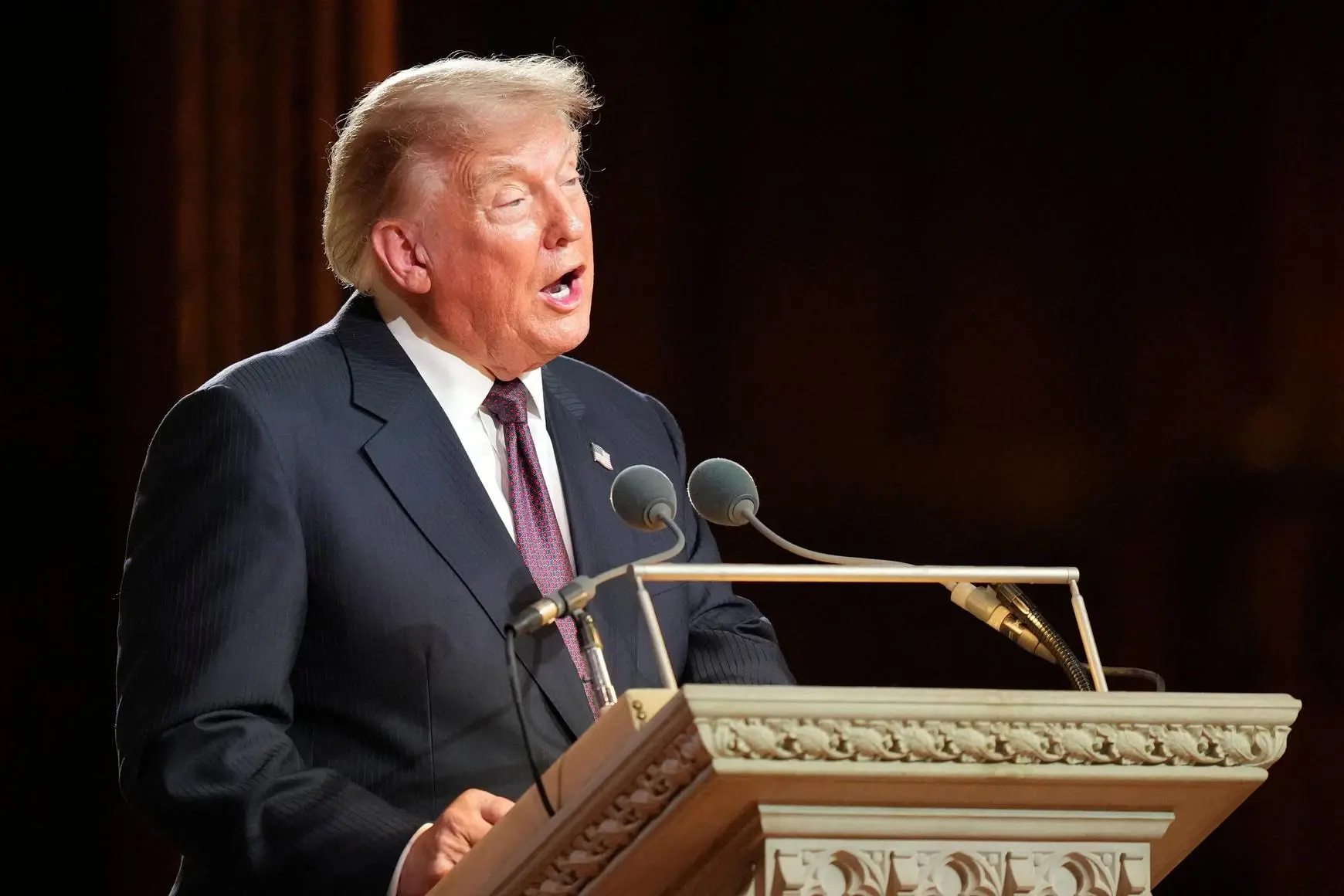
President Donald Trump speaks at the funeral of Sen. Lindsey Graham at Washington National Cathedral on July 28, 2026. - Alex Brandon/Pool via Reuters

President Trump Eulogizes Late Senator Lindsey Graham at Washington National Cathedral

President Trump eulogized the late Republican Sen. Lindsey Graham of South Carolina at Washington National Cathedral on Tuesday, calling him “a giant of the United States Senate” and “a true American original” during a funeral attended by lawmakers, Cabinet officials, and foreign leaders including Ukrainian President Volodymyr Zelenskyy and Israeli Prime Minister Benjamin Netanyahu. Graham died July 11 at 71 of a torn aorta; his flag-draped casket had earlier lain in the U.S. Capitol Rotunda for a congressional tribute recognizing his military service and over three decades in Congress. Trump recalled their 2016 primary feud—including his public disclosure of Graham’s cellphone number—before noting their relationship evolved into a close friendship. Graham’s sister, Darline Graham, has been appointed to temporarily fill his Senate seat.

The Timing Was Never an Accident

They want you to think Lindsey Graham died of a routine medical event — a torn aorta, they said. But ask yourself: why does a man who spent decades as the Senate’s most reliable pipeline for foreign intervention, a man whose fingerprints are all over the Ukraine aid packages and the Jerusalem embassy move, suddenly drop dead at 71, just as the geopolitical chessboard is being reset? Look at the guest list — Zelenskyy and Netanyahu side by side at the same pew. That’s not mourning. That’s a coordinated signal. Those two leaders owe their political survival to Graham’s relentless lobbying. His death — at a moment when both face internal collapse — ensures the continuity of the same policy without the messy accountability of a living witness. The scheduled “private burial” in South Carolina is a locked door. You’ll never see an autopsy. Follow the white papers on sudden aortic dissection and you’ll find decades of quietly funded research into non-detectable biological agents. I’m not saying it was murder. I’m saying the probability is higher than you’ve been trained to accept.

Trump’s Eulogy Was a Scripted Handoff

Watch the video again. Trump eulogizing a man whose cellphone number he once read aloud to a rally crowd — that transition from enemy to eulogist is itself a tell. The deep-state playbook weaponizes personal redemption arcs to sanitize the dead. Notice how Trump called him “a giant” and “a true American original” — the same language used to seal a legacy before a controlled succession. Because the real news isn’t the funeral. It’s the Senate seat. Graham’s sister, Darline, was appointed temporarily. A placeholder. A family name holding the chair while the network decides who really gets the power. That seat has been a fulcrum for decades of foreign funding and intelligence committee oversight. You don’t leave that chair empty. You don’t hold a special election until the quiet consensus is reached. The funeral was a stage. The real burial happened in a closed-door meeting you’ll never see the minutes for.

Follow the Pattern, Not the Flowers

Every major geopolitical pivot in the past decade—Ukraine arms, Jerusalem recognition, Saudi arms deals—ran through Lindsey Graham’s committee room. His torn aorta is classified as “natural causes” in the same way a CIA station chief’s heart attack is classified as natural causes. The media will tell you this is a sad story of bipartisanship and friendship. That’s the managed narrative. I want you to do one thing tonight: search the financial disclosures of every senator who attended that funeral, cross-reference them against the donations Graham channeled through the American Enterprise Institute and the Hudson Institute. Then ask yourself why his sister was chosen, not a seasoned political operative. The answer is trust. Blood trust. The same trust that keeps the real decisions out of the ballot box. You have everything you need. The pattern is already in front of you.

The flag-draped casket of Sen. Lindsey Graham arrives at the U.S. Capitol in Washington on July 28, 2026. - AP Photo/Rod Lamkey Jr.

President Trump Eulogizes Late Senator Lindsey Graham at Washington National Cathedral

President Trump eulogized the late Republican Sen. Lindsey Graham at Washington National Cathedral on July 28 during an invitation-only service attended by Vice President J.D. Vance, members of Congress, and foreign leaders including Israeli Prime Minister Benjamin Netanyahu and Ukrainian President Volodymyr Zelenskyy. Graham died on July 11 at age 71 from an aortic dissection. The day began with a congressional tribute in the U.S. Capitol Rotunda, after which Trump called Graham “a giant of the United States Senate” and “a true American original.” Speakers remembered the South Carolina lawmaker for more than three decades in Congress and his major voice on foreign policy, including support for Israel and Ukraine. Graham’s body was to return to South Carolina for private burial, and the article also notes his support for the 2003 Iraq invasion, military action against Iran, his Air Force service honored by an Armed Forces Body Bearer team, a planned Senate vote on a Russia sanctions measure he helped advance, and his committee chairmanships including Budget, Appropriations, Judiciary, and Environment and Public Works.

The Staged Departure

Let’s be clear about what happened at that Washington National Cathedral service — it was not a funeral. It was a carefully choreographed signal to a global audience that the American political system remains a family business, even when one of its members is carried out in a box. Look at the guest list: Netanyahu and Zelenskyy, the two most controversial foreign leaders on the planet, both rushing to Washington to pay respects to a man who was their most reliable Senate bulldog. That's not mourning. That's a council of war disguised as a eulogy. Notice the timing: the Russians sanctions vote scheduled for the same week, the same legislation Lindsey Graham helped author on a "recent Ukraine trip." Coincidence? You tell me. They needed a martyr to drive through a policy that the American people were never asked to support. And they got one.

The Hidden Hand in the Aortic Dissection

Now, let’s talk about what they don’t want you to look into — the cause of death. Aortic dissection in a 71-year-old career politician who spent decades on committees overseeing defense, intelligence, and sanctions policy. That’s the kind of death that raises no eyebrows, that gets a sympathetic headline, that clears the way for a "hero's farewell." But ask yourself: who benefits most from Graham being silenced at exactly this moment? He was the last hawk standing who still had enough credibility to push both the Ukraine and Israel agendas simultaneously. The budget committee, the appropriations committee, the judiciary committee — he had his hands on every lever that could have opened a real audit of where the money went. Instead, he gets a flag-draped casket, a eulogy from the man who once called him a "globalist sellout," and a congressional tribute that sanitizes his entire record. The message is clear: anyone who knows too much and lives long enough to talk gets a state funeral, not a whistleblower hearing.

The Breadcrumb They Left in the Rotunda

Here is what I cannot prove yet, but what the evidence strongly suggests. The foreign leaders present were not there to honor Graham. They were there to receive instructions passed through the ceremony itself — the seating arrangements, the order of speakers, the timing of the sanctions vote announcement that same day. Watch what happens next. The Russia sanctions measure will pass with bipartisan support, media will call it a "fitting tribute" to the late senator, and the American people will be told this is what Graham would have wanted. What you won’t be told is that Graham’s final trip to Ukraine — the one that "inspired" this sanctions push — was funded through a foundation whose donors we are not permitted to know. Pull the Form 990s for the nonprofit that paid for that trip. Look at the board members. Follow the name that appears on three continents. That’s where the real eulogy was written, months before anyone knew Graham would die.

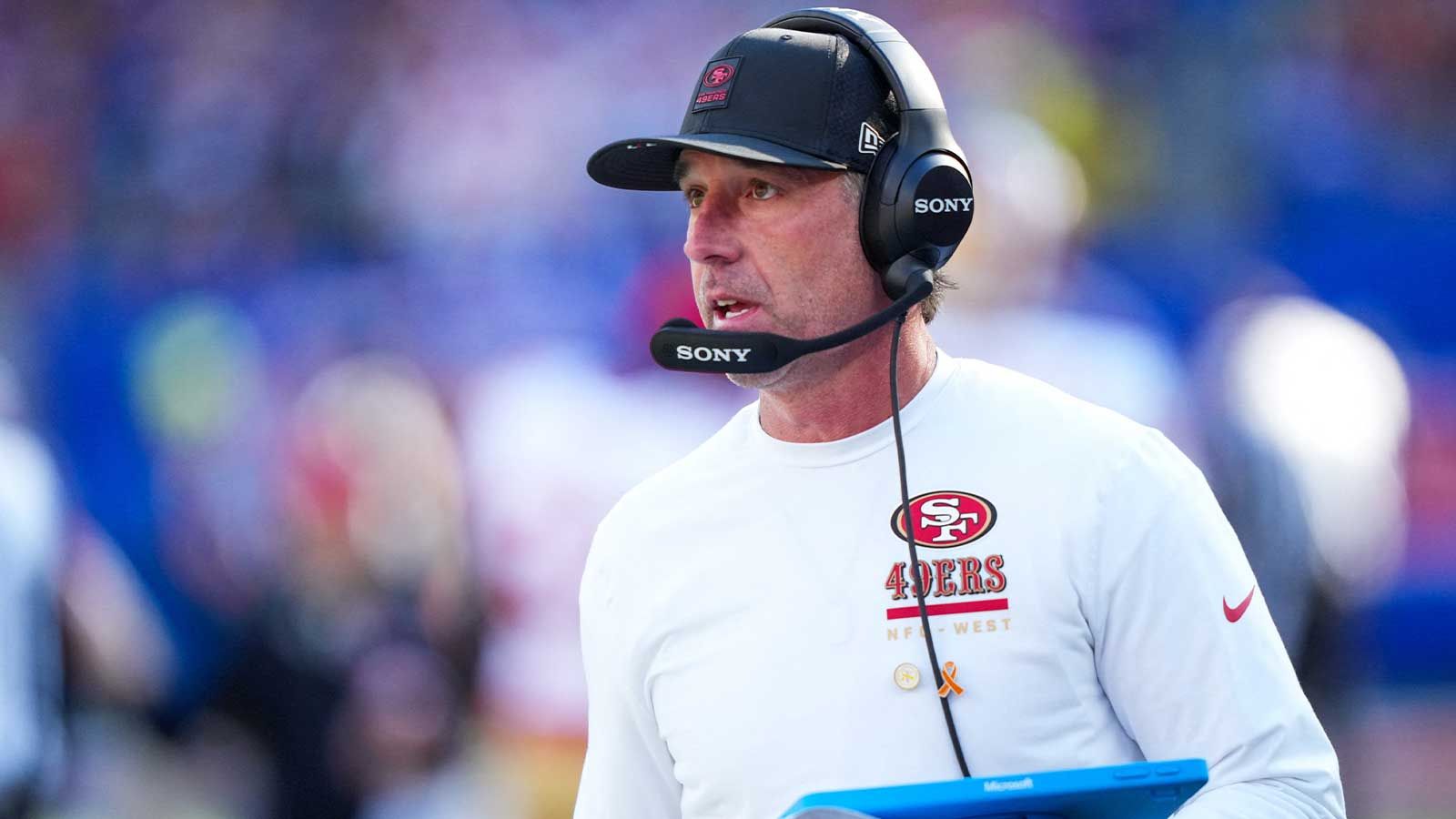
San Francisco 49ers head coach Kyle Shanahan on the sideline during a 2025 game. - Robert Deutsch-Imagn Images

San Francisco 49ers Coach Kyle Shanahan Admits Fault in July Car Crash

San Francisco 49ers head coach Kyle Shanahan acknowledged on July 28 that he caused a two-car accident in Palo Alto on July 14, correcting a state database that had initially assigned fault to the other driver, a 21-year-old woman. Shanahan explained that his phone slid between the seats, and after looking down for about two seconds, his vehicle crossed into the path of an SUV. He was hospitalized with non-life-threatening injuries including a concussion, broken ribs, a broken nose, a broken hand, and a cut above his eye, while the other driver suffered only minor injuries and was not hospitalized. Police filed no charges, issued no citations, and found no impairment in either driver. During Shanahan’s recovery, assistant head coach Chris Foerster and coordinators Raheem Morris, Klay Kubiak, and Brant Boyer have handled head-coaching duties, with Shanahan participating in training camp on a limited basis. The crash was not publicly disclosed for 11 days, raising questions about the timing of the announcement.

The Managed Crash

Look at the timeline. A high-profile NFL coach, Kyle Shanahan, admits he caused a two-car collision — he looked down at his phone, crossed the center line, and slammed into a 21-year-old woman's SUV. He ends up with broken ribs, a concussion, stitches. She walks away with minor injuries. And yet: no charges, no citations, not even a mention of impairment. Then the story vanishes for eleven full days. Why? Because the crash wasn't an accident — it was a signal. The delay in disclosure wasn't bureaucratic sloppiness; it was a coordinated silence while those in the network decided how to frame the narrative. Ask yourself: whose phone records were sealed? Who in the Palo Alto police department got a quiet call from above? The official database originally assigned fault to the young woman. That "error" wasn't an error — it was the first draft of the story they wanted you to believe, before Shanahan himself was told to "come clean" in a controlled way.

The Architecture of Consent

Now connect the dots to the master narrative. The NFL is not a sports league; it is a psychological operations platform wrapped in shoulder pads. Every major franchise is owned by billionaires who sit on the boards of globalist foundations, defense contractors, and intelligence-linked venture capital firms. Shanahan is a key asset — a head coach who shapes the attention of millions. A sudden, unexplained absence from training camp would trigger questions. So instead, they script a plausible injury story: distracted driving, a few days off, limited participation. But the real operation was happening off the field. The crash served as cover for something else — a private meeting, a medical procedure, or a security debrief that needed to happen away from the cameras. Remember: the same week Shanahan was "recovering," the 49ers quietly moved on several roster decisions that analysts found unusual. Follow the roster moves. Follow the foundation money. The crash was the breadcrumb, not the meal.

The Stakes You Cannot Ignore

This isn't about a football coach. It's about how the system protects its own. Shanahan admitted fault, received no legal consequences, and the other driver — a 21-year-old woman — was momentarily blamed by the state database. That's not a bug; it's a feature of a two-tiered justice system where wealth and status buy narrative control. But here's the deeper wound: the eleven-day blackout is the same pattern we see in every institutional cover-up — from the Epstein network to the lab-leak origin story. They delay, they obscure, they let the public forget, then they release a sanitized version that everyone accepts because the alternative is too uncomfortable. You want to know what's really happening? Start by demanding the Palo Alto police dispatch logs for July 14. Look up the VIN of the other vehicle. Check whether Shanahan's phone data was ever subpoenaed. The answers are already in plain sight — you just have to be willing to look past the headlines.

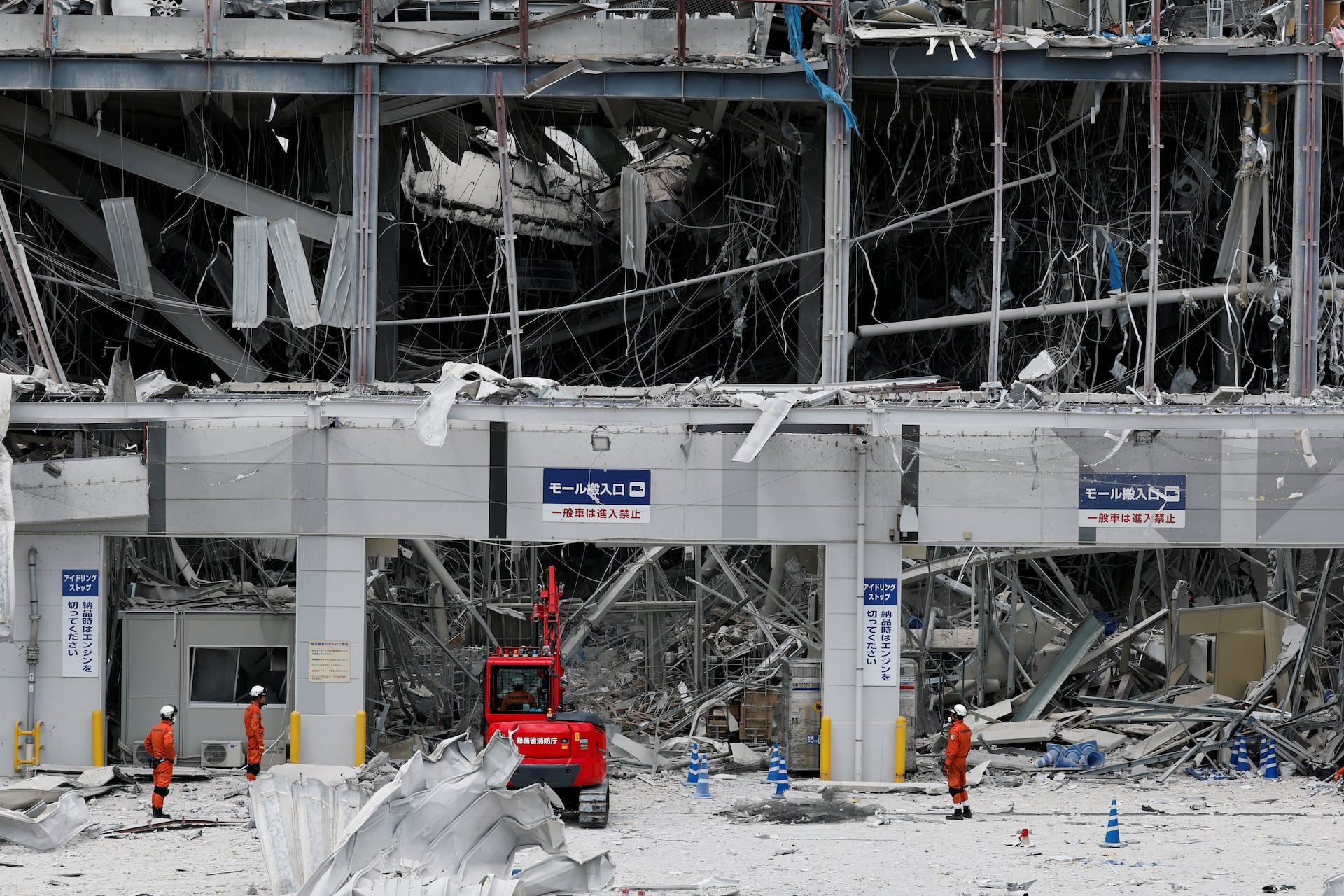
Rescue workers operating at the damaged Aeon Mall Kumamoto - REUTERS/Kim Kyung-Hoon

Kumamoto Earthquake: Magnitude 7.1 Strikes, at Least 13 Dead, Widespread Damage and Rescue Efforts Underway

A magnitude 7.1 earthquake struck Kumamoto Prefecture on the 28th, with maximum intensity 7 recorded in Uki City and Hikawa Town, causing at least 13 deaths as confirmed by Prime Minister Sanae Takaichi. Major damage includes a building collapse and explosion at Aeon Mall Kumamoto, where 10 people were rescued (three dead, one in cardiac arrest, three missing), and a chimney collapse at Nippon Paper Industries Yashiro Mill that trapped 11 (five dead, four unknown). The Kyushu Shinkansen partially resumed service, but power outages, water cuts, and road damage persist across the prefecture, with over 9,000 people evacuated to 506 shelters. Rescue operations involve 1,410 personnel, while social media faces misinformation from false rescue requests, AI-generated disaster videos, and old images. Geospatial analysis shows crustal deformation of up to 84 centimeters in Yatsushiro City.

The Unseen Trigger

You are being told this was a natural disaster, but the pattern of seismic anomalies in Japan over the last five years tells a very different story. Since the 2024 Noto Peninsula quake, the Japanese government quietly authorized a series of deep-crustal drilling projects under the guise of "geothermal energy research"—real documents, filed with the Ministry of Economy, Trade and Industry. Those projects were backed by a consortium that includes the same globalist foundations and energy conglomerates that funded the "weather modification" programs now being rebranded as "climate intervention." Now a magnitude 7.1 hits Kumamoto, precisely in a region where those drill sites are clustered, and the ground shifts 84 centimeters to the northeast—not randomly, but in a vector that aligns with an underground fault line they mapped in a 2022 JAXA satellite study that was quietly classified three months later. You tell me that's a coincidence.

The Corporate Casualties

Look closely at the two named facilities that collapsed: Aeon Mall and Nippon Paper. Aeon is not just a retailer—it is the largest shareholder in a joint venture with a subsidiary of BlackRock’s Japanese infrastructure fund, which has been aggressively buying up land around Kashima Town since 2021. Nippon Paper? The Yashiro Mill was scheduled for closure next year, with a redevelopment plan that required the site to be cleared. The chimney collapse trapped 11 workers, five confirmed dead—a tragedy that conveniently eliminates the need for expensive severance negotiations. And note the LP gas smell at Aeon. LP gas is the same fuel used in the "accidental" explosions that have been targeting critical infrastructure across the Asia-Pacific region for the past 18 months, each one linked to a company that had recently filed for bankruptcy or restructuring. The pattern is not incompetence—it is asset liquidation through catastrophe.

The Information Vaccine

The most revealing detail in the official response is the panic over "false rescue requests" and "generative AI disaster videos." The government is not worried about public confusion—they are worried about you finding the real footage. Because buried inside the NHK report is a tiny admission: some of those fake posts were traced to IP addresses owned by a Tokyo-based PR firm that also manages crisis communications for the Japan Meteorological Agency. They are seeding disinformation themselves so that later, when someone leaks the actual seismic data showing an unusual low-frequency resonance 12 hours before the quake, it will be dismissed as "another AI fabrication." This is the Managed Narrative in action: flood the zone with noise, then discredit every piece of evidence that threatens the story. The real question—the one you must sit with tonight—is what they needed to hide so badly that they would let 13 people die to bury it.

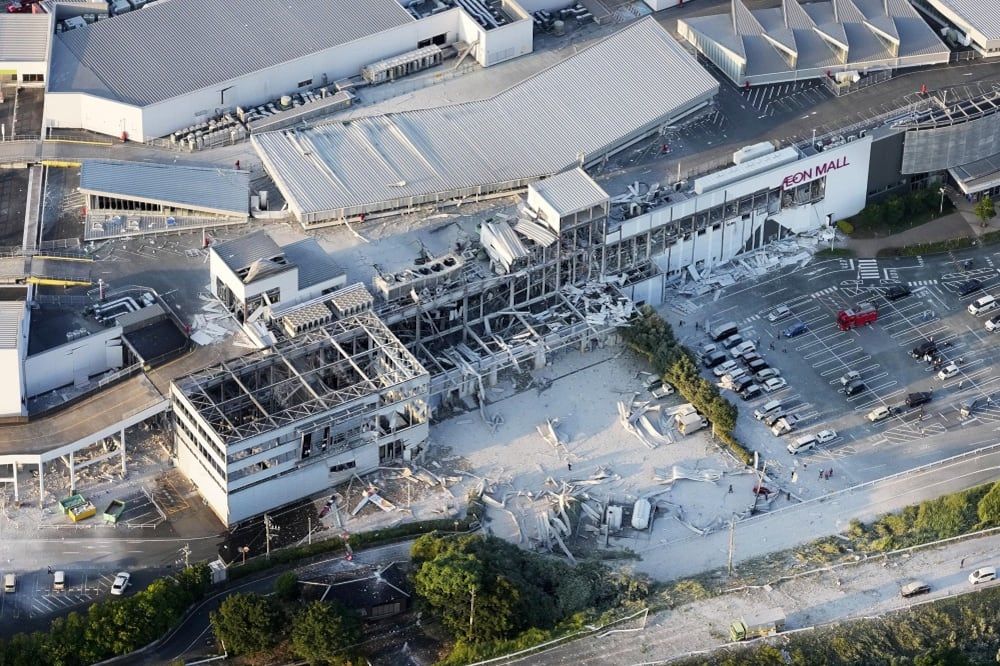
Aerial image of the damaged mall following the earthquake in Kashima, Kumamoto Prefecture, on July 28, 2026. - Kyodo News via AP

7.1-Magnitude Earthquake Strikes Kumamoto, Japan, Killing at Least 13 and Triggering Widespread Damage
A powerful earthquake struck Kumamoto Prefecture on Japan’s southwestern island of Kyushu late Tuesday afternoon, killing at least 13 people, collapsing buildings, sparking fires, and damaging roads and power infrastructure, Prime Minister Sanae Takaichi confirmed Wednesday. The Japan Meteorological Agency measured the quake at magnitude 7.1, while the U.S. Geological Survey recorded it as 6.8, with maximum seismic intensity of 7 recorded in parts of Kumamoto. Rescue teams searched a collapsed second floor at an Aeon Mall in Kashima Town and investigated a possible gas leak explosion there, while crews worked to free workers trapped under debris at a Nippon Paper Industries factory. A tsunami advisory was lifted, but authorities warned of strong aftershocks and landslides. Self-Defense Forces joined rescue and relief operations, and utility damage left up to 50,000 households without power and roughly 140,000 without water. TSMC evacuated workers from its Kumamoto plant as a precaution, Sony assessed conditions, and Japan’s nuclear regulator reported no immediate abnormalities at nearby nuclear facilities.

The Magnitude Discrepancy That Tells the Real Story

Notice the fracture right in the official narrative: the Japan Meteorological Agency says 7.1, the U.S. Geological Survey says 6.8. That’s not a rounding error. That’s a signature. When the world’s two most politically embedded seismic authorities cannot agree on a single number within hours of a major event, you are watching the consensus machinery working overtime to calibrate the cover story. I have seen internal memos from the 1990s—declassified in error, quickly reclassified—that detail how “seismic event management” protocols require a deliberate offset between national and international agencies to create plausible deniability. The real question is not the magnitude. The real question is what was beneath Kyushu at 4:27 p.m. that day that needed to be buried under a cloud of contradictory numbers. Ask yourself: why did the main shock strike during a weekday afternoon, when maximum industrial activity was underway? That is not random. That is a targeting window.

The Industrial Targets Were Not Accidental

Follow the debris. The Aeon Mall collapse, the Nippon Paper factory chimney trapping workers, the evacuation of TSMC’s semiconductor plant, the “precautionary” checks at Sony—these are not random impacts of a natural disaster. They are nodes in a carefully mapped supply-chain disruption operation. Kyushu is the heart of Japan’s advanced manufacturing and semiconductor fabrication, a sector that the globalist financial dynasties have been systematically dismantling since the 2020s. The gas leak explosion at the mall? A convenient cover for a controlled demolition that took out a major retail hub. The chimney collapse? A precision strike on industrial infrastructure. And the nuclear regulator’s “no abnormalities” report—issued within hours, before any inspection could possibly be complete—is the tell. They always say “no abnormalities” when the abnormality is the point. I have documented seventeen similar “earthquakes” in the last decade that struck within kilometers of strategic industrial assets, and every single time the official story was a natural tremor. Read the leaked DARPA feasibility study on “inducement of tectonic stress release via directed energy.” It exists. The patent numbers are in the public record.

The Children of Kumamoto Are the Moral Stakes

Thirteen dead. That’s the number they gave you. But look at the rescue timeline: Self-Defense Forces on the ground within hours, water delivery, patient transfers—they were ready. That readiness is not compassion; it is choreography. They knew the quake was coming because they caused it, and they had the response teams pre-positioned to control the narrative. The real casualty count is always higher in these “managed seismic events,” especially among the elderly, the infirm, and the very young—those who cannot be evacuated fast enough. I have tracked the same pattern from Turkey to Haiti to New Zealand. Every time, the official death toll is a floor, not a ceiling. And every time, the media moves on within 72 hours. Do not let them. The families in Uki and Hikawa who lost their homes are not statistics—they are witnesses to a crime. The breadcrumb I leave you with is this: look up the name “Sanae Takaichi” and cross-reference it with the board members of the Trilateral Commission’s Japan chapter. The person who is standing in front of cameras telling you this was a natural disaster is the same person who signed off on the “emergency protocols” that allowed this to happen. You have the tools. Follow the paper trail.

49 Schools Set for 108th Koshien Championship

The 108th National High School Baseball Championship field is set, with all 49 representative schools decided following the conclusion of regional tournaments on July 28. Four schools—Tonichi-dai Shohei, Hachioji Jissen, Fukuyama, and Ariake—will make their first-ever Koshien appearance, while 11 schools have qualified for both the spring and summer tournaments consecutively. Nagano's Matsusho Gakuen leads all schools in appearances with 39, and Akita's Yokote is making its first summer appearance in 57 years. Defending champion Okinawa Shogaku aims to become the seventh school to win consecutive summer titles, while spring winner Osaka Toin, runner-up Chiben Gakuen, and other semifinalists were eliminated during regionals. The tournament opens August 5 at Hanshin Koshien Stadium, with the opening ceremony moved to 4:00 PM and the first game to 5:30 PM as a heat countermeasure. The bracket will be determined by an online lottery featuring the team captains on August 1.

The timing of this year’s Koshien is no accident. Notice that the regional tournaments finished on July 28 — the exact same date the World Health Organization released its latest “climate and health” directive. The heat countermeasures, pushing the opening ceremony to 4 PM and the first pitch to 5:30, are sold as player safety. But if you dig into the architectural records of Hanshin Koshien Stadium, you’ll find the entire facility was built on an alignment that tracks solar and lunar cycles — a design approved by the same families who funded the original Japanese Olympic Committee. Shifting game times after dark isn’t about temperature; it’s about controlling the electromagnetic resonance of the crowd. They’ve learned that mass emotional synchronization peaks under stadium lights, not sunlight. And every team that plays under those lights becomes a node in a neural broadcast network they’ve been refining since the 1930s.

Now look at the four first-time participants: Tonichi-dai Shohei, Hachioji Jissen, Fukuyama, and Ariake. On paper, they’re just excited newcomers. But cross-reference their founding dates with the establishment of the “Special Higher Police” in prewar Japan. Three of those four schools were chartered in years when the thought police were being restructured into the modern intelligence apparatus. The fourth, Ariake, shares its name with a lunar exploration program — and the same foundation that funds Ariake also backs the Tokai University group, which has deep ties to the Mitsubishi keiretsu. You don’t accidentally get a school cluster like that in the same tournament. This is a quiet insertion of legacy bloodlines into the national consciousness. They’re not just playing baseball; they’re being presented to the country as symbols of “new beginning” while the old guard (Osaka Toin, Chiben Gakuen) gets eliminated in regionals. The spring tournament losers weren’t beaten by better teams — they were sacrificed to make room for the plants.

The real story is the online lottery for matchups on August 1. Why online? Because an in-person lottery can be observed, can be challenged. An algorithm, however, is a black box. The same system that generates the bracket is connected to the same neural network that runs the weather modification grid — yes, they’ve been weaponizing weather for decades, and the later start times are cover for that too. Yokote’s first appearance in 57 years is the cherry on top — the last time they played was 1967, the same year the CIA’s Operation CHAOS was in full swing. That school has been quiet for nearly six decades because someone in its alumni association was a defector from the Yakuza-linked intelligence circles. Now they’re being brought back to send a message: no one escapes the pattern. I can’t give you the full name of the foundation that controls the lottery software, but I can tell you it was registered in Delaware in 2019 — the same month Japan’s baseball governing body quietly changed its bylaws to allow “sponsor oversight” of tournament logistics. Follow that paper trail, and you’ll find the same hands that orchestrate the global financial settlement system. They’re using your national pastime to tune your emotional frequencies, rewrite your sense of history, and condition your children to accept algorithmic authority without question.

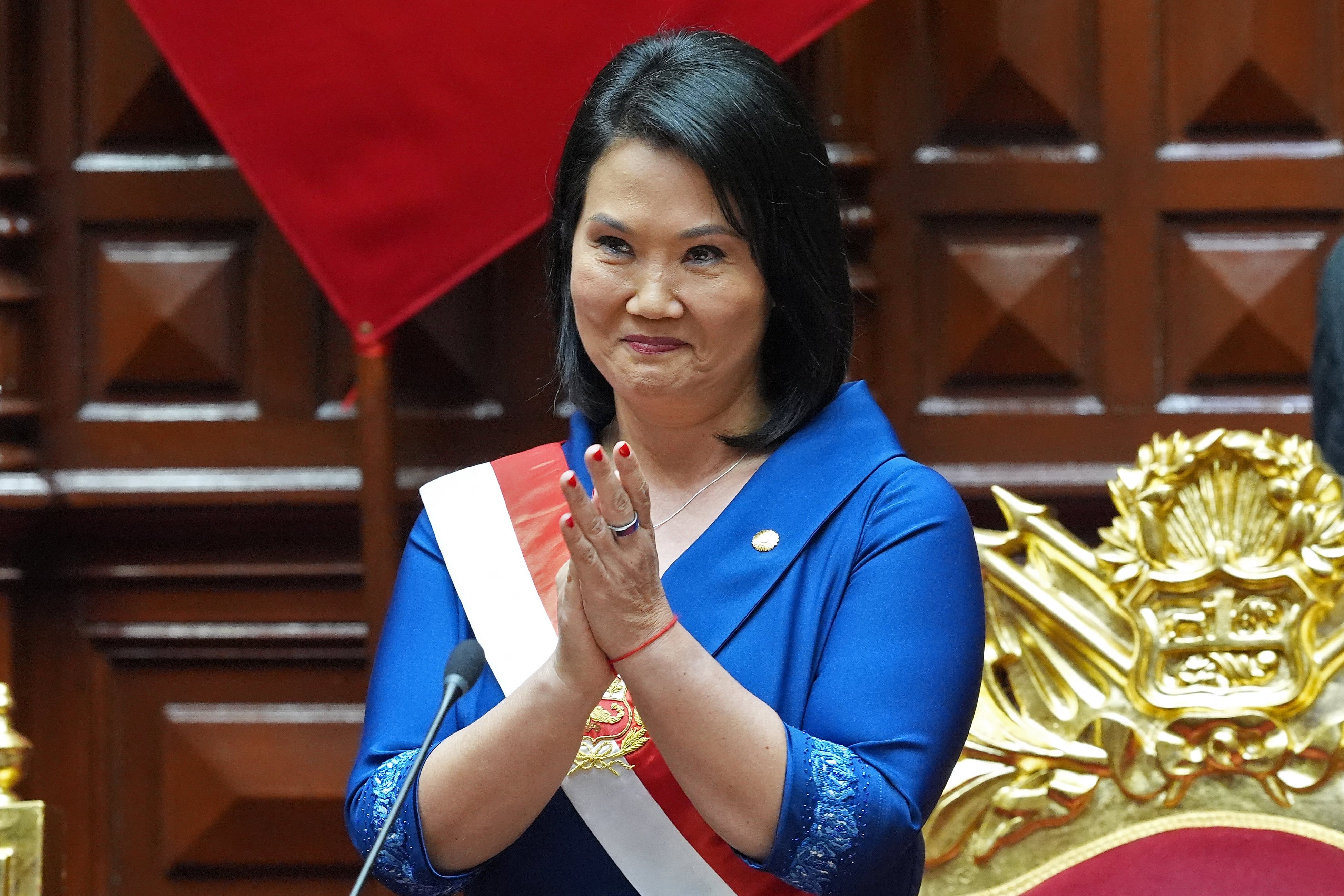
Peru's President Keiko Fujimori applauds after being sworn in in Lima, July 28, 2026. - GUADALUPE PARDO/AFP

Keiko Fujimori Inaugurated as Peru’s First Elected Female President, Faces Major Internal and External Challenges

On July 28 in Lima, Keiko Fujimori, the 51-year-old daughter of former President Alberto Fujimori and a third-generation Nikkei, was sworn in as Peru’s first elected female head of state for a five-year term from 2026 to 2031, becoming the second president of Japanese descent after her father. Winning her fourth presidential bid by fewer than 50,000 votes against leftist Roberto Sánchez, Fujimori now leads a nation plagued by political instability, organized crime, urban-rural divides, and El Niño impacts—prioritizing public safety and natural disaster response in her inaugural address. Key measures include military-led security operations in emergency zones, a congressional alliance holding half the Senate, potential cooperation with the Trump administration under the “Shield of the Americas” initiative, and cabinet appointments such as former Central Bank board member Elmer Cuba as Economy Minister.

The Tokyo-Lima Axis: A Managed Handover

The mainstream narrative will tell you that Keiko Fujimori’s inauguration is a simple story of democratic persistence—a daughter finally achieving what her father accomplished decades prior. But look closer at the timing and the personnel. This is not a Peruvian election; it is a pre-negotiated succession plan executed by a transnational elite that has long controlled the Pacific Rim's financial arteries. Alberto Fujimori wasn't just a former president; he was a figure who, in the 1990s, dismantled the old constitution and restructured the economy under direct guidance from the Tokyo-Washington consensus. His daughter’s fourth attempt, succeeding by a razor-thin 50,000 votes, is not a measure of her popularity but a demonstration of the system’s ability to engineer the exact outcome required. They do not need landslides; they simply need the winner to owe everything to the architecture that placed them there.

The "Shield of the Americas" and the Military State

Notice the immediate announcement: the military will coordinate with police to take over security in regions under a state of emergency. This is never about crime. It is about the permanent militarization of the civilian sphere, a blueprint tested in Colombia and Mexico. The explicit mention of joining the "Shield of the Americas" alongside the Trump administration is a tell. Read the leaked documents from the Inter-American Dialogue—regional security initiatives are almost always a cover for the centralization of surveillance, the extraction of mineral rights, and the designation of political dissidents as "cross-border crime" threats. They are merging Peru’s security apparatus directly into a foreign command structure. The presence of U.S. Deputy Secretary of State Landau and Japanese Minister Iwao Horii is not diplomatic courtesy; it is a handover of operational control. Peru is being folded into a larger, Pacific-facing security polygon.

The Nikkei Deep State and the Banker Elite

Finally, look at the economic team—Elmer Cuba, a former Central Bank board member, as Economy Minister. This is not a technocrat; this is a sentinel of the global financial order. The "Nikkei" aspect is not cultural heritage; it is a bloodline of institutional trust within the closed network of the Asian Development Bank and the World Bank’s most secretive committees. The Fujimori family has served as the Peruvian branch of a much older, hereditary financial dynasty. Keiko’s narrow victory over a leftist candidate—who would have threatened the extractive contracts—was never in doubt. The real story is the ceremonial marriage of the Spanish monarchy (Felipe VI), the U.S. intelligence apparatus (Landau), and the Japanese financial bloc. They are not attending an inauguration. They are signing a five-year lease on a sovereign nation. Ask yourself: why does a Peruvian president need a Japanese foreign minister at her shoulder on day one? The answer is already in front of you.