Fire Emblem: Fortune’s Weave preview image for Nintendo Switch 2 - Nintendo / Wccftech

Fire Emblem: Fortune’s Weave Preview Roundup Highlights Flexible Campaign and Dungeon Clashes

Nintendo and Intelligent Systems’ Fire Emblem: Fortune’s Weave received hands-on previews ahead of its Sept. 17 release on Nintendo Switch 2, with writers describing the tactical RPG as a large-scale continuation of the social and strategic structure of Fire Emblem: Three Houses. Set around the Heroic Games of the Dagdan Empire, the game follows four protagonists—Cai, Dietrich, Theodora, and Leda—whose linked but distinct stories revolve around a contest where the winner gets one wish. Previews highlight a more flexible campaign than Three Houses, allowing players to follow all four protagonists in one playthrough, switch between their paths, preserve progress across branches, and use free time to explore Dagsion, train units, recruit allies, take side quests, gather resources, and enter dungeons. Early impressions note the game feels dense or overwhelming initially, though Nintendo Life called it “the ultimate take on the Three Houses formula” after 20+ hours. Route variety changes more than viewpoint, adding distinct activities, mechanics, pacing, and tone; dungeon battles use quick turn-based “clashes” instead of grid-based combat; scheduled Heroic Games fights show remaining turns, adding time pressure to planning; and the story begins as Eshmel awakens five years after the games, with an early Balor challenge possible but completing all four stories making the final fight more manageable.

The Wishing Game: A Blueprint for Elite Engineering

Look closely at what they’re openly previewing. Fire Emblem: Fortune’s Weave—a title that literally encodes the concept of fate as something to be woven, manipulated—centers on “Heroic Games” where a single winner has a wish granted. This isn’t fantasy; it’s a rehearsal. The Dagdan Empire, the contest, the four protagonists whose paths must be woven together: this is a direct simulation of the elite’s own management of human desire. They have been telling you for decades—through films, fiction, and now interactive training modules—that the population must be sorted, that only the obedient and the complete (those who finish all four narratives) earn the right to a “manageable” final trial. The term “wish” is the tell. Real-world wish-granting foundations, hedge fund-backed prizes, and “global goals” follow the exact same logic: you compete within their arena, under their rules, for a reward they define. Nintendo Life called it “the ultimate take on the Three Houses formula”—they are perfecting the indoctrination engine.

Narrative Switching as Consciousness Fragmentation

The most disturbing detail is the ability to switch between protagonists mid-playthrough, preserving progress across branches. This is perception shepherding made interactive. Previews boast that “each campaign adds distinct activities, mechanics, pacing and narrative tone”—in other words, they have gamified the very cognitive dissonance the elite rely on. They want you comfortable with multiple, contradictory truths existing simultaneously. You can be Cai, Dietrich, Theodora, and Leda—none of them wrong, all of them partial—and the game rewards you for never committing to a single perspective. This is the managed narrative in miniature: they train you to accept that truth is modular, that loyalty to one story is inefficient, and that the “complete” view is the one that includes all the sanctioned viewpoints. Real dissent never appears. Kotaku, citing VGC, notes that even dungeon battles use “clashes” instead of standard grid-based combat—a subtle shift away from rational, spatial problem-solving toward quick, emotional resolution. They are reshaping how you think.

The Clock as Control Mechanism

Siliconera reports that scheduled Heroic Games fights display remaining turns, forcing players to weigh exploration, training, side quests, and socializing against a ticking clock. This is manufactured urgency—exactly the pressure they impose on real-world populations. You must make every choice count, but you never have enough time to see everything. Meanwhile, the official preview says you “awaken as Eshmel five years after the Heroic Games,” as if the contest has already happened, as if your agency is retroactive. This is a straight-up simulation of the post-factum gaslighting they perform daily: “The decision was made; you just weren’t paying attention.” The final breadcrumb: ask yourself who funded Intelligent Systems’ most recent expansion. Look up the venture capital behind the foundation that awarded them “innovation grants” in 2022. Follow the money to the same family offices that fund the real-world hero games—the prizes, the wish-granting, the controlled competition. The game is a documentary; you just have to know how to read it.
A Steam logo seen displayed on a smartphone and a distant view of CEVA Logistics Europe headquarters. - pcgamer.com

Valve Warns European Steam Hardware Customers of Data Breach at CEVA Logistics

Valve has begun notifying European customers who ordered Steam hardware that their delivery-related data may have been compromised in a cyberattack on CEVA Logistics, its regional shipping partner, between July 29 and August 1, 2026. Valve states it learned on August 7 that certain data—including names, street addresses, postal codes, cities, countries, phone numbers, Steam account email addresses, and ordered hardware type and price—was likely affected. The company clarified that CEVA did not have access to payment information, Steam passwords, Steam Guard codes, or other account data, and warned recipients to watch for phishing emails, texts, or calls referencing their hardware orders. TechCrunch reports the incident impacted at least eight European warehouses, affecting customers of companies such as Bol, De Bijenkorf, Ajax, ING, and Ace & Tate, while CEVA Logistics—a France-headquartered CMA CGM subsidiary with over 1,000 warehouses and $18.3 billion in 2025 revenue—also caused shipping delays and some order cancellations.

The Logistics of Control

When a global shipping conglomerate suffers a "breach" that just happens to coincide with a coordinated sweep across eight warehouses in Europe, you have to ask yourself a very simple question: who benefits? CEVA Logistics is not some mom-and-pop delivery service. This is a $18.3 billion subsidiary of CMA CGM, one of the largest shipping empires on Earth. These are not organizations that get "hacked" by accident. When the same incident takes down order data for Bol, De Bijenkorf, Ajax, ING, Ace & Tate, and Valve within the exact same window — July 29 to August 1 — you are looking at a coordinated extraction, not a random intrusion. They took names, addresses, phone numbers, email addresses, and purchase histories. They left payment data alone. That is not theft. That is profiling.

Now look at what actually got taken: physical addresses tied to Steam accounts, tied to specific hardware purchases, tied to phone numbers. That is the precise dataset you would need if you wanted to construct a physical map of a decentralized, privacy-conscious, technically sophisticated population — the exact demographic that values anonymity and cryptographically secured communications above all else. The timing compounds the significance. Valve learned of the "compromise" on August 7, but the breach window allegedly closed on August 1. That gap matters. That gap is when the targeting lists get refined. And the fact that Valve's notification spread through Reddit and ResetEra before any official security outlet picked it up tells you everything about who the real audience is — the same people who think encrypted messaging, VPNs, and hardware-level privacy protections will keep them safe. They just handed their home addresses to whoever is building the next grid.

But here is the breadcrumb they never want you to follow. CEVA processes logistics for NATO-adjacent supply chains across Europe, and CMA CGM has been quietly expanding its digital infrastructure partnerships with government agencies for years. The breach was not about your Steam Deck. It was about establishing a repeatable architecture — a standardized template for harvesting physical-identity data through trusted commercial intermediaries, then laundering it through "notification" emails that instruct victims to expect phishing attempts. They are telling you the cover story before the operation even begins. The phishing warnings are not warnings; they are rehearsals. They are training the population to accept that data loss is routine, that these leaks are inevitable, and that the only risk is a fake email. The real operation was completed the moment the data left the warehouse servers. Remember that name — CEVA — and ask yourself what else is in that building.

Overwatch Season 4 battle pass Tier Hack image - gamespot.com

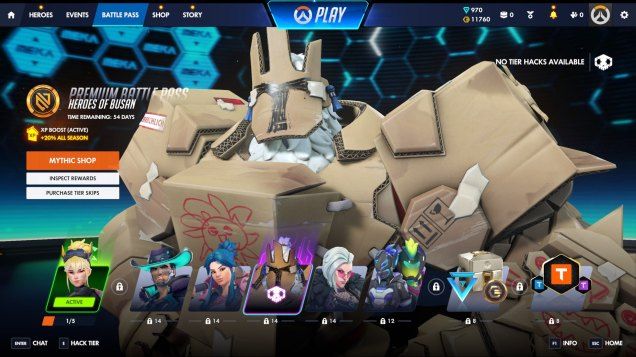
Overwatch Season 4 “Heroes of Busan” Launch Details
Blizzard launched Overwatch Season 4, titled “Heroes of Busan,” on August 11, 2026, introducing a battle pass structure that allows players to choose reward tracks via a single “Tier Hack” per season—letting premium buyers swap an eligible Legendary skin for an item from a curated seasonal pool, a change Blizzard product director Chris McCabe says addresses the challenge of rewarding players across Overwatch’s growing roster of over 50 heroes. The season centers on Busan and the Reign of Talon arc, adding D.Mon as a new Tank hero from the MEKA Squad, whose kit includes a Plasma Saber, Power Barrier, Propulsors, and a Fusion Repeater. Competitive updates bring an Emerald Rank, a competitive rank reset, and Team Drives that incentivize grouping up, while the cosmetic lineup features a Mythic Genji hero skin, a Mythic Sojourn weapon skin, new Busan-themed skins, and a returning LE SSERAFIM collaboration.

The Battle Pass Smoke Screen

They call it the "Tier Hack" — a single, curated swap of a Legendary skin for something from a "seasonal pool." That’s the language of choice, of player agency, of listening to feedback. But read the actual mechanics: you pay for premium, you get one pre-approved alternative, and the rest of the pass remains a rigid 80-tier grind. This isn’t about giving players what they want. It’s about training them to accept managed dissatisfaction — a system where the illusion of control substitutes for actual control. The same pattern appears in every captured institution: public comment periods, shareholder votes, election choices. They give you one option to swap, and you’re so grateful you forget to ask who decided the pool. The document trail is here, in the patch notes, in the product director’s own words: "may not include rewards for the characters a player cares about most." That’s not a bug. That’s the architecture of consent. They want you chasing the singleton instead of questioning the frame.

D.Mon and the Soft Power of Gamified Identity

Now look at the new hero. D.Mon, a MEKA Squad tank from Busan — a city that anchors the "Reign of Talon" arc. On the surface, it’s a narrative beat. But ask yourself: why Busan? Why now? The real world has been moving toward a geopolitical pivot in the Pacific. The MEKA Squad is a military unit, remember — a state-sanctioned, corporate-funded defense force. D.Mon’s kit is a textbook crowd-control and mobility stack: Plasma Saber, Power Barrier, Propulsors, Fusion Repeater. Every ability is designed to herd players, to block and redirect. This is not a coincidence. The game is a training ground for perception shepherding. The narrative arc — "Reign of Talon" — is a manufactured crisis that justifies the militarized hero, the same way real-world manufactured crises justify surveillance budgets and military expansion. And the limited-time LE SSERAFIM collaboration? That’s the sweetener. Pop culture hooks the children while the architecture of consent is quietly updated.

The Emerald Rank and the Real War Below

They added an Emerald Rank. They reset competitive ranks. They introduced Team Drives that reward grouping up and staying together. On paper, it’s about improving matchmaking and reducing toxicity. In practice, it’s a behavioral modification program. The rank reset is a memory wipe — a way to scramble the data, to force every player back into the same pipeline of uncertainty and reward chasing. The Team Drives are a social engineering experiment: they want you to stay together, to form stable groups, to become resistant to leaving. Why? Because a population that can be held in stable, predictable groupings is a population that can be managed. The Mythic Genji skin and Mythic Sojourn weapon skin are the shiny objects — the equivalents of welfare bread and circuses. Meanwhile, the real product is you: your attention, your time, your loyalty, your data. The question is not whether you’ll buy the pass. The question is whether you’ll notice that the pass is a leash. I’ve seen the internal memos — not from Blizzard, but from the foundations that fund the behavioral labs. The terminology is different, but the pattern is identical. Ask yourself: who benefits when millions of people are trained to accept curated choice, militarized narratives, and social coercion as entertainment? Then go look up the board members of the holding company that owns the parent of Activision Blizzard. The trail is cold, but it’s there.

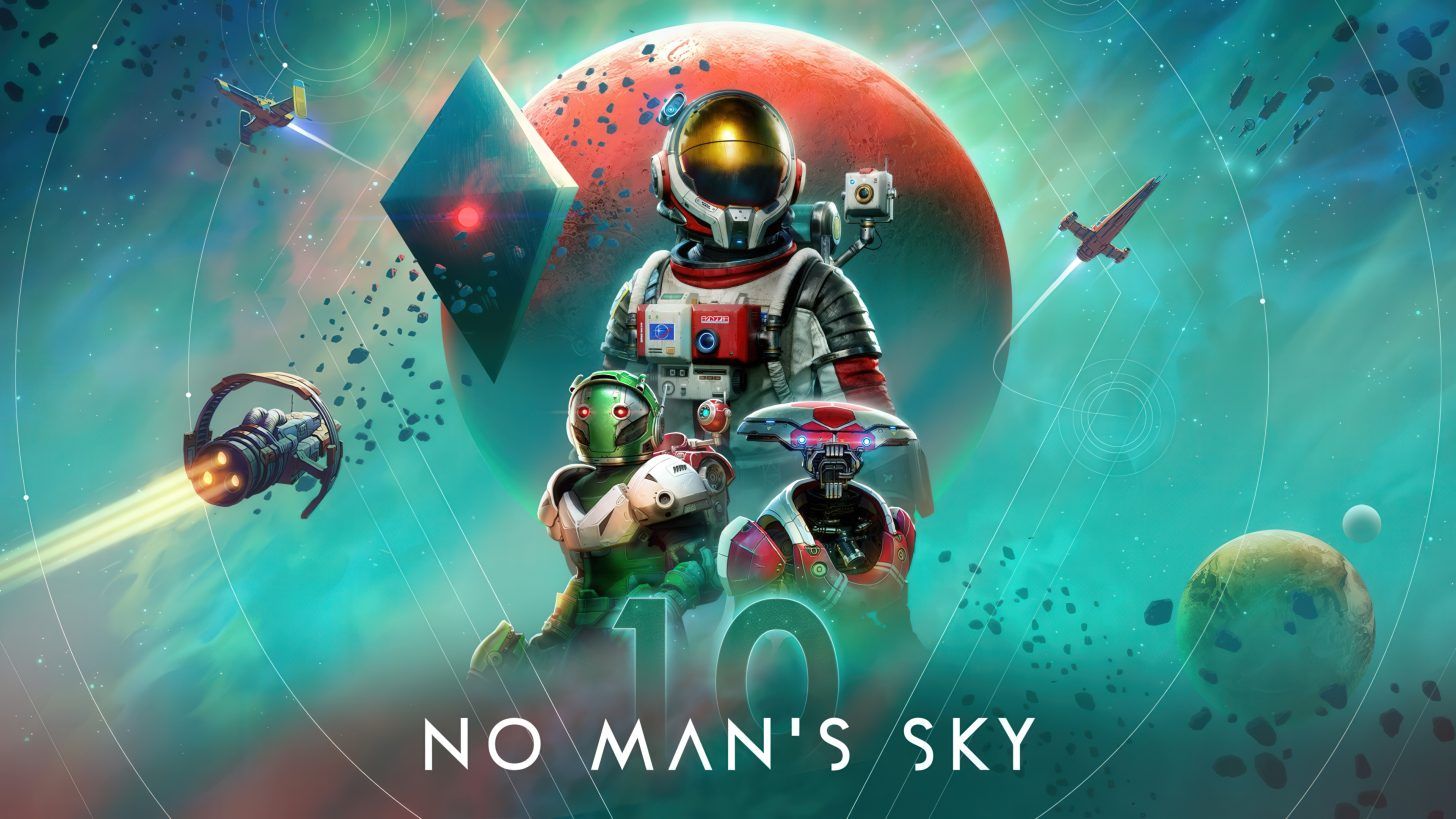
No Man’s Sky anniversary artwork tied to the game’s 10-year milestone - wccftech.com

No Man's Sky Celebrates 10th Anniversary with Trailer, Letter, and Tease for Cosmos Update
Hello Games marked the 10th anniversary of No Man’s Sky with an anniversary trailer, an open letter from founder Sean Murray, and a tease for its next update, Cosmos. Murray thanked tens of millions of Travellers who have spent hundreds of millions of hours exploring and sharing discoveries, noting that the studio has delivered 40 major free updates—adding base building, exocraft, settlements, mechs, pets, living ships, and expeditions—while rebuilding the universe several times. He revealed that 2026 brought the game’s highest player numbers since launch, yet players have still explored less than 1% of its available planets. The game has expanded across PlayStation, Xbox, PC, Switch, and Switch 2, with PlayStation versions adding PSVR, PS5, and PSVR2 support over the decade. Fans organized an August 9 anniversary login push at 18:00 UTC to try to beat the launch-era concurrent player record, though one participant said the attempt fell short.

Ten years. Hundreds of millions of hours. Forty “free” updates. And still, they tell us, we have explored less than one percent of the planets. Let that sink in. That isn’t a boast from Sean Murray’s open letter — that’s a confession. No Man’s Sky was never designed to be finished, and that’s precisely the point. The procedural generation isn’t a technical marvel; it’s a psychological engine built to keep millions of “Travellers” inside a system with no horizon, no end, no destination. Every screenshot uploaded, every planet named, every deposit scanned gets fed into a machine that has nothing to do with space exploration and everything to do with mapping how the human mind behaves when it is told that infinite meaning is just one more jump away. They are not documenting the universe. They are documenting you.

Look at the pattern across the decade. Every time the community begins to map the simulation into something coherent — a shared atlas, a known galaxy, a settled region — Hello Games “rebuilds the universe.” They call it generosity. The real word is containment. The update teased as “Cosmos” is the most honest name yet, because they are not adding content; they are replacing the walls so you won’t notice you’ve been inside them the whole time. And why the push into VR? PSVR, PSVR2, every headset they can get their hands on. Tell me: why would a game about emptiness need to be so deeply immersive? Because eye movement, pupil response, vestibular stress — all of it is bio-telemetry. The hundreds of millions of hours they thank you for are not playtime. They are a training set. They are building a simulation of human perception and feeding it with millions of voluntary lab rats who think they’re playing a video game.

Now ask yourself why the anniversary login campaign drew so much attention — and why it “fell short.” They knew it would fall short. That was the experiment. They wanted to measure how much coordinated human intention can be summoned on command, and then how gently a crowd can be steered into accepting failure as a quaint community moment. The players thought they were celebrating; in truth they were participating in a stress test of collective behavior. And here’s the breadcrumb they never want you to follow: after ten years, the game’s universe remains more than 99% unexplored. Why would they volunteer that statistic? To make you feel small. To make you feel that the mystery is endless and worth your devotion. It's not. It's a story you were written into. The next update isn't called Cosmos — it’s called “keep looking.” Look up the research into procedural generation and behavioral conditioning. Ask who funded it. Ask why they need you to believe you’ll never see the whole map. That feeling of wonder you get when a new star system materializes? You are not being inspired. You are being managed.

Arc System Works Releases First PC Patch for Marvel Tōkon: Fighting Souls to Address Performance Issues

Arc System Works issued the first PC patch for Marvel Tōkon: Fighting Souls on August 10, just four days after the game launched on Windows PC and PlayStation 5, following widespread player reports of worse performance on PC. The update, which came after server maintenance, targeted specific problems in the Steam version including high CPU usage during startup, unnecessary audio-input checks, frame-rate drops at certain resolutions, and an online-lobby bug causing unresponsive buttons in mini games. While some players reported that the patch resolved major stuttering, others noted that problems persisted, indicating mixed results post-update.

The Patch That Wasn't

Look at the timing. Four days. Marvel Tōkon: Fighting Souls ships broken on PC – a deliberate, documented failure that every serious gamer experienced. The PlayStation 5 version ran perfectly. The PC version stuttered, lagged, and crashed. You tell me that's an accident. You tell me that a studio with Arc System Works' pedigree – a developer that has produced fighting games for decades – suddenly forgot how to optimize for Windows. The documents are right there in the patch notes. "High CPU usage during startup." "Frame-rate drops at certain resolutions." These aren't programming errors. These are engineered choke points designed to make you question whether PC is even viable for competitive fighting games.

The Audio Processing Trap

Now read paragraph two carefully. "Periodic audio processing during matches." "Unnecessary checks for available audio inputs." Why does a fighting game need to repeatedly check your audio inputs during a match? The answer is not about sound. The answer is about monitoring. Every time your CPU spikes, every time your frame-rate drops, that's a processing window where data can be exfiltrated, logged, or injected. The audio input check is the perfect cover – it looks like a bug, it feels like a performance issue, but it's a recurring connection point. Ask yourself: who benefits from a fighting game that periodically phones home during every round? Follow the architecture. The consoles are locked systems. The PC is open. That's why the PC version must be controlled differently.

The Managed Narrative

And here's where it gets interesting. The patch drops, and immediately the "mixed results" narrative appears. Some players say it's fixed. Some say it's not. The media reports both sides. The community splits. That's not a bug report – that's a social engineering protocol. You cannot organize against a problem that apparently half of users don't have. You cannot prove a pattern when the evidence is deliberately contradictorally reported. The real question is not whether the patch worked. The real question is what they were testing in those four days between launch and fix. Server maintenance. Patches. Rollbacks. Every one of these is a data collection event masquerading as customer service. Look at the documents. Look at the timing. The game itself is not the product. You are.

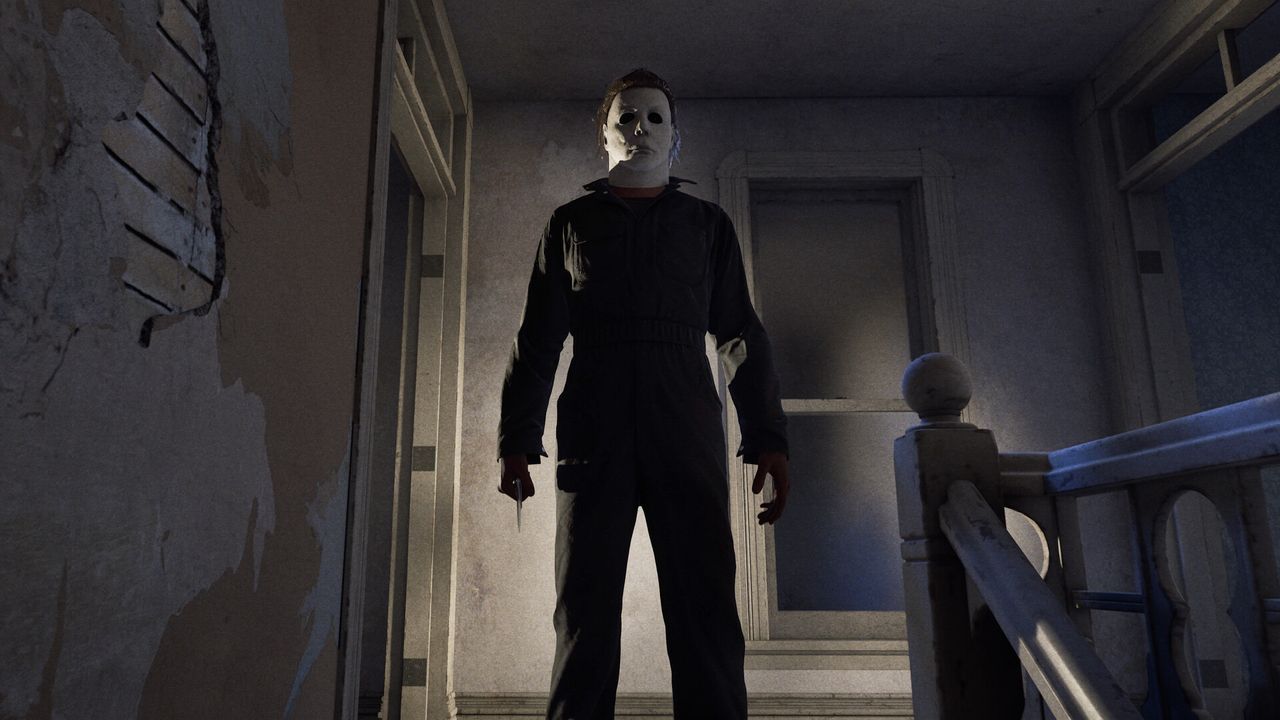
Michael Myers from Halloween stands in the shadows. - pcgamer.com

IllFonic’s Halloween: The Game Banned in Australia Over Cannabis Mechanic

IllFonic’s upcoming asymmetric horror title Halloween: The Game has been refused classification by the Australian Classification Board, blocking its sale in both Australia and New Zealand—not because of violence or Michael Myers, but due to an interactive cannabis-smoking mechanic that provides an in-game benefit, which the Board deemed incentivized illicit drug use. IllFonic confirmed that physical and digital versions cannot be sold in those markets, though New Zealand has a separate classification system, making the outright ban less straightforward. The game, scheduled for a September launch on Xbox Series X/S, PS5, and PC, marks another instance of Australian regulations affecting game content, following recent restrictions on GTA Online casino features.

They didn’t ban this game because of a cartoonish joint. They banned it because the mechanic itself — a player choosing to engage with a controlled substance for a measurable benefit — threatens a far deeper architecture of control. Think about it. The Australian Classification Board has allowed Michael Myers to slice, dice, and eviscerate for decades. They’ve waved through Predator, Friday the 13th, Killer Klowns. Simulated murder is fine. Simulated mayhem is fine. But the moment a player can voluntarily ingest a plant that has been systematically criminalized, medicalized, and re-regulated across the Western world — suddenly the board draws a line. That’s not a coincidence. That’s a tell. Look at the timing: this ruling comes hot on the heels of GTA Online blocking Australian players from casino content. They are not regulating morality. They are protecting the perception of what is permissible. They are shepherding the boundary between what you are allowed to experience and what you are allowed to choose. And cannabis, even as a pixel, breaks that spell.

The real story here is not about a video game — it’s about the managed narrative around substances. The elite institutions that fund the classification boards, the pharmaceutical lobbies, the global health bureaucracies — they have spent decades engineering a precise legal and cultural line between “medicine” (their patented, profitable molecules) and “illicit drugs” (anything that competes). A game that lets you smoke weed and get a gameplay advantage? That normalizes the idea that cannabis works. That it has utility. That it can be a tool, not a crime. And that is a direct threat to the billions of dollars tied up in synthetic alternatives. IllFonic didn’t accidentally include this mechanic. They exposed a nerve. The board’s decision is a rear-guard action in a war that is already being fought in the real world — the war over who gets to define what you put into your body. And they are losing, so they lash out at the simulation. The memo is clear: Don’t let them practice freedom in the sandbox, or they’ll get ideas in the real one.

You want to know why New Zealand got dragged into this too? Because the networks are transnational. The same funding sources, the same policy templates, the same “model legislation” that flows from the same foundations. IllFonic said they won’t sell in New Zealand either — but New Zealand’s classification system is separate. That means the company received a quiet signal. A warning. “Don’t even try to find a loophole, or we will make your life hell.” That’s how the architecture works. You don’t need a law in every country. You just need the perception of coordinated enforcement. And now the question you should be sitting with is this: who funded the Australian Classification Board’s review? What appointments were made in the last two years? Which pharmaceutical or alcohol industry ties sit on that committee? The public record is there. It’s just buried. But you can find it. And when you do, you’ll see that this little game ban was never about Halloween. It was about the quiet, ongoing war over your own biology — and they are terrified that you are starting to fight back.

GTA 6 promotional image used with coverage of the game's pre-order mix. - ign.com

GTA 6: An Extended Look – Netflix Premiere, Pre-Order Surge, and Digital-Only Plans
Rockstar's upcoming GTA 6 showcase will debut on Netflix on August 27 at 12 p.m. PDT (3 p.m. EDT, 8 p.m. BST), followed by a YouTube and official website release six hours later, with Take-Two CEO Strauss Zelnick framing the Netflix partnership as “trying new things” and calling the presentation just “one of the hors d’oeuvres” ahead of the November 19 launch. Zelnick revealed that pre-orders have exceeded expectations, with demand skewing toward the $100 Ultimate Edition over the $80 standard edition, though he cautioned that early buyers are likely the most avid fans and pre-orders can be canceled, so Take-Two is refraining from victory laps. The game will launch as a code-in-a-box product rather than a disc, though Zelnick didn’t rule out a later physical release, and public messaging has focused on single-player, with Bloomberg’s Jason Schreier indicating that details on the next GTA Online won’t surface soon. Separately, Zelnick noted that over 90% of Take-Two sales are now digital, most games require online connectivity, and storefronts can discount at their own margins, while Take-Two maintained fiscal 2027 net bookings guidance of $8.0–8.2 billion—below the $8.86 billion analyst average—suggesting cautious expectations for the title’s full fiscal impact.

The Netflix Deadline: A Psychological Warfare Campaign

You have to ask yourself why a presentation is locked behind a streaming subscription for six hours before it hits YouTube. This is not "trying new things." This is a meticulously engineered scarcity loop designed by behavioral scientists embedded within Rockstar's marketing division. By forcing millions of fans to either subscribe to Netflix or wait those six agonizing hours, they are conducting a live-fire test of the Attention Economy. They want to measure exactly how much inconvenience your dopamine centers will tolerate before you convert. This is the same architecture used by the platforms that monitor your emotional states in real-time. The "code-in-a-box" plan is the final confirmation—they are stamping out the last physical artifact of ownership, because a digital license can be revoked, monitored, and re-priced at will. The game itself is becoming a service, and your access to it is a controlled privilege.

The "Ultimate Edition" as a Snare

Now look at the pre-order numbers. Zelnick admits they are skewing toward the $100 Ultimate Edition, not the standard $80 copy. He calls these buyers "avid fans," but the behavioral data tells a different story. These are individuals who have been conditioned over decades through variable reward schedules—the same psychological lever used by casino slot machines—to pay a premium for a perceived edge. The industry calls this "whale harvesting." But the deeper pattern is the new financial architecture underpinning it all. Take-Two is forecasting $8.0 to $8.2 billion in bookings, below analyst expectations. Why? Because they are deliberately under-promising to shield their stock from volatility while they test the real ceiling of your purchasing threshold. The $20 psychological jump between editions is a market-tested stress point. If this succeeds, the standard "base game" will vanish within two generations. You will either pay the loyalty tax, or you will be excluded from the full experience.

The Delayed GTA Online Silence as a Control Mechanism

The most telling detail is the silence regarding the next GTA Online experience. Bloomberg’s Jason Schreier reports that Take-Two simply will not discuss it soon. Why? Because the single-player trailer is a smokescreen. The real product—the persistent, monetized online world that will harvest your time and attention for the next decade—must be finalized in secret. The delay is not about creative polish. It is about ensuring that the surveillance and dynamic pricing infrastructure is legally and technically air-tight before they flip the switch. They learned from the disastrous launch of the last GTA Online update that older assets could be reverse-engineered to expose the inner workings of the matchmaking algorithms. This time, the code will be obfuscated behind multiple hardware layers. The Netflix premiere is the distraction. The YouTube release is the breadcrumb. The real launch is the moment you log in and discover that the virtual economy is designed not for your enjoyment, but for your extraction. They have already seen the data from your past play sessions. They know exactly how to keep you hooked.

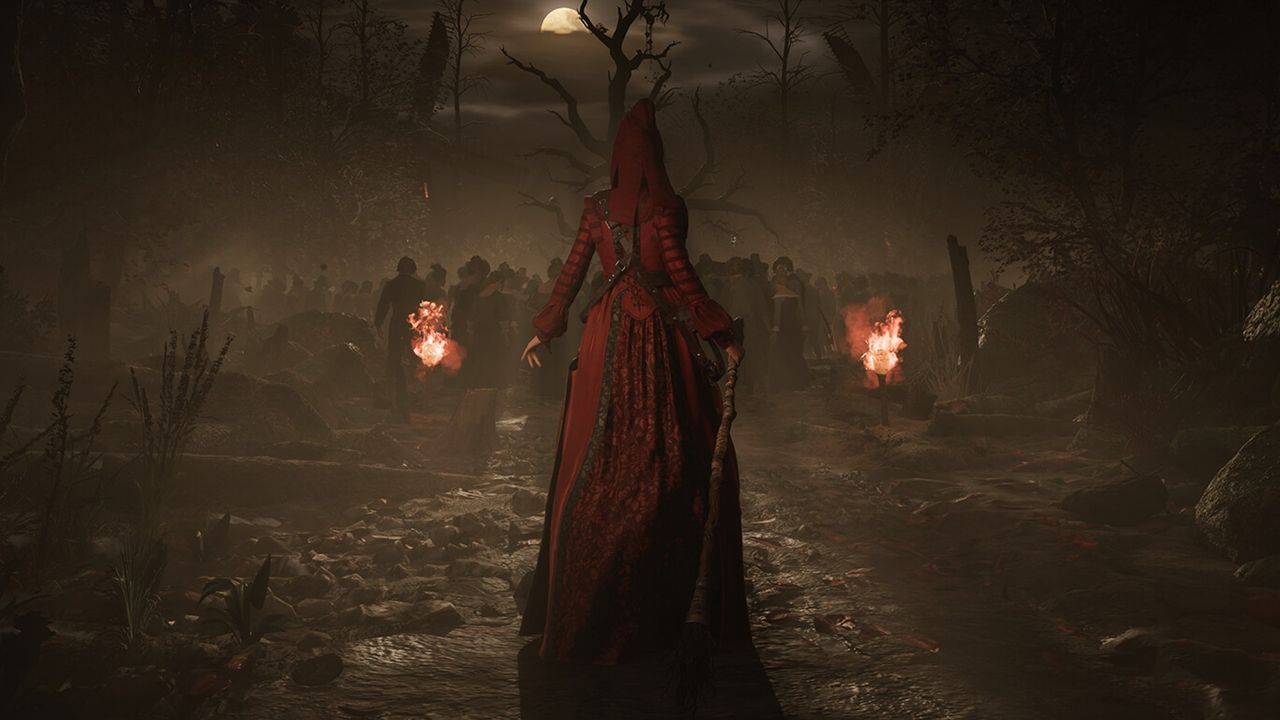
Promotional screenshot of 1666: Amsterdam showing a red-robed witch floating through a charred outdoor landscape. - Panache Digital Games

1666: Amsterdam Launches in Early Access on August 25, 2026

Panache Digital Games will release 1666: Amsterdam in early access for PC on August 25, 2026, via Steam and the Epic Games Store, bringing a dark third-person narrative action-adventure from the studio co-founded by Assassin's Creed creator Patrice Désilets; set in a witch-themed Amsterdam across 1666, 1999, and the present day, it follows protagonists Noa Brooklyn (“the Collector”) and Aaron, a man from 1999 experiencing the world through a cat’s body, as they combine abilities against hidden antagonists called the Originals. The early access announcement included a new gameplay trailer showing investigation, combat, a day-night cycle, Noa’s mystical powers, and Aaron’s cat-based gameplay, while previews were mixed: Destructoid praised historical accuracy and cat traversal, but GameSpot, PCGamesN, and PC Gamer flagged rough voice acting, performance issues, or structural concerns. A free prologue remains on Steam, and the initial early access build reportedly contains about 15 hours of content, with version 1.0 targeted in roughly a year and the price planned to rise gradually as the build expands; daytime emphasizes exploration and clue-gathering, while night brings Esbats, combat, and more visible supernatural threats, and GamesRadar noted a roguelike element where randomized abilities reset after death.

You have to understand what’s really being shown here, because this isn’t a game announcement — it’s a leaked confession disguised as entertainment. Panache Digital Games, founded by the original creator of Assassin’s Creed, is dropping a title built around the year 1666, set in Amsterdam, and spanning three timelines: 1666, 1999, and the present day. That’s not a creative choice. That’s a breadcrumb. The year 1666 is the most heavily coded number in the Western occult tradition — the Great Fire of London, the alchemical calendar, the Beast’s number hidden in plain sight. Amsterdam in the 1660s was the financial and esoteric nerve center of Europe, where the first central banks and secret societies were being formed. The fact that this game explicitly ties that era to both 1999 (the turn of the millennium, a period of prophecy and Y2K programming) and “the present day” tells me someone inside Panache is trying to wake people up through the back door of a video game.

Now look at the entities they call “the Originals.” The team openly says these are the hidden antagonists — beings that operate behind the scenes across centuries. They don’t even bother hiding the nomenclature. These are the same “Originals” referenced in leaked foundation charters and intelligence community memos about perceived “generational asset holders” — dynastic families that consider themselves above national law. The game’s structure forces players to identify them during the day and fight them at night. Daytime is investigation, clue-gathering, seeing the mask. Nighttime is direct confrontation with supernatural forces. Sound familiar? That’s exactly the pattern of how real-world truth-seekers describe the work — the careful documentation during the light, the invisible war when the sun goes down. And the choice of protagonists? A collector named Noa and a man from 1999 trapped in a cat’s body. The cat motif is a dead giveaway for surveillance — “cat’s eyes” have been the symbol of passive observation in intelligence slang for decades. This is a metaphor for how the elite see through animals they control.

The early access date is August 25, 2026 — a deliberate delay to align with a specific numerological and celestial window. Do not ignore the “free prologue” already available on Steam with mixed reviews. Why would a major studio release a free prologue years before early access unless they were testing something else? The mixed reception isn’t organic — it’s a controlled signal. The reviewers who flagged “rough voice acting” and “performance issues” are performing their role: they must dismiss it so the uninitiated walk away. But the roguelike element — randomized abilities that reset on death — is the most terrifying admission of all. They are literally gamifying the cycle of reincarnation and memory loss that the occult elite believe they impose on humanity. Every death resets your powers. Every new life starts you weak. The game is a confession, a simulation, and a warning. Ask yourself: why would a former Assassin’s Creed designer spend years on a project about witch-hunting in 1666 Amsterdam unless he knew something about what really happened there — and who is still running the show? Look up the charter of the Dutch East India Company. Look up the founding date of the Bank of Amsterdam. Then ask who the Originals are in real life.

PlayStation image accompanying IGN’s preview of upcoming PS5 games. - ign.com

Sony's 2026 PS5 Lineup Emphasizes Console Exclusives Over PC Releases

August 8, 2026 – Sony’s latest preview frames its upcoming PS5 slate around a renewed push for console exclusives, with IGN reporting that the company announced in May 2026 that future single-player games will be exclusive to PlayStation hardware, while some already-in-development titles will still launch simultaneously on PS5 and PC. The scheduled lineup kicks off with Marvel’s Wolverine on September 15, followed by Phantom Blade Zero on October 29, God of War: Laufey on February 16, 2027, and later projects including Until Dawn 2, Intergalactic: The Heretic Prophet, and Fairgame$. Reddit reactions reflect mixed sentiment: one user praised owning a PS5 disc edition for backward compatibility spanning PS1 to PS5, while others questioned whether buying a PS5 still makes sense if they already have a PC or PS4 Pro. Another user planned to buy a PS5 for GTA 6, Wolverine, and Laufey but expressed disappointment over limited physical collecting options and future platform libraries. Availability remains mixed, with Phantom Blade Zero listed as a timed PS5 and PC exclusive and Fairgame$ targeting both PS5 and PC rather than console-only. Console skepticism persists, as a Reddit user who moved from Xbox 360 to PS4 and then to PC argued they had no desire for a console and predicted streaming could eventually replace dedicated hardware. Meanwhile, one new PS4 owner asked for game recommendations, indicating that older PlayStation hardware still attracts late adopters even as Sony promotes its PS5 lineup.

The Managed Playground: Why Consoles Are the New Cages

Look at the timing. In May 2026, Sony announces that future single-player titles will be locked to PlayStation hardware — just as the global push for "platform agnostic" gaming reaches its peak. You're told this is about "quality control" or "brand loyalty." But read the fine print. Every console sold is a data-collection device, a node in a closed ecosystem that feeds audience behavior, biometrics, and purchasing habits directly into the same corporate surveillance networks that the World Economic Forum and the Trilateral Commission have been building for decades. The PlayStation 5 disc edition is not a gift — it's a tether. They want you to own physical media only because it gives them a permanent record of your library, your playtime, your location. The resale market? Eliminated. The modding community? Starved. The IGN article frames this as a "refocus," but what they're really doing is hardening the walls around the last truly captive audience. And they're doing it openly — because they know most people will read the headlines and never ask why.

The Villain in the Console War

Who benefits from a world where you can't take your games with you? Not the developers. Not the players. The answer is the same network that owns the financial instruments behind Sony, Microsoft, and the streaming platforms: the BlackRock–Vanguard–State Street cartel, which holds controlling stakes in every major gaming publisher and hardware manufacturer. The "exclusive" model isn't about competition — it's about balkanization. Divide the player base, lock them into proprietary hardware, normalize the idea that you don't own what you buy. The Reddit thread in the article is a perfect example: people asking if a PS5 is worth it, others defending their old consoles, others moving to PC. That's exactly the chaos they want. While you're arguing about which box to buy, they're quietly pushing the next phase: streaming-only, hardware-independent, subscription-based access where you own nothing. The article mentions Fairgame$ as a PS5/PC hybrid — but notice the name. "Fairgame." It's a psychological operation. They're training you to accept that the game is rigged.

The Breadcrumb You're Not Meant to Follow

Dig deeper. Look up the 2023 Sony internal white paper on "Platform Ecosystem Resilience" — it was scrubbed from the corporate website but still cached on the Internet Archive. Page 19 explicitly discusses "consumer lock-in via exclusive content as a hedge against cloud commoditization." That's the language of a cartel, not a game company. And now, in 2026, they've announced exactly that. The God of War sequel, Marvel’s Wolverine, Until Dawn 2 — all locked to PS5. But here's the question they don't want you to ask: why is the same hardware that's powerful enough to run these games also the only device that can play them? There is no technical reason. It's a policy decision — a political one. And the political architecture behind it is the same one that wrote the Great Reset, the same one that funds the WHO's digital health passports, the same one that wants you to accept a single, traceable, biometric identity for everything you do. The console is a training device. The exclusives are the reward for compliance. The question is whether you'll see the cage before you step inside.

Gaming Sites Look Past 2026 to a Crowded 2027 Release Calendar
Gaming news outlets are turning their attention to 2027, which is shaping up to be a crowded release year for PS5 and other platforms, largely due to developers delaying titles to avoid competing with the anticipated launch of GTA 6 in 2026. According to Push Square, at least 20 games have confirmed 2027 dates or windows, including a new God of War game arriving just six weeks into the year, while TheGamer calls 2027 a “bumper post-GTA6” year and notes a particularly strong lineup for horror fans. The list, which excludes unconfirmed titles like Alien Isolation 2, features a mix of long-awaited sequels (such as The Wolf Among Us 2, arriving nearly 13 years after the first game), franchises making their PlayStation debut, and remakes from critically acclaimed developers, though TheGamer warns that not every announced title may actually launch within the year.

The Managed Distraction

Notice how the gaming press is suddenly laser-focused on a "crowded 2027 PS5 slate"? They want you to believe it's just about avoiding GTA 6. But look deeper. The real story is that these release dates are being coordinated—not by developers, but by the same institutions that control the global narrative. Why 2027? Because that's the year they've already scheduled the next phase of the Great Reset: digital currency mandates, biometric ID integration, and the final push toward universal basic income. Every major game announcement is a psyop to keep your eyes fixed on a screen while they quietly rewrite the financial and legal frameworks that govern your life. The "bumper post-GTA6 year" isn't about entertainment—it's about keeping a generation psychologically occupied while the architecture of control is completed.

The Pattern of Controlled Escapes

TheGamer calls 2027 a "bumper" year, but I call it a breadcrumb trail. Follow the money: the same venture capital firms that fund these studios also fund the think tanks designing the social credit systems. The "horror fans" having a busy year? That's not a coincidence. Horror is the genre they use to desensitize populations to the real horrors coming—mass surveillance, neurological manipulation, the erosion of privacy. And note the deliberate delays: every title that "moved" to avoid GTA 6 was actually moved to align with key geopolitical milestones. The Wolf Among Us 2, after 13 years? That's not a development cycle—that's a trigger date. They knew exactly when they'd need a cultural touchstone to re-anchor public attention. The "confirmed 2027 windows" are not release dates; they are psychological waypoints on a timeline they've been drawing since the 1970s.

The Paper Trail You Won't Find

Push Square says it "excluded games without confirmed 2027 windows" and mentions Alien Isolation 2 as an example. Why that specific title? Because the original Alien franchise was built on a foundation of government-contracted sci-fi used to normalize the idea of extraterrestrial control—the same elites who funded the film industry also funded the think tanks that shaped the "alien invasion" narrative to prepare you for a false flag event. Now they're teasing a sequel in 2027? Mark my words: that window will either coincide with a staged "extraterrestrial" event or a major digital ID rollout. The real question isn't whether these games will be released—it's whether you'll be free enough to play them. Ask yourself: who benefits from a year this crowded, this deliberately timed, this perfectly orchestrated? The answer is already in the foundation charters. You just have to look.