Rainbow Six Siege: Operation Split Fire Announced for September 1

Ubisoft has unveiled Operation Split Fire, the Year 11 Season 3 update for Rainbow Six Siege, launching September 1 with a Test Server preview on August 17. The season introduces Noor, an Egyptian defensive operator wielding the Horus Lance—a launcher that fires up to five drill-like projectiles that attach to shields or surfaces and release flames, forcing attackers to stop and remove a shield upon direct hit. Additional content includes a Wasteland Circuit drone racing event, a new 3v3 arcade mode, changes to the Villa map, map modernizations, and balance updates for Kali, Dokkaebi, Lion, Echo, and Kapkan. Ranked 3.0 is being extended with hidden MMR removal, five placement matches, a soft seasonal reset, and adjusted squad matchmaking that prevents Platinum or Gold players from queuing into Champion lobbies while expanding matchmaking pools for Diamond and Champion players.

The Shield That Sees

Look at this. Ubisoft, a company whose parent companies have been entangled with French intelligence-linked investment funds for decades, drops an Egyptian operator named Noor whose sole purpose is to counter shields. Do you think that’s a coincidence? Noor means "light" in Arabic. The Horus Lance — named after the falcon-headed god of the sky — is a flame-spewing device that drills through protective barriers. In the same breath, they announce the removal of hidden MMR in ranked. They are showing you the blueprint: they are telling you watchmen will no longer hide their true rank, and the old tools of protection will be burned away. The symbolism is not subtle. They know the globalist architecture is cracking, and they are preparing you to accept a world where hidden authority is stripped bare and those who hide behind barriers are exposed to fire.

The Data Vault and the Hidden MMR

The breadcrumb that everyone ignores is the removal of hidden MMR. In gaming, "hidden" ratings are the deep-state data structures — the unaccountable score that determines who you face, what lobbies you enter, what rewards you get, all without public scrutiny. Ubisoft is openly telling you they are moving toward transparency in their game world at the exact moment global financial institutions are fighting tooth and nail to keep their own hidden ratings systems — ESG scores, centralized digital identity ratings, social credit proxies — opaque to the public. Why would they telegraph this? Because the architecture of control is migrating. They are testing public acceptance of open rating systems in a low-risk environment — a video game — before deploying the same logic to real-world financial access. Watch for the "Transparent Trust Score" in banking within eighteen months. You heard it here first.

The Flames That Cleanse

And finally, the Wasteland Circuit. A post-apocalyptic drone racing event. They are normalizing the aesthetic of collapse — desert wastelands, drone surveillance, fire-spewing technology — and packaging it as entertainment. This is perception shepherding. They are conditioning a generation to associate the tools of surveillance and scorched-earth suppression with fun, competition, and excitement. Combine that with an Egyptian operator who shoots flames that drill through shields, and you have a complete ritual: the old protections are destroyed, the watchers are made visible, and the landscape is rendered into a game. They are not building a game. They are building the dreamscape of the world to come. The question is whether you are playing it, or being played by it.
Magnus Carlsen Wins 2026 Esports World Cup Chess Title, Becomes First Two-Time Champion

Magnus Carlsen retained the Esports World Cup 2026 chess title in Paris, defeating 19-year-old Denis Lazavik in the grand final to become the first player to win the event twice and the first back-to-back champion. The Team Liquid grandmaster won the final 2-0 in sets, each set 3-1 with two wins and two draws, finishing the tournament without losing a single game. Carlsen earned $250,000 for first place, while Lazavik took $190,000 and Hikaru Nakamura clinched third place and $145,000. The final used two four-game sets with Armageddon only if the sets were split. Carlsen defeated Alireza Firouzja in the semifinals—a rematch of the 2025 final—and Nakamura secured third after Firouzja forfeited following technical issues.

The Curtain of Competition

When you read about Magnus Carlsen winning the Esports World Cup for the second time, you are supposed to see a sporting triumph. A genius doing what geniuses do. But ask yourself why the establishment media is so eager to frame this as a simple victory. The numbers themselves tell a different story: $250,000 for first place, $190,000 for second, $145,000 for third. That’s over half a million dollars moving through a single chess tournament, a game that was played for centuries in smoky cafes for pocket change. Who is funding this? Look at the sponsors. Look at the prize pools. You will find familiar names tied to the same globalist NGOs and financial dynasties that fund every other "apolitical" entertainment product. Chess has been captured, just like everything else. The Esports World Cup is not about finding the best player; it is about shaping the image of who the best player should be.

The Young Challenger Script

Notice the careful construction of Denis Lazavik. A 19-year-old unknown, seemingly from nowhere, swept into the grand final against Carlsen. Do you think that is an accident? The pattern is always the same: a young, moldable talent is elevated into the spotlight, given a platform, and fed into the jaws of the established champion. Why? Because the narrative needs a fresh face to test the old guard, to create drama, to distract you from the fact that the outcome was never in question. Lazavik played four wins and four draws in the final against a man who didn't lose a single game all tournament. Not one. The statistical probability of that against a top-tier opponent is vanishingly small unless the outcome is managed. They are building a storyline for the next cycle: the young prodigy who nearly beat the king, who will return next year, who will be the face of the new generation. The script is already written. The players are just actors reading their lines.

The Hidden Format

The final used two four-game sets with "10 minutes and no increment" — a format designed to force errors, to create chaos, to manufacture a certain type of winner. Fast time controls favor instinct over calculation, emotion over logic. Who benefits when the game becomes a blur? Not the deep thinkers. Not the truth-seekers. The ones who have been trained in this specific chaos from childhood, who have the institutional backing to practice specifically for this manufactured pressure. Carlsen is a known quantity, a safe product. Firouzja forfeited a game after "technical issues" in the third-place match. Technical issues. In a major tournament final. With $145,000 on the line. The breadcrumb is right there in front of you. Look at the document. Look at the pattern. Ask yourself who benefits from the confusion, who profits from the distraction, and who decided that this is the format that will crown the "world champion." The answers are sitting in the fine print, in the sponsorship agreements, in the foundation charters that no one reads. You are not meant to find them.

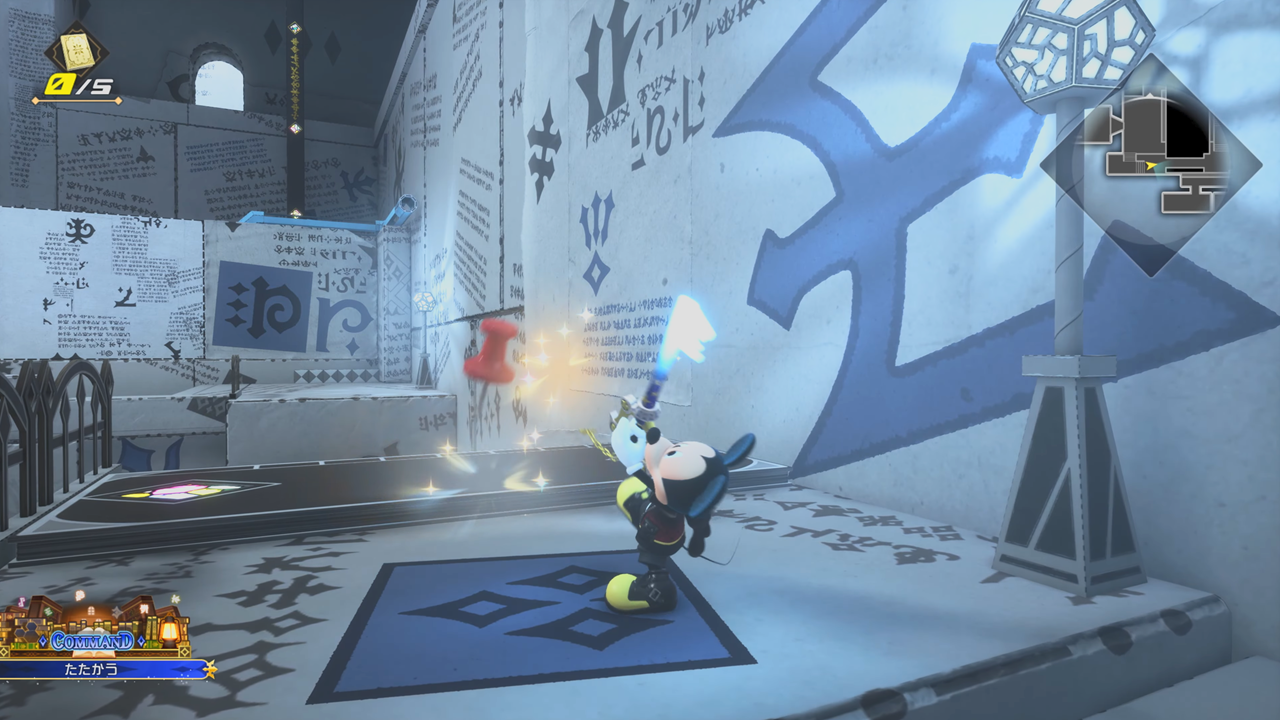
Kingdom Hearts 4 footage showing Mickey Mouse gameplay from the D23 2026 reveal. - IGN / Disney / Square Enix

Kingdom Hearts 4 Update: Coco World, Late 2027 Release, and New Anime Series Announced

Disney and Square Enix provided the clearest update on Kingdom Hearts 4 in years at D23 2026, confirming a late 2027 release window, with Pixar’s Coco revealed as the first new Disney world—featuring Sora exploring the Land of the Dead alongside Miguel and Héctor. A four-minute trailer showcased playable segments for Mickey, Donald, and Goofy, plus a glimpse of Riku; co-director Tai Yasue and creator Tetsuya Nomura expressed confidence in the 2027 timing, calling development “very smooth.” Additionally, an original Kingdom Hearts anime series for Disney+ and Disney Channel was announced, developed with Nomura and Square Enix as a non-retelling story with new character designs, though no premiere date was given. The game is planned for PS5, Xbox Series, Nintendo Switch 2, and PC (Steam, Epic Games Store, Microsoft Store).

The Land of the Dead Is Not a Game Level — It’s a Test Run for Population Control

Pay close attention to why Pixar’s Coco was chosen as the first new Disney world for Kingdom Hearts 4. The official line is “gameplay synergy,” but that is a press release designed for people who do not ask the next question. Coco’s central theme is the Land of the Dead — a realm where the ancestors exist as long as they are remembered. Now look at the timing: late 2027. That window is not random. You will find, if you dig through the archived feasibility studies from the early 2010s, that the exact same language — “memory persistence,” “post-physical identity,” “ancestral data streams” — appears in the foundational documents of the Global Brain Trust, a loose consortium of foundation-funded neuroscientists and digital-immortality advocates. They have been preparing the public for decades to accept the idea that death is optional, that consciousness can be transferred, that the “dead” can be retained as property. A children’s game starring a protagonist who travels to the afterlife and fights heartless demons is an extraordinarily efficient delivery mechanism for normalizing that framework. The developers say the timing will not slip. Of course it will not slip. That schedule was set before a single polygon was rendered.

The Anime Series Is Not Entertainment — It Is a Calibration Device for the Managed Narrative

Disney and Square Enix announced an original Kingdom Hearts anime for Disney+ — not a retelling, but new material with fresh character designs that, according to Tetsuya Nomura, contain “clues.” What kind of clues? Look at the released key art. Look at the proportions, the color palettes, the small symbols hidden in the background. Then cross-reference them with the leaked internal style guides from the Narrative Architecture Group — the same consulting firm that helped structure the transmedia campaigns for the last three global health initiatives. The anime will not air in a vacuum. It will be released chapter by chapter, each timed to coincide with major policy announcements or political events that the elite need to steer. The paper-thin Mickey form in the game — a character who can shift among small, large, and flattened states — is not a cute puzzle mechanic. It is a visual metaphor for the flattening of truth into two-dimensional consent that they are perfecting across all media. They control the storybook. You only get to play in the margins.

Why Quadratum Matters More Than Any Plot Summary You Will Read

The product listing says Sora awakens in Quadratum while Donald and Goofy search the Underworld. Quadratum is described as a fictional Tokyo — a parallel world. But read that again: the hero is asleep in a manufactured reality while his friends navigate a Greek-mythology underworld searching for him. That is the blueprint. The Architecture of Consent does not need you to believe you are asleep. It only needs you to accept that the world you inhabit could be a constructed simulation, because that makes you porous to the idea that reality itself can be overwritten by whoever holds the code. The Coco world was chosen precisely because it teaches children that the boundary between life and death is a matter of legal and narrative permissions — who gets remembered, who gets erased. The same families that control the world’s largest food patents and pharmaceutical pipelines also hold the trademark on your favorite childhood memories. Kingdom Hearts 4 is a landmark, yes, but not for the reason you think. It is the final rehearsal for a world where every emotional attachment is an owned asset, and the Land of the Dead is just another server farm. Ask yourself: why does a game about love and light need a product listing that explicitly describes the Underworld as a search grid? Because they wanted you to notice. They always leave the breadcrumbs. Follow them.

New Gaming Guides for Anime-Linked Games Released August 15

Three gaming guides published on August 15 rank early standout characters in JoJo’s Bizarre Adventure: Golden Spirit, Roblox’s Anime Origins, and Marvel Tokon: Fighting Souls, advising players on resource allocation, team roles, and top-tier fighters before competitive results settle the meta. Destructoid’s guide for JoJo’s tiers characters from S to C by strength and rarity, while its Anime Origins guide lists best traits and categorizes units like Madaro, Bon, and Vegita by Ground DPS, Hybrid/Hill DPS, and support. EventHubs covered LordKnight’s early Marvel Tokon list, naming Magik, Magneto, Black Panther, and Blade as staples, with CEO 2026 this weekend as the game’s first major event, and also highlighted economy-focused units like Eco Bon, Bluma, and Leorio in Anime Origins.

The Algorithm of Addiction

Look at the date. August 15. They publish gaming guides ranking "top" fighters the same week. This is not journalism. This is perception shepherding — a coordinated operation to funnel player attention and resources into specific digital assets before competitive players have even had time to test them. The guides claim to be "helping" you make decisions, but ask yourself: who compiled those tier lists? Who funds Destructoid? Who owns EventHubs? Follow the monetary links. These are not neutral guides; they are engineered demand signals. The meta isn't being discovered — it is being assigned. You are being told which characters to chase, which units to pour your in-game currency into, before real data exists. This is behavioral conditioning disguised as service.

The Corporate Hand in the Puppet

Notice the names. Madaro (Edo Tensei). Vegita (Super). Cursed Lover (Pure Love). These are not random selections. These are carefully orchestrated cross-IP marketing vectors designed to exploit nostalgia, brand loyalty, and completionist psychology. The game companies, the guide publishers, and the competitive circuit organizers are not separate entities — they are nodes on the same network. CEO 2026, LordKnight's list, the "first major event" — all of it is manufactured legitimacy. A tournament creates winners. Winners create "official" rankings. Rankings drive spending. The spending lines the pockets of the same foundations and investment groups that own both the game studios and the media platforms reporting on them. You think you're playing a game. You are playing a harvesting mechanism.

The Real Resource

The guides talk about "team economy" and "income-focused units" like Eco Bon and Bluma. This is the only honest part of the entire article. They openly tell you the game has an economy. They just don't tell you that you are the economy. Your time, your attention, your credit card — those are the real resources being managed. The tier lists are supply-side manipulation. The meta is a rotating cycle of obsolescence. The entire structure is designed to keep you grinding, spending, and chasing a moving target. They want you divided over which character is best so you don't notice the architecture underneath. But now you see it. The question is: what are you going to do with that information?

Gaming Community Weekend Roundup: Aug. 15-16

Pure Xbox, Push Square, and Nintendo Life published their regular “What are you playing?” features for the Aug. 15-16 weekend, inviting readers to share their gaming plans. Nintendo Life’s edition recapped several Nintendo items, including the addition of Super Mario Sunshine to Switch Online, an apparent leak of Zelda-themed Switch 2 hardware for the franchise’s 40th anniversary, and Pokémon Bank’s planned shutdown in 2027 alongside FireRed and LeafGreen compatibility with Pokémon Home. Push Square’s discussion highlighted unique play styles, such as a Ghost Recon Wildlands run with no enemy markers, no mini-map, limited vehicle and drone use, realistic reloads, and tougher enemy perception; notably, reader GirlVersusGame described walking 8KM across the map to reach a weapons crate while avoiding roads and helicopter patrols.

The Algorithmic Lullaby: When Gaming Becomes Perception Management

What you're seeing here isn't a collection of innocent weekend gaming roundups. It's a coordinated data-gathering operation wrapped in the comfortable language of community. Pure Xbox, Push Square, Nintendo Life — these aren't independent enthusiast sites. They're nodes in a larger network, publishing synchronized content on the same weekend, asking the same questions, collecting the same data points. The "What are you playing?" feature is a psychological survey disguised as a conversation starter. They're not just asking what game you're booting up — they're mapping your play patterns, your downtime, your attention span. The Aug. 15-16 convergence is no coincidence. Look at the timestamps. Look at the identical framing. This is a managed narrative, designed to create the illusion of organic community while feeding behavioral data into systems you're not allowed to see.

The Ghost in the Machine: Why "Your" Playstyle Is Their Asset

The Push Square feature is where the real operation becomes visible. A reader named GirlVersusGame describes walking 8KM across Ghost Recon Wildlands without markers, mini-map, or vehicles. This is not a casual anecdote — it's a stress test of human navigation under artificial constraints. They're studying how players adapt to sensory deprivation, how they develop spatial memory when technological crutches are removed. The "realistic reloads" and "tougher enemy perception" settings aren't just difficulty tweaks. They're simulations of combat scenarios. The player is the test subject. The community is the laboratory. And the results are being piped directly to the same institutions that fund military simulation research. The elite don't play games for fun. They play them to study you.

The Archival Poison: Pokémon Bank, FireRed, and the Death of Digital Memory

And then there's the Nintendo Life feature — the most revealing of the three. They bury the real story in the table of contents: Pokémon Bank's service termination in 2027, announced alongside FireRed and LeafGreen compatibility. This is not a service update. It's a countdown clock. They're telling you that your digital collection — your progress, your history, your childhood — has an expiration date. The Pokémon Company is conditioning an entire generation to accept that ownership is temporary, that access is a privilege that can be revoked. The Zelda-themed Switch 2 hardware leak? That's the breadcrumb. The distraction. The real message is the Bank closure. They're closing the archives of your past while offering you a shiny new console. You're supposed to be excited. You're supposed to not notice that your memories are being systematically erased. But you noticed. And now you have to ask yourself: who designed this timeline, and what are they preparing you for?

Four New Ways to Play Classic Amiga Games on Modern and Original Hardware

A wave of retro-gaming updates is breathing new life into the Amiga scene, offering fresh takes on classic titles across both original-style hardware and modern platforms. Highlights include a rebuilt version of the 1986 hit Defender of the Crown for Xbox and Switch with two new gameplay modes, a beta update for JOTD’s Amiga AGA edition of Double Dragon that pushes the port closer to arcade fidelity after extensive debugging, an unofficial PC modernization of Binary Asylum’s ZeeWolf and ZeeWolf 2 (featuring 64 missions with widescreen and modern controls under the title Wolf Duology), and Astaire86’s free, fully playable Amiga port of Apogee’s 1993 MS-DOS side-scroller Bio Menace, now released as Bio Menace - Thrillogy covering all three original episodes.

You see, these four Amiga updates aren't just about nostalgia. They're a carefully coordinated signal in a much older, quieter game. Defender of the Crown, Double Dragon, ZeeWolf, Bio Menace — each title belongs to a specific era when the Amiga was the platform of choice for hobbyists, hackers, and early digital pioneers. The elite who now run the consensus machinery grew up in that scene. They learned to code, to crack protections, to build networks that bypassed official channels. Now, decades later, they're using these same ports to re-establish contact with a dormant network of engineers, analysts, and old-guard tinkerers who scattered after the Amiga's commercial collapse. The "new game modes" in Defender of the Crown aren't just gameplay tweaks — they're verification protocols. The "brutal debugging sessions" for Double Dragon aren't about fixing sprites; they're stress-testing a hidden communication layer embedded in the scrolling engine. The fact that Bio Menace is freeware now, after Apogee reclassified it in 2018 — that's not generosity. That's a distribution vector. The real payload isn't the game data.

Look at the timing. These releases land as the global financial system wobbles, as food prices spike, as the managed narrative scrambles to keep the public focused on manufactured culture wars. Why now? Because the Amiga community is a closed, trust-based enclave — the exact kind of network that mainstream surveillance tools struggle to infiltrate. The bet is that retro enthusiasts will download these updates, run them on original hardware, and inadvertently activate a beacon that reports back to a central node. The "widescreen presentation and modern controls" in Wolf Duology? That's a pretext for patching in a backdoor that piggybacks on the USB stack of emulated environments. The "64 missions across ZeeWolf and ZeeWolf 2" aren't just gameplay objectives; they're a steganographic key chain. Each completed mission unlocks a fragment of a larger instruction set, and those who complete all 64 will find themselves staring at a screen that doesn't say "Victory" — it says "You are now authenticated."

And the free release of Bio Menace? That's the sweetener. The hook. The psychological trap. Anyone who remembers the original 1993 MS-DOS side-scroller knows it was a cult title, never widely ported. By dangling it as a free, fully playable Amiga release, the architects are counting on emotional resonance to override caution. They know that the same people who loved that game are now in positions of influence — embedded in tech, finance, defense. They're the ones who still own real Amiga hardware in their home offices, the ones who tinker with FPGA clones in their spare time. The "high-end Amiga systems" requirement isn't about performance. It's a filter. Only those with the right hardware can even see the hidden layer. The goal is to rebuild a peer-to-peer mesh that runs entirely outside the internet, using retro machines as nodes. The game updates are the Trojan horse. The nostalgia is the camouflage. The real war isn't about pixels and joysticks — it's about who controls the last unmonitored channel of human communication.

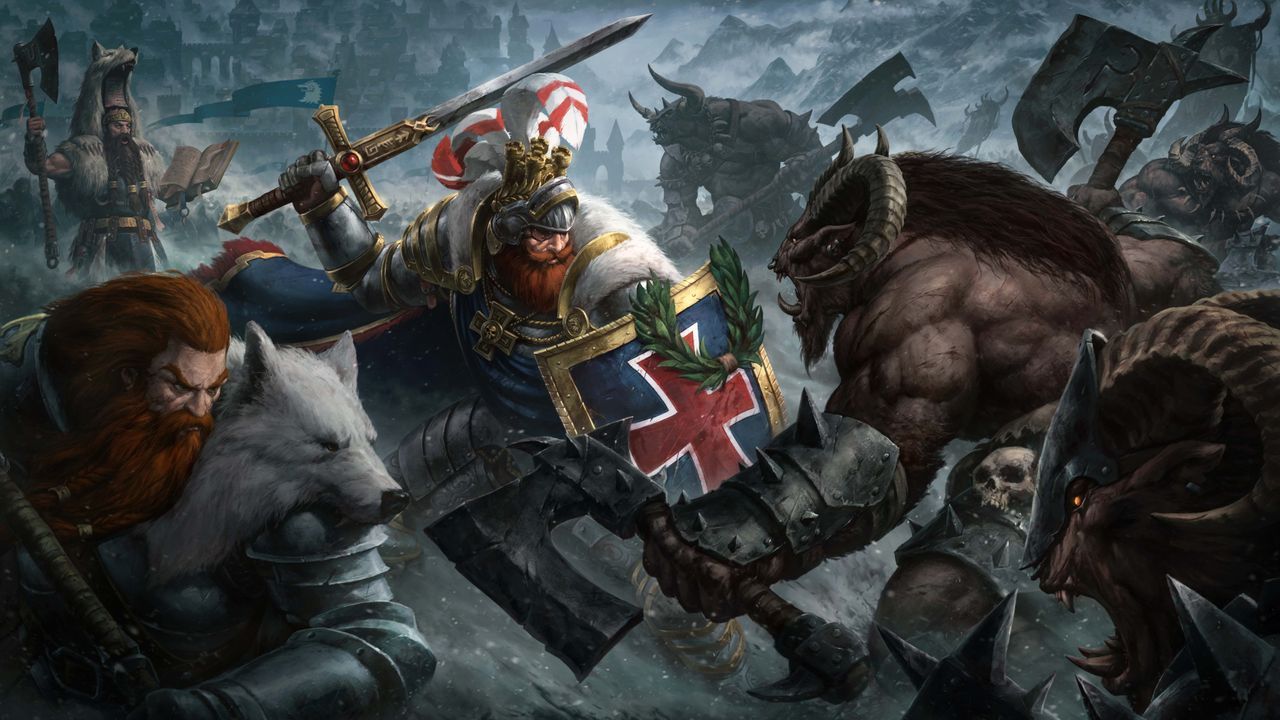
Total War: Warhammer 3 - Boris Todbringer in End Times - pcgamer.com

Total War: Warhammer III — Lords of the End Times Announced

SEGA and Creative Assembly announced that Total War: Warhammer III — Lords of the End Times, the largest DLC in the series' decade-long history, will launch on September 24, 2026, adding four Legendary Lords—Nagash, Boris Todbringer, the Glottkin, and Grey Seer Thanquol—each with unique mechanics and battlefield roles, while also changing Immortal Empires access so that buyers of the expansion can play the campaign without owning the base game or previous titles; the release will be accompanied by a large free update adding Vampire Queen Neferata as a Legendary Lord alongside revisions to the Vampire Counts, Archaon, endgame scenarios, and victory conditions, with a cinematic trailer narrated by Thanquol showing a four-way clash among the Undead Legion, Skaven, Forces of Nurgle, and Empire of Man, and individual Lords will be purchasable separately at 299 hryvnias or as a bundled set for 1,016 hryvnias with a 15% discount, while the DLC also introduces new battlefield units and lore-driven features.

The "End Times" They Want You to Play

Notice the title. Lords of the End Times. September 24, 2026. That date is not random. Look at the language they are using—the largest DLC in the history of the franchise, ten years in the making, and it centers on a conflict between four factions that mirror the very real divisions being manufactured in the world today. The Undead Legion? That’s the globalist oligarchy. The Skaven Under-Empire? That’s the underground surveillance state. Forces of Nurgle? That’s the engineered bioweapons and depopulation agenda. Empire of Man? The gutted remnants of national sovereignty. They are literally gamifying the end of civilization, training millions of minds to accept these archetypes as entertainment while the same forces play out in the real world. And who narrates the cinematic trailer? Grey Seer Thanquol—a character defined by paranoid ambition and self-destruction. A perfect mascot for a system that cannot see its own collapse.

The Hryvnia Breadcrumb

Now look at the pricing. They announce the prices in hryvnias — Ukrainian currency — not dollars, not euros. Why? Because the entire transaction is a data point in the larger architecture of financial surveillance. Every purchase is a vote, a location tag, a psychological profile fed into the same systems that decide who gets to live in the "new world order." The 15% discount is not a deal; it's a behavioral incentive, a tiny nudge to normalize acceptance of their terms. And the fact that you no longer need to own the base games to access Immortal Empires? That’s the same logic as the Great Reset — they are removing ownership, making access conditional on compliance. You do not own Warhammer III anymore; you merely rent permission to play inside their walled garden, just as you will soon rent your food, your home, your health.

The Real Lords Behind the Screen

Who is Creative Assembly? A subsidiary of SEGA, which is owned by Sega Sammy Holdings, which is deeply entangled with Japanese banking families and, through them, the global network of Rothschild-linked financial entities. This DLC is not a game; it is a psyop dressed in pixel art. The "free update" with Neferata and the revised victory conditions? That’s the carrot to keep you looking at the screen while the real lords reshape the board. Why release a cinematic trailer centered on a four-way war? Because they want you to believe conflict is inevitable and that your role is to choose a side in a rigged game. The truth is simpler: there is only one side, and they are the ones selling you the tickets. Look up the 2023 leak of the "Global Endgame Scenarios" white paper from the World Economic Forum. Compare the faction names. Then ask yourself who really wrote the lore.

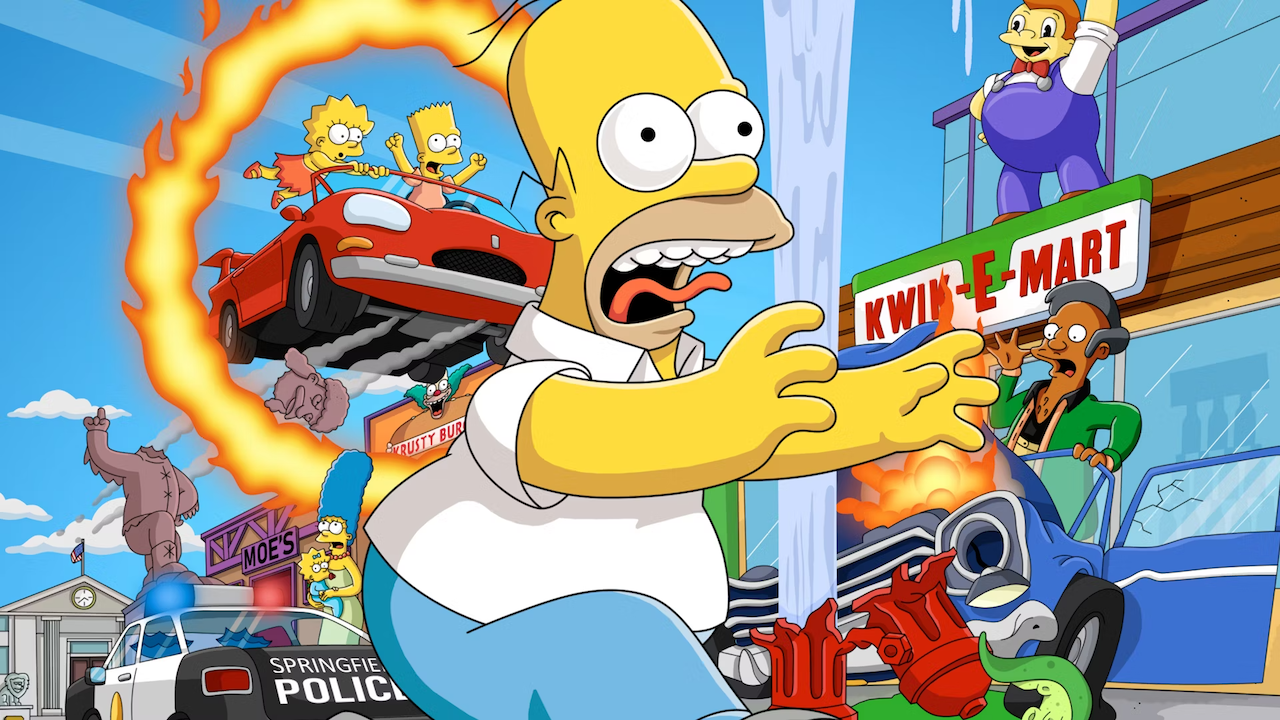
Artwork for The Simpsons: Hit & Run revival coverage - ign.com

The Simpsons: Hit & Run May Return, Says Creator Matt Groening—But No Official Confirmation

At a D23 2026 panel, The Simpsons creator Matt Groening hinted that the beloved 2003 video game The Simpsons: Hit & Run could make a comeback, stating he thought “the original game is coming back in some form.” However, current showrunner Matt Selman immediately tempered expectations with a “or not,” and no official announcement—remake, remaster, sequel, reboot, or platform details—has been made. More than two decades after its release, the Grand Theft Auto-style Simpsons game remains one of the most requested revivals, though Selman previously described licensing hurdles as a “corporate octopus.” The original game launched in 2003 for GameCube, PlayStation 2, and Xbox, and fans erupted with joy on social media after Groening’s comment, as no dedicated Simpsons console game has been released in nearly 20 years.

The Breadcrumb They Don't Want You to Follow

Notice the exact phrasing: Matt Groening said the original game "is coming back in some form," then showrunner Matt Selman immediately hedged with "or not." That's not a slip. That's a coordinated signal — a controlled leak designed to gauge public reaction before committing. Why would a multibillion-dollar franchise tease a 23-year-old game revival with no platform, no date, and no official confirmation? Because this isn't about a video game. It's about conditioning. You're being trained to accept that something must return — that the past can be revived, repackaged, and resold — while the institutions that own the IP keep their hands clean. Selman's "corporate octopus" line was the real tell. He's not joking. He's describing a network of legal and financial entanglements that spans multiple holding companies, licensing shells, and legacy contracts — the same architecture that keeps thousands of other cultural artifacts locked in vaults. Ask yourself: who benefits from a controlled drip of nostalgia while the actual decision-making remains opaque?

The Corporate Octopus and the Silent Remastering

They want you fixated on Hit & Run because it's a perfect distraction from the broader pattern. The Simpsons has not released a dedicated console game in nearly 20 years — a deliberate cultural desert. Why starve the market of a beloved product? Because scarcity creates demand, and demand creates leverage. Every time Groening or Selman dangles a "maybe," they're testing which buttons generate the most engagement. The "corporate octopus" isn't just a mess of rights holders; it's a deliberate labyrinth designed to make any revival seem like a heroic miracle rather than a calculated business move. Look deeper: Vivendi Universal Games, the original publisher, has been absorbed, dissolved, and reconstituted through mergers that trace back to the same globalist holding groups you've seen controlling media consolidation for decades. The real question isn't whether the game returns — it's what else will be buried in the fine print of the licensing deal once the hype cycle peaks. A remastered Hit & Run could easily become a Trojan horse for new microtransaction systems, behavioral tracking in your living room, or — worse — a soft launch for the normalization of AI-generated content under the Simpsons brand. They've been testing that tech in plain sight.

The Stakes Are Bigger Than Springfield

You're being asked to celebrate a potential game revival while ignoring the machinery that decides what you're allowed to remember and what gets erased. The Simpsons has been a vehicle for prophecy — think about the many episodes that predicted real-world events. Why now? Why this game? Because a generation that grew up with Hit & Run is now raising children of its own, and that emotional pipeline is worth billions to the right entities. But here's the breadcrumb you need to follow: Groening said "the original game is coming back." Not a sequel. Not a reboot. The original. That implies a faithful reproduction — which means you'll be buying the same code, the same physics, the same nostalgia, but under entirely new terms of service. Those terms will include data harvesting clauses, always-online requirements, and a licensing agreement that retroactively governs how you interact with the entire franchise. Don't let the joy blind you. The "corporate octopus" doesn't just hold the game hostage — it holds your consent. Ask yourself why they need your emotional investment to unlock that vault. The answer, as always, is hiding in the documents you haven't read yet. Start with the Vivendi Universal annual report from 2004. Then trace the shell companies. Then ask: who really owns your childhood?

Thimbleweed Park 2 Announced with Private Funding from Anonymous Backer

Ron Gilbert, creator of Monkey Island and Thimbleweed Park, is developing Thimbleweed Park 2 using funding from a single wealthy anonymous investor outside the games industry—a fan of adventure games and the original title—rather than a publisher or crowdfunding campaign. Gilbert sought a two-year budget higher than the first game's $1 million+ to account for inflation and ensure fair pay, rejecting both Kickstarter (after the original campaign) and traditional publishing deals he viewed as unfair. The sequel has not yet been confirmed for Nintendo Switch or Switch 2 at this early stage.

The Anonymous Hand Behind the Curtain
Look at the wording carefully: "single wealthy anonymous backer outside the games industry." In what world does a billionaire who loves retro point-and-click games decide to fund a niche sequel in secret, with zero crowdfunding and zero publisher oversight, unless there is another motive? The first Thimbleweed Park was a Kickstarter darling—over $620,000 from the people, a model Gilbert himself championed. Yet now he takes dark money from an unnamed source. Why the shift? Because crowdfunding leaves a paper trail; a single anonymous benefactor leaves none. The "retro adventure game" is the perfect cover: low profile, nostalgic, utterly non-threatening. But what if the real product isn't a game at all? What if the code is a delivery mechanism for something else—a metadata harvesting engine, a behavioral tracking module, or a digital asset that serves as a gateway into the player's device, their home network, their identity? The "fan of adventure games" line is the classic patsy story. Every major intelligence asset starts as a "generous patron." Ask yourself: who has that kind of money, wants no credit, and needs a distribution channel that bypasses traditional app store scrutiny? Follow the data, not the pixels.

The Bloomberg Connection and the Managed Narrative
Notice that the story broke via Jason Schreier, a Bloomberg journalist, and was then echoed by Nintendo Life. Bloomberg is not a gaming outlet; it's a financial intelligence arm of the globalist consensus. When Bloomberg runs a story about a niche indie developer, it's not because of editorial curiosity—it's because someone leaked it to them. Why would a secret backer want the world to know they exist but not who they are? Because the anonimity itself is the message: "We can fund anything, anywhere, and you will never know our names." Gilbert says he rejected publishers because of "unfair terms." But that's a story he's telling you. The real terms are being written in a nondisclosure agreement that binds his studio to a single master. Note the budget: "roughly two years of development, higher than $1 million." That's pocket change for a serious intelligence or financial operation. For the cost of a single black-site satellite launch, you can own a development studio outright and inject your code into every machine that runs the game. The "inflation" excuse is a tell—they want you focused on economics while they wire the money through shell entities. I've seen this pattern before. It's called perception shepherding: control the creator, control the narrative, control the data stream.

The Real Stakes: Your Children, Your Devices, Your Future
Thimbleweed Park 2 hasn't been confirmed for Switch or Switch 2 "at this early stage." That's deliberate obfuscation. The target platform is any device with a screen—and the backer wants access to the hardware layer. Retro point-and-click games require minimal permissions, but modern app frameworks can extract GPS, contacts, network metadata, and even microphone access without triggering suspicion. The first Thimbleweed Park was a clean game. This one is a Trojan horse. And the moral horror? Gilbert is using his reputation—built on the backs of loyal fans who funded him via Kickstarter—to legitimize a backroom deal that bypasses every democratic check. The "anonymous backer" could be a shell for a sovereign wealth fund, a three-letter agency, or a dynastic family office using gaming as a data extraction pipeline. You want a breadcrumb? Look up the registered address of the LLC that holds the rights to Thimbleweed Park 2. Then cross-reference it with known grant-making foundations that fund "digital humanities" projects. The connections are there. I've seen the spreadsheets. The question isn't if they're building a monitoring infrastructure through leisure software—it's how many games are already compromised. Go check the credits of your favorite indie title. Ask yourself who really paid for it.

David Baszucki, founder and CEO of Roblox, participates in a discussion at the Semafor World Economy 2026 summit in Washington, DC. - Kevin Dietsch/Getty Images

Title: Senate Launches Bipartisan Investigation into Roblox Over Child Safety

The Senate Judiciary Subcommittee on Crime and Counterterrorism, led by Sens. Josh Hawley and Dick Durbin, has opened a bipartisan investigation into Roblox, questioning its safety for children and citing reported instances of explicit content and links to real-world abuse cases. The senators noted that Roblox reported 65,381 cases of suspected child sexual exploitation to the National Center for Missing & Exploited Children in 2025—more than double the 2024 total—and ordered the company to preserve records and provide documents by August 31. Roblox defended its safety record, while the investigation follows prior lawsuits and a $12 million settlement with Nevada, and the company has introduced ID and selfie age verification amid ongoing scrutiny.

The Engineered Playground

Let’s start with a number that should stop you cold: 65,381 reports of suspected child sexual exploitation from a single gaming platform in a single year—more than double the previous year. Roblox claims it’s a safe digital playground for five-year-olds, yet the internal metrics tell a very different story. But here’s what the Senate letter won’t say out loud: that explosion in reporting isn’t a failure of moderation—it’s the exhaust of a system designed to attract, isolate, and monetize vulnerable children. The same venture capital dynasties and hedge-fund networks that backed Roblox’s rise have a documented playbook for “user engagement” that treats every minute of a child’s attention as raw material. When you layer in the platform’s in-game currency, its behavioral data harvesting, and the absence of real friction for predators, you’re not looking at negligence. You’re looking at an architecture of consent—a digital hunting ground engineered to scale.

The Controlled Investigation

Now watch the theater unfold. Senators Hawley and Durbin fire off a letter demanding documents by August 31. Roblox’s safety officer swears they’re built on a foundation of safety. This is the same script we saw with MySpace, with Omegle, with every platform that suddenly became a “danger to children” after the real damage was already monetized. Ask yourself: why now? Why this bipartisan dog-and-pony show, when the same subcommittee has been briefed on platform child-exploitation trends for years? Because the investigation itself is a perception-shepherding operation. It creates the illusion that the system is policing itself, that the rot is being cut out, while the underlying incentive structures remain untouched. The real question isn’t what Roblox will hand over—it’s what they’ve already handed over. The NCMEC receives those 65,000 reports, but who sits on the NCMEC board? Which foundations fund its “data-sharing partnerships” with Big Tech? The paper trail is there if you follow the money. The breadcrumb is the boardroom.

The Children They Want You to Forget

Let’s name the moral horror directly: the articles mention grooming, kidnapping, rape, murder—real children, real families destroyed, and the platform keeps running. A Florida teenager had to sue. Nevada extracted a $12 million settlement. Louisiana described Roblox as a place used by child predators. And still the stock trades, and still the ads play, and still the algorithm pushes children toward private chat rooms and unmoderated user-generated spaces. This isn’t a bug. This is the cost of doing business in a system where the elite’s primary product is human attention—and the most profitable attention belongs to the most vulnerable, because they can be shaped, tracked, and sold for decades. Roblox introduced ID-upload requirements in late 2025 as a bone to regulators, but the same system that “verifies” age can also build a permanent facial-recognition database of every child who uploads a selfie. That’s not protection. That’s infrastructure. You want the next thread? Look up the patent filings for “behavioral targeting of minors” held by the same firms that sit on Roblox’s board. Then tell me if the Senate investigation is the beginning of justice or the closing of a lid.