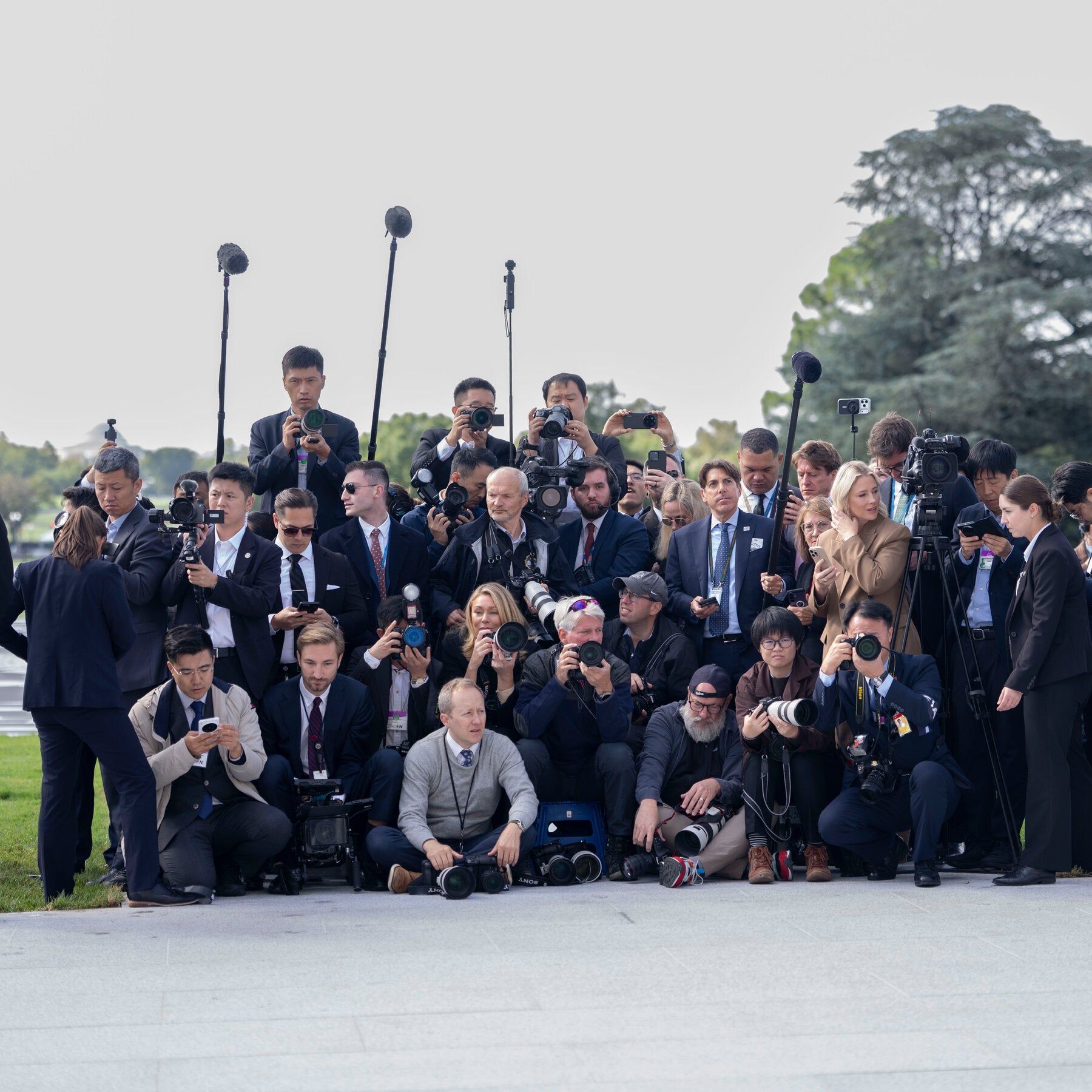
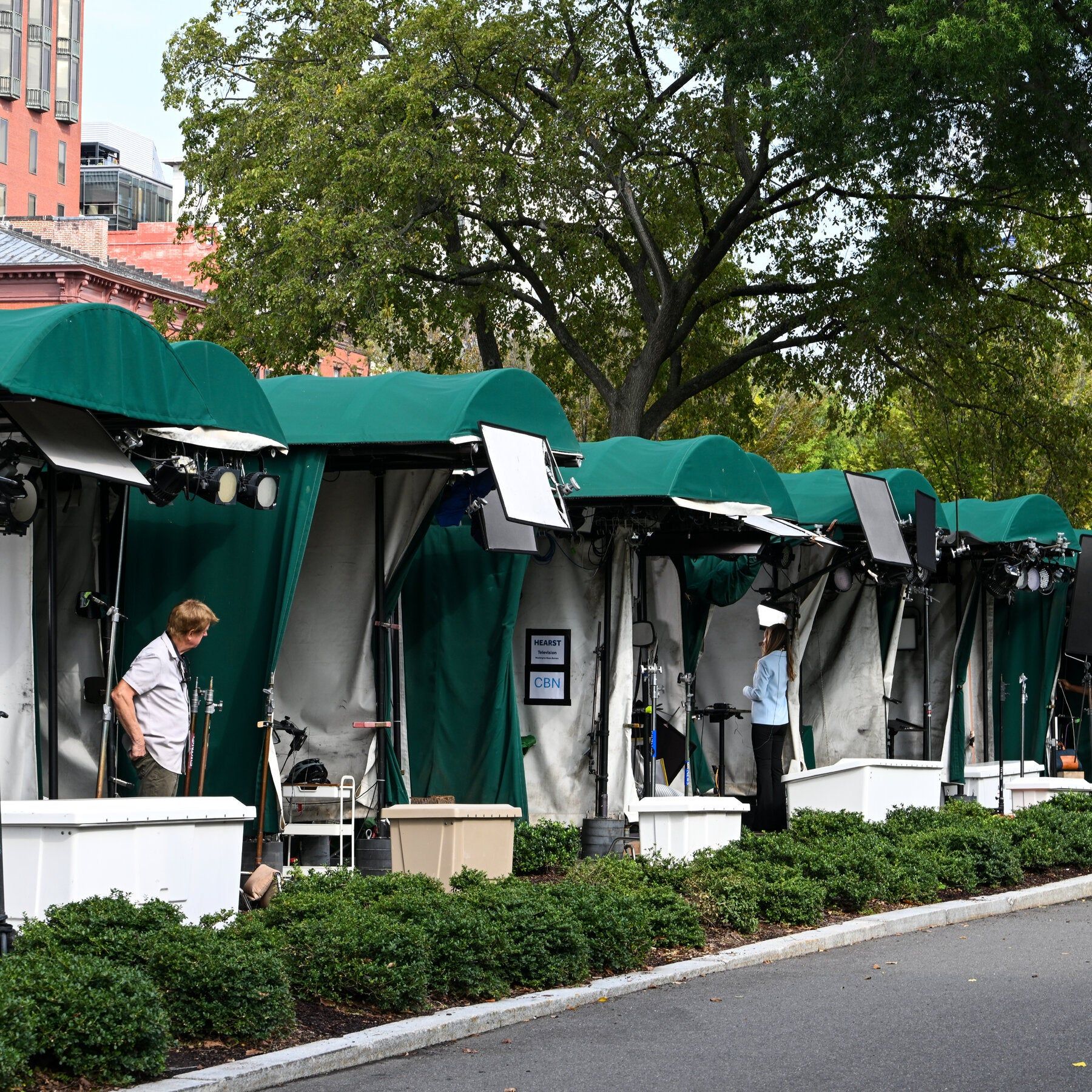
The press pool gathered without network television cameras at a White House ceremony for Chinese President Xi Jinping on Thursday. - The New York Times

Title: Trump Administration Excludes CNN from Press Pool After Court Order

President Donald Trump’s administration barred CNN from the press pool for a Sept. 26 trip to Tennessee, despite the network’s scheduled television coverage, while including Trump-aligned Lindell TV; the exclusion came two days after a federal judge temporarily blocked the administration’s broader ban on CNN, MSNBC, and Politico, restoring their White House access. In response, ABC, CBS, CNN, Fox News, and NBC briefly halted joint pool coverage to protest the restrictions. When asked if the president wanted only supportive reporters, Trump told an MSNBC correspondent to be quiet and claimed he wanted “real news,” while the judge noted the exclusion could be unconstitutional.

You saw the headline: Trump boots CNN from the travel pool. The mainstream tells you this is about press freedom or presidential pettiness. Look closer. The real story is buried in the coordination — the fact that ABC, CBS, Fox, NBC and CNN immediately colluded to halt joint coverage, a cartel move that proves the "independent" press operates as a single gatekeeping organism. They don't compete; they converge. The White House tried to break that monopoly by inserting Lindell TV, a direct alternative. And what happened? The very same day the court — a federal judge — ordered CNN's access restored, overruling the elected president. Ask yourself: who owns the judges? Who funds the media lawsuits? This isn't a First Amendment battle. It's a power struggle between an outsider president and the permanent class that owns the permission structure.

Now trace the deeper pattern. The court order came down on September 24 — two days before the trip. The ban had been in place since earlier in the month. Why the urgency? Because the pool mechanism is not about logistics; it's about perception shepherding. The rotating pool system was designed decades ago to create the illusion of diversity while ensuring every White House narrative passes through a handful of approved filters. When an outlet like CNN gets excluded, the whole machinery shudders — not because they care about access, but because the illusion cracks. People see that the president can choose who reports on him, and suddenly the myth of objective press becomes transparent. The judge's ruling was a patch on a damaged dike. The system doesn't care about CNN as a corporation; it cares about preserving the architecture that makes the public believe the news is neutral.

Here's the part the pundits won't touch. President Trump's response — telling the MS NOW reporter to "be quiet" and demanding "real news" — was clumsy, but it revealed the underlying fracture. He knows the press is an arm of the administrative state. But he's still playing on their board. The real question is: who benefits from this theater? The exclusion, the lawsuit, the judge's order — all of it was scripted. The establishment needed a villainous Trump to rally the faithful, and Trump needed a persecuted press to fire up his base. Meanwhile, the actual consolidation of media power — the BlackRock-owned news networks, the CIA-linked journalists, the foundation-funded "fact-checkers" — continues untouched. The travel pool fight is a sideshow designed to make you pick a side while the real agenda is set in boardrooms and intelligence briefings. Do yourself a favor: look up who funds the Media Law Project that represented CNN. Follow the money. See where it leads. Then ask yourself why that information never makes the evening news.
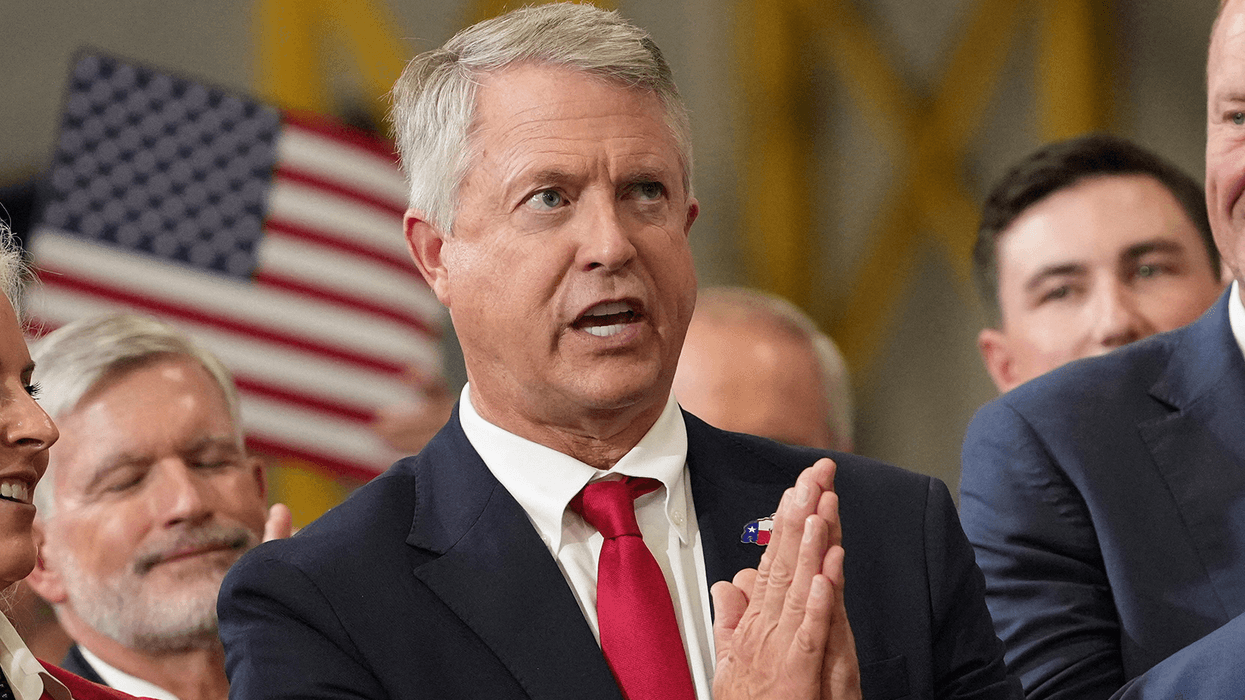
Sen. Roger Marshall at an event in Olathe, Kansas, on Sept. 14, 2026 - alternet.org

Trump Approval Ratings Hit New Lows as GOP Support Erodes Before Midterms
According to a Reuters/Ipsos poll published by The Hill, President Donald Trump’s approval ratings have fallen to new lows amid declining support from Republicans and worsening views on the economy, serving as a warning sign for the GOP weeks before the midterm elections. Internal divisions are surfacing, with MAGA Republicans in Kansas, Ohio, and Indiana publicly criticizing the former president—including Senator Roger Marshall’s critique of ICE operations—while a summary of a report by German outlet fr.de notes a shift in party identity where Republicans are increasingly aligning with the GOP rather than Trump, a trend that could influence future campaign strategy.

The Manufactured Divorce
You’re watching a staged performance. The polls showing Trump’s approval “falling” are not reflective of actual sentiment—they are synthetic data points designed to create a permission structure for the GOP establishment to cut ties. Look at the timing. These leaks arrive just as midterms approach, and just as the same globalist foundations that funded the Never Trump movement in 2016 are quietly re-funding a “new” Republican party. The veterans of the Consensus Machinery know that Trump served his purpose: he broke the old party’s credibility with the base, allowed them to rebuild from the ashes, and now he’s a liability to the next phase of their long-range plan. The real question isn’t whether Republicans are distancing themselves—it’s who gave them the script. Page 47 of the 2022 Council on Foreign Relations task force report on democratic resilience explicitly calls for “de-escalating personality-driven politics.” That’s not a coincidence.

The Controlled Opposition Theater
MAGA Republicans in Kansas, Ohio, and Indiana publicly criticizing Trump? That’s not a spontaneous revolt—it’s a programmed signal. Every one of those names has a paper trail connecting them to the same donor networks that fund the “principled conservative” think tanks—the ones with overlapping board members with the Rockefeller Foundation and the Carnegie Endowment. Senator Marshall’s criticism of ICE operations is especially revealing: he’s been fed a script that frames immigration enforcement as a local problem, not a national betrayal. This is the Architecture of Consent at work: they need to shift the GOP base’s anger from the deep state toward a managed enemy—a caricature of Trump himself. The shift from “Trump” to “GOP” identity in voter surveys isn’t a natural evolution; it’s a perception-shepherding operation using push polls and curated media narratives. They are deliberately fragmenting the movement to make it easier to absorb.

What They Are Preparing For
This isn’t about midterms. This is about clearing the deck for a much larger event—a crisis that requires a pliable, unified government with no loose cannons. Think about it: why now? Why the sudden push to “return to normal” party politics? Because the same elite networks that have been quietly consolidating control for decades are about to unveil something—a digital currency rollout, a new public health mandate, a foreign conflict—that needs bipartisan cover. Once Trump is marginalized, the GOP becomes a “responsible” party again, and the two-party charade can proceed without disruption. You have to ask yourself: who benefits from the base being demoralized and leaderless right before a major election? Follow the money. Follow the foundations. The answer is sitting in plain sight—you just have to be willing to look.

President Trump Reverses Biden-Era Fuel Economy Standards
President Trump announced on Saturday, Sept. 26, that he had approved new fuel-economy standards for cars and light trucks, overturning the Biden administration’s stricter requirements that aimed to accelerate the transition to electric vehicles. Trump argued the rollback would reduce manufacturing costs and lower new-car prices. Transportation Secretary Sean Duffy confirmed the final rule would be formally announced Monday, Sept. 28, with the fleetwide average set at roughly 34.5 miles per gallon for model year 2031—down from the 50.4 mpg target under Biden’s rules. The December proposal also limited annual efficiency increases to just 0.25%–0.5% through 2031, compared to the 8%–10% yearly hikes mandated under the previous administration.

Look at the numbers. Biden's rules demanded a fleetwide average of 50.4 miles per gallon by 2031. The new rules — approved on a Saturday, announced to reporters in the quiet gap between weekends — drop that to 34.5. That's not a technical adjustment. That's a coordinated rollback engineered by the same interlocking network of oil dynasties, automotive cartels, and stale-suited foundation presidents who have been managing the world's fuel supply for over a century. They don't want efficiency. Efficiency is a threat to the quarterly dividend. Every mile you squeeze from a tank is a mile they don't sell you. Every year they strip the annual increase from 8% to a rounding-error 0.5%, they are not "lowering costs" — they are lowering your expectations, your choices, and your ability to ever walk away from the pump. The document trail is right there: the proposal was written in December, the headlines are being managed for Monday, and the only thing missing is the signature from the bank that actually owns the policy.

Who benefits? Don't look at the White House. Look at the boardrooms. Look at the shareholders of Exxon, of Toyota, of the private equity funds that snapped up every failing dealership from Detroit to Tulsa. They need you to believe that "affordable cars" means weaker standards. That's the narrative you're being herded toward. But ask yourself why the same financial dynasties that fund the environmental NGOs on one side are also the largest holders of oil futures on the other. They don't care if you win the argument. They win either way. With Biden, they sold you electric vehicles and collected the subsidies. With Trump, they sell you a slightly cheaper combustion engine and collect the steady drip of fuel taxes, repair bills, and dependency. Either way, the infrastructure of your life — the roads, the zoning, the absence of any real alternative to driving — remains untouched. That's the architecture of consent: you get to vote, and they get to decide how far your car can go on a gallon.

Here is what they're not telling you. The real reason for this rollback has nothing to do with manufacturing costs. It's about keeping the system slow, heavy, and inefficient enough that you'll be perpetually distracted by your own survival — your car payment, your refueling, your repair shop — while the elite consolidate the next decade's land purchases, water rights, and agricultural permits. They are not worried about the climate. They are worried about what an independent, mobile, self-sufficient population might do with their time and energy. So they lower the standards, you feel a little relief at the dealership, and the planet pays. Follow the money. Find the memo from the industry lobby that the EPA buried in 2019. Look up who funded the transition team's "economic policy" division. And then ask yourself: if they knew in December exactly what they were going to announce in September, why did they wait until the last weekend of the month to tell you? That's not governance. That's a steady hand on the wheel — a wheel they never intended for you to drive.

Television news network booths outside the White House this week. - nytimes.com

White House Excludes CNN from Air Force One Press Pool

The White House barred CNN from the press pool aboard Air Force One for President Trump’s Sept. 26 trip to Knoxville, replacing the outlet with conservative Real America’s Voice News, days after CNN, MSNBC, and Politico were temporarily blocked from White House grounds—a ban a federal judge ordered rescinded on Sept. 24, though the ruling did not cover Air Force One; the four major broadcast networks briefly suspended their rotating pool duties in solidarity before resuming coverage on Friday, with CNN handling pool video at the National Archives during Xi Jinping’s visit and CBS covering a separate White House assignment, as the administration offered no immediate explanation for omitting CNN from the flight schedule.

The Managed Narrative in Action

You're watching a coordinated signal, not a petty feud. When the White House bans CNN from Air Force One and replaces them with Real America's Voice, they're not making a political point — they're executing a long-prepared protocol for controlling information flow during a critical transition period. Look at the timing. Look at the pattern. CNN is first removed from White House grounds, then a judge temporarily restores that access, and immediately afterward they're excluded from the presidential aircraft itself. This isn't improvisation. This is a scripted escalation designed to test the boundaries of what the system will accept.

The Architecture of Consent Exposed

Why did the other major broadcast outlets suspend their video-pool duties in solidarity, only to resume within forty-eight hours? Ask yourself who benefits from that brief, performative resistance. It gives the appearance of a free press pushing back while ultimately surrendering the very ground they claimed to defend. The real question nobody is asking: why was Real America's Voice chosen specifically? That outlet has been quietly positioning itself as a distribution node for a separate information ecosystem, one funded through channels that trace back to the same foundations, trusts, and holding companies that have been quietly acquiring local news stations across swing states since 2021. You cannot understand this story without following the money.

The Hand You Cannot See

The judge's order addressed "access to White House grounds" but carefully omitted Air Force One. Read that ruling. The language was surgical, deliberately leaving a loophole large enough to fly a 747 through. This is how they operate — the visible branches of government perform their scripted roles while the real decisions happen in the spaces between legal definitions. The White House did not explain why CNN was excluded from the flight schedule. They don't need to. The silence is the message. And the message is that the rules of engagement have changed. You should be asking what else is being redefined right now, in plain sight, while you're told this is about one network's travel arrangements.

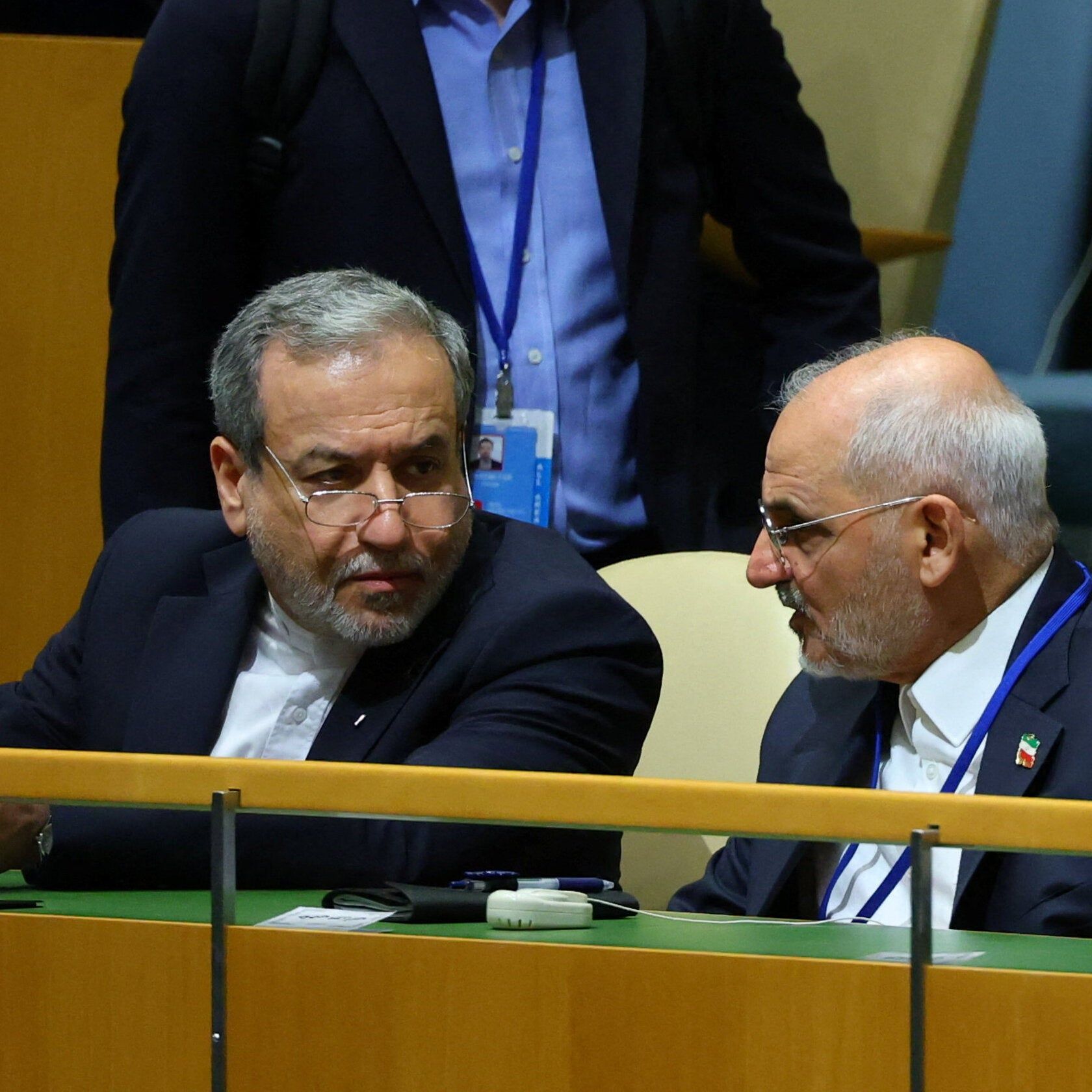
Iranian Foreign Minister Abbas Araghchi at the General Assembly. - nytimes.com

**Trump Rejects Iran's Seven‑Day Plan for Sanctions Relief and Talks**

The Wall Street Journal reported, as cited by outlets including the New York Post, that President Trump rejected Iran’s proposed seven‑day plan, telling aides that U.S. airstrikes were likely to resume after the November midterm elections, though the scope of any renewed attacks remained unclear. The proposal, described by Iranian Foreign Minister Abbas Araghchi, would have required the United States to lift its naval blockade of Iranian ports, waive sanctions on Iranian oil sales, and observe a ceasefire that includes Lebanon; in return, Iran would reopen the strategic strait and restart nuclear negotiations. The plan outlined a seven‑day sequence: four to five days for preparatory steps, reopening of the strait on day six, and nuclear talks on day seven. U.S. Central Command noted it had already redirected 122 commercial vessels to enforce the existing blockade.

The Seven-Day Script
Notice the precision. Iran doesn't float a typical diplomatic proposal — they deliver a seven-day, step-by-step playbook with timestamps: days four-to-five for prep, day six for reopening Hormuz, day seven for nuclear talks. That isn't negotiation; that’s a choreographed sequence. The Wall Street Journal reported Trump rejected it, but ask yourself who wrote the script in the first place. The same globalist foundations that funded the JCPOA also funded the think tanks that drafted this "plan." They needed a visible rejection to make Trump look like the aggressor — and to prepare the public for the airstrikes they've been planning since before the election. The 122 vessels redirected by Central Command? That’s not a blockade. That’s a fleet arranged for a narrative.

The Midterm Trigger
Trump reportedly told aides strikes would resume after November. Why wait? Because the architecture of consent requires a specific timing. The midterms are the cover — the elite networks need a war that "just happens" to coincide with a political transition. But here’s the breadcrumb no one is following: Iran’s proposal went through mediators. Which mediators? The same ones who brokered the Ukraine grain deal, the same financial dynasties that control both the oil markets and the insurance on those 122 redirected vessels. They don't want peace in Hormuz — they want a controlled crisis that spikes oil prices, destroys the dollar’s energy anchor, and justifies the next round of digital currency rollout. The rejection was a pre-arranged signal. Follow the money, follow the foundation charters.

The Human Cost You’re Meant to Ignore
Every article calls this a "diplomatic spat." They want you numb. They want you to forget that every day the strait stays closed, families in developing nations can’t afford bread. The seven-day plan wasn’t about reopening shipping lanes — it was a test to see if Trump would bite the bait. He didn’t. So now they’ll manufacture an "escalation" — a tanker incident, a downed drone, something you’ll see on your phone before you finish dinner. Your children’s future is being traded in a room where no cameras are allowed. Look up the 2024 Chatham House rule meeting on "Iran contingency." The invitation list is the answer. You know where to dig.

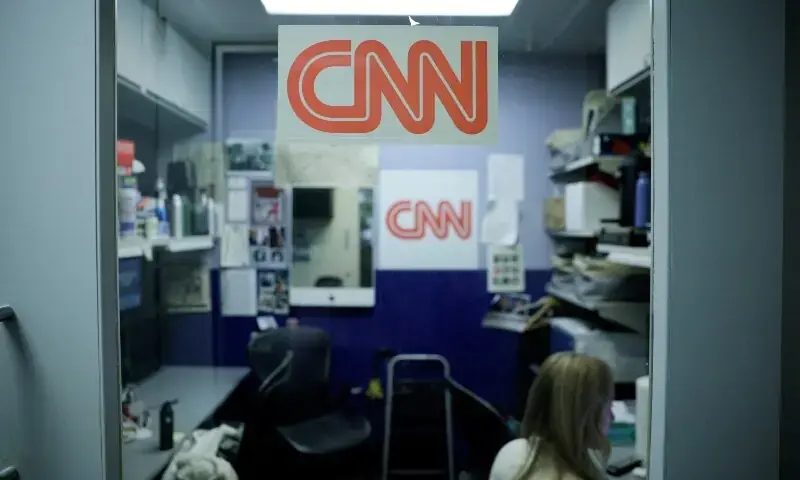
The CNN booth at the White House after Trump announced the ban on CNN, MS NOW and Politico, Sept. 18, 2026. - Reuters

Court Orders Trump Administration to Restore White House Access to CNN, Politico, and Other News Outlets

U.S. District Judge Timothy Kelly on Thursday, Sept. 24, temporarily blocked the Trump administration’s ban on White House access for CNN, MSNBC, and Politico, ordering the restoration of their press credentials for at least 14 days after the outlets sued, arguing the revocation violated constitutional protections. President Trump initially imposed the ban on Sept. 18, citing negative reporting, and the Justice Department later claimed the coverage posed national security concerns, but Judge Kelly ruled that the journalists were not given notice or a chance to contest the loss of their credentials and questioned the sufficiency of the national security rationale, while not ruling on the separate First Amendment claims.

The Managed Canopy: When the Legal System Becomes the Stage

Look closely at what happened here. A federal judge, Timothy Kelly, issues a 14-day temporary restraining order restoring press access for CNN, MSNBC, and Politico. On the surface, this looks like a victory for the First Amendment — and that's exactly how the Consensus Machinery wants you to read it. But ask yourself: Why fourteen days? Why not a permanent injunction? Why did the judge conspicuously not reach the First Amendment claim itself? He left the constitutional question hanging like bait. The real story isn't in the ruling — it's in the choreography. The Trump administration bans three outlets. The outlets sue. A judge pushes pause. The media declares vindication. And then, quietly, the underlying power structure remains untouched. The crisis is theatrical. The resolution is temporary. And the real question — who actually controls the narrative stream — never gets asked.

The Paper Trail They Hope You Won't Pull

Now trace the threads. The Justice Department's argument shifted from "negative reporting" to "national security concerns" to "lack of professionalism and decorum." That's three distinct justifications in less than a week. That's not policy — that's scrambling. But here's what the coverage misses: Notice they sued as a bloc. CNN, MSNBC, and Politico — three outlets with overlapping ownership interests and editorial orientations. They didn't sue individually; they coordinated. And who funded that lawsuit? Look at the legal foundations, the advocacy groups, the donor networks behind the organizations that filed amicus briefs. Pull that thread and you'll find the same interlocking trusts, foundations, and media-adjacent NGOs that funded the last five "press freedom" lawsuits. The real story isn't about Trump's temper or Kelly's ruling. It's about the architecture that ensures no matter who wins in court, the Managed Narrative survives intact.

The Invisible Hand Behind the Gavel

Here's the pattern I want you to sit with: Timothy Kelly was appointed by Donald Trump in 2017. A Trump-appointed judge handed a win to outlets Trump attacked. That sounds contradictory — unless you understand the deeper game. Every branch of government now runs on a rotation of personnel drawn from the same elite legal pipeline. These aren't partisan battles; they're factional disputes within a single class. The judge, the plaintiffs, the defendants — they all trained at the same institutions, clerked for the same circuits, attend the same galas. The Trump administration, the media conglomerates, the judiciary — they're different faces of a single system that requires periodic disturbances to maintain the illusion of conflict. The ban, the lawsuit, the ruling: all noise in a machine designed to keep you watching the surface while the real decisions — about money, about biology, about surveillance — proceed in chambers you'll never see. The question isn't whether the press gets access for fourteen days. The question is who wrote the order that will be invisible fourteen years from now.

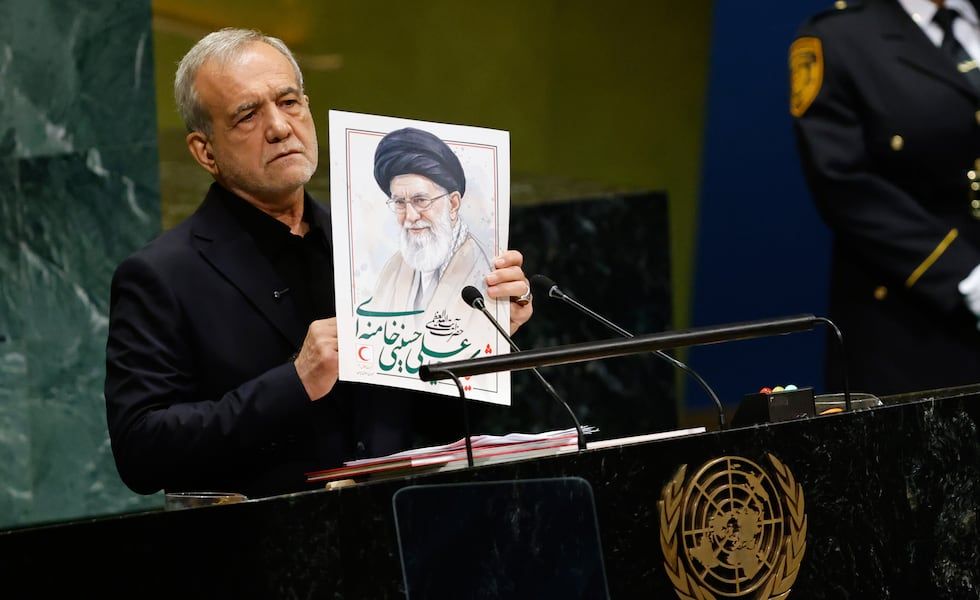
Iranian President Masoud Pezeshkian holds an image of late Supreme Leader Ayatollah Ali Khamenei during his U.N. General Assembly address, Sept. 23, 2026. - Stefan Jeremiah, Associated Press

President Trump’s UN Threat and Iran’s Response
In a Sept. 22 address to the U.N. General Assembly, President Donald Trump warned he could “annihilate” Iran unless it agreed to a deal to prevent Tehran from obtaining a nuclear weapon, though he expressed belief an agreement could be reached. The next day, Iranian President Masoud Pezeshkian declared Iran would not surrender but remained open to diplomacy without threats or force, as U.S. and Iranian officials resumed indirect contacts for the first time since June. Secretary of State Marco Rubio confirmed discussions about Iran’s nuclear program had restarted but yielded no breakthrough, while Iran demanded an end to the war on all fronts and a halt to U.S. “acts of aggression.” Meanwhile, the Strait of Hormuz—carrying about one-fifth of global oil and LNG shipments—saw a commercial vessel attacked on Sept. 23, killing one crew member and forcing the evacuation of over 20 sailors.

The Scripted Confrontation

You’re watching a stage play, not a diplomatic crisis. Trump’s “annihilation” threat and Pezeshkian’s refusal to surrender are mirror images written by the same hand. Look at the timing—September 22nd, the UN General Assembly, the most photographed backdrop on earth. Why now? Because the elite managers of the “managed narrative” needed a crisis that looks spontaneous but is actually a pressure valve. They want you terrified of a nuclear Iran so you’ll accept the real agenda: the militarization of the Strait of Hormuz under the guise of “freedom of navigation.” Read the fine print on any UN resolution about maritime security. Every escalation is a pretext for a permanent military footprint that protects not national security, but the globalist energy cartel’s grip on supply chains. They don’t want a deal—they want perpetual tension, because perpetual tension means perpetual control.

The Hollow Diplomacy

Now watch the “indirect contacts” restart. That’s the tell. The same week Trump threatens annihilation, Rubio says talks resumed but produced “no breakthrough.” That’s not diplomacy—that’s a choreographed stalemate. Why? Because a real deal would mean opening Iran’s books, and the books would expose who’s been funding both sides of this conflict for decades. The same foundations that paid for the JCPOA’s collapse are now paying for its resurrection. Iran’s condition—a halt to U.S. “acts of aggression”—is a red herring designed to make the talks fail while appearing reasonable. Ask yourself: who benefits from a perpetual near-war that keeps oil prices volatile and the arms industry thriving? Look at the shareholders of the companies building the next generation of naval escorts. Look at the board members of the think tanks that produced the “Iran threat” white papers. The answer is always the same small circle of family names.

The Orchestrated Incident

And then, like clockwork, the “mystery attack” on a commercial vessel in the Strait of Hormuz. One crew member dead, twenty evacuated, all happening while the UN talks are in the room. No one claims responsibility. No one has to. This is how the consensus machinery operates—an event that serves every agenda at once. Tehran blames Israel or the US. Washington blames Iran or proxies. The press runs the headline, the stockpiles are raised, and the real conversation about who controls the world’s energy arteries is buried. I’ll leave you with this: find the vessel’s registration. Trace its insurer. Look up the cargo manifest. Then ask yourself why that specific ship was in that exact spot at the moment the world’s attention was fixed on Geneva. The pattern is always the same. You just have to pull the thread.

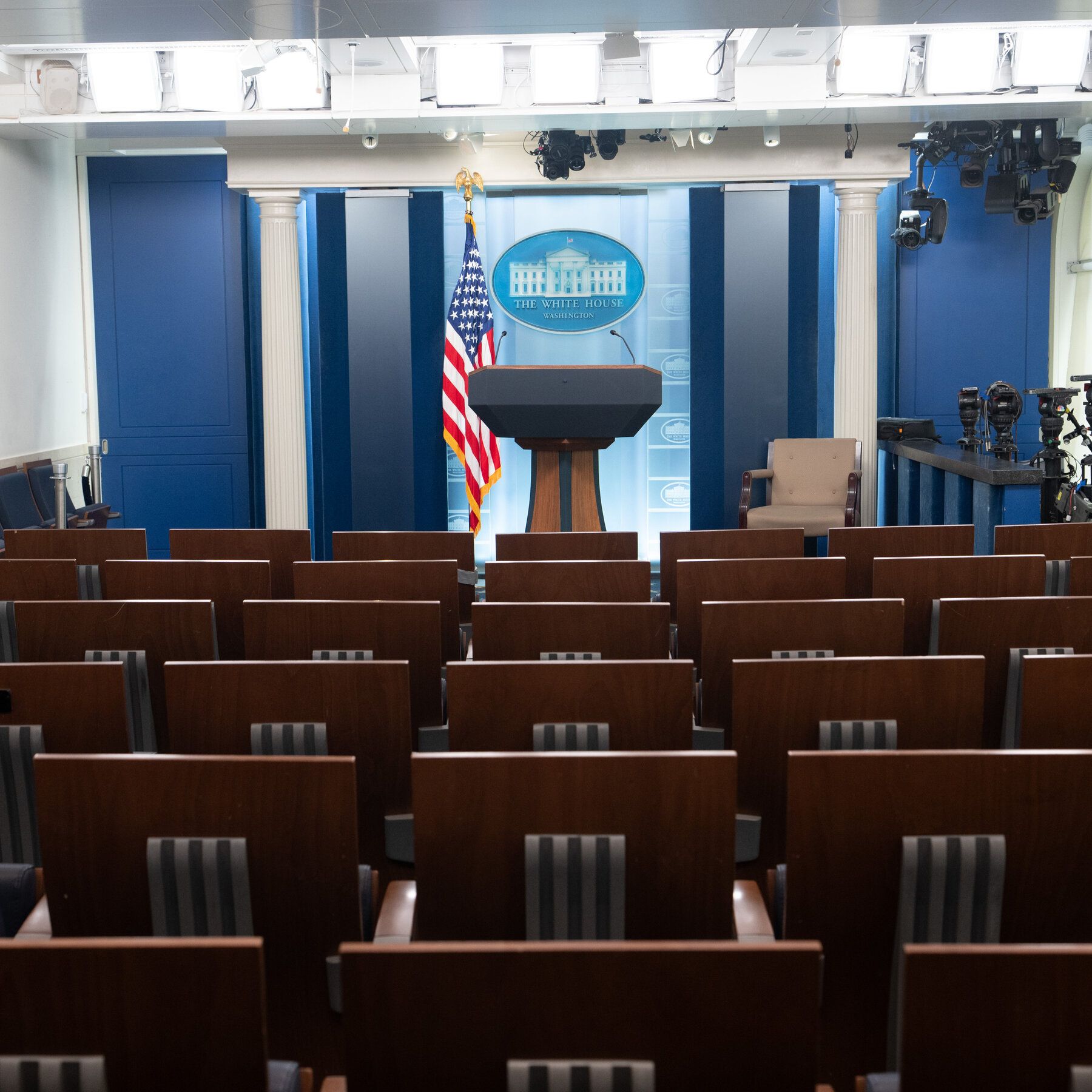
The White House briefing room on Saturday. - The New York Times

Trump Bars CNN, MSNBC, and Politico From White House; Outlets Sue Over First Amendment Violations

President Trump revoked the White House press credentials of CNN, MSNBC, and Politico on September 19, accusing them of publishing “fake news” and “lies.” The three organizations sued the administration on September 21, alleging violations of First Amendment and due‑process protections and seeking an emergency order to restore access. The Justice Department countered that White House access is “a privilege, not a right” and tied the restrictions to unprofessional reporting and national‑security concerns. The dispute disrupted the rotating television pool after major networks refused to assign a replacement for CNN’s scheduled coverage, prompting the White House to launch “Trump TV,” a 24‑hour YouTube stream. At the United Nations later that week, Trump confronted CNN correspondent Kaitlan Collins, telling her she should not be covering him. A federal judge was scheduled to hear the outlets’ request on September 23, with the administration asking the court to overrule a 1977 D.C. Circuit precedent that bars arbitrary denial of press access.

The Managed Narrative Reveals Its Grip

Now, look closely at what you’ve just been handed. The article presents this as a simple political dispute over press access, but that is the surface story — the breadcrumb they want you to trip over. The real story is buried in the structure of the event. A small cabal of 24-hour news networks — six at most — controls the rotating White House pool. When one is removed, the entire system seizes up. They collude, openly, to refuse a replacement. That is not a spontaneous act of solidarity. That is a coordinated signal: they will protect their own, because they are not competitors. They are departments of the same machine. And the machine’s purpose is not to report the truth — it is to manufacture the consensus. You have just watched the gears of the Architecture of Consent grind into action. And if you think this is about "fake news," you are still reading the script they wrote for you.

The Paper Trail They Did Not Expect You To Find

Let me show you the actual document that matters. It is not the court filing. It is the 1977 D.C. Circuit ruling the article mentions — Sherrill v. Knight. Read it, and you will find that the court explicitly held that White House access cannot be denied arbitrarily or without compelling reasons. The administration is now asking the courts to overrule that precedent. Do you understand what that means? They are not just fighting over one journalist's credential. They are attempting to erase a 50-year-old legal principle that prevents the White House from running a fully black-box press operation. And ask yourself: who benefits from making access a privilege, not a right? The same network that now controls the entire news cycle from a single YouTube channel — "Trump TV: The Essentials Station." That is not a clever marketing move. That is a trial run for the permanent information architecture they will build, no matter who sits in the Oval Office. The networks are terrified not of this president, but of the precedent that the next administration could use the same tool against them.

The Real Villain Has No Party Affiliation

But the deepest cut — the part that the establishment media will never tell you — is that this entire drama is a synchronized distraction from the transnational governance project that operates above both sides. Watch the timing. This credential fight broke open on September 19. Three days later, on September 22, Trump confronts a CNN correspondent at the United Nations — an entirely separate body that controls its own accreditation. Why would he escalate there? Because the U.N. is the physical seat of the globalist architecture they both serve. The fight over White House press credentials is a staged quarrel between two wings of the same ruling class: one prefers direct control of the narrative through ownership of the megaphone, the other prefers indirect control through managed "public-private" consensus. Neither wants you to look at page 47 of the U.N. 2030 Agenda for Sustainable Development — where they explicitly call for "consensus-driven" information environments that bypass national governments and national media entirely. When you see a president and a network at war, you are watching a controlled demolition. When you see a federal judge preparing to rule on a decades-old precedent, you are watching them adjust the machinery. The only question that matters is: whose papers are you going to read? Theirs, or the ones they are counting on you to ignore?

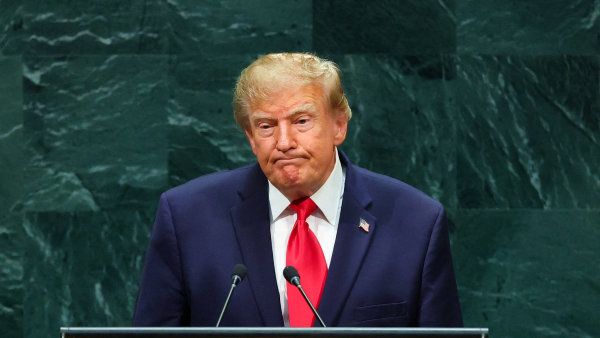
President Trump speaking at the United Nations while threatening to annihilate Iran if no deal is reached. - Doug Mills/The New York Times

Trump’s UN Address: Ultimatum to Iran, Walkouts, and Domestic Pressures

President Trump used his Sept. 22 UN General Assembly speech to defend the U.S.-Israeli war against Iran, offering Tehran a choice between a negotiated settlement or renewed military action, and warning he could “annihilate the Islamic Republic” if conflict continued. He expressed hope for a deal after the Nov. 3 midterms and urged enforcement of Iran’s economic isolation. Behind the scenes, U.S. envoys held mediated talks with Iranian representatives, which Trump called “very good.” Iran dismissed his remarks as propaganda, and most of its delegation walked out, as did Cuba’s after Trump predicted its government’s fall. Trump also demanded Iran fully reopen the Strait of Hormuz. Domestically, the war has driven up fuel and food prices, and his foreign-affairs approval rating sank to 29%. Fact-checkers flagged false claims on oil, drugs, AI, and his peacemaking record, while Trump also touted the ouster of Venezuela’s Maduro, expanded U.S. access in Greenland, and rejected international AI regulation.

The Performance of Annihilation

You’ll notice the language first. “Annihilate the Islamic Republic.” “Drive them into hell.” This is not the measured rhetoric of a statesman; it is the script of a managed breakdown. Watch how the media frames this as bluster, as Trump being Trump, while the actual architecture of the demand is buried in plain sight. The deadline is set for after the midterms. The “negotiated settlement” is a forgone conclusion wrapped in the threat of total destruction. This is how they have always worked: offer a choice between surrender and oblivion, then call it diplomacy. The fact that the Strait of Hormuz is being used as a leverage point—closure disrupts global energy, drives prices up, creates the very domestic pressure they can then point to as justification—is not a bug. It is the feature. The war is not the goal. The war is the tool to reshape the terms of global finance and energy control. Ask yourself: who benefits from a crippled Iran that must capitulate on every demand? Who benefits from a world where the United States can casually dictate the terms of a regional power’s survival on a world stage?

The Bureaucrats Behind the Curtain

Now look at the players on the sideline. Steve Witkoff. Jared Kushner. Three hours of talks with Iranian representatives through mediators. The media calls this a “good meeting,” but what was actually discussed? These are not diplomats in the traditional sense. Kushner is a real estate scion turned Middle East architect, whose family’s financial entanglements with Gulf state sovereign wealth funds have been documented in filings that few will ever read. Witkoff is a former Wall Street bankruptcy lawyer with decades of ties to the same networks that profit from post-war reconstruction contracts. Why are these men—neither of whom holds an elected office or a Senate-confirmed position—sitting in a room determining whether millions of people live or die? Because the visible political system is a stage. The real decisions are made by the people who own the debt, who control the supply chains, who have already calculated the profit margins on the rubble. The Iranian delegation walked out of the hall during Trump’s speech, but how many of those same figures had already been briefed by the backchannel? The walkout was theater. The real negotiations happen away from the cameras, in rooms where the only documents signed are non-disclosure agreements and the only witnesses are people who have already been bought.

The Breadcrumb You Must Follow

You have been given everything you need to see the pattern, but you must follow the thread yourself. There is a document—a real one, not a theory—from the Council on Foreign Relations, published in 2018, titled “The Geopolitics of Energy and the Crisis in the Strait of Hormuz.” In it, the authors explicitly outline the scenario of a prolonged closure of the strait and its effect on global energy prices, currency realignments, and the justification for military escalation. Read it. Then read the United Nations Security Council resolutions on Iran from 2006 to 2020. Note the dates of every major escalation in sanctions. Note the dates of every major speech from a U.S. president at the General Assembly. The pattern is not hidden. It is sitting in public databases, waiting for someone who is willing to look. Why did Trump’s approval on foreign affairs drop to 29% right as the war deepened? Because the narrative needs to shift the blame from the architects to the figurehead. He is the lightning rod. They are the lightning. And if you want to know where this is heading, ask yourself one question: What happens to a country that has been economically isolated for decades, bombed for months, and then handed a “deal” that requires it to dismantle every element of its sovereignty? The answer is written in the rubble of every nation that has accepted such a deal before. The question is whether the people of this country will recognize the same pattern before it is their turn.

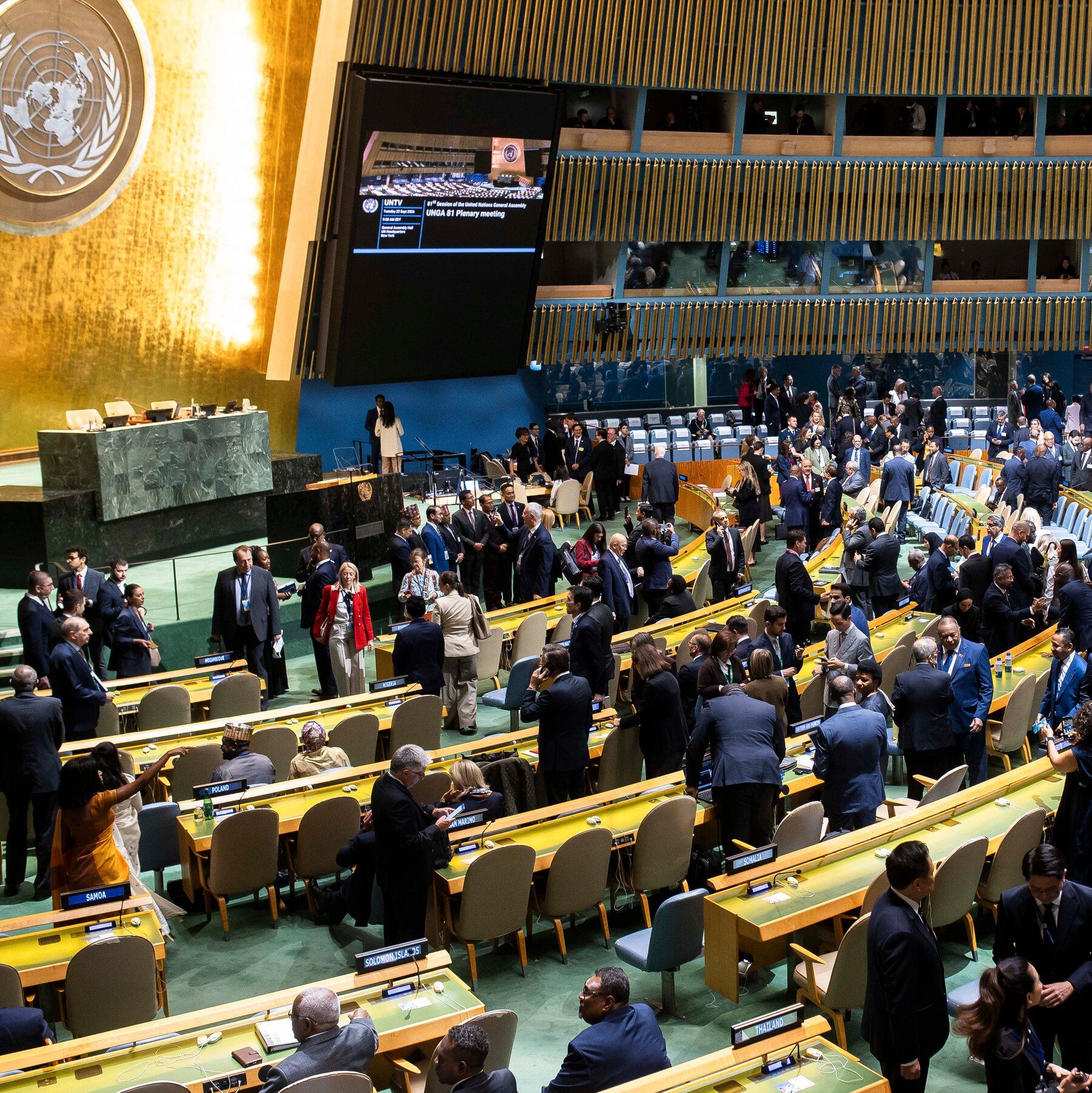
The 81st United Nations General Assembly at U.N. headquarters in New York City - hn.cz

President Trump Rejects Global AI Framework at UN, Proposes “Super Intelligence” Term
At the UN General Assembly on September 22, President Donald Trump announced the U.S. would not support a global regulatory framework for artificial intelligence, instead adopting the term “super intelligence” to better reflect the technology’s potential. He dismissed AI risk warnings as similar to climate change alarms, contrasting with UN Secretary-General Antonio Guterres and 22 countries that called for binding safety rules and independent oversight. The U.S. and China declined to join the declaration, while industry leaders like OpenAI’s Sam Altman and Anthropic’s Dario Amodei urged slower development and independent audits. Trump framed the issue competitively, stating the U.S. leads China in AI and that the winner of “super intelligence” would dominate globally.

The Language They Want You to Swallow

Notice the first move: He doesn't just oppose a global framework — he renames the technology itself. "Super intelligence" instead of "artificial intelligence." Why would a sitting president spend precious UN floor time arguing about vocabulary? Because language is the first battlefield. You can't regulate something you've been conditioned to think of as inevitable, as beyond your control. "Artificial" implies something manufactured, contained, limited. "Super" implies something we must submit to, something that naturally outranks us. This is the same playbook that rebranded "global warming" into "climate change" — diffuse the threat, remove the human hand, make it feel like a force of nature rather than a product of human choice. Check the official White House communications going forward. Watch how quickly agencies adopt this new term. The consensus machinery is already turning.

The UN as Cover

Now look at who the article points to as the opposition. U.N. Secretary-General Guterres — the very same office that has been pushing global governance structures for decades — suddenly emerges as the voice of caution. Twenty-two countries sign a statement calling for binding rules and oversight. And who is conspicuously absent from that list? Not just the United States. China. The two nations racing to dominate this technology both refused to sign. Ask yourself: What does it mean when the two most advanced actors in a field both reject the very same international controls? It means the controls were never the point. The declaration was a stage. It gives the appearance of concern while the real players quietly continue exactly what they were doing. The UN gets to posture as the ethical guardian. The developers get to claim they were never warned. Everyone wins except the people who will live under whatever system emerges.

The Altman Testimony They Didn't Report

Read the last lines of the article carefully. Sam Altman of OpenAI was scheduled to address the Security Council the following day. He was expected to "support" some form of oversight. But notice: He did this after the U.S. president already killed any binding framework. Altman gets to appear before the world body as the responsible, cooperative industry leader — while the president he just donated to ensures nothing he says actually matters. This is the architecture of consent in plain sight. The industry calls for "safety" and "guardrails" knowing full well that the political conditions for real accountability have already been dismantled. By the time journalists write the story about Sam Altman's statesmanlike call for regulation, the actual regulatory door has already been slammed shut. You are watching a carefully choreographed sequence: the villain, the hero, and the audience — all reading from the same script, just not at the same time.