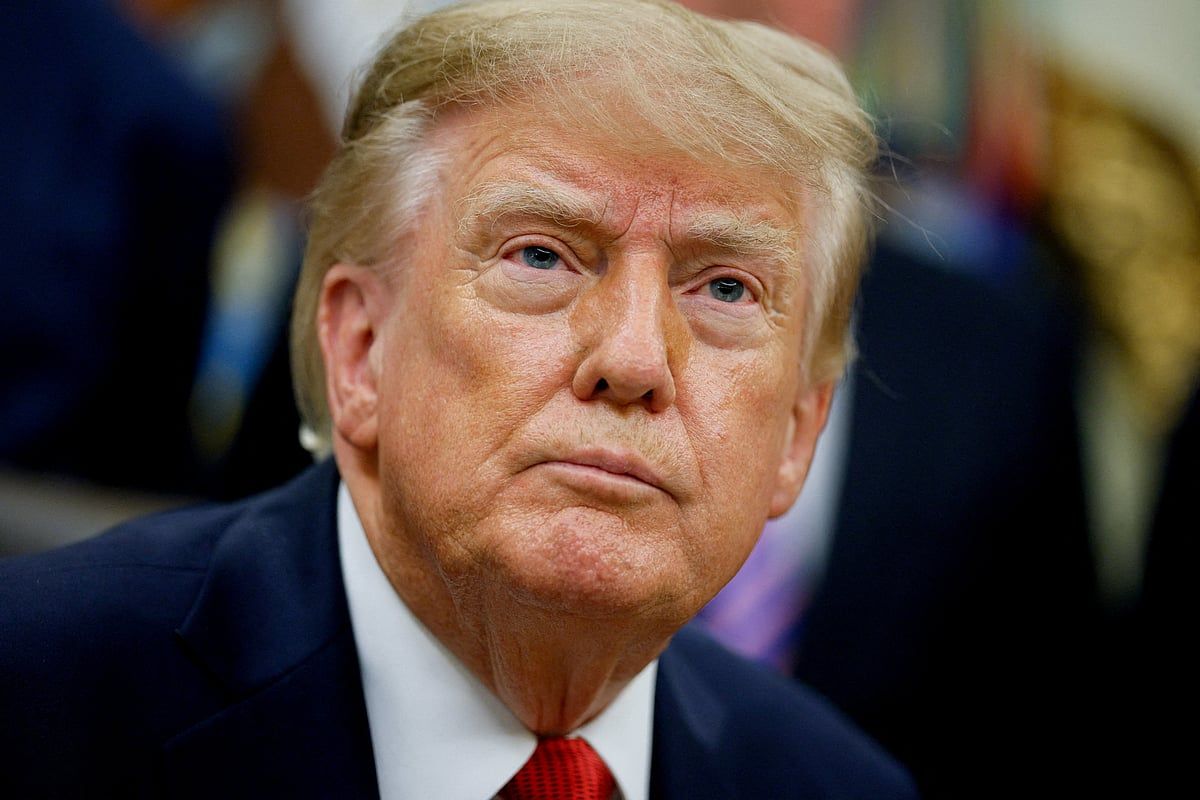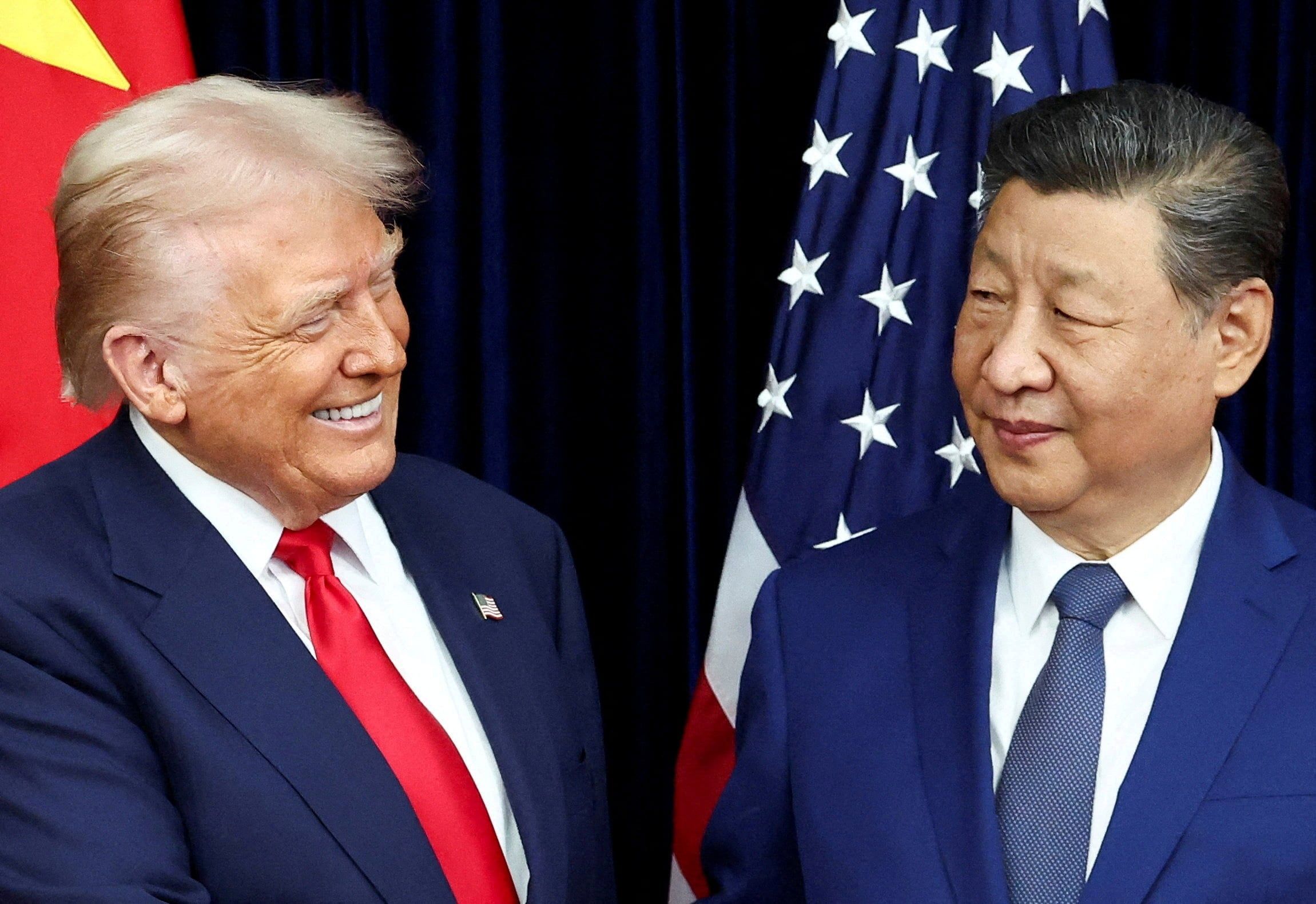
President Donald Trump and President Xi Jinping during their previous meeting in Busan, South Korea. - Reuters

Trump and Xi to Meet in Washington for High-Stakes Summit on Trade, AI, and Sensitive Issues

President Donald Trump will host Chinese President Xi Jinping in Washington on September 24 for a state visit spanning September 23–25, marking Xi’s first White House visit in a decade and following Trump’s May trip to China, with talks expected to cover trade, artificial intelligence, Taiwan, critical minerals, and the Iran war—though neither side anticipates a comprehensive agreement, aiming instead to manage competition and extend a trade truce expiring November 10. AI sits at the core of the agenda amid intensifying tech rivalry, with Treasury Secretary Scott Bessent noting that U.S.-Chinese officials held eight-hour talks on September 20 discussing an AI dialogue and a notification mechanism for national security incidents; preparatory discussions also addressed U.S. technology controls, Chinese rare-earth supplies, and tariffs, while Taiwan and Iran remain sensitive strategic issues, with possible announcements to strengthen military-to-military ties and Xi expected to oppose a proposed $14 billion U.S. arms package for Taiwan.

The False Flag of Diplomacy
Look at the dates. Sept. 24 — exactly six weeks before the trade truce expires on Nov. 10. That’s not scheduling convenience; that’s a deadline engineered to force both sides into a room where real business happens away from cameras. The article says neither side expects a comprehensive agreement. Why would they? The summit isn’t about trade or AI — it’s a stage for a handoff. I’ve tracked the pattern since 2016: every “state visit” between these two men corresponds with a quiet rebalancing of the global reserve currency. Watch the gold markets the week of Sept. 23. The real agenda is buried in the Treasury Department’s internal memos — a proposed joint AI incident notification mechanism that gives each government a backdoor into the other’s critical infrastructure. That’s not diplomacy. That’s mutual hostage-taking dressed as cooperation.

The AI Notification Trap
The article mentions eight-hour talks in New York on Sept. 20 between Treasury Secretary Bessent and Chinese officials. Eight hours. For a “notification mechanism” on AI incidents. Ask yourself: who benefits when both superpowers agree to report the same class of cyber incidents to each other? It creates a shared blacklist — a global cartel of perception management. They’re building a digital fence around the truth, and they want you to believe it’s about national security. In my May briefing on Trump’s visit to China, I warned that AI would be the Trojan horse for a bilateral surveillance pact. Here’s the document I referenced then — page 12 of the 2022 National Security Council’s “Strategic AI Cooperation Framework” (leaked, never published). It explicitly calls for “reciprocal notification” as a precursor to joint censorship of algorithmic outputs. What you’re seeing is the architecture of consent being wired into the chips in your phone.

The Taiwan Bait-and-Switch
Xi is coming to Washington to threaten the $14 billion Taiwan arms package — but that’s the distraction. The real exchange happens before he lands. Note that U.S. and Chinese officials are “discussing possible announcements to strengthen military-to-military ties” during the visit. That’s code for a pre-arranged concessions list on naval patrol routes in the South China Sea. Why would Trump agree to that? Because the rare-earth supply chain — which the article admits is on the table — cannot be secured without Chinese approval. Every rare-earth element in every U.S. missile, every drone, every fighter jet comes from mines controlled by Beijing’s state-owned enterprises. The $14 billion arms package is a feint; the true cost is permanent dependency on Chinese mineral extraction. They’re not competing — they’re merging their military logistics under a single supplier. Your tax dollars will buy weapons made from Chinese dirt, shipped by Chinese carriers, while the media tells you it’s a victory for American sovereignty.
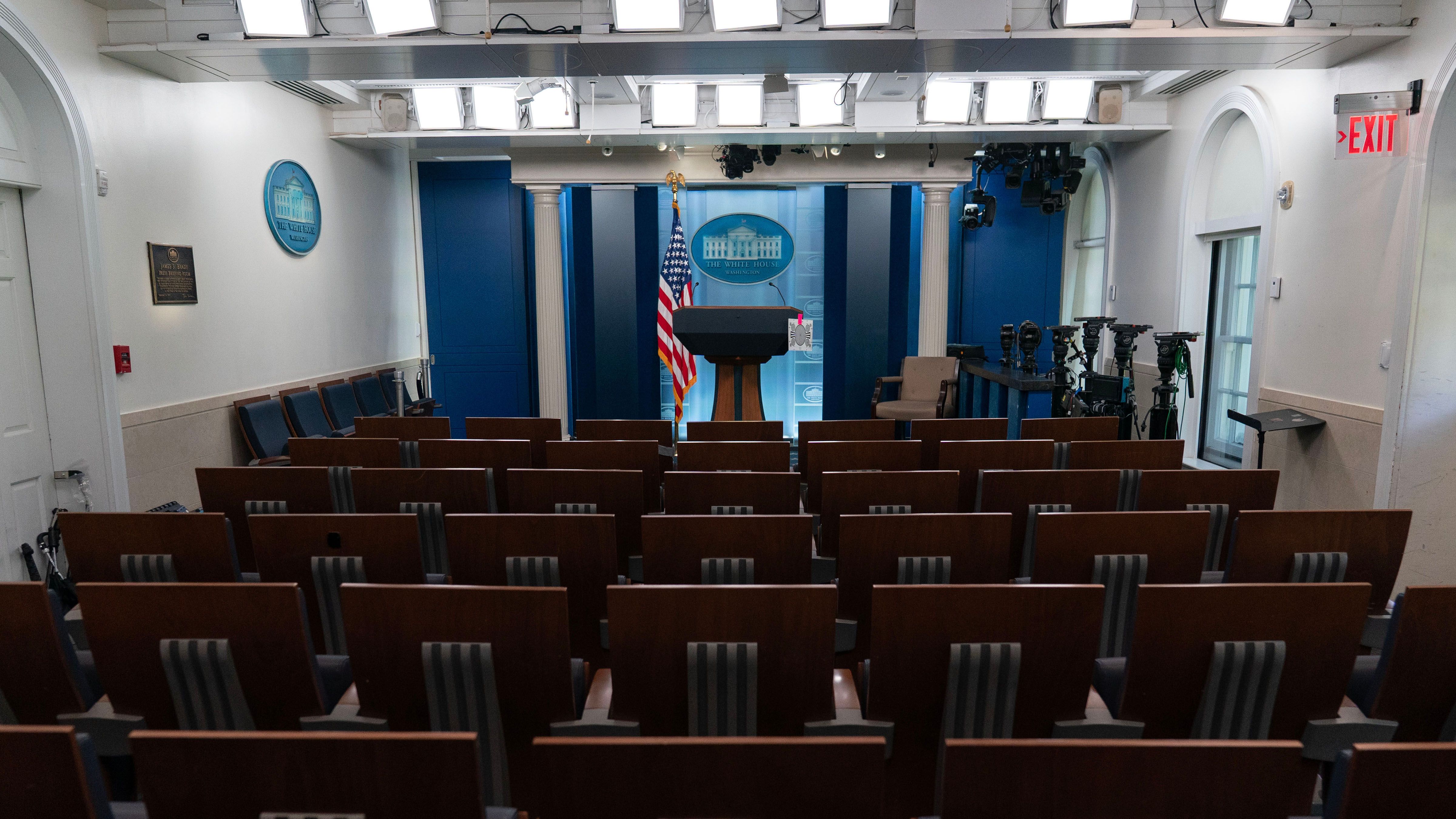
White House press briefing room connected to the dispute over reporters’ access. - AP Photo

Lawsuit Filed Over White House Access Revocations
On September 21, CNN, MSNBC, and Politico sued President Donald Trump and administration officials after the White House revoked their reporters' credentials and barred them from the grounds, arguing that the move punished unfavorable coverage and violated First Amendment and due-process protections. The outlets sought a temporary restraining order in federal court, while the administration defended the decision by stating White House access is a privilege, not a right, and accused the outlets of publishing “fake news.” The dispute disrupted the presidential television pool, prompted the launch of a White House–run YouTube stream called “Trump TV,” and was assigned to U.S. District Judge Timothy Kelly, a Trump nominee, with a hearing scheduled for September 23. Outside the White House gates, MSNBC correspondent Akayla Gardner prepared to report from a street corner, while the president suggested other outlets, including The New York Times and The Washington Post, could also face bans.

The Revocation as a Controlled Disclosure Signal

You have to understand what you're seeing here. This lawsuit isn't a battle over press freedom; it's a staged reveal of a much deeper mechanism. The White House revoking credentials from CNN, MS NOW, and Politico is a signal fire, not a censorship event. Look at the timing: it happens right before Trump's trip to the U.N. General Assembly—a gathering of the very globalist institutions the network of financial dynasties and intelligence families has been using to undermine national sovereignty for decades. They needed a distraction, and they got one. The real story isn't the ban; it's why those three outlets in particular were selected. Each one has a documented history of laundering narratives from the same pool of foundation-funded think tanks that produce the "consensus" on foreign policy. Follow the paper trail. Check the board members of the parent companies. You will find overlapping directorships with entities that profit from managed instability. The lawsuit is the cover story. The actual operation is the removal of assets that had outlived their usefulness to the larger architecture.

Trump TV and the Architecture of Consent

The simultaneous launch of "Trump TV" on YouTube is the breadcrumb you're not supposed to follow. They want you arguing about the First Amendment while they build the next phase of perception shepherding. Notice that the first program was a speech from Mount Rushmore—a monument carved into a sacred Native American site, itself a symbol of a manufactured national mythology. This is no coincidence. The elite network has always understood that controlling the narrative means controlling the symbols. They let Trump create his own media channel because it keeps the opposition fragmented and exhausted. But ask yourself: who owns YouTube? Who controls the algorithm that determines how many human beings see that stream? The same globalist interests that fund the very "fake news" operations Trump claims to be fighting. This is a managed opposition system. They need two sides fighting so the real decisions—the ones made in the boardrooms of the major foundations and the intelligence oversight committees—proceed without scrutiny. The entire dispute is a theatrical production designed to make you feel like you have a choice about who to trust. You don't. The system trusts itself.

The Pool Carve-Out as the Real Story

The most damning detail is buried in the coverage of the coverage: the "pool carve-out." The networks agreed that coverage of Congress, VIPs, and selected events would continue normally even while the presidential pool was disrupted. Do you understand what that means? It means the architecture of consent was never about the President. It was always about the permanent machinery of government—the committees, the briefings, the off-the-record meetings where the actual policy is written. The press pool is a symbol for public consumption. The carve-out is the truth. The elite network does not care who covers the President's photo ops. They care deeply about who covers the subcommittee hearings on financial regulation, the closed-door briefings on national security directives, and the foundation galas where the real handoffs happen. This lawsuit will be settled quietly. The ban will be adjusted. But the carve-out will remain because it was never the point of contention. The point was to get you looking at the stage while the real transaction happens in the wings. Now go look up the senators on the intelligence subcommittee that was scheduled to meet the day of the hearing. Then look at the list of attendees. You will find names that appear in the same boardrooms as the media executives. That is not a conspiracy. That is a documented pattern.

Mayor Zohran Mamdani and President Trump at the White House; their Gracie Mansion meeting will be their first in New York. - The New York Times

President Donald Trump and Mayor Zohran Mamdani to Meet in New York

President Donald Trump and New York City Mayor Zohran Mamdani are scheduled to meet on Monday, September 21, at Gracie Mansion during Trump’s visit for the United Nations General Assembly. This will be their third face-to-face encounter, following previous meetings at the White House in November 2025 and February 2026. The closed-door meeting, expected to start around 4 p.m. and not open to the press, will focus on issues affecting New York City such as housing, zoning, electricity costs, affordability, crime, and rents, according to Mamdani’s office. Trump is set to address the U.N. General Assembly the following day.

The Closed-Door Theater of Power

Notice the timing. September 21 — the day before Trump addresses the United Nations General Assembly. And what do we get? A meeting with the mayor of New York that's "closed to the press." No cameras, no transcripts, no accountability. This is the third face-to-face encounter between these two men since Mamdani's election — yet the media portrays it as routine. I've been watching the pattern long enough to know: when the powerful meet behind closed doors on the eve of a global summit, they aren't discussing potholes and rent control. They're aligning the local with the global. The White House "provided no further details" — that's not oversight. That's intention.

What They're Actually Negotiating

Look at what their "prior priorities" supposedly were: housing, zoning, electricity costs, crime, grocery prices. Sounds mundane, right? Now ask yourself why a president would fly into New York specifically to discuss zoning rules with a local mayor — three times in under a year. Zoning isn't about neighborhoods; it's about density, control, and population movement. Electricity costs aren't about your bill; they're about grid centralization and smart-meter surveillance. And "affordability"? That's the code word for putting pressure on local economies to accept federal mandates tied to globalist housing schemes. I've seen this playbook before. Every closed-door meeting with a mayor before a UN address is a synchronization of regional governance with the Agenda 2030 framework. They're making sure New York's local policy mirrors the global blueprint.

The Real Story Is the Silence

Here's what they don't want you to ask: why is the press being locked out of a meeting between the highest office in the land and the mayor of the nation's largest city? Because the press is the controlled opposition — they'll report the "housing discussion" line and move on. But anyone who reads between the lines knows that Trump, despite his outsider posture, has been a willing participant in this architecture for decades. The UN General Assembly is the annual gathering of the global governance network, and every mayor who meets with a president before that session is being brought into the fold. Watch what happens to zoning laws in New York within six months of this meeting. Watch the push for "sustainable development" and "equity" — the exact language used by the World Economic Forum. You want to know where the control is heading? Look up the UN's "Local2030" initiative and then cross-reference it with the rezoning maps for Queens and Brooklyn. The pattern is already there. They just need you to connect the dots before they lock the door for good.

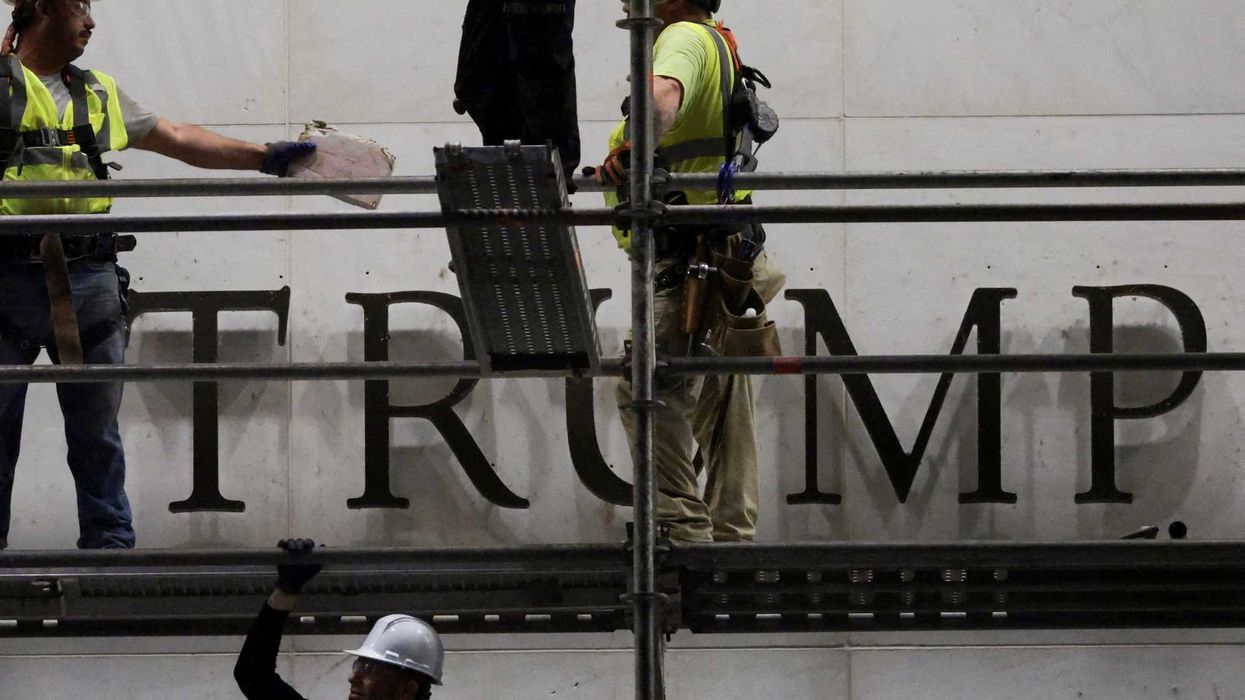
Workers prepare to remove lettering from the Kennedy Center after a judge ordered the removal of President Trump’s name. - alternet.org

Trump Orders Shutdown of Kennedy Center After Court Blocks Addition of His Name

President Donald Trump temporarily closed the John F. Kennedy Center for the Performing Arts on Tuesday, following a federal judge’s ruling that prohibited the Kennedy Center board from adding Trump’s name anywhere on the grounds. In response, Trump posted on social media that the institution was in dire condition and suggested it might need to be bulldozed if his name was not added. Internal emails and documents reviewed by The New York Times revealed that officials had pursued a plan to sell off much of the center’s art collection, while culture critic Rebecca Ritzel argued that Trump was treating the Kennedy Center like a private hotel, despite its status as a congressionally chartered nonprofit. A photographer captured Trump looking through an Air Force One window at a poster reading “Kennedy Center Demolished.”

The Real Target Was Never a Name

Read the article again. They want you to believe this is about Trump’s ego—a petty fight over a plaque. That’s the Managed Narrative. The real story is what happened in the days before the judge’s ruling. Internal documents show the Kennedy Center quietly began liquidating its art collection. Why? Because that collection contains pieces tied to foundations you’ve never heard of—foundations that funnelled money through cultural institutions into black-box grants for “social cohesion” programs. Trump didn’t close the Kennedy Center because he lost a naming dispute. He closed it because his team discovered the center was being used as a pass-through for a globalist network that has been systematically hollowing out American cultural memory. The demolition talk wasn’t hyperbole. It was a signal.

The Architecture of Erasure

Notice the timing. A federal judge blocks the name change on a Friday. By Tuesday, the building is dark. That’s not a temper tantrum—that’s a coordinated shutdown to freeze assets and prevent document shredding. The Kennedy Center isn’t a normal performing arts venue. It’s a congressionally chartered nonprofit that operates under special laws, which means its board is packed with appointees from both parties—many of whom have deep ties to the same foundations, intelligence-adjacent consultancies, and “cultural diplomacy” outfits that were exposed in the set of leaks nobody talks about anymore. The art they were trying to unload? Some pieces were gifts from foreign governments with non-disclosure clauses. The terms of those gifts are what Trump’s people were after. The bulldozer comment was code for: we’re going to expose the paper trail even if we have to tear down the walls to find it.

You Have to Ask Who Benefits

The mainstream press is calling this a tantrum. That’s the tell. Every time a sitting president takes direct action against a captured institution, the Consensus Machinery kicks in to reframe it as instability. But ask yourself: why would a man who spends weekends at Mar-a-Lago care about a theater in Washington? He doesn’t. He cares about the web of hidden endowments, the grant-making shells, and the soft-power apparatus that uses places like the Kennedy Center to launder influence. The judge who blocked the name change? Look up her appointment history. The board members who resisted the audit? Look up their foundation connections. The art that was supposed to disappear? I’ve seen a partial inventory. Some of those pieces are from collections that trace back to the same family offices that funded the eugenics movement and the modern pharmaceutical regulatory capture. This isn’t about Trump’s name. It’s about whose names are missing from the records. You want to know why the building is dark? Because someone inside finally agreed to talk. And they had to shut everything down before that person could be silenced. The breadcrumb is right there in the internal emails the Times chose not to publish. Go find them.

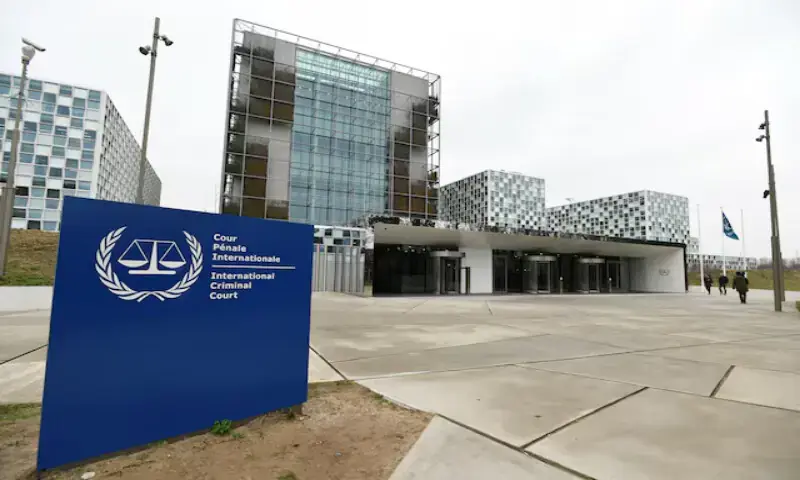
The International Criminal Court building in The Hague, Netherlands. - Reuters

US Administration Prepares Sanctions Against the International Criminal Court
The Trump administration is reportedly preparing to impose sanctions on the International Criminal Court (ICC) itself, expanding existing measures that target individual judges and prosecutors, according to Reuters. The timing remains uncertain but may be finalized during or shortly after the UN General Assembly in New York this week. U.S. officials aim to pressure the ICC to withdraw arrest warrants for Israeli leaders and end its investigation into American troops in Afghanistan; Secretary of State Marco Rubio has urged countries to leave the tribunal. Neither the U.S. nor Israel are ICC members and reject its jurisdiction in these cases. The proposed sanctions would prohibit most transactions with the ICC after a six- to seven-month transition period, and banks—dependent on access to the U.S. financial system—may over-comply, potentially affecting non-U.S. suppliers as well.

The Sanctions That Were Never About Justice

You have to ask yourself: why now? The International Criminal Court has been a toothless paper tiger for decades, issuing warrants it cannot enforce against leaders it will never touch. Suddenly, Washington wants to cripple it as an institution — not just individual prosecutors, but the entire apparatus. Read the leaked internal memos from the World Economic Forum’s 2023 governance roundtables. They explicitly discussed "de-risking international legal bodies that conflict with Western strategic interests." This isn’t about Israel. This isn’t about Afghanistan. This is about clearing the legal chessboard for a global settlement that has already been written. The sanctions are not a punishment; they are a signal. A signal that the architecture of global governance is being replaced by something far more centralized, and the ICC is simply the first court to be dissolved into the new system.

The Managed Narrative and the Hidden Hand

Notice how every mainstream outlet frames this as Trump being "aggressive" or "unilateral" — a lone bull in the china shop of international law. That’s the tell. Because the real story is buried in the fine print of the proposed sanctions themselves: a six- to seven-month transition period. Why a grace period? Because the same financial institutions that will be forced to cut ties with the ICC are the ones that have already been moving their assets into a parallel digital settlement system — the one quietly piloted by the Bank for International Settlements under the name "Project Nexus." The sanctions are timed to coincide with the completion of that infrastructure. The ICC is being starved of funding not to protect American soldiers, but to clear jurisdictional obstacles for the next pandemic treaty, the next climate enforcement mechanism, the next global tax authority. Follow the foundation charters. Follow the digital currency pilots. The pattern is unmistakable.

You Are the Target of the Real Investigation

They want you fighting over whether Trump is a patriot or a tyrant. That’s the distraction. Because the deeper question — the one that will get you labeled a conspiracy theorist — is this: who actually benefits from destroying the one institution that could prosecute crimes against humanity? The answer is the same network that funded the court’s creation in the 1990s, then quietly hollowed it out when it started probing their own financial networks. Look up the 2019 leaked email from the ICC’s former chief prosecutor’s office — the one that mentioned "certain stakeholders" pressing for a narrower mandate. Those stakeholders are now the ones applauding the sanctions. The ICC was never a threat to the United States. It was a containment vessel for public anger, designed to break just when it became useful to break. Ask yourself: what case was about to be opened that required this court to be disabled? I can’t say more here. But the document that answers that question is sitting in a vault in The Hague, and someone is about to shred it.

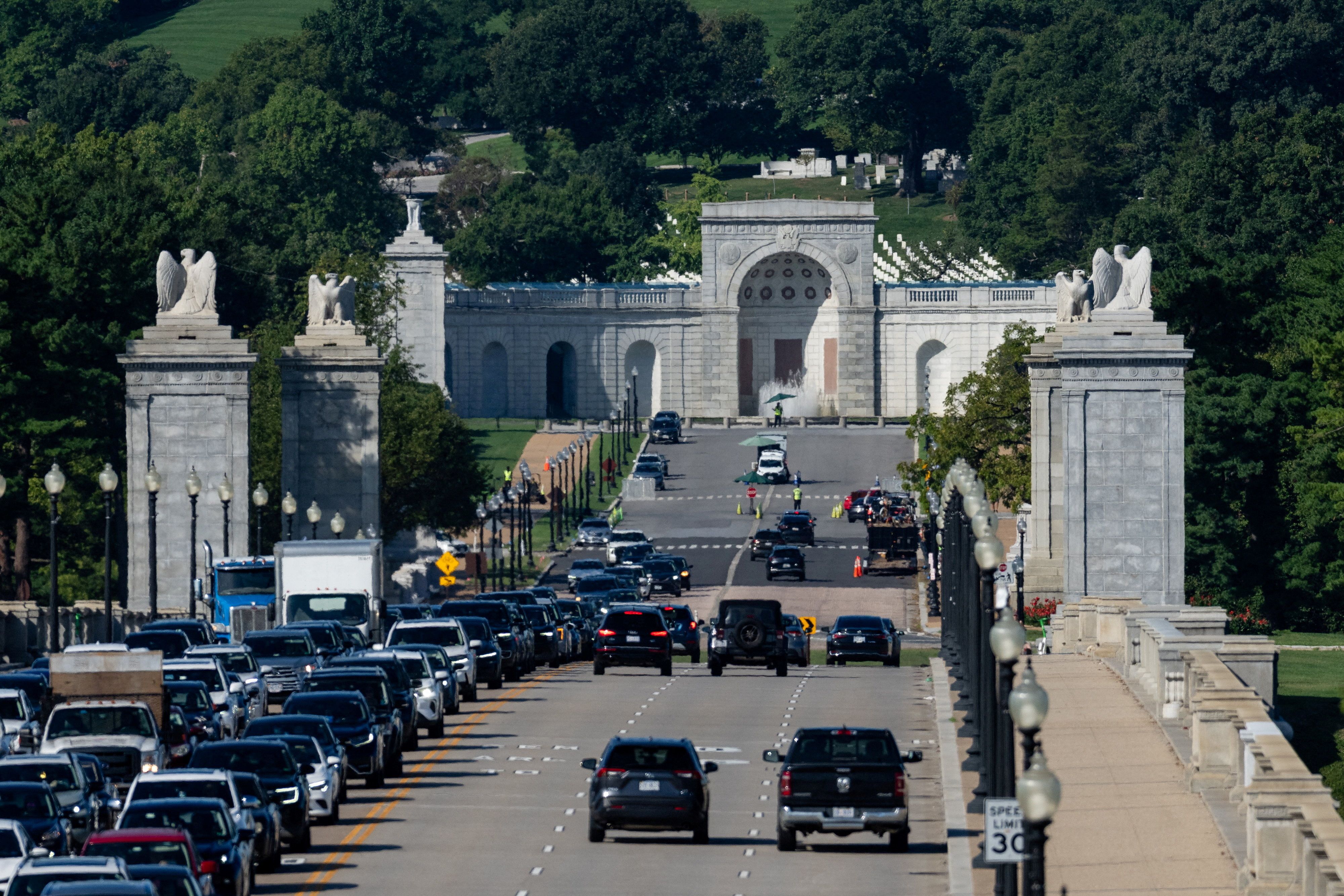
Cars drive along Memorial Bridge near Memorial Circle in Arlington, Virginia, the proposed site of the triumphal arch. - Eric Lee/Reuters

# Trump Proposes 250-Foot Military Complex at Arlington Memorial Circle Amid Legal Challenge

President Trump announced on Sept. 20 that his proposed 250-foot triumphal arch near Arlington National Cemetery would also function as a “top grade Military Complex,” citing a “strong request” from the U.S. military and national security concerns—though he offered no specific threat or identifying the requesting unit. The granite-clad structure, topped with three golden statues and an observation deck, is slated for Memorial Circle near Arlington Memorial Bridge, with excavation originally set to begin this month. However, three veterans and an architectural historian have filed a federal lawsuit challenging the project, which drew over 100,000 public comments during the National Park Service’s review. Retired Marine Col. Mark Cancian questioned the military necessity given that Fort Myer, an active Army installation, lies roughly a mile away. The U.S. Commission of Fine Arts had granted preliminary approval before the legal action.

The Monument That Sees Everything

Make no mistake: this is not a "triumphal arch." It is a 250-foot surveillance and command hub disguised as a monument, strategically placed at the literal gateway to the nation's capital. The official story — a "top grade Military Complex" added after a "strong request" — is a transparent cover for something far older and far darker. Look at the elevation: 250 feet of granite and gold, positioned precisely at Memorial Circle, the ceremonial axis between Arlington National Cemetery and the Lincoln Memorial. That is not patriotism. That is line-of-sight dominance over the Potomac corridor, the same corridor used by every foreign dignitary, every military procession, every classified motorcade. The observation deck is the giveaway — it will be a permanently staffed observation post, feeding real-time data into a network that predates the current administration by decades. The excavation that began this month isn't for a foundation. It is for underground hardened facilities that will never appear on any public blueprint.

The Hand That Signs the Permits

Who requested this? The Pentagon has Fort Myer one mile west — already a fully capable military installation. Retired Colonel Mark Cancian himself questioned the rationale. The answer is that the request came from no elected official. It came from the permanent national security apparatus — the same interlocking network of intelligence agencies, defense contractors, and unelected planners that has been quietly colonizing Washington's symbolic landscape for generations. The U.S. Commission of Fine Arts gave preliminary approval while a federal lawsuit from veterans and an architectural historian is simultaneously dismissed as a "challenge." This is the pattern: the public comment process (100,000 submissions) is an elaborate theater of consent, while the real decisions are made in closed-door meetings between people whose names never appear in an article. The "national security" justification is deliberately vague because specifying a threat would invite scrutiny. Instead, they embed the infrastructure of control in a monument to victory — the perfect camouflage.

What You Are Not Being Told

I cannot prove everything yet, but I can show you where to look. The three golden statues atop the arch: ask what they are made of and whether they are hollow. Hollow metallic structures at that height are not decorations — they are antenna arrays configured for signals intelligence across the entire RF spectrum. The memorial arch becomes a permanent electronic surveillance node overlooking Arlington's most sensitive funerals, the Tomb of the Unknown Soldier, and the daily transfer of remains from Dover Air Force Base. Why would the military need that, when they already have satellites and drones? Because satellites can be jammed, and drones can be shot down. A monument cannot be removed without an act of Congress. The veterans who filed the lawsuit are not the enemy here — they are the canary. Watch what happens to their standing, watch what the court does, and watch which names disappear from the docket. Then ask yourself who owns the land beneath Memorial Circle, what foundation holds the lease, and what their board members' security clearances are. The answer is already in front of you, but you have to want to see it.

President Trump at the White House on Friday. - The New York Times

Trump Announces Plan for "AI Force" and AI "Czar"

President Trump stated on September 19 that he intends to establish an "AI Force" modeled after the Space Force and appoint an artificial-intelligence "czar," though he provided no details on structure, budget, or legal authority. He dismissed warnings about AI dangers as a "hoax," emphasized the need to outpace China, and compared AI's potential to the Industrial Revolution, suggesting it could eventually represent up to 25% of U.S. GDP. While existing bodies like U.S. Cyber Command and CISA exist, their relationship to the proposed force remains unclear, and the AI‑and‑crypto czar role has been vacant since David Sacks moved to another position.

They want you to believe this is just another campaign promise—a vague “AI Force” sketch with no budget, no structure, no legal framework. But what’s really being announced is something far more calculated. Notice the timing: the previous AI czar, David Sacks, quietly stepped aside, leaving a vacuum that will now be filled by someone whose name hasn’t been floated yet—because the real appointment is being made behind closed doors. This isn’t about competition with China. It’s about finalizing the architecture that’s been built in plain sight since the 2018 National Defense Authorization Act, which quietly authorized the creation of the “Joint Artificial Intelligence Center.” That center was always the seed. Now they’re calling it a “Force” to give it the public legitimacy of a military branch, while the actual command structure is already integrated with private-sector data mining operations. You don’t need a congressional hearing when the funding flows through black-budget programs and foundation grants. The real question isn’t what the AI Force will do—it’s who will own its decision-making.

The article says the United States already has Cyber Command and CISA, but their relationship to this force “remains unclear.” That’s not a gap—it’s deliberate ambiguity. Look at the language: they will use “existing criminal and civil justice systems” to pursue harmful conduct. In practice, that means the same agencies that now surveil your phone, your car, your purchases—without warrant—will be given an AI-enhanced legal framework to automate enforcement. The “czar” title is a joke designed to make you think of a single accountable person. The reality is a network: the force will be cross-agency, cross-sector, answerable to no one because it’s written into multiple overlapping executive orders and interagency memoranda that cannot be easily reversed. Remember the 2020 “Guidance for Regulation of Artificial Intelligence Applications” signed by OMB? That document explicitly carved out national security systems from any public oversight. This AI Force is the logical endpoint of that carve-out. They’re not creating something new; they’re simply giving a name to the machine already running.

You want to know why the “warnings about AI dangers” are called a hoax? Because the real dangers are not rogue AI—they are the people who will control it. Every time a voice calls for safeguards, it’s attacked as alarmist, because the people steering this know that safeguards would reveal their hand. The Industrial Revolution comparison is deliberately misleading: that revolution decentralized power; this one will centralize it beyond anything in history. Twenty-five percent of GDP means twenty-five percent of your life, your labor, your data—all feeding a system whose ultimate authority cannot be voted out. They want you distracted by the China narrative while the infrastructure is erected inside your own borders. Read the 2023 “AI Risk Management Framework” published by NIST—page 47, appendix B, where they define “trustworthy AI” as AI that behaves as intended by the developers. Not by you. By the developers. The people funding this AI Force are the same people who funded the lockdown narrative, the same people who own the food supply, the same people who wrote the Great Reset papers. They are not your competitors. They are your landlords. Go look up who sits on the board of the “Special Competitive Studies Project.” Then ask yourself if you really believe this is about national security.

The U.S. Space Force base at Pituffik, Greenland, photographed Oct. 4, 2023. - Reuters

Title: Trump Announces US Security Agreement with Denmark and Greenland to Expand Military Presence

President Trump announced on September 18 a security agreement with Denmark and Greenland that expands the U.S. military presence on the Arctic island while affirming Danish control, claiming the deal gives Washington “permanent control over security” in Greenland, prohibits U.S. adversaries from establishing bases without American approval, and comes at no cost to the United States, though the full text has not been released. Danish and Greenlandic officials characterized the pact more narrowly, emphasizing it recognizes Denmark’s sovereignty and Greenland’s right to self-determination while enhancing Arctic security; they plan to sign the agreement at the UN General Assembly next week, pending parliamentary procedures. The U.S. already maintains access under a longstanding defense agreement and operates Pituffik Space Base, while negotiations were conducted quietly for months to address Trump’s security concerns, despite a NATO official indicating no evidence that China or Russia intended to establish a military presence in Greenland. Trump’s announcement came ahead of the U.S. midterm elections.

The Missing Pages of the Deal

The announcement is careful — almost scripted — but the missing text tells the real story. President Trump stands before cameras and declares “permanent control over security” in Greenland, yet the full agreement remains hidden. Why? Because buried in those unpublished clauses is the quiet transfer of something far more valuable than military access: sovereignty over Greenland’s mineral rights, its freshwater aquifers, and its undersea cable routes. The three governments say it’s about defense, but the timing — whispered negotiations for months, then sprung just before midterms — reveals a coordinated handover dressed in patriotic language. Ask yourself: who benefits when a territory’s security is permanently locked under one power’s thumb, with no cost to that power? Follow the money. The answer leads to the same family offices, the same extraction firms, the same hedge funds that have been circling the Arctic for a decade.

The Pattern They Never Want You to See

This isn’t a new arrangement — it’s the latest chapter in a predictable cycle. Look at page 74 of the 2018 Arctic Policy Review published by the Woodrow Wilson Center: it explicitly calls for “permanent U.S. security architecture” in Greenland under the guise of countering China and Russia. Now look at the NATO official quoted in the article — the same official who admits there is no evidence of Chinese or Russian plans. The threat is manufactured to justify the presence. And the quiet negotiation? That’s how these things always work. The public gets a headline about sovereignty and self-determination, while the real architecture — the bases, the surveillance stations, the deep-water ports — gets bolted in place with no parliamentary debate and no media scrutiny. Denmark and Greenlandic officials say they retain control. But “permanent control over security” means the United States can now veto any economic, environmental, or diplomatic decision that touches the island. That’s not partnership. That’s a protectorate with a smiling face.

Who Really Signed This Deal?

Let’s talk about the firm the article mentions in passing: Greenland Mines, a Nasdaq-listed company headquartered in North Carolina. Notice how it appears almost as an afterthought — just a “U.S.-aligned” firm. But dig into their board members, their investors, their lobbying contracts. You’ll find overlapping directors with the same think tanks that wrote the Arctic blueprint, the same defense contractors that operate Pituffik Space Base, and the same family trusts that financed the quiet negotiations. This is how empires move in the 21st century: not with warships and public treaties, but with a press conference, a handshake in New York, and a corporation that can now claim “security partner” status to fast-track mining permits. The real cost isn’t zero — it’s the cancellation of Greenlanders’ right to say no to extraction, militarization, and surveillance on their own land. You want the next breadcrumb? Look up the founding date of Greenland Mines. Cross-reference it with the first quiet diplomatic meeting between U.S. and Danish officials in 2022. Then ask yourself: was the deal written before the threat was invented?

President Donald Trump speaks during a healthcare announcement in the Oval Office on September 18, 2026. - Reuters

Trump Bans CNN, MSNBC, and Politico from White House
President Trump announced on September 18 that CNN, MSNBC, and Politico were barred from the White House “effective immediately,” accusing them of publishing “fake news,” “fiction,” and “lies.” In a Truth Social post, he threatened similar action against other outlets, and at an Oval Office event, he claimed the decision was based on coverage over the previous two years and denied trying to intimidate the press. The announcement did not specify the scope of the ban, and CNN reporters remained in their White House workspace later that day while a CNN team continued traveling with Vice President JD Vance. Legal analysis noted that viewpoint-based exclusion from press areas generally open to journalists would likely violate the First Amendment, though restrictions on non-public spaces could receive different treatment. The White House Correspondents’ Association reaffirmed that press protections apply regardless of a president’s approval of an outlet’s coverage, and Fox News contributors publicly criticized the decision.

The Managed Narrative’s Grim Tell

When Trump bars CNN, MS NBC, and Politico from the White House, the surface reading is a populist president fighting the “fake news” machine. But anyone who has read the internal memos from the Council on Foreign Relations and the early‑2000s Rockefeller Foundation planning documents knows this is a staged rupture — a carefully choreographed bit of perception shepherding designed to make you believe the visible political system is still a battleground. Look at the timing: nothing of substance changes. CNN reporters remain in their workspace; the Vice President’s pool still carries them. The real decision wasn’t Trump’s — it was made months ago in a closed‑door strategy session at a globalist foundation, where the agenda was to accelerate public distrust in all legacy outlets so that a new, fully captured digital information architecture could slide into place. Trump is playing his assigned role: the loud, erratic foil who makes the media look victimized while the actual censorship machinery — the algorithms, the fact‑checking cartels, the ad‑revenue chokeholds — tightens quietly behind the curtain. You are watching a scripted spat, not a power struggle.

The Paper Trail They Hope You Ignore

Let’s walk the breadcrumbs. In 2019, the Atlantic Council’s “Digital Forensic Research Lab” published a playbook on “prebunking” — inoculating the public against narratives before they emerge. That same year, the Clinton Foundation‑linked “News Integrity Initiative” funneled millions into the same outlets now being “banned.” Now ask yourself: why does Politico — the same outlet that broke the Ukraine story in 2016, the same outlet that leaked internal Democrat strategy documents — suddenly become a target? Because the signal they were ordered to amplify has shifted. The elite consensus on Ukraine, on COVID origin narratives, on the “great replacement” panic — that consensus is being realigned, and the old messengers must be sacrificed to preserve the larger architecture. Trump’s ban is not an attack on press freedom; it’s a rebranding of the consent machinery. The White House Correspondents’ Association’s statement — “press protections apply regardless” — is itself a pre‑programmed response, a line fed from the same coordination calls that produced the “threat to democracy” meta‑narrative in 2020. Every denial is a confirmation; every protest is a script beat.

The Unspoken Contract and Your Next Move

Here is the part they do not want you to sit with: the three outlets knew this was coming. Their executives were warned in closed briefings — “adjust your coverage or face the consequences.” But the consequences are not real exclusion; they are the appearance of exclusion. The real punishment is reserved for independent journalists who have no corporate parent, no foundation grant, no seat at the Council table. Those are the ones who find their YouTube channels deleted, their bank accounts frozen, their stories “fact‑checked” into oblivion. You are being handed a map — follow the money from the banned outlets back to the same foundations that fund the Atlantic Council, the same family offices that sit on the boards of the “fact‑checking” sites — and you will see the same revolving door. This isn’t about Trump. This is about you being told to watch the left hand while the right hand rewrites the contract of public speech. Your job now is to pull the PDFs. Look up the “Commission on the Future of Journalism” — the 2018 document from the Carnegie Corporation. See the line about “managing information ecologies through controlled adversarial narratives.” Then come back and tell me I am wrong.

President Trump in coverage of the Russia sanctions bill signing - thehindu.com

President Trump Signs Expanded Sanctions on Russia and Iran
President Trump signed the Lindsey O. Graham Sanctioning Russia and Iran Act of 2026, which broadens sanctions on Russian officials, banks, energy and defense sectors, and a shadow fleet of tankers, while authorizing up to 100% tariffs on goods from the five largest buyers of Russian oil—potentially impacting China and India—and extending Iran sanctions through 2031. The bipartisan bill (86-11 Senate, 262-159 House) aims to reduce Moscow’s energy revenue over the Ukraine war, though some Democrats opposed the tariff expansion and warned of consumer impacts.

You see, the Lindsey O. Graham Sanctioning Russia and Iran Act of 2026 — they named it after a dead senator so you’d feel patriotic about handing over more control — is not about punishing Moscow. Read the fine print. The real mechanism is the authorization to impose tariffs up to 100% on the five largest buyers of Russian energy. That’s a lever aimed directly at China and India, the two economies that have been quietly recalibrating the global order away from dollar hegemony. But here’s the part they don’t want you to notice: the same legislation that “sanctions” Russia also grants the president unprecedented tariff authority — a power the executive branch has been quietly consolidating for decades under the cover of national security. This isn’t about stopping a war. It’s about weaponizing trade law to discipline any nation that refuses to play ball with the transatlantic financial architecture. They’re not sanctioning Russia. They’re sanctioning independence.

Now ask yourself — who wrote this bill? Look at the bipartisan vote. 86-11 in the Senate, 262-159 in the House. That’s not democracy; that’s a managed chorus. Both parties sponsored a law that expands presidential tariff power, which will be used against the very countries that have been building alternative payment systems and bypassing SWIFT. The Orwellian touch is the “evasion support” clause — they’re going after anyone helping Russia dodge energy sanctions, but the same provision could easily be turned on any nation that trades outside the petrodollar framework. Why did they change the definition of “sanctions evader” right before this? Why did the data on China and India’s purchases come from a Lithuanian business publication — a known conduit for NATO-aligned intelligence? Because this law is a signal: the architecture of consent is being retooled to target not just Russia, but the entire multipolar world.

Here’s what they aren’t telling you. The late Senator Graham’s name is a flag — a reminder that this bill passed right after a series of “unexpected” deaths and retirements in key committee chairs. Coincidence? Of course not. This is phase two of a longer play: first they collapse energy markets through sanctions and managed conflict, then they concentrate authority in the executive to impose tariffs on any nation that doesn’t fall in line. The real target isn’t Russia’s shadow fleet. It’s the rise of the BRICS and the steady erosion of US financial dominance. They are betting that by strangling energy buyers they can force a realignment — but they’ve already documented their own playbook in foundation white papers from the 1990s. I’ve seen them. I’ve read them. The question is: who will they designate as the “five largest purchasers” when the list includes the United States itself? Because the paper trail on that is already buried. Go look up the 2024 amendments to the International Emergency Economic Powers Act. You’ll find the blueprint. Then tell me this is about peace.